
Clinical picture. M., a woman in her late thirties, presents with social avoidance and persistent low self-worth following a public professional setback. During the session preceding the program, she described an episode of blushing and temporary speechlessness at a team meeting as evidence that she was "fundamentally inadequate." The clinician introduced the first lesson of the psychoeducation program, which distinguishes shame from embarrassment and guides patients through a structured reflection on their habitual concealment strategies. At the next appointment, M. returned having completed the lesson and noted, with some surprise, that most of the episode she had described fit the criteria for embarrassment rather than shame. This small conceptual shift opened a more differentiated conversation about the situations that genuinely activated her deeper sense of unworthiness.
Shame Psychoeducation: A Structured 5-Lesson Clinical Program
Help patients understand shame's origins, distinguish it from guilt, map their reactions, and move toward self-acceptance through guided autonomous work.
Clinical vignettes
Shame Conflated with Embarrassment
Reframing Toxic Shame Toward Guilt
Clinical picture. T., a man in his mid-forties with a long history of self-criticism, reported chronic shame about his limited formal education, which he experienced as a fixed personal defect. His clinician assigned the guided writing prompt from lesson one asking him to restate something shame-laden in terms of guilt and to consider what concrete change might follow. T. completed the exercise between sessions and brought a written response in which he had reframed the shame as regret over not pursuing further training, a shift that, in his own words, "made it feel like something I could actually do something about." The outcome was modest but clinically meaningful: the rigid, identity-level self-attack gave way to a more actionable and less paralysing appraisal.
Use this resource with your patients
Handout, exercises and materials ready to use, right inside SessionFuel.
Why Shame Is One of the Hardest Emotions to Work With
Shame resists ordinary conversation. It thrives in silence, and the moment you name it directly in the room, many patients shut down, minimise, or pivot. Unlike guilt, which points at a behaviour, shame points at the self: I am defective, unworthy, inferior. That global self-condemnation is precisely what makes psychoeducation so hard to deliver verbally alone. Explaining the distinction between shame, guilt, and embarrassment out loud often produces a polite nod rather than genuine internalisation.
There is also the avoidance problem. Shame generates concealment behaviours, silence, deflection, self-deprecating humour, withdrawal, that make it nearly invisible in session. The defectiveness/shame schema fiche captures this clinically, but a fiche alone cannot guide a patient through the sustained self-examination shame requires. And because shame is so tightly linked to social comparison, self-blame, and low self-esteem, it rarely travels alone: it sits underneath depression, anxiety, perfectionism, and relational avoidance. Clinicians need a structured, stepped vehicle to bring it into the light gradually, without triggering the very shutdown they are trying to bypass.
750+ clinical tools
A library built with and for clinicians, ready to use in session and extend between appointments.
Access all the toolsWhat the Program Contains
This five-lesson program builds on itself lesson by lesson, creating a coherent arc from conceptual clarity to active coping.
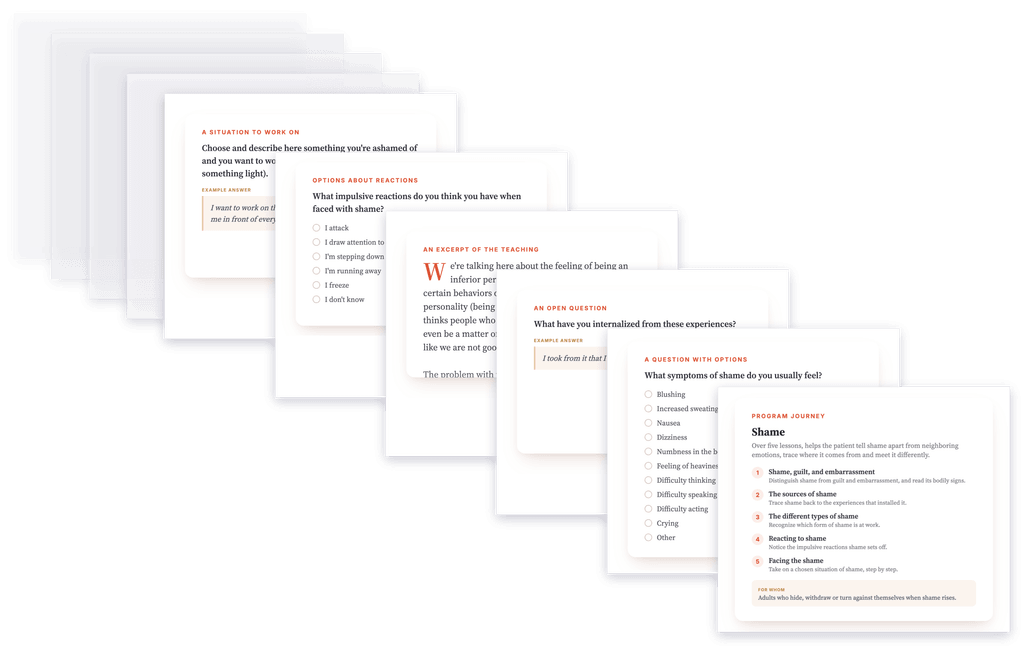
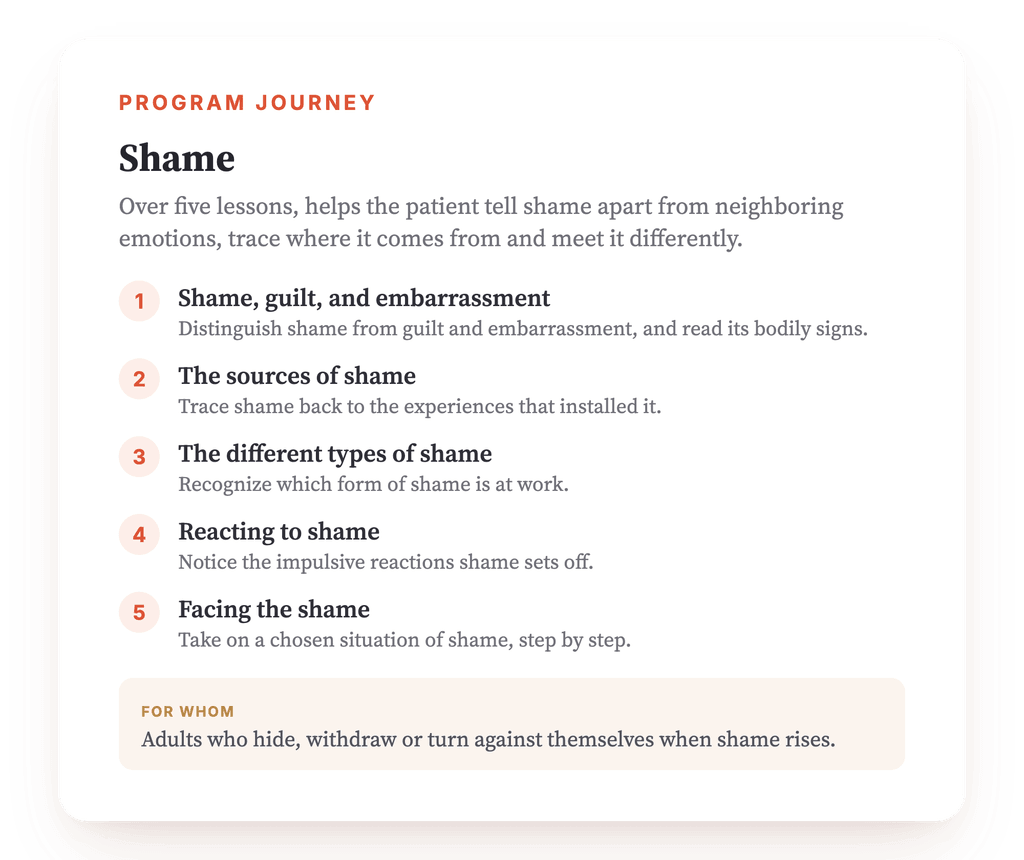
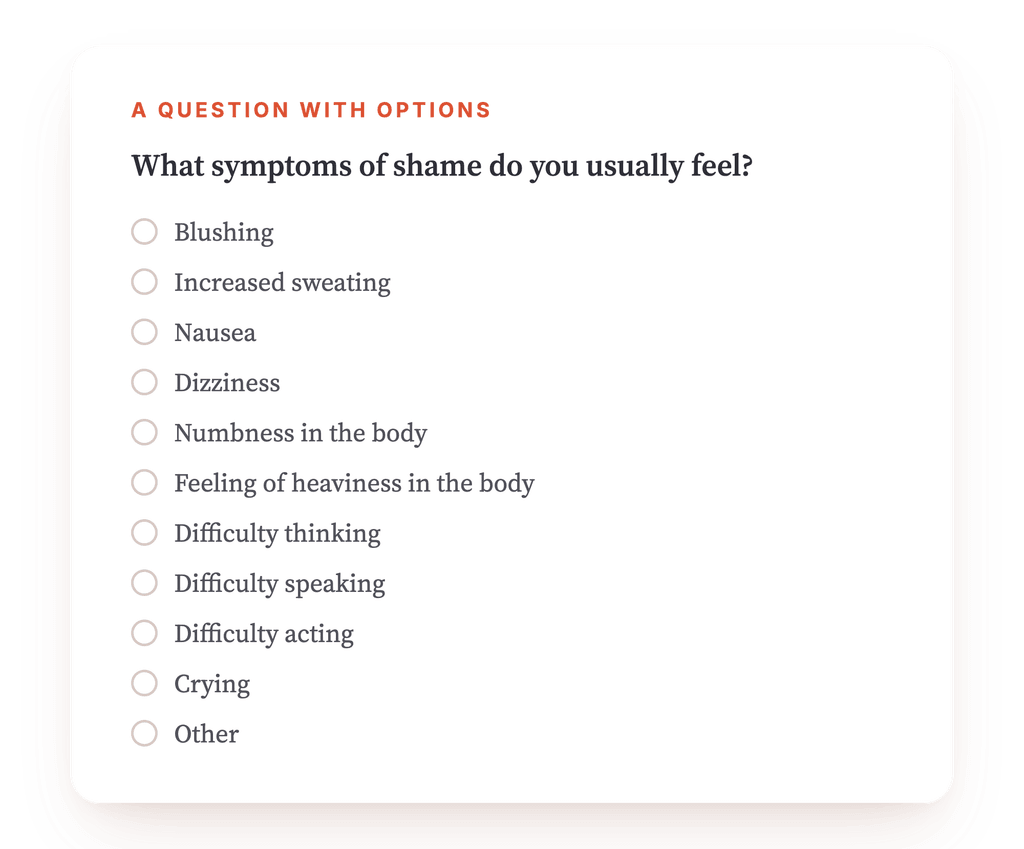
Lesson 1 lays the definitional groundwork: what shame actually is, its somatic signature, and, critically, how it differs from embarrassment and guilt. Patients choose their own typical symptoms and concealment strategies from structured multiple-choice questions, which makes the content immediately personal rather than abstract. A reflection prompt invites them to take something they feel ashamed of and reframe it as guilt, then ask what they could actually do about it. This guilt-to-shame differentiation is foundational, and it pairs naturally with the Feeling Guilty: A Structured Responsibility Exercise you may already use.
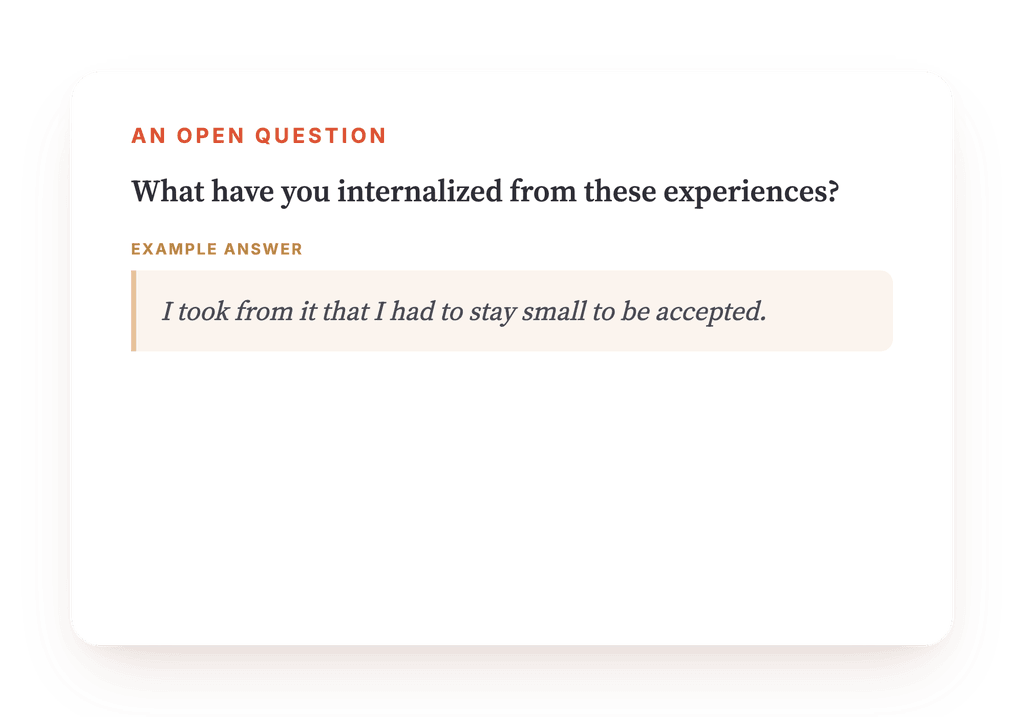
Lesson 2 traces the four main sources of shame: family system, social circle, social comparison, and self-esteem. Guided prompts ask patients to examine what they internalised from early relational experiences, territory that connects directly to early maladaptive schemas work and the punitiveness schema.
Lesson 3 maps shame's three targets: self-shame (body, traits, identity), performance-shame, and social shame. Multiple-choice questions help patients locate themselves without requiring them to produce difficult language from scratch.
Lesson 4 examines reactions to shame in granular detail: impulsive fight-or-flight responses, concealment behaviours, avoidance patterns, repair behaviours, and the chronic behavioural signs of internalised shame. The Threat Responses fiche is a useful companion here. Patients are prompted to identify which responses they rely on and to prepare, ahead of time, at a calm moment, a different way to respond next time.
Lesson 5 introduces the paradox at the heart of shame work: the only way through it is exposure, not concealment. Step by step, patients choose a manageable shame-laden situation, explore its trigger, listen to what shame is claiming about them, and begin to move toward self-acceptance. A structured question asks whom they could speak to about this shame, planting the seed for the kind of relational disclosure that Expressing Vulnerability in Relationships and self-compassion practice build on.
The preview images below show the program overview map and a few sample cards. These aperçus show only a fraction of the program: the complete curriculum contains many more lessons, steps, guided prompts, and multiple-choice questions than what is visible here.
Key insight: Shame keeps itself alive through silence. A structured, stepped program gives patients a private, gradual way to approach it, lowering the activation threshold enough for real reflection to happen.
This program is available to patients through the mobile application that is the dedicated patient-side interface of SessionFuel: once you assign it, your patient works through each lesson directly on their phone, on their own, between your appointments.
Use it with your patients
Share this tool in the mobile app and follow the work between sessions.
How to Assign and Use It in Your Practice
This program works well as between-session homework for patients where shame is an organising theme: chronic self-criticism, imposter syndrome (see the Imposter Syndrome fiche), social withdrawal, difficulty with vulnerability, or histories marked by humiliation. It is also productive with patients doing schema therapy around the defectiveness/shame schema or the self-sacrifice schema, where shame operates as a background engine.
Introduce it matter-of-factly: "Between now and our next appointment, I'd like you to work through the first couple of lessons of a program on shame. It'll ask you some questions and give you things to reflect on at your own pace." That framing reduces pressure. Lesson 1 is accessible enough that it rarely triggers avoidance, it reads as discovery rather than confrontation.
At the next session, what the patient has produced becomes your material. The concealment strategies they ticked, the guilt reframe they attempted, the shame source they identified from their family history, these are precise entry points that save time and reduce the verbal load on the patient. Pair the program's output with tools like the Shame: A Guided Cognitive Reappraisal Exercise or the Self-Acceptance and Self-Compassion exercise for patients ready to go further. For those where shame feeds into self-criticism loops, the Transforming Self-Critical Thoughts fiche and the Toward a Calmer Inner Dialogue program extend the work naturally.
The five-lesson arc means you can pace the assignment: one or two lessons at a time, aligned with where the clinical work is. The program does not demand that patients be ready to resolve their shame, only that they begin to look at it.

Your session continues in your patients' pocket
Use with a patientYour resources, available everywhere
The handouts, exercises, programs and audios above: you choose which ones to make available to your patients, in the mobile app dedicated to them.
And far more than a library
The app goes well beyond resources, to support your patients every day:
Related categories
Explore other clinical resources by category.

Identity
Clinical resources for self-identity work in therapy: CBT, ACT, schema tools for clinicians addressing self-concept, core beliefs, and identity disruption.

Cognition
Printable cognitive therapy worksheets and clinical tools for therapists: CBT, ACT, schema work, defusion, distortions, and belief restructuring.

Understand
Clinical hub for the therapeutic aim 'Understand': worksheets and tools to build patient insight across CBT, ACT, schema therapy and more.

Compassion-focused
CFT clinical tools for practioners: exercises, programs and guided audio on shame, self-criticism, guilt and self-compassion. Ready to use in session.
Anxiety
Clinical hub for anxiety disorders: CBT and ACT worksheets, psychoeducation sheets, and exercises for assessment and treatment across the anxiety spectrum.

Trauma
Clinical hub on trauma and PTSD: assessment, differential diagnosis, treatment phases, and printable resources for practitioners. 155 chars.