
Clinical picture. A., a 34-year-old woman, presents with longstanding agoraphobia that has progressively restricted her to a radius of a few streets around her home. She had attempted graded exposure twice before without success, reporting that anxiety escalated too quickly for her to remain in the situation. Before any in vivo work began, her clinician introduced the first lesson of the exposure program, which frames relaxation as a prerequisite rather than an adjunct. Between sessions, A. worked through the lesson independently, identifying shoulder and chest tension as her primary somatic markers and experimenting with Jacobson progressive relaxation each morning before leaving the flat. At the following appointment she reported that, although she had not yet attempted any exposure, she felt meaningfully more confident that she could modulate her physical arousal, which gave the therapeutic work a more solid starting point.
Graded Exposure: A Structured Psychoeducation Program
A four-lesson autonomous program to guide patients through the full arc of exposure work, from relaxation foundations to graduated practice and debriefing.
Clinical vignettes
Agoraphobia: Building a Relaxation Baseline
Social Phobia: Mapping Anxious Situations Before Exposure
Clinical picture. T., a 28-year-old man with social phobia, avoided most professional meetings and all group meals, relying on remote work arrangements to manage his distress. His clinician introduced the structured exposure program and asked him to complete the first two lessons before their next appointment, with particular attention to the preparatory lesson on identifying and ranking anxiety-provoking situations. T. returned having listed nine specific scenarios, ordered by subjective distress, and had also drafted a written description of a calm imagined setting for use during Schultz relaxation. This preparatory work shifted the clinical conversation from vague avoidance patterns to a concrete, stepwise hierarchy, allowing the clinician to anchor the upcoming exposure plan to material the patient had generated himself.
Use this resource with your patients
Handout, exercises and materials ready to use, right inside SessionFuel.
Why exposure is hard to hand over to a patient
Exposure therapy has the strongest evidence base of any intervention for phobias, agoraphobia, and social anxiety, yet translating that evidence into something a patient can actually carry out on their own is where most of the clinical friction lives. Explaining the rationale once in a consultation rarely produces lasting change. Patients leave understanding, in principle, that avoidance maintains fear, but they lack a step-by-step framework to act on that understanding between appointments. The underlying mechanism, rooted in classical conditioning, is abstract until it becomes personal. Identifying one's own avoidance behaviours, mapping safety behaviours, calibrating a fear hierarchy, and then rehearsing exposure with enough regularity to produce habituation: each of these steps demands more than a verbal explanation.
That gap is precisely what this program addresses.
750+ clinical tools
A library built with and for clinicians, ready to use in session and extend between appointments.
Access all the toolsWhat the program contains
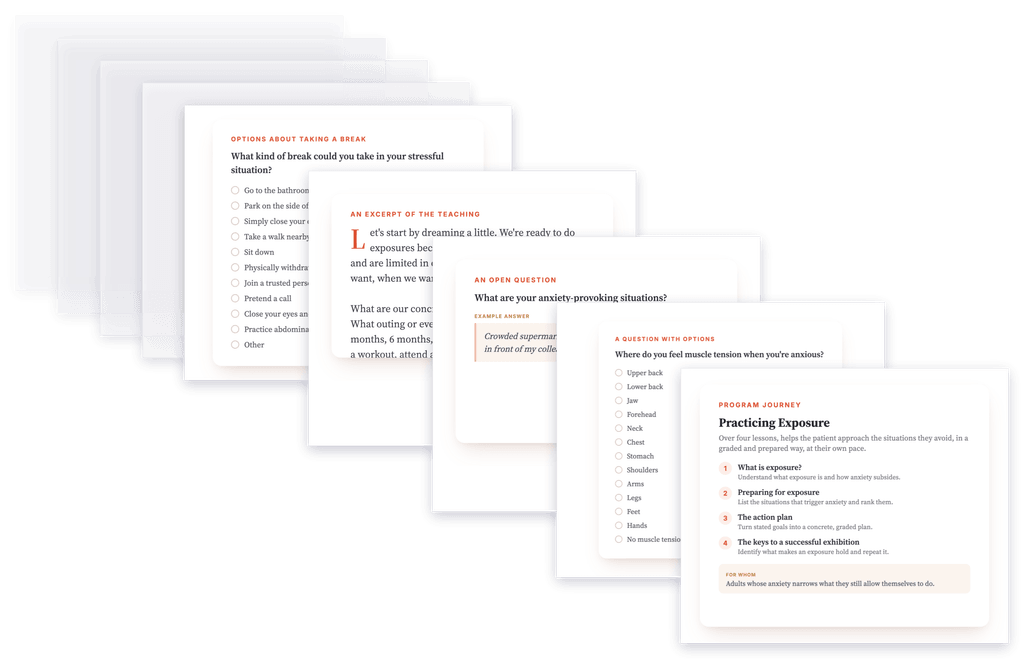
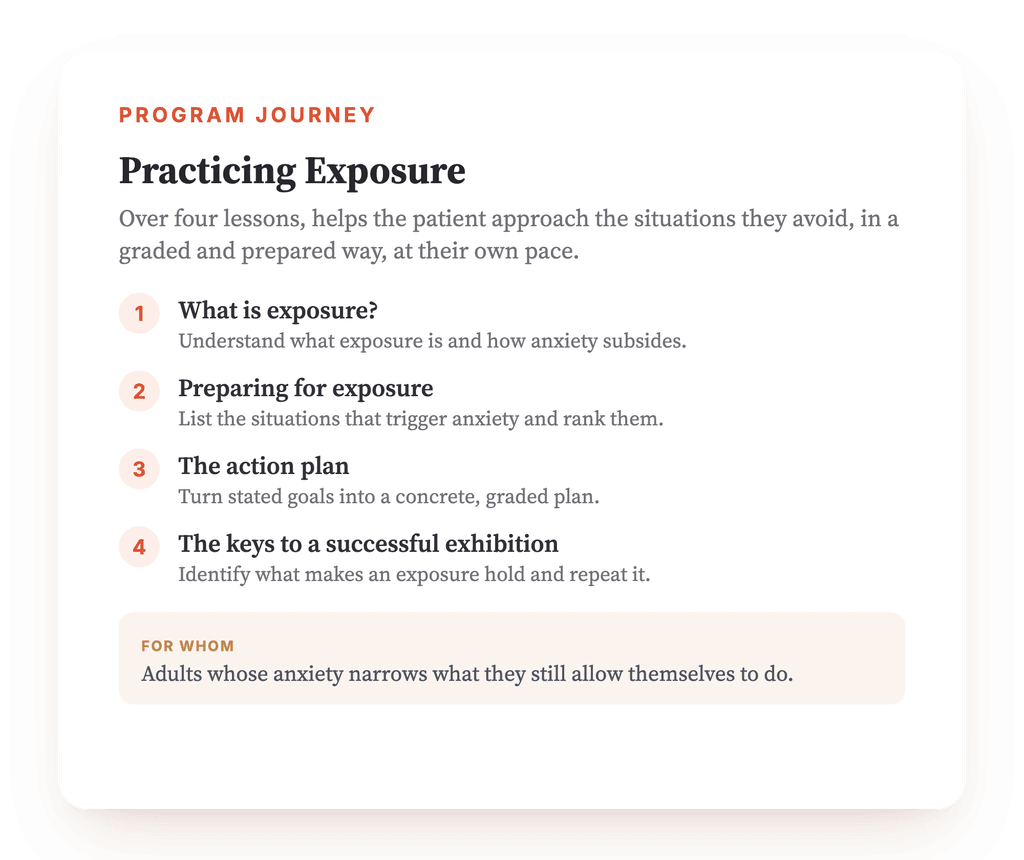
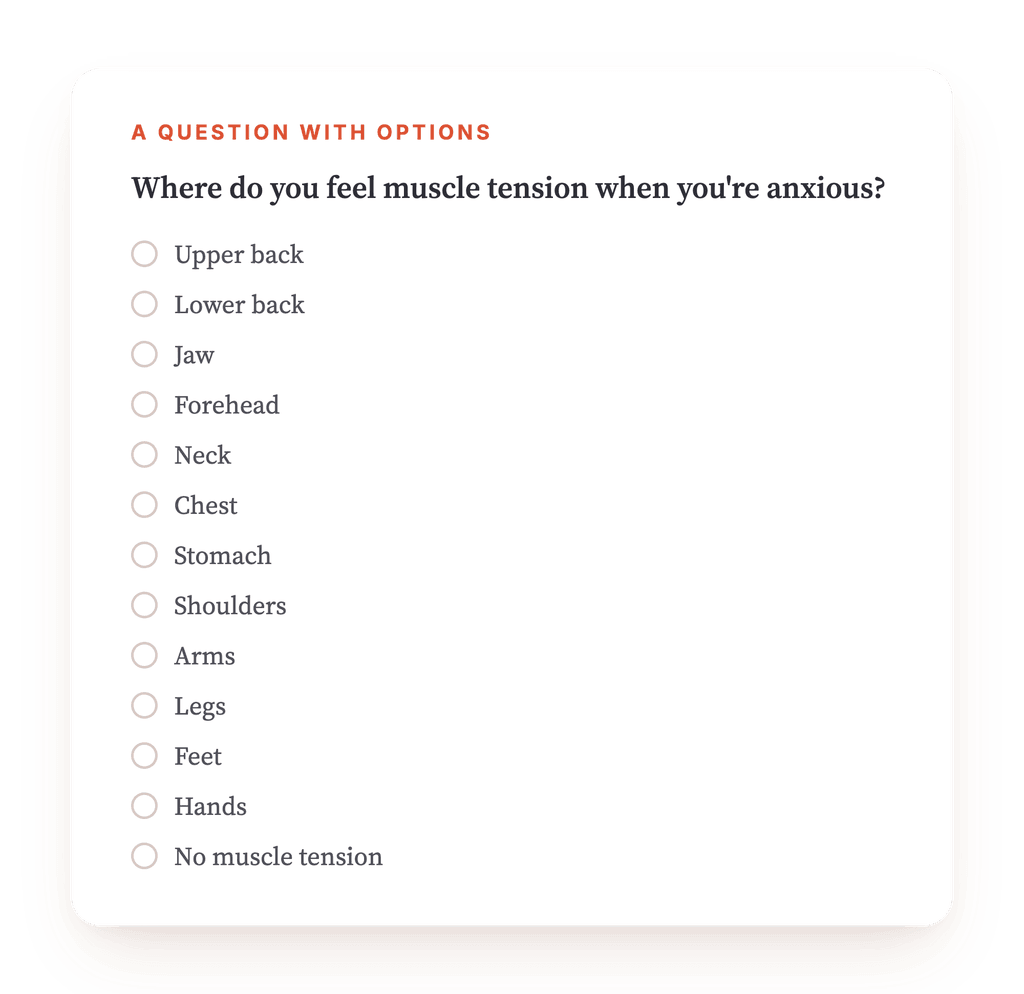
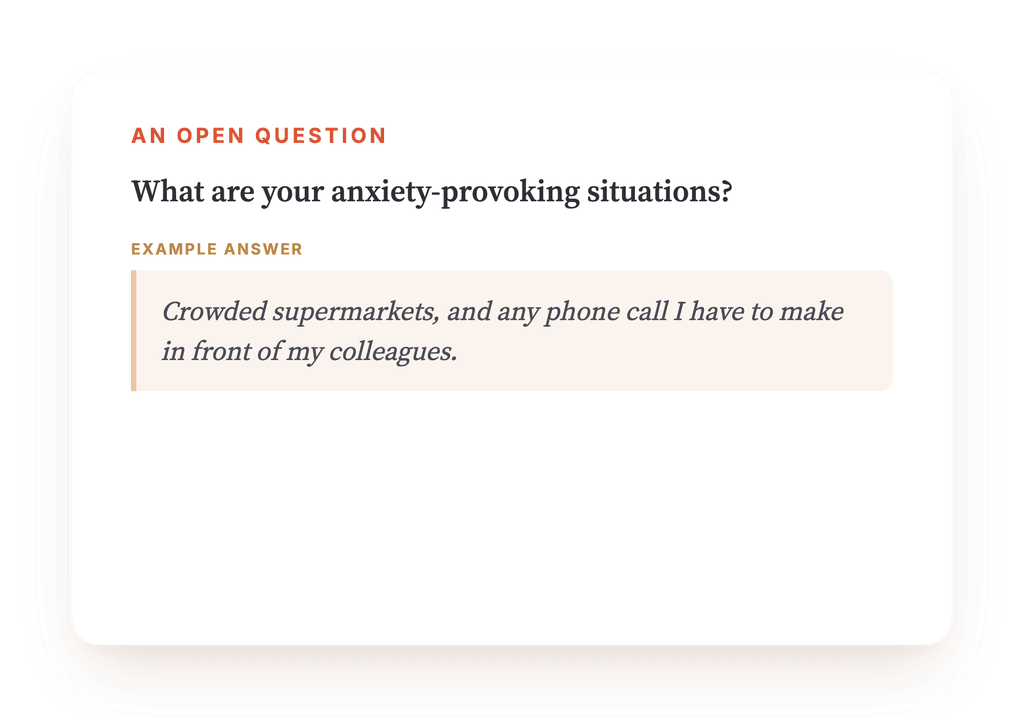
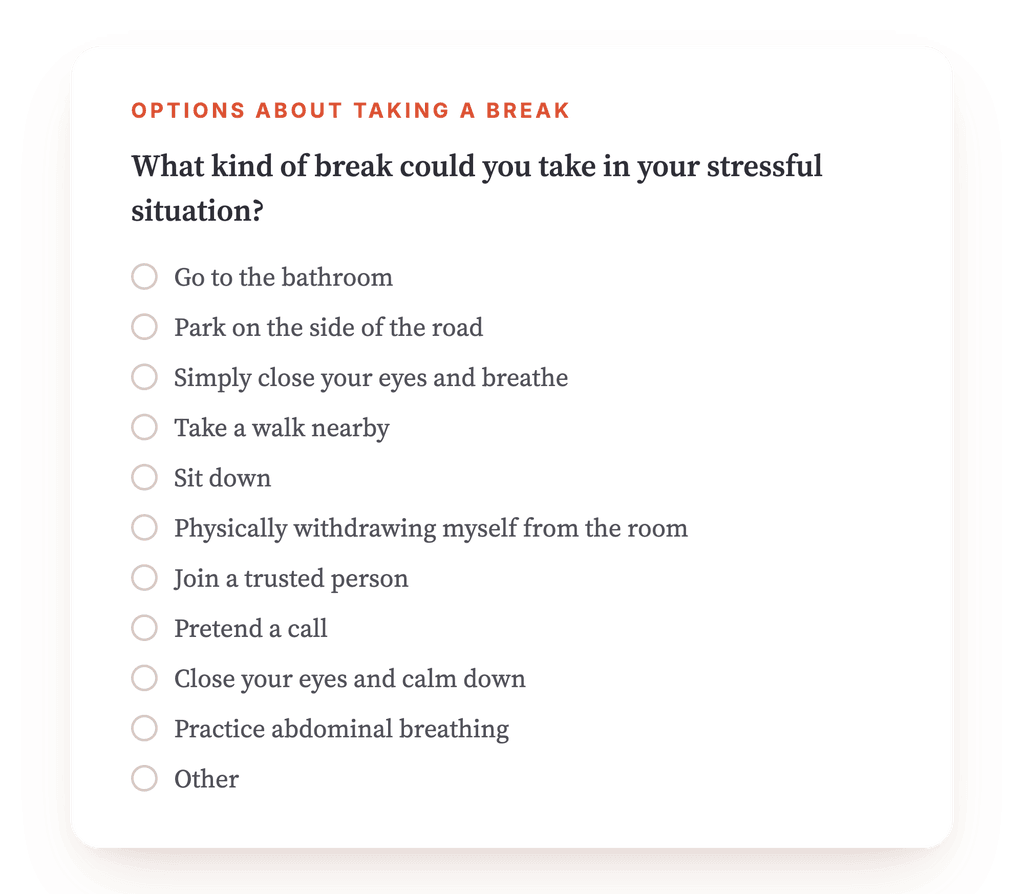
Practicing Exposure is a four-lesson autonomous psychoeducation program that walks patients through the full clinical arc of exposure work. The previews embedded here show a program overview map and a small selection of sample cards; these aperçus ne montrent qu'une fraction du programme, which is substantially richer, with many more steps, guided prompts, multiple-choice questions, and explanatory texts than any excerpt can convey.
Lesson 1 builds the necessary foundations: the patient learns the logic of conditioning, identifies where they hold muscular tension, and explores two relaxation methods (Jacobson progressive muscle relaxation and Schultz autogenic training) as prerequisite tools for what follows. A prompted reflection on daily relaxation routine turns knowledge into a concrete plan.
Lesson 2 moves into preparation. The patient maps their own anxiogenic situations in writing, names the emotions and sensations they provoke, and then systematically identifies avoidance and distraction behaviours. This mirrors the clinical mapping you would do together, but done autonomously, it generates material the patient genuinely owns. The Building a Personal Exposure List for Anxiety Disorders exercise pairs naturally here.
Lesson 3 builds the action plan: the patient writes goals at three, six, and twelve months, then constructs a personalised exposure hierarchy by identifying the variables that modulate difficulty (presence of a trusted person, distance, crowd size, time of day, and others) and anchoring the scale with their own 0/100 and 100/100 reference points. This operationalises the SUDS logic described in the Exposure Hierarchy: Fear Ladder PDF Worksheet, Tools and Exercises.
Lesson 4 covers the keys to successful practice: tolerating rather than resisting discomfort, planning pauses without letting them become avoidance, anticipating physical symptoms (palpitations, trembling, nausea, dizziness), and conducting a written debrief after each exposure. This lesson also prompts the patient to name the difficulties they anticipate, which feeds directly into your next consultation.
This program is available to patients through the mobile application that is the dedicated patient-side interface of SessionFuel: once you assign it in SessionFuel, your patient completes each lesson directly on their phone, at their own pace, between appointments.
Use it with your patients
Share this tool in the mobile app and follow the work between sessions.
Integrating it as between-session homework
This program is designed as autonomous work carried out between consultations, not as a substitute for therapy. You assign it when you have established the exposure rationale in session and the patient is ready to begin structured practice.
It suits patients with specific phobia, agoraphobia, or social anxiety, provided they have sufficient motivation and no acute crisis. Patients already familiar with the conditioning model, through a resource such as What Keeps Fears and Phobias Going or Specific Phobia, will engage with Lesson 1 more efficiently. For patients with social anxiety, pairing the program with What Keeps Social Anxiety Going or Social Anxiety Safety Behaviors adds useful clinical framing.
Introduce it as structured practice: "Between now and our next appointment, you will work through the first two lessons. They will ask you questions about your own situations; bring your answers back and we will use them." At the following appointment, the patient's written responses from Lessons 2 and 3 (their situation list, their hierarchy anchors, their anticipated difficulties) become direct clinical material: you refine the hierarchy together, adjust the pacing, and address the fears they named in Lesson 4.
Key insight: The programme's guided prompts do not replace clinical judgement; they produce personalised, written patient output that makes your next consultation immediately actionable rather than starting from scratch.
For patients who need additional conceptual grounding alongside the programme, the Comfort, Stretch & Panic Zones fiche helps calibrate productive discomfort, and Exposure Therapy Effectiveness reinforces the inhibitory learning rationale. Where panic symptoms are prominent, Clark's Cognitive Model of Panic or What Keeps Panic Going can be assigned alongside. For patients whose avoidance is driven by fear of body sensations, the Fear of Body Sensations fiche provides a complementary interoceptive exposure framework.
Your session continues in your patients' pocket
Use with a patientYour resources, available everywhere
The handouts, exercises, programs and audios above: you choose which ones to make available to your patients, in the mobile app dedicated to them.
And far more than a library
The app goes well beyond resources, to support your patients every day:
Related categories
Explore other clinical resources by category.

Anxiety
Clinical hub for anxiety disorders: CBT and ACT worksheets, psychoeducation sheets, and exercises for assessment and treatment across the anxiety spectrum.

Cognition
Printable cognitive therapy worksheets and clinical tools for therapists: CBT, ACT, schema work, defusion, distortions, and belief restructuring.

Understand
Clinical hub for the therapeutic aim 'Understand': worksheets and tools to build patient insight across CBT, ACT, schema therapy and more.

Exposure
Exposure therapy clinical resources for practitioners: worksheets, hierarchies, and psychoeducation tools for anxiety, PTSD, OCD, and avoidance-based presentations.

CBT
CBT worksheets, cognitive restructuring exercises & behavioral tools for clinicians. Evidence-based resources for every phase of cognitive behavioral therapy.

Trauma
Clinical hub on trauma and PTSD: assessment, differential diagnosis, treatment phases, and printable resources for practitioners. 155 chars.