
Exposure Therapy: Clinical Resources for Evidence-Based Practice
Exposure therapy, the cornerstone of cognitive-behavioral treatment for fear-based disorders, encompasses a broad family of techniques ranging from systematic desensitization and in vivo confrontation to imaginal exposure and interoceptive induction. This page is designed for clinicians who routinely integrate exposure-based interventions into their practice and are looking for structured, printable tools to support that work. The resources gathered here span psychoeducation sheets, graded hierarchy worksheets, behavioral experiments, and skill-building exercises applicable across anxiety disorders, PTSD, OCD, and related presentations. Each tool is designed to extend therapeutic work beyond the session and to give patients a structured framework for practicing exposure independently.

Why confrontation with feared stimuli produces lasting change
Exposure therapy operates on well-established learning principles: repeated, deliberate contact with a feared stimulus, without the catastrophic outcome the patient anticipates, disrupts the conditioned fear association. Two models currently guide clinical thinking. The habituation model posits that within-session fear reduction is the mechanism of change, anxiety attenuating as the physiological arousal response runs its course. The inhibitory learning model, now widely preferred in the literature, reframes the goal: rather than erasing the original fear memory, the patient acquires a new, competing inhibitory memory (CS/no-US) that suppresses the fear response when successfully retrieved. This distinction has direct implications for how you design and pace exposures in session.
The practical consequence is that in-session distress is not a contraindication; it may even be a necessary ingredient. What matters most is that the patient violates their threat expectancy: they predict catastrophe, the catastrophe fails to materialise, and that mismatch drives new learning. Keeping this mechanism explicit in your psychoeducation helps patients tolerate transient spikes in anxiety without interpreting them as treatment failure.
From extinction learning to generalisation
A known vulnerability of exposure-based gains is context-dependence. Learning acquired in the therapy room may not transfer automatically to the environments where fear was originally conditioned. Strategies that promote generalisation include varying the contexts in which exposure is practiced, conducting sessions in naturalistic settings where feasible, and explicitly retrieving the inhibitory memory across multiple cues and emotional states. Spacing exposures over time, rather than massing them in a single block, also consolidates retrieval. These principles directly inform how you sequence the worksheets and home-practice assignments found in this category.
Identifying Candidates for Exposure in Consultation
Clinical indicators and avoidance patterns
The clearest indicator for exposure work is avoidance as the primary maintenance mechanism, whether behavioural (situational escape, compulsive rituals, safety behaviours) or cognitive (suppression, rumination used to neutralise threat, selective attention). Presentations that fit this profile most readily include specific phobias, panic disorder with or without agoraphobia, social anxiety disorder, generalised anxiety with chronic worry, OCD with compulsions, and PTSD maintained by experiential avoidance of trauma-related cues. Screening for the function of the patient's avoidance, rather than simply cataloguing avoided stimuli, clarifies the exposure rationale from the first assessment appointment.
Clinically, pay attention to safety behaviours: the partial avoidances that allow the patient to enter feared situations while still preventing full disconfirmation of the threat belief. These include reassurance-seeking, subtle compulsions, distraction, carrying medication without taking it, or strategically positioning oneself near exits. Safety behaviours are common and often invisible to the patient; their identification is a prerequisite for designing exposures that will actually challenge the core threat expectancy rather than rehearse a modified form of avoidance.
Motivational and functional assessment
Before beginning a hierarchy, assess the patient's current functional impairment and their readiness to tolerate short-term distress for longer-term gain. Motivational ambivalence is the rule rather than the exception, especially in patients with longstanding avoidance or comorbid depression. A brief functional analysis, mapping avoided stimuli, avoidance responses, and their reinforcing consequences, provides both a clinical roadmap and a psychoeducational tool you can use with the patient to build a shared treatment rationale.
Comorbidities and Differential Diagnostic Considerations
When avoidance is not anxiety-driven
Not all avoidance is fear-based, and this distinction is clinically consequential. In major depressive disorder, withdrawal from activities is primarily anhedonic and motivationally depleted rather than escape-driven; behavioural activation is the appropriate first-line technique, though exposure elements may be layered in once engagement improves. In autism spectrum presentations, sensory sensitivities warrant careful functional analysis before defaulting to an exposure model: the goal may be tolerance-building, but the pacing and rationale differ substantially from classical fear-extinction paradigms.
Borderline personality organisation with severe dissociation, acute psychosis, and active substance dependence with unstable physiological states each require clinical caution. Exposure conducted before adequate affect regulation capacity is in place may re-traumatise rather than facilitate new learning. In those cases, stabilisation work takes precedence, and exposure is deferred or sequenced carefully within a phased treatment framework.
Comorbid PTSD and anxiety: sequencing considerations
When PTSD co-occurs with a primary anxiety disorder, decide whether to address them in parallel or sequentially based on severity and functional priority. Prolonged exposure protocols integrate imaginal and in vivo components systematically; exposure and response prevention for co-occurring OCD may proceed alongside PTSD work if the patient is stabilised and motivated. Document your sequencing rationale explicitly: it will guide supervision, inform case transfers, and support treatment continuity when the patient sees multiple clinicians.
Using the Resources in This Category in Session
Building and calibrating the exposure hierarchy
A well-constructed fear hierarchy (or SUDS ladder) is the structural backbone of any graduated exposure programme. The hierarchy gives the patient a transparent map of the work ahead, normalises the graded approach, and provides a shared language for monitoring progress across sessions. In early sessions, use a hierarchy worksheet collaboratively: the patient generates the items, you help calibrate the subjective distress ratings and identify embedded safety behaviours that may be artificially suppressing scores.
For patients working on interpersonal fear and social avoidance, the Assertiveness Ladder: PDF Worksheet, Tools and Exercises for Clinical Practice offers a graded framework that bridges assertiveness skill-building with exposure principles. Because social anxiety routinely involves both skill deficits and conditioned fear of negative evaluation, combining a behavioural rehearsal structure with explicit exposure rationale addresses both mechanisms simultaneously. The ladder format mirrors the graduated hierarchy model, making it straightforward to integrate into an existing CBT or ACT protocol.
Between-session practice and self-monitoring
Exposure gains are consolidated primarily through independent practice between sessions. Structured worksheets serve several functions here: they prompt the patient to record their pre-exposure expectancy, their peak and end-of-task distress ratings, and their post-exposure appraisal of what actually happened. This expectancy-violation record is both a therapeutic intervention and a session-by-session monitoring tool. Reviewing completed sheets at the start of each appointment re-activates the inhibitory memory, reinforces the disconfirmatory learning, and allows you to adjust hierarchy progression in an evidence-informed way.
Integrating Exposure Work into the Broader Care Plan
Sequencing within a CBT or transdiagnostic protocol
In most structured protocols, psychoeducation precedes the first exposure trial by at least one session. Patients who understand the mechanism, specifically why short-term distress is a feature rather than a flaw of the treatment, show better adherence and fewer premature terminations. A dedicated psychoeducation sheet on the anxiety cycle and the role of avoidance is a cost-effective way to transmit this rationale and give the patient something to re-read between sessions.
The standard sequencing in an individual CBT block runs as follows:
- Functional assessment and case conceptualisation.
- Psychoeducation on the fear-avoidance cycle and the rationale for exposure.
- Construction of the exposure hierarchy with the patient.
- Therapist-guided exposure trials, beginning at a moderate SUDS level (not necessarily the lowest rung).
- Assignment of independent between-session practice with a structured self-monitoring sheet.
- Review, troubleshooting, and hierarchy progression each session.
- Relapse prevention planning: identifying anticipated future triggers and preparing a self-directed exposure plan.
Pharmacotherapy interface
When patients are concurrently prescribed an SSRI or SNRI, exposure work typically proceeds without modification; indeed, the anxiolytic effect may lower the threshold for engaging with the hierarchy. Benzodiazepines present a more complex picture: when taken immediately before an exposure trial, they can suppress the autonomic arousal that may be necessary for encoding new inhibitory learning. Where possible, coordinate with the prescribing clinician to schedule exposure sessions outside the pharmacological peak window, and document this rationale in the shared care record.
Points of Vigilance and Clinical Limits
Non-response and return of fear
A meaningful proportion of patients will not achieve clinically significant symptom reduction from exposure alone, or will experience a return of fear following an initial response. Context shifts (new environments, stressors, physiological state changes) are the most common triggers. Proactively designing exposures in varied contexts, explicitly retrieving the inhibitory memory in the original acquisition context, and including relapse-prevention sessions reduce but do not eliminate this risk. When a patient presents with a return of fear after successful treatment, this is not a regression to baseline; a briefer second course of exposure often restores gains more rapidly than the initial treatment.
Contraindications and ethical limits of the printed resource
Printable worksheets and psychoeducation sheets support, but do not replace, the therapeutic relationship and clinical judgement. A hierarchy worksheet handed to a patient without adequate preparation, alliance, and rationale can increase avoidance if the patient interprets the task as overwhelming. Use resources collaboratively, calibrate the pace to the patient's window of tolerance, and document informed consent for exposure procedures in jurisdictions where this is required. Clinicians who feel uncertain about initiating exposure protocols for the first time are advised to seek supervision rather than relying solely on the printed materials available here.
Tools in this category
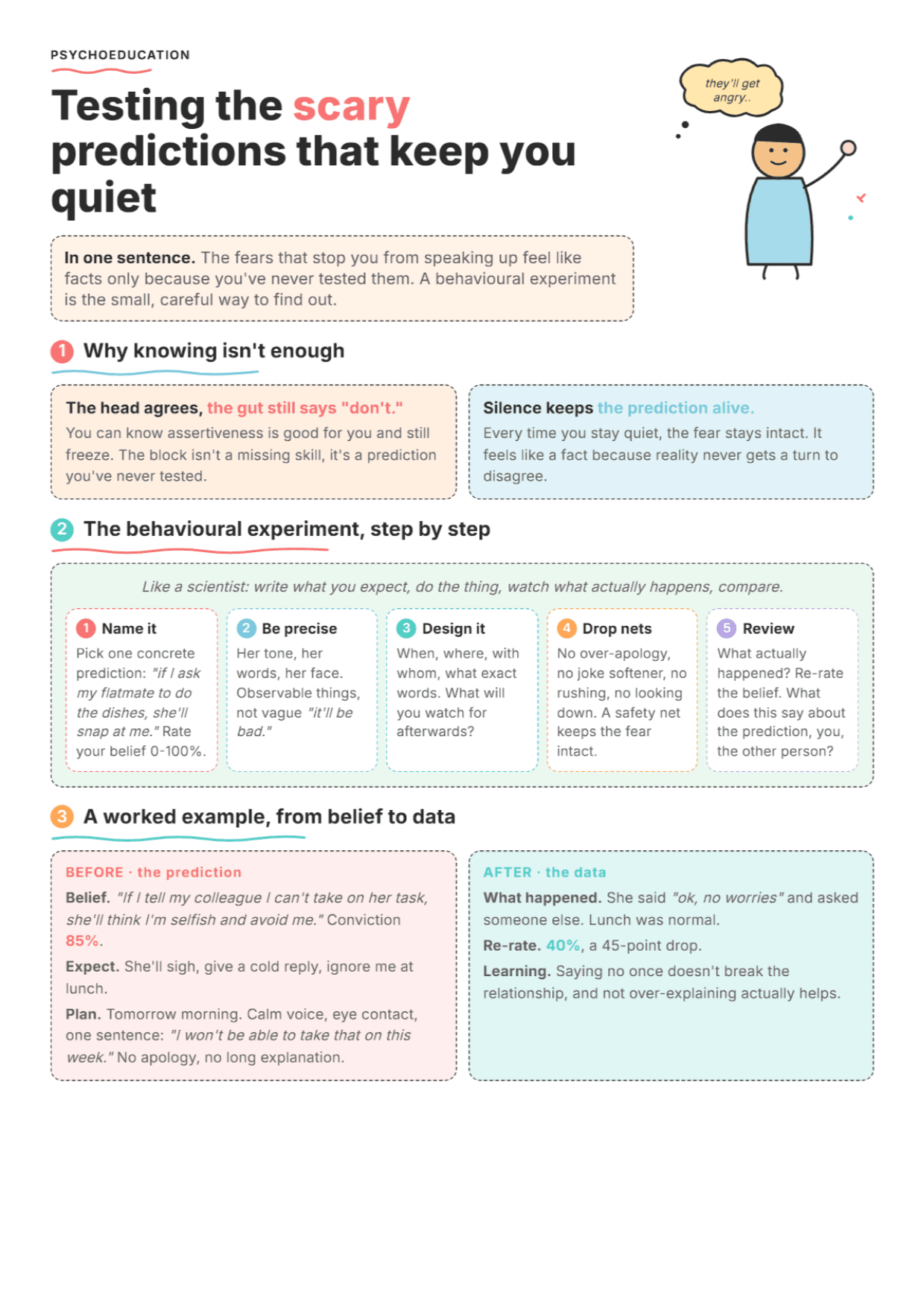
Handout
Assertiveness Behavioral Experiment: PDF Worksheet, Tools and Exercises
A visual PDF worksheet clinicians can use in session to help patients design, run, and debrief assertiveness experiments, building real behavioral evidence against fear-driven predictions.
Self & identityAnxiety
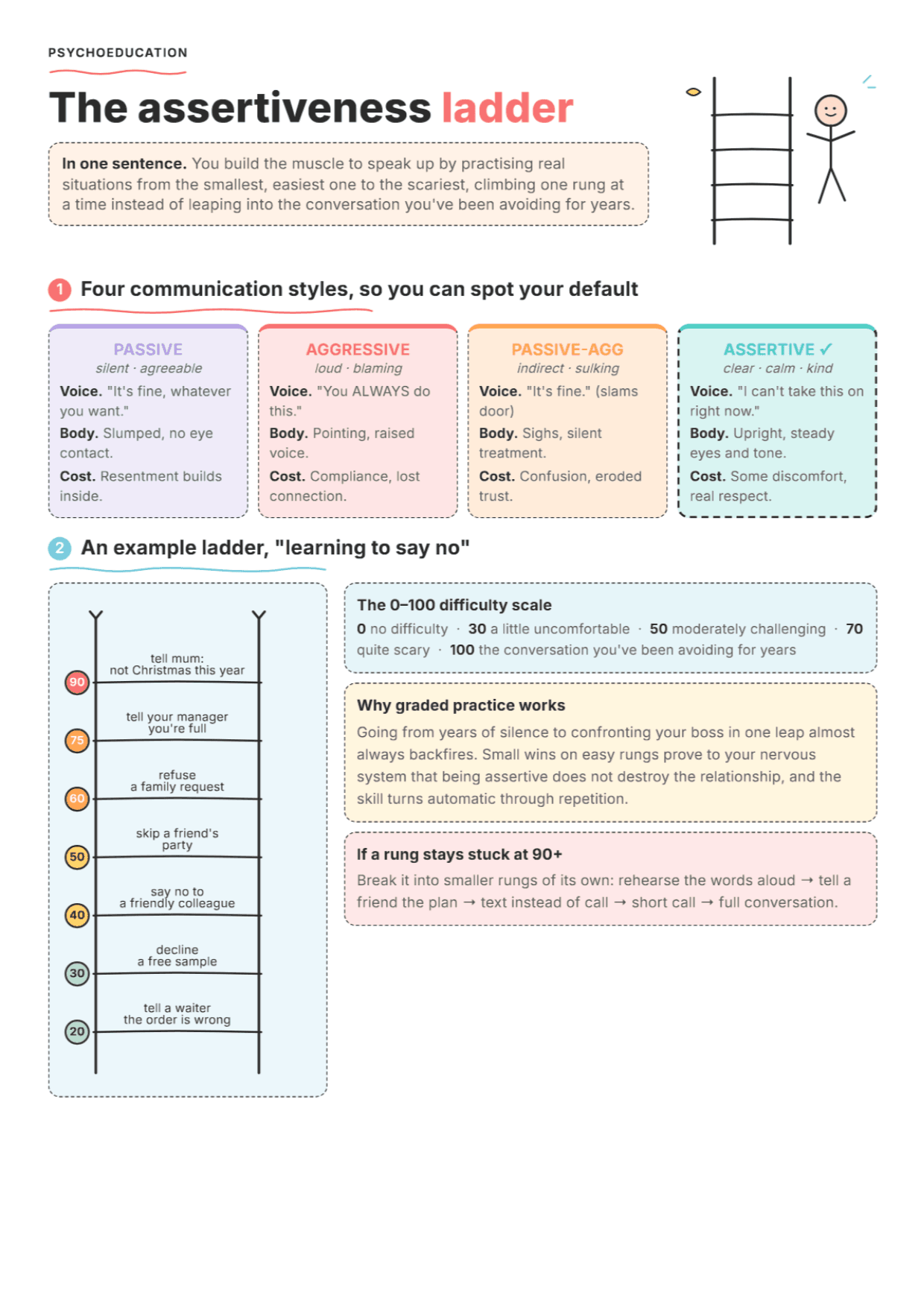
Handout
Assertiveness Ladder: PDF Worksheet, Tools and Exercises
A visual PDF worksheet clinicians can use in session to explain graduated assertiveness practice, build a personalized hierarchy, and give patients a concrete reference between appointments.
Self & identityAnxiety
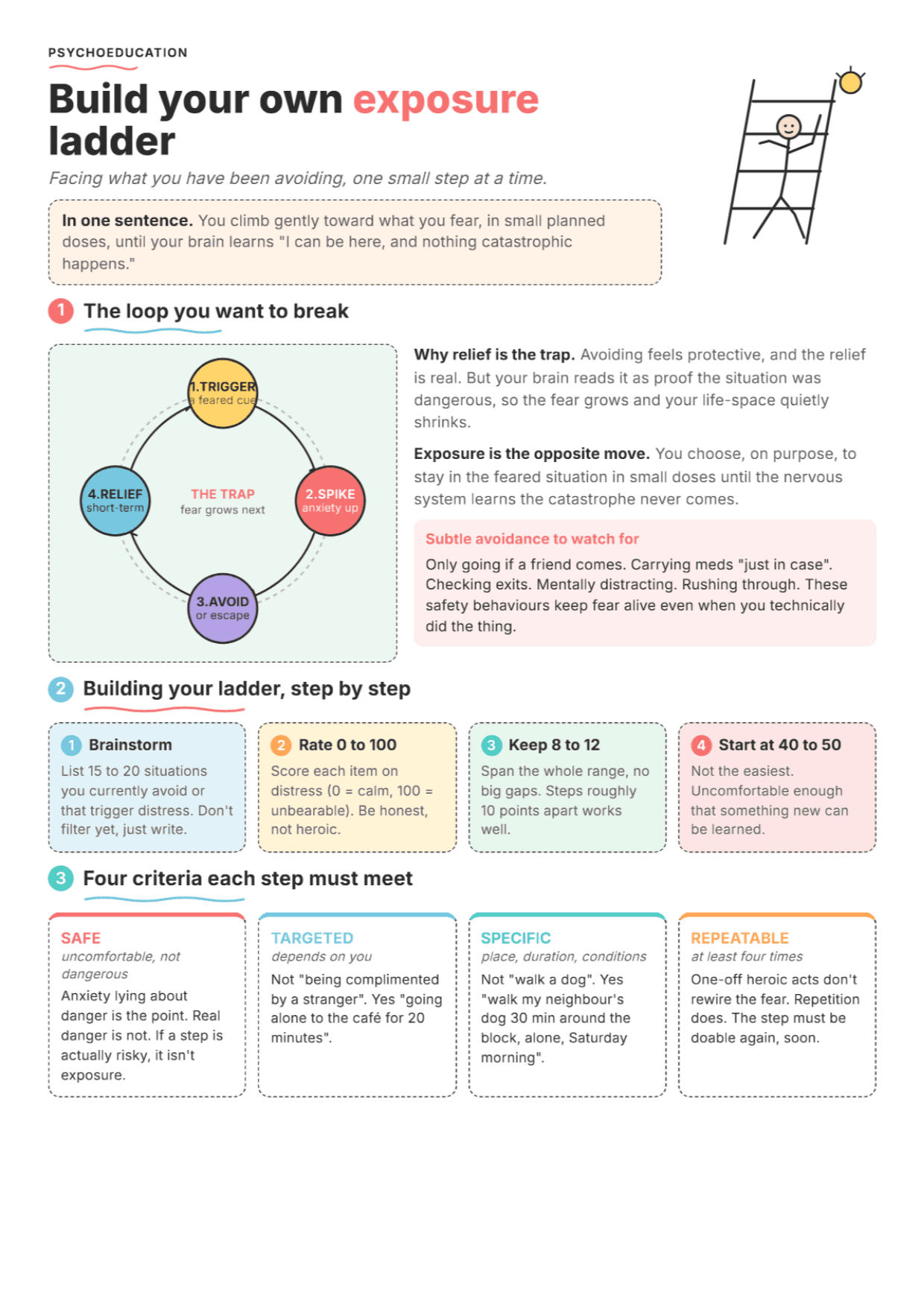
Handout
Building an Exposure Hierarchy: PDF Worksheet, Tools and Exercises
A printable PDF worksheet with concrete tools and exercises to help clinicians explain graded exposure clearly in session, build a personalized fear ladder, and guide patients step by step.
AnxietyTrauma & PTSD
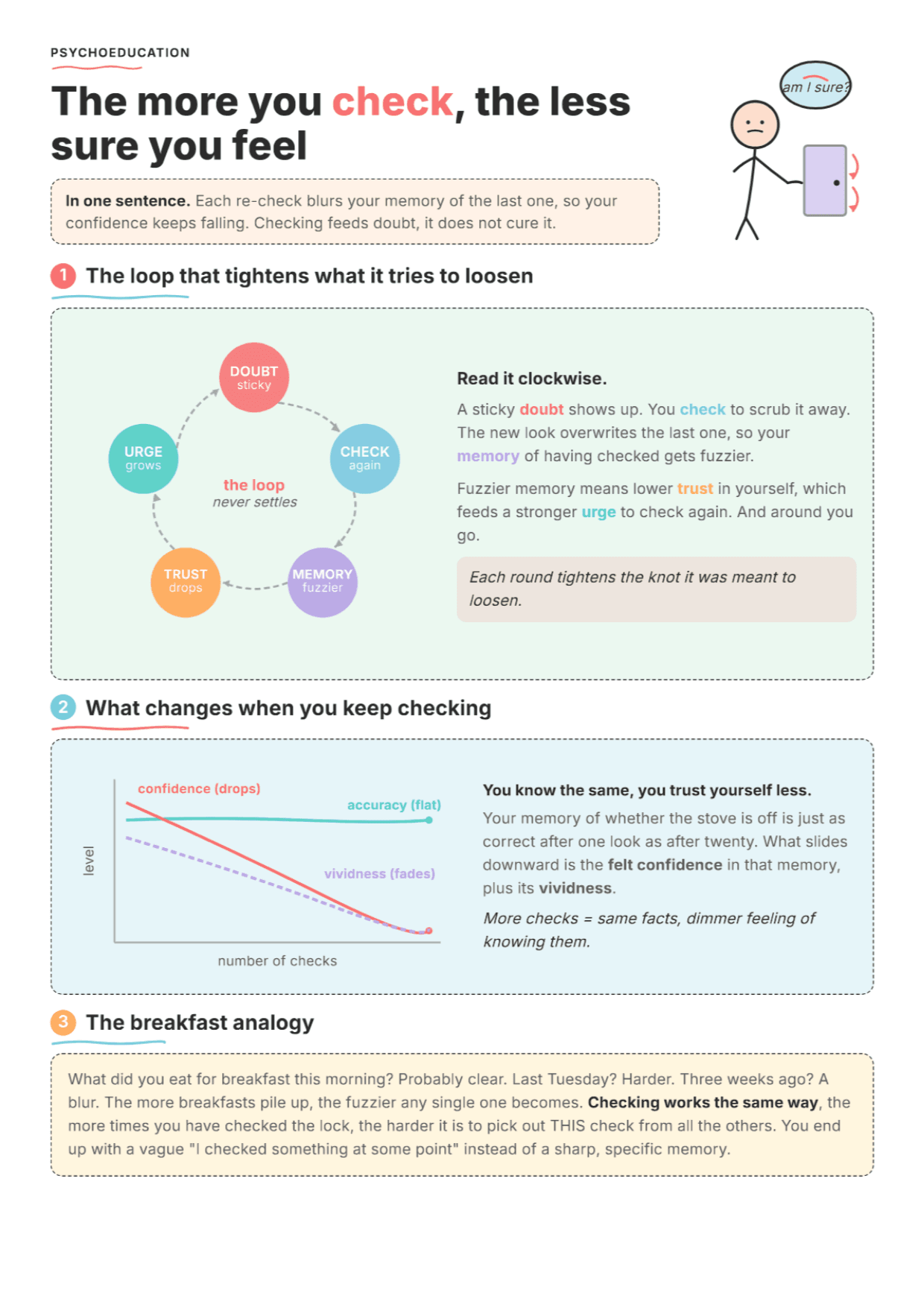
Handout
Checking, Certainty, and Doubt: PDF Worksheet, Tools and Exercises
A visual PDF worksheet for clinicians to explain the checking-doubt loop in session, with a structured 2-day behavioural experiment and ready-to-use psychoeducation tools.
Anxiety
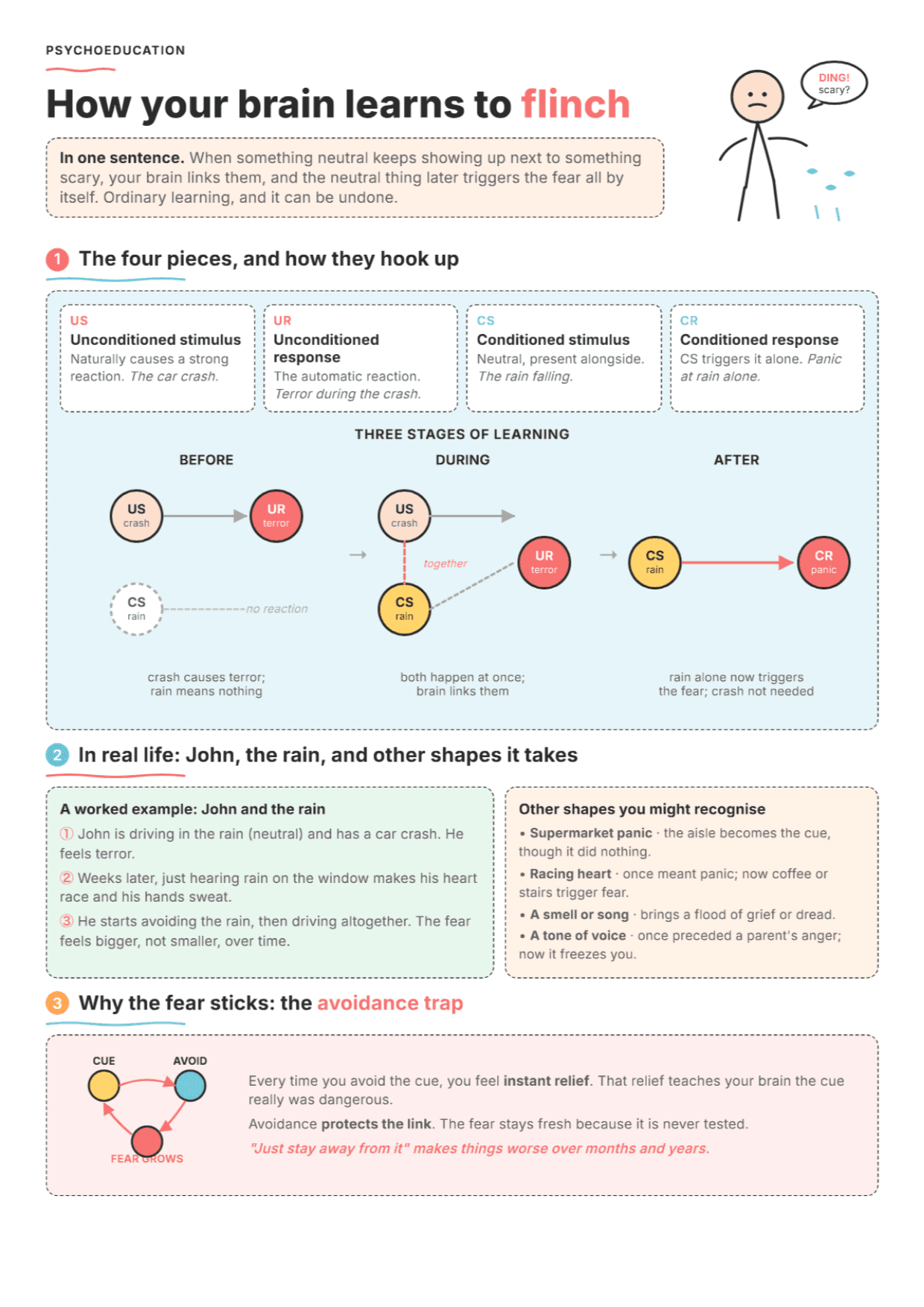
Handout
Classical Conditioning: PDF Worksheet, Tools and Exercises
A printable PDF fiche, clinical tools, and exercises to explain the conditioning mechanism clearly in session and support exposure-based work.
AnxietyTrauma & PTSD
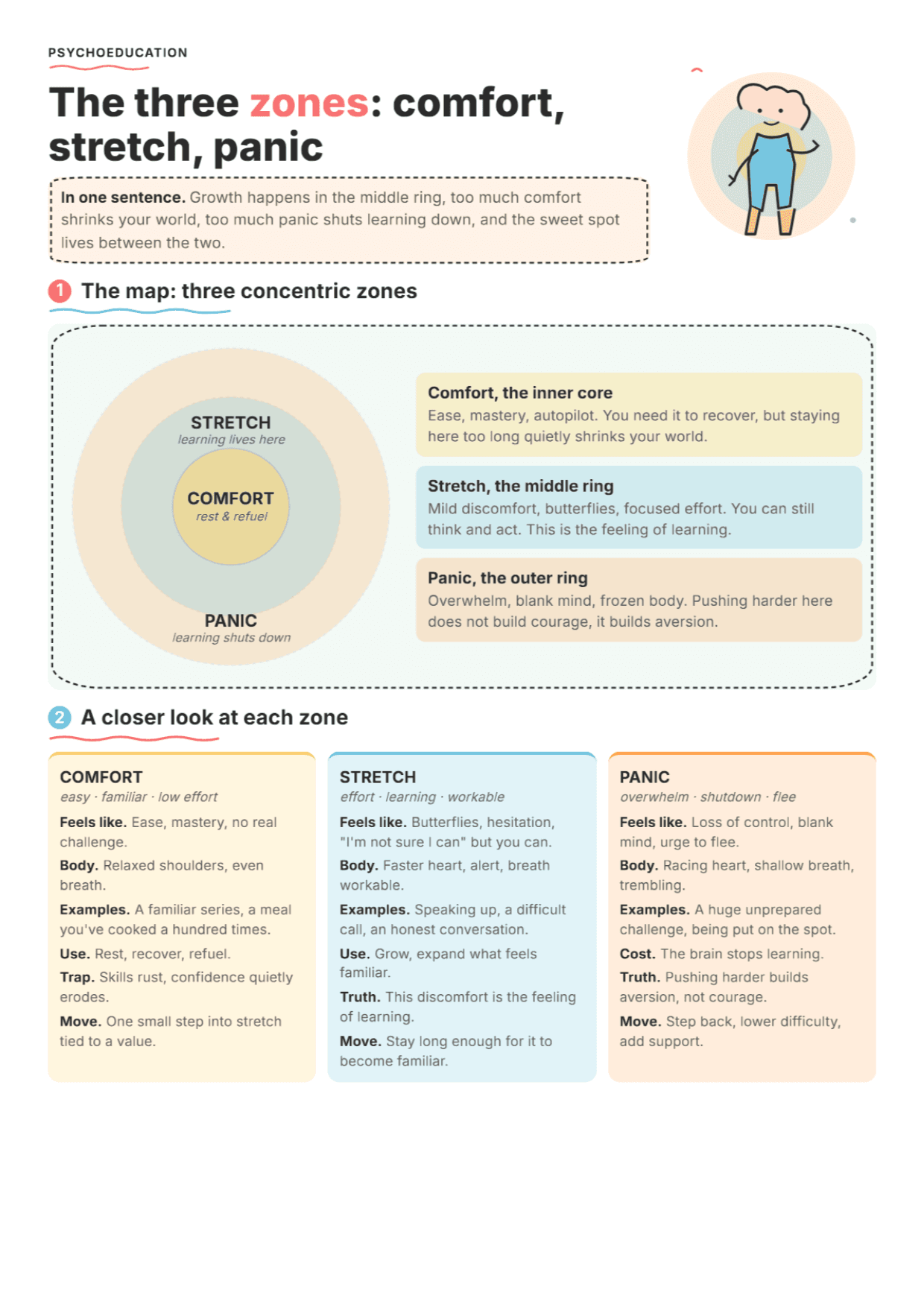
Handout
Comfort, Stretch & Panic Zones: PDF Worksheet, Tools and Exercises
A visual psychoeducation tool helping clinicians explain the three zones of learning, distinguish productive discomfort from overwhelm, and calibrate exposure work in session.
AnxietySelf & identity
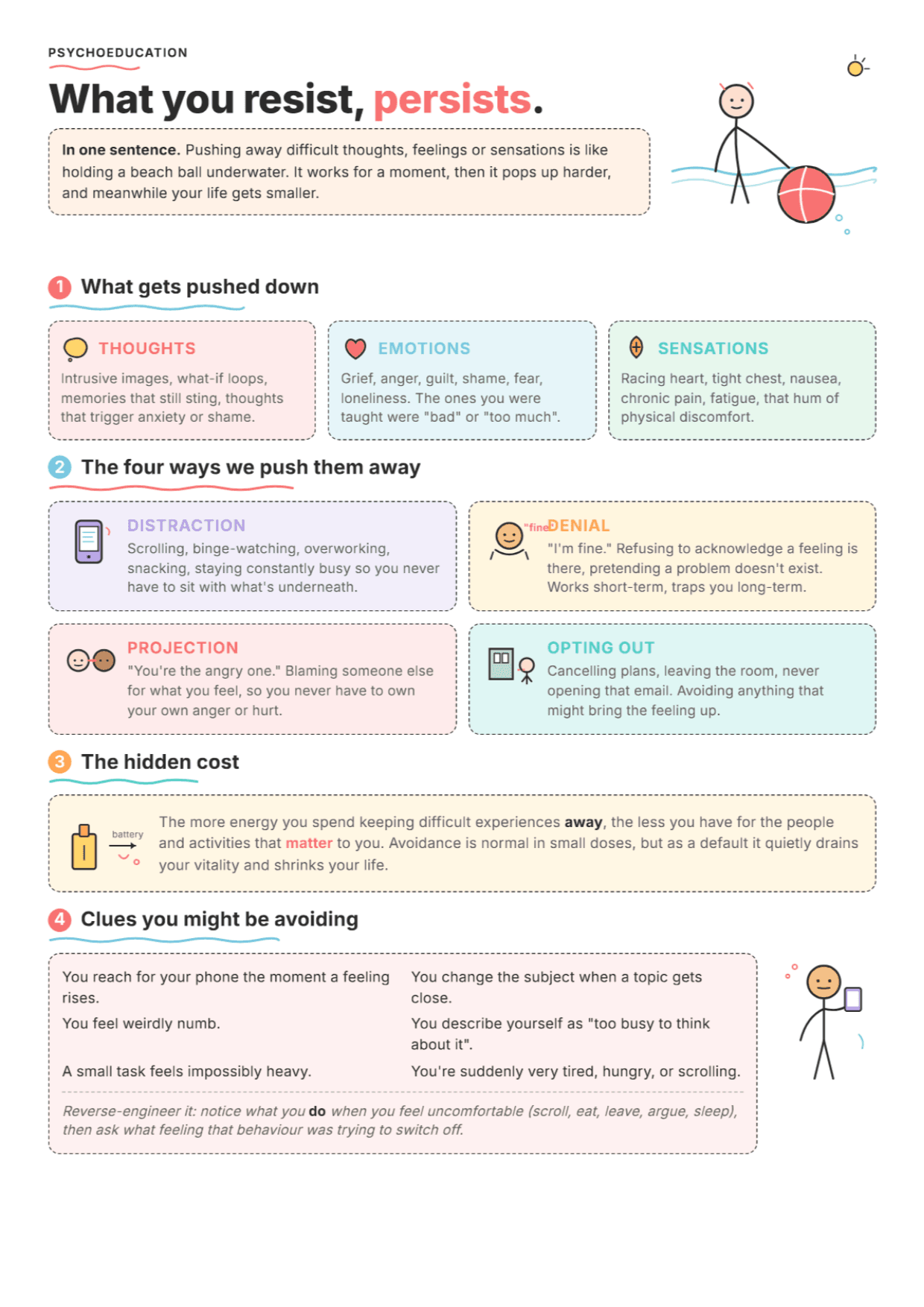
Handout
Confronting Avoidance: PDF Worksheet, Tools and Exercises for ACT Practice
A visual psychoeducation tool to explain experiential avoidance in session, map its hidden costs, and introduce acceptance-based steps with ACT-grounded patients.
AnxietyMood & depression
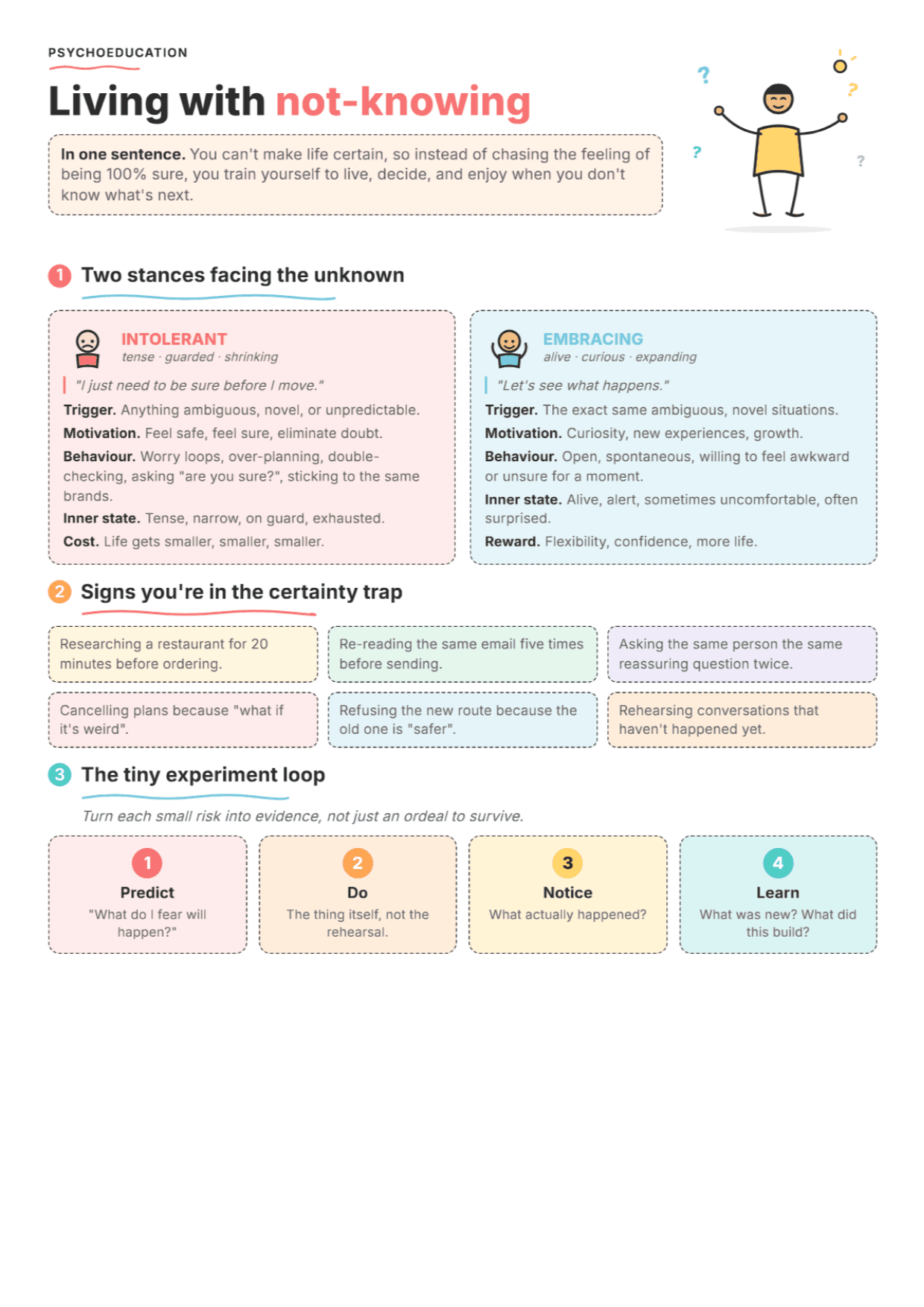
Handout
Embracing Uncertainty: PDF Worksheet, Tools and Exercises
A visual psychoeducation fiche PDF to explain intolerance of uncertainty in session, name the certainty trap, and introduce graded behavioral experiments.
AnxietyThoughts & cognition
Handout
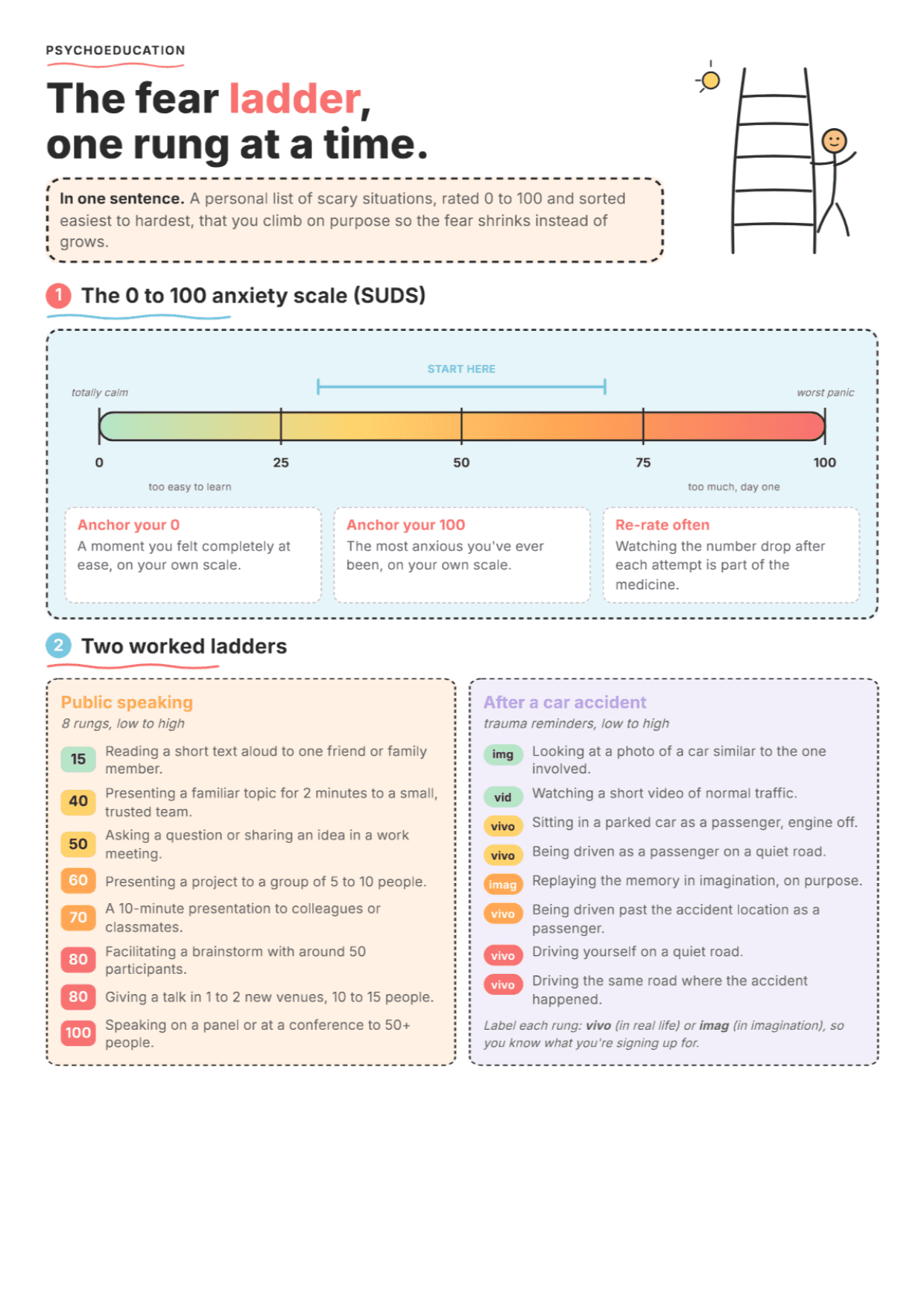
Exposure Hierarchy: Fear Ladder PDF Worksheet, Tools and Exercises
A printable PDF worksheet with worked fear ladders, SUDS calibration, and step-by-step climbing guidance to make graded exposure concrete in session.
AnxietyTrauma & PTSD