
Clinical picture. A and B, a couple in their late thirties, presented with recurrent gridlock around financial decisions; both described feeling unheard and dismissed during disagreements. The clinician introduced the Compromise psychoeducation program and assigned Lesson 1 between sessions, asking each partner to complete the guided prompt on their couple's five-year goals independently before the next appointment. At the following session, both partners brought written responses that differed less than each had expected, opening a focused discussion on the gap between perceived and actual priorities. The clinician used this to introduce the program's framing of long-term thinking as a deliberate counterweight to in-the-moment emotional reactivity. Progress remained modest, though the exercise provided a concrete shared reference point the couple could return to.
Compromise in Relationships: A Psychoeducation Program
A structured 5-lesson program helping patients develop genuine compromise skills and recognize the limits that should never be crossed in romantic relationships.
Clinical vignettes
Perspective-Taking in a Stalled Couple
Distinguishing Sacrifice from Compromise
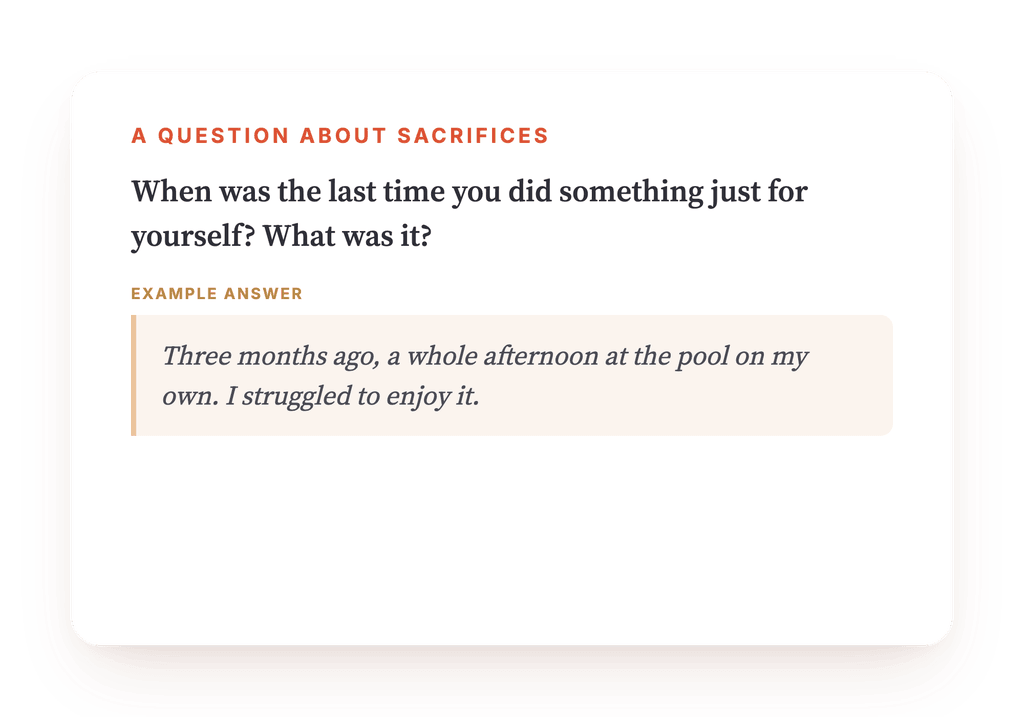
Clinical picture. C, a woman in her mid-forties, sought individual therapy reporting chronic dissatisfaction in her marriage and difficulty identifying why agreements with her husband consistently left her depleted. The clinician introduced Lesson 2 of the Compromise program, centering on the distinction between genuine compromise and unilateral sacrifice, and asked C to complete the emotional check-in question after recalling her most recent concession at home. C returned having selected terms such as "resigned" and "impuissant" from the lesson's prompt list, which gave the session a precise vocabulary for examining her pattern of acquiescence. This concrete reflection helped differentiate situations where flexibility was adaptive from those where her individual needs were being systematically set aside. No rapid resolution was expected; the exercise primarily sharpened the clinical formulation.
Use this resource with your patients
Handout, exercises and materials ready to use, right inside SessionFuel.
Why compromise is harder to teach than it looks
Most couples who struggle with compromise are not simply stubborn. They lack the concrete skills, perspective-taking, empathy, flexibility, need communication, that make mutual agreements actually feel mutual. When one partner consistently sacrifices while the other holds firm, or when recurring domains like money, sex, and time generate the same conflict week after week, a verbal explanation in the consultation room rarely moves the needle. The concept lands, but the practice does not follow.
The other difficulty is clinical: compromise has a hard boundary. Disrespect, social isolation imposed by a partner, and systematic denigration are not areas for negotiation, yet patients often arrive confused about where flexibility ends and self-abandonment begins. Helping them internalize that distinction requires more than a sentence; it requires structured reflection over time.
This program answers both needs.
This program is available to patients through the mobile patient app of SessionFuel, the dedicated patient-side interface for clinicians who use SessionFuel. You assign the program directly to your patient, who then completes each lesson independently on their phone, between appointments.

750+ clinical tools
A library built with and for clinicians, ready to use in session and extend between appointments.
Access all the toolsWhat the program contains
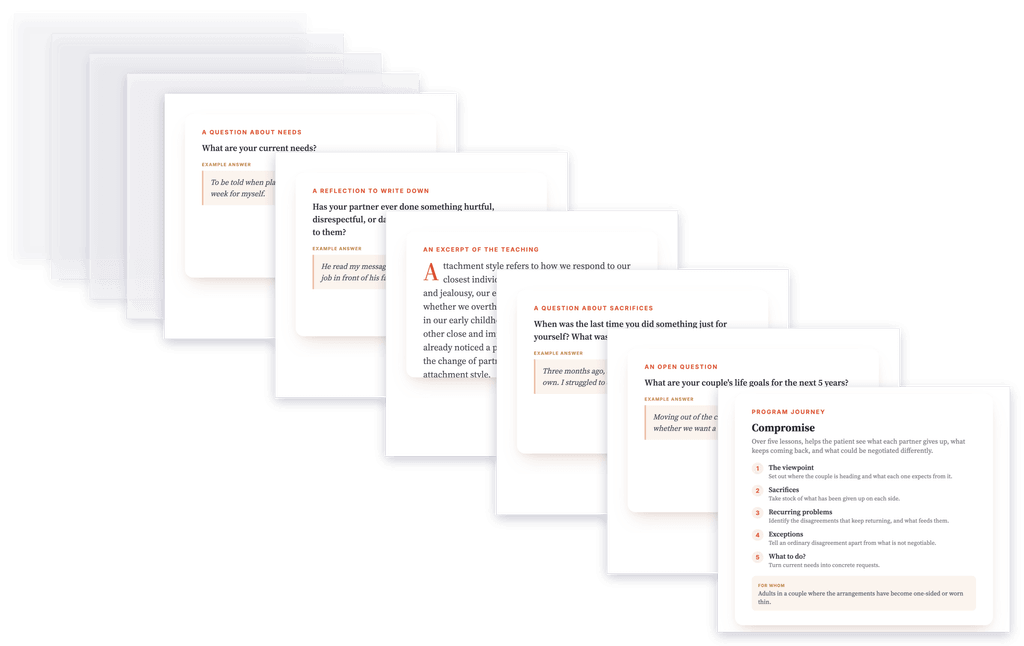
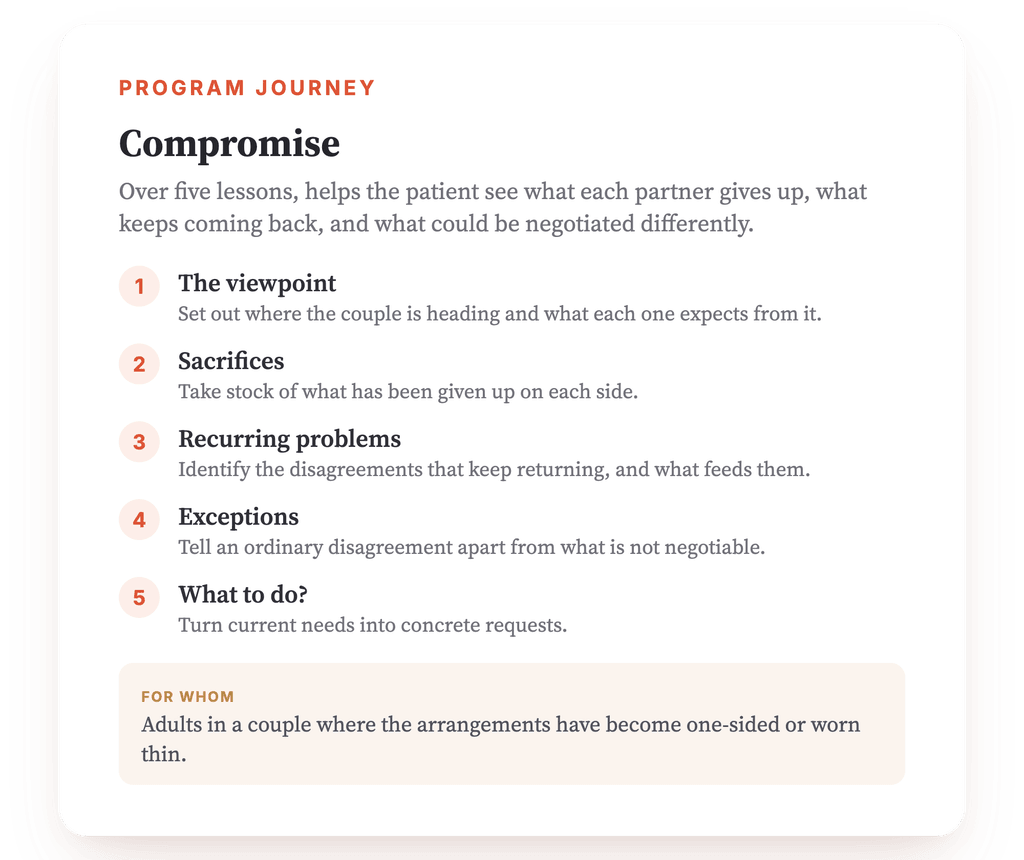
Compromise is a five-lesson autonomous program. The previews embedded here, the overview map and a few sample cards, show only a small aperçu of the program; the complete curriculum contains far more lessons, steps, reflective prompts, and multiple-choice exercises than what is visible in these excerpts.
The arc moves deliberately from skill-building to limit-setting:
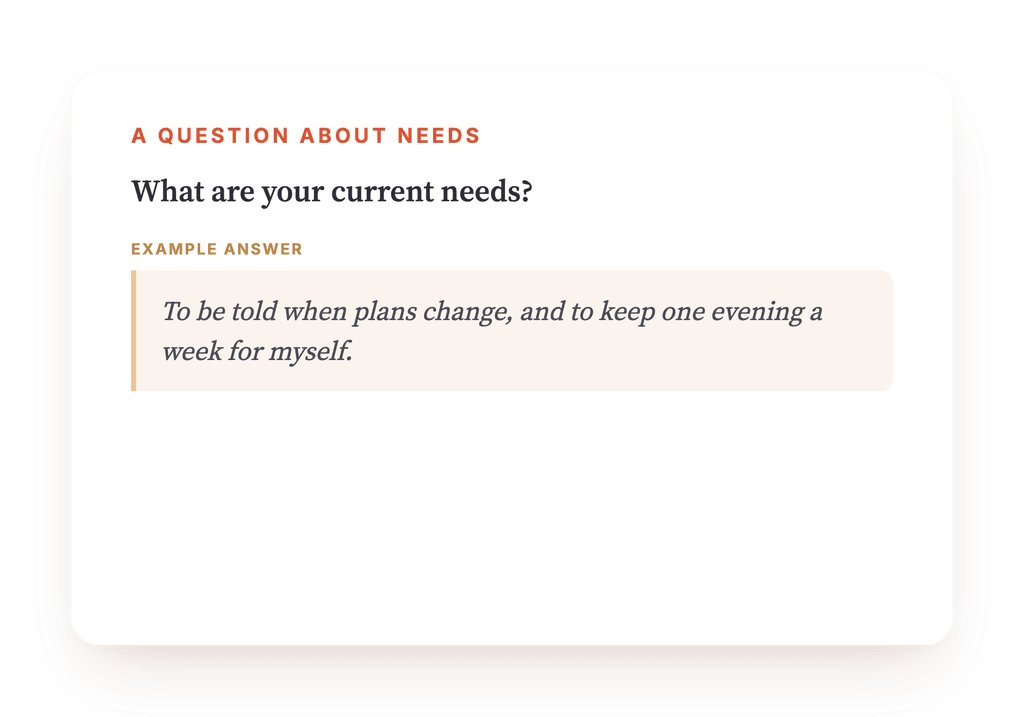
- Lesson 1 (Perspective) builds the foundational trio: long-term thinking during disagreement, empathy as a trainable skill, and the flexibility required to make space for a partner's different approach. Patients reflect on couple goals, on what matters most to their partner, and on which positions they can genuinely release.
- Lesson 2 (Sacrifices) uses emotional feedback, including a nuanced multiple-choice emotion inventory after a recent compromise, to examine whether sacrifice is reciprocal. It integrates the psychological necessity of individual needs alongside relational generosity, connecting naturally to work on self-sacrifice patterns.
- Lesson 3 (Recurring problems) introduces attachment styles and the five love languages as frameworks for understanding why the same arguments keep returning, then addresses the three domains couples most frequently struggle with: sexual life, time, and money. The Sexual Life in Couples program is a useful complement here.
- Lesson 4 (Exceptions) covers the non-negotiables: disrespect, isolation, and denigration. Patients are guided through reflection on past hurtful experiences and asked to examine partner behavior through the lens of the relationship green flags framework. This lesson offers a grounded entry point to conversations about cycle of abuse patterns if clinically indicated.
- Lesson 5 (What to do) synthesizes the program: communicating needs clearly, active listening, identifying personal and partner values through a structured multiple-choice exercise, and accepting one's own errors. It connects directly to work on nonviolent communication, assertive communication, and reflective listening.
Key insight: A compromise that rests entirely on one person's sacrifice is not a compromise, it is a slow erosion. This program helps patients feel that distinction rather than only think it.
Use it with your patients
Share this tool in the mobile app and follow the work between sessions.
Integrating it as between-session homework
Assign this program as structured work to be completed between therapy appointments, one lesson at a time. It suits couples seen individually or jointly, and it is particularly well-adapted to patients who intellectually understand compromise but cannot operationalize it under emotional pressure.
Introduce it simply: explain that the program will give them a step-by-step structure to develop the specific skills underlying good compromise, and that the written reflections will give you both something concrete to work from at the next appointment.
Which patients benefit most: those navigating recurring couple conflict, patients with subjugation or self-sacrifice schemas who need to distinguish healthy compromise from habitual capitulation, and partners who struggle to name their own needs, especially useful alongside the Behavior, Emotion, Underlying Need fiche.
At the next appointment, the patient's written responses, prompted reflections on partner values, love language rankings, past compromises, and personal limits, become the clinical material. You can use the emotion inventory from Lesson 2 to open a conversation about whether the balance in the relationship is genuine. The values exercise in Lesson 5 maps directly onto work with the Relationship Values fiche. The Couple Misalignment and Values exercise is a natural follow-up for patients who discover in Lesson 4 that some of their accepted limits have in fact been crossed.
The Conflict in Romantic Relationships program and the Communication Skills in Couples program work well as parallel or sequential assignments depending on where your patient is in the process.
Your session continues in your patients' pocket
Use with a patientYour resources, available everywhere
The handouts, exercises, programs and audios above: you choose which ones to make available to your patients, in the mobile app dedicated to them.
And far more than a library
The app goes well beyond resources, to support your patients every day:
Related categories
Explore other clinical resources by category.

Relationships
Clinical worksheets and tools on relational functioning: attachment, schemas, assertiveness, and communication skills for therapists. Printable PDF resources.

Build skills
Skill-building resources for clinicians: printable worksheets and exercises for coping, assertiveness, and communication skills training in therapy.

Emotion-focused
Emotion-focused therapy clinical resources: worksheets, exercises & programs for EFT practitioners working with individuals and couples.

Systemic & narrative
Systemic family narrative therapy resources for clinicians: worksheets, psychoeducation programs, and exercises for couples, families, and groups.
Anxiety
Clinical hub for anxiety disorders: CBT and ACT worksheets, psychoeducation sheets, and exercises for assessment and treatment across the anxiety spectrum.
Trauma
Clinical hub on trauma and PTSD: assessment, differential diagnosis, treatment phases, and printable resources for practitioners. 155 chars.