Systemic Family Narrative Therapy: Clinical Resources for Practitioners
Systemic family narrative therapy brings together two epistemologically distinct but deeply complementary traditions: the systemic-relational framework, which reads individual symptoms as expressions of circular, recursive interaction patterns, and the narrative approach, which examines how families co-construct the stories that organise their distress and their resilience. This page is intended for psychologists, psychotherapists, family therapists, and any clinician working with couples, families, or groups who want structured, evidence-informed printable tools aligned with these orientations. You will find here a curated set of worksheets, psychoeducation programs, and guided exercises that can be integrated directly into your systemic and narrative clinical practice, from first assessment to termination.
Systemic and Narrative Foundations: Two Traditions, One Clinical Logic
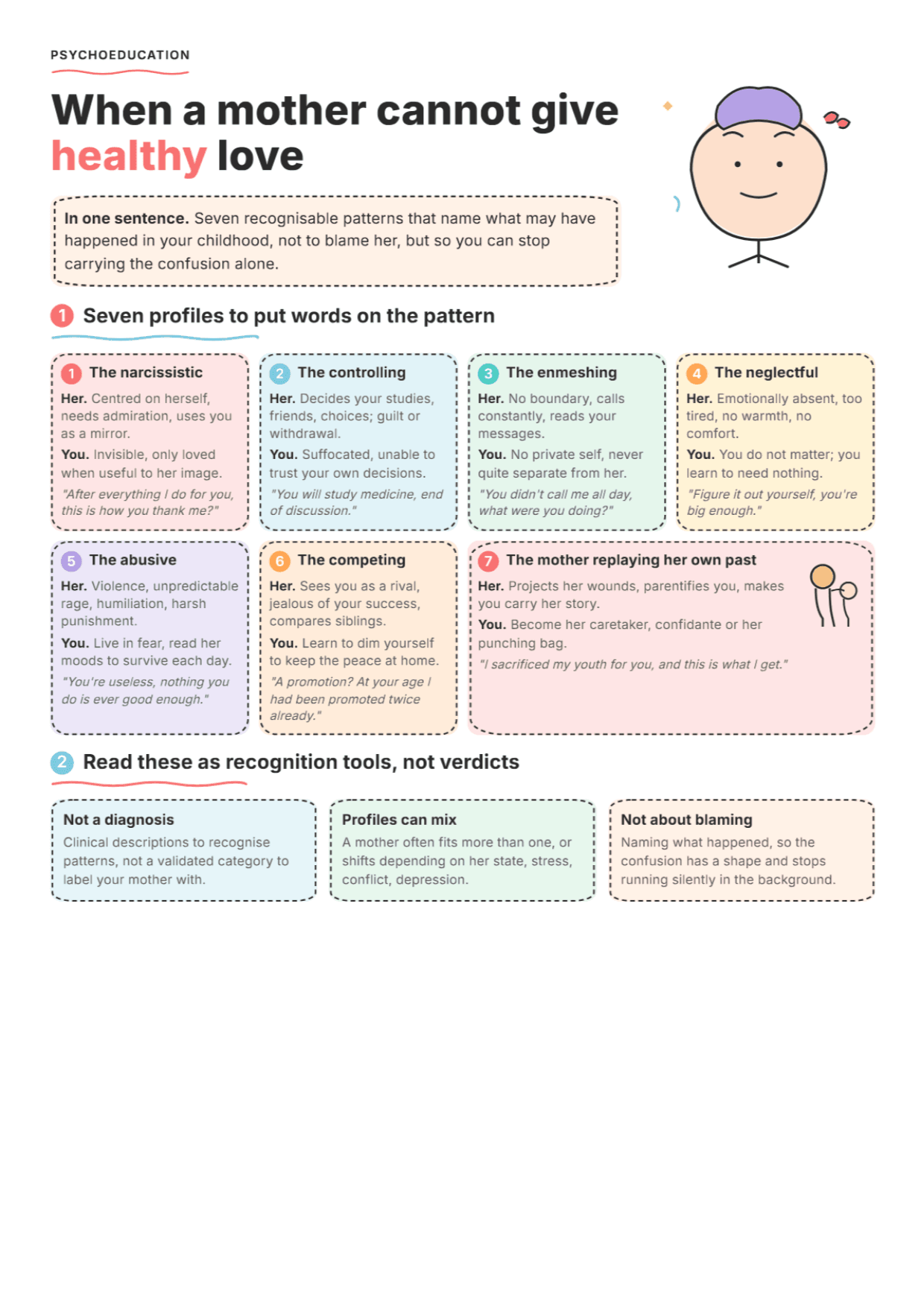
Systemic family therapy was born from the work of the Palo Alto school, the Milan group, and later structural and strategic models. Its central premise is that the identified patient (the person brought to consultation) is best understood as the bearer of a relational tension distributed across the entire system. Symptoms have a function; they regulate proximity, distance, loyalty, or power in ways the family cannot yet articulate. The clinical gaze therefore shifts from intrapsychic structure to the interactional sequences that maintain the presenting problem.
Narrative therapy, developed by Michael White and David Epston, adds a discursive layer to this relational reading. Families do not simply have problems; they tell stories about those problems, stories shaped by cultural, gendered, and generational discourses. When a narrative becomes totalising ("my child has always been difficult", "our couple has never communicated"), it forecloses alternative meanings and constrains the system's capacity for change. The clinician's task is to map the dominant narrative, identify its effects on each member, and open space for counter-stories.
Circular Causality and Co-construction
Where a linear model asks "what caused this?", a systemic model asks "what maintains this, and for whom?". Circular causality means that each member's behaviour is simultaneously a response to and a trigger of others' behaviours, forming feedback loops that resist punctuation. The clinician learns to track these loops rather than assign blame, which is itself a powerful reframe for families entrenched in attributional conflict.
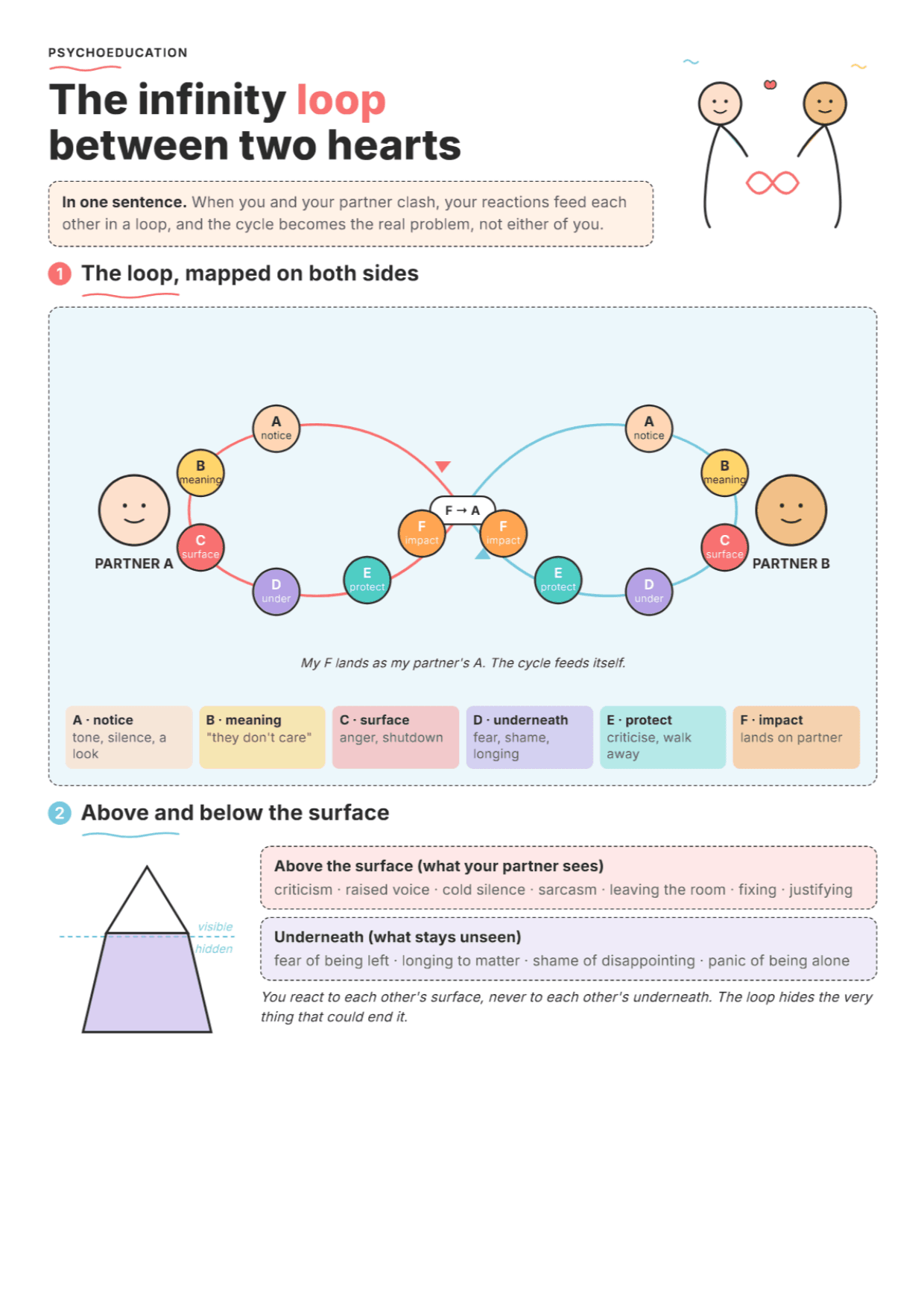
Narrative therapy deepens this by asking how the loop is named and storied. A couple locked in a pursuer-distancer cycle may have co-authored a shared narrative in which one partner is "emotionally unavailable" and the other "controlling". Both stories are partial, both are maintained by interactional sequences, and both obscure the relational need underneath. Externalising the narrative ("the distance" rather than "you") creates enough separation for curiosity to re-enter the system.
The Family as Unit of Change
In systemic-narrative work, the unit of intervention is always the relationship, even when you are seeing an individual. A child's behaviour is read in the context of the sibling subsystem, the parental couple, and the extended family's narrative inheritance. This has direct implications for which resources you deploy and in which order. Psychoeducation, for instance, only lands when it addresses the relational meaning the family has already attributed to the symptom.
Identifying Relational Patterns in the Consulting Room
Systemic Markers at Presentation
Certain clinical presentations almost always signal a systemic-narrative reading is warranted. Repeated symptom relapse despite individually oriented treatment, triangulation of a child in parental conflict, rigid role assignments ("the problem child", "the responsible one"), and transgenerational repetitions noted by the family itself are all flags. So is the presence of a third party (school, paediatric services, social welfare) who has become incorporated into the system's homeostatic regulation.
In the first sessions, listen for the problem-saturated description: the way the family narrates the identified patient's difficulty as fixed, global, and essential to that person's identity. This is your entry point. Questions such as "When was the problem not present?" or "Who first gave it that name?" begin to loosen the narrative without threatening the family's coherence.
Relational Configurations Calling for Structured Tools
Practitioners working with parental couples in distress frequently encounter asymmetric distributions of responsibility that have been story-ed as natural or inevitable. The Unequal Mental Load in Couples: A Guided Clinical Exercise offers a structured mapping of this distribution, allowing both partners to visualise the imbalance before it can be narratively re-examined. It works well after a few sessions of relational history-taking, when the therapeutic alliance is solid enough to hold the discomfort the exercise generates.
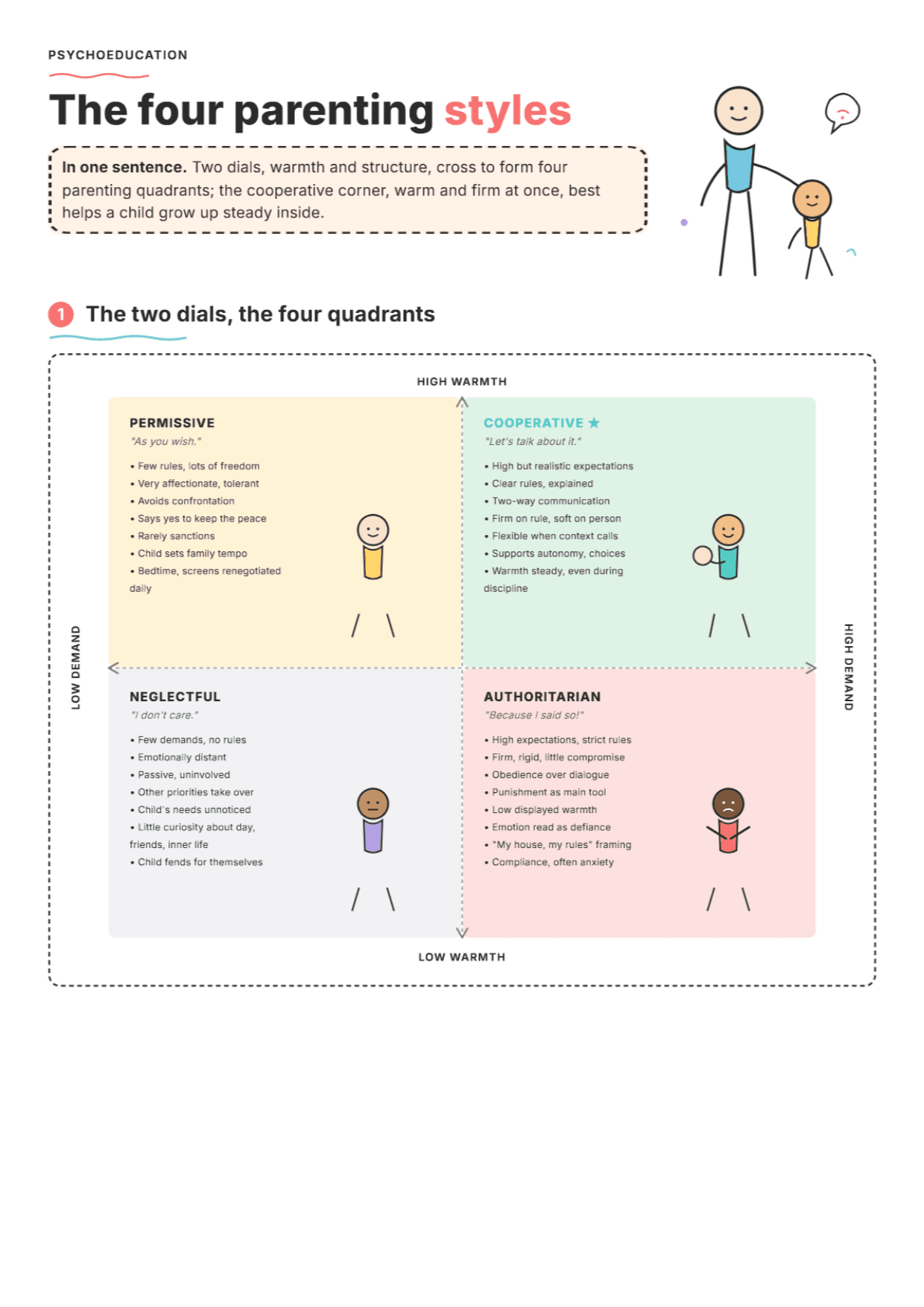
When working with parent-child systems around sibling dynamics, the Sibling Relationships: A Psychoeducation Program for Parents provides a psychoeducational frame that normalises rivalry and competition as systemic phenomena rather than character flaws. This reframe is distinctly systemic: it redistributes the explanatory locus from the "difficult child" to the relational field.
Comorbidities, Differential Diagnosis, and Clinical Limits
When Systemic Framing Needs to Be Complemented
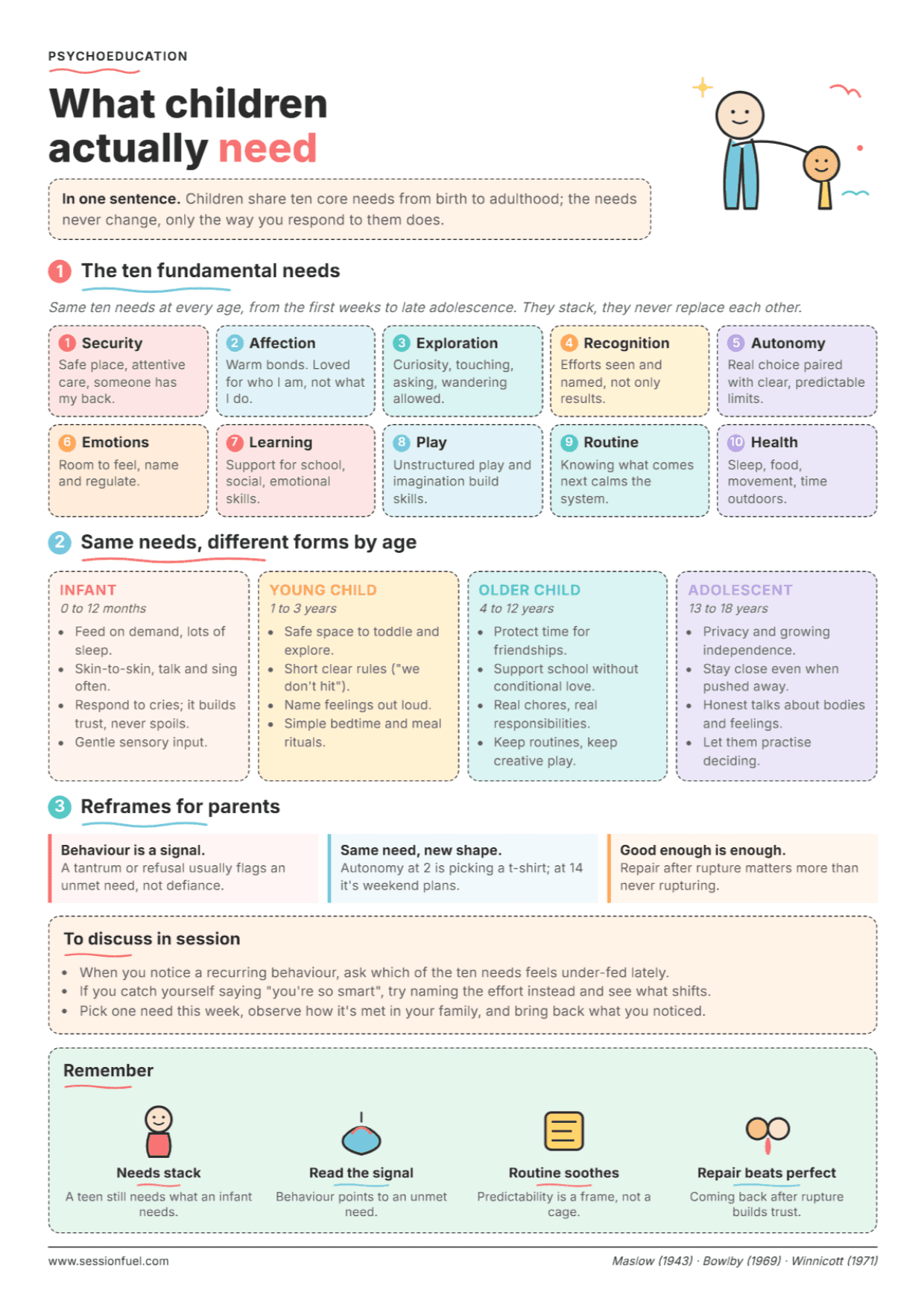
Systemic-narrative therapy does not operate in a diagnostic vacuum. Axis I conditions (depressive episodes, anxiety disorders, ADHD, early psychosis) are frequently present in the identified patient and require concurrent individual or pharmacological management. The systemic lens does not replace psychiatric assessment; it contextualises it. A child meeting criteria for oppositional defiant disorder, for instance, is best served by a dual reading: neurobiological predisposition plus relational maintenance patterns. Psychoeducation programs designed for parents, such as the Strong-Willed Children: A Psychoeducation Program for Parents, are calibrated precisely for this interface, providing both diagnostic clarification and relational reframing.
Differential Diagnosis: Relational Distress vs. Individual Pathology
A common clinical challenge is distinguishing a relational disorder (ICD-11: QE codes) from an individual disorder that is being maintained by relational patterns. Marital conflict with communication deficits may present as a depressive episode in one partner; adolescent individuation conflict may look like conduct disorder. The systemic-narrative clinician asks: does the symptom organise the relationship, and would it remit if the interactional pattern changed? If yes, the relational level is primary. If the individual symptom persists across relational contexts, concurrent individual treatment is indicated.
Contraindications for couple or family work include active domestic violence, acute psychosis, and situations where conjoint sessions would compromise the safety of a member. In these cases, systemic thinking can still inform individual formulation without convening the system.
Using These Resources in Session: Integration and Sequencing
Psychoeducation as a Systemic Intervention
In the systemic-narrative model, psychoeducation is never merely informational. It is a narrative intervention: it introduces an alternative description of the problem, one that is less blaming, more interactional, and more amenable to change. When a family receives information about screen dependency not as a disciplinary failure but as a regulatory co-construction between child and family system, the meaning of the symptom shifts. The Screen Dependency in Children: A Parent Psychoeducation Program is built on this logic, guiding parents through an understanding of the relational functions that excessive screen use may serve.
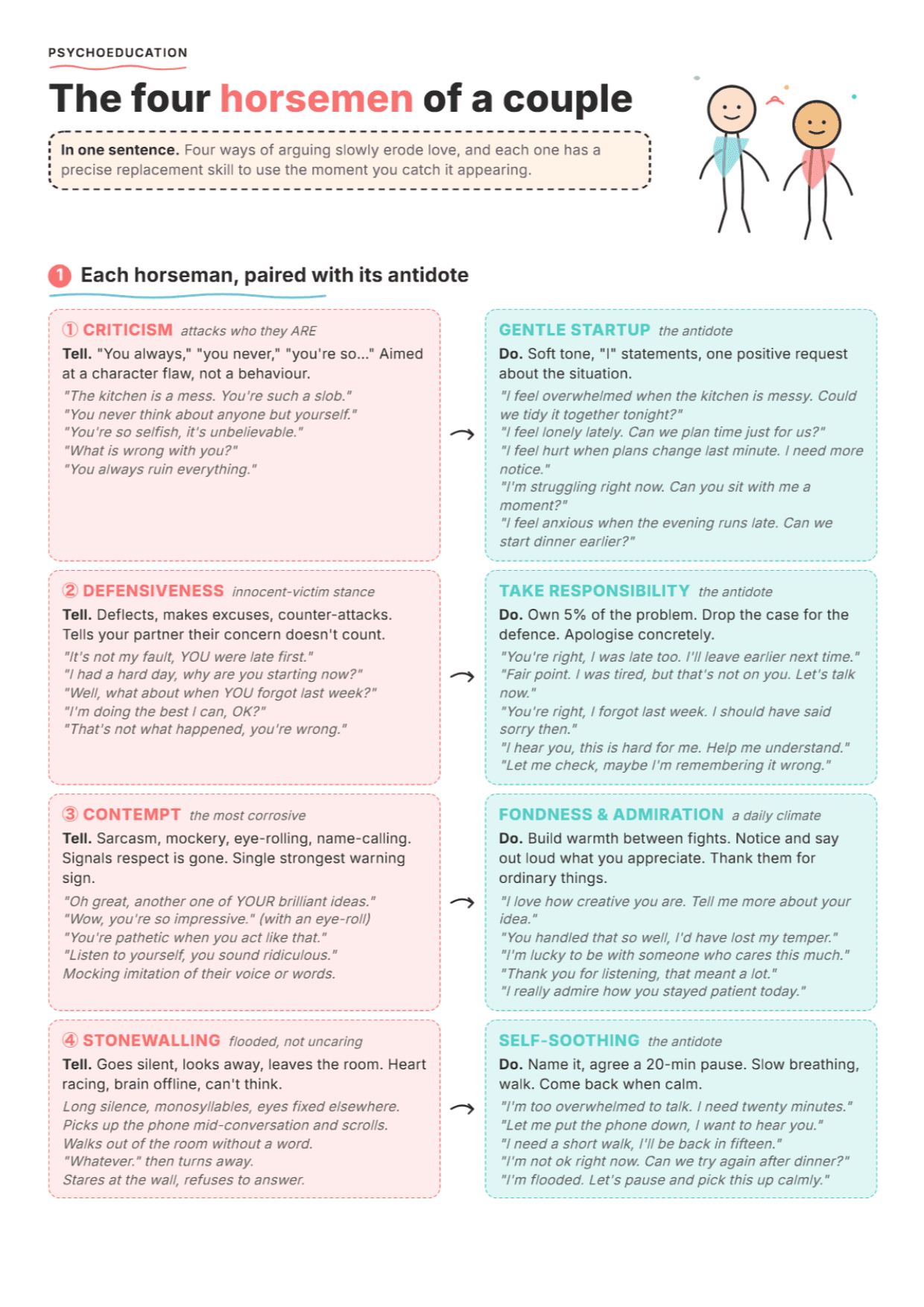
For couples presenting with communication difficulties, psychoeducation about interaction cycles provides a shared language that externalises the problem from either partner. The Couples Communication: A Psychoeducation Program maps common dysfunctional sequences (escalation, withdrawal, demand-withdraw) in accessible terms, making the interactional pattern visible as an entity separate from the individuals caught in it.
Exercises to Map Personal and Family Narratives
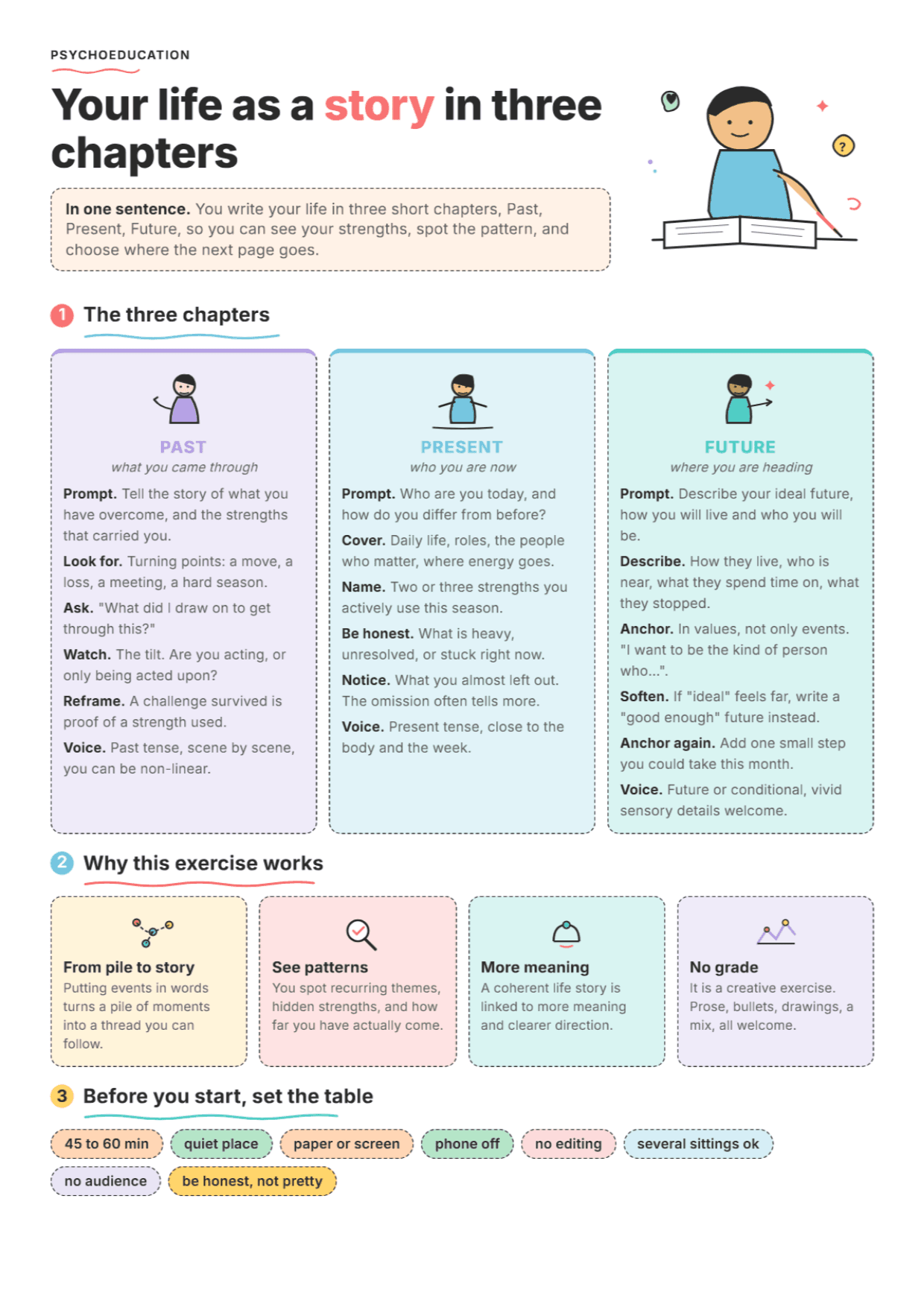
In group or multi-family settings, structured self-introduction exercises are useful both clinically and therapeutically. The My Personal History: A Group Self-Introduction Exercise serves a double function: it gathers genogram-adjacent material (family origin, key relational events, formative experiences) while modelling the narrative stance. Participants begin to hear their own story as a story, with choices about emphasis, characters, and outcomes, rather than as an immutable sequence of facts.
> Clinical vignette: A therapist working in a multi-family group for parents of adolescents with anxiety disorders introduced the personal history exercise in session three. One father, who had opened every session with a clinical account of his daughter's symptoms, found himself describing instead his own experience of a "perfectionist household" growing up. The group paused. Several other parents recognised the same inheritance. The conversation shifted from symptom management to transgenerational narrative transmission, opening a thread that held for the remaining six sessions.
Integrating Systemic-Narrative Work Into the Care Plan
Sequencing Interventions Across the Therapeutic Arc
A coherent care plan structured around systemic-narrative principles typically follows a recognisable sequence:
Relational mapping: genogram, problem-saturated narrative elicitation, identification of interactional cycles.
Narrative externalisation: separating the problem from the person or couple, naming it collaboratively.
Psychoeducation: providing an alternative, less pathologising frame for the presenting difficulty.
Structured exercises: using worksheets and guided exercises to make implicit relational dynamics explicit and workable.
Re-authoring conversations: identifying unique outcomes, exception sequences, and preferred stories.
Consolidation and transmission: documenting the new narrative, involving the wider system if clinically indicated.
The printable resources in this category map onto steps 3 and 4 with particular density. They are most effective after the externalisation work has begun: handing a couple a communication program before they have separated themselves from the problem risks reinforcing rather than loosening the dominant narrative.
Involving the Full System
Systemic-narrative work gains substantially when the intervention permeates the relational environment rather than remaining contained in the consulting room. Sending psychoeducation materials home, asking partners to complete an exercise such as the Unequal Mental Load in Couples: A Guided Clinical Exercise between sessions, or inviting parents to share a program with a co-parent who does not attend therapy: all of these extend the therapeutic field and increase the probability that new narratives will be reinforced by daily relational experience.
Points of Vigilance and Clinical Limits
Therapeutic Alliance in Multi-person Work
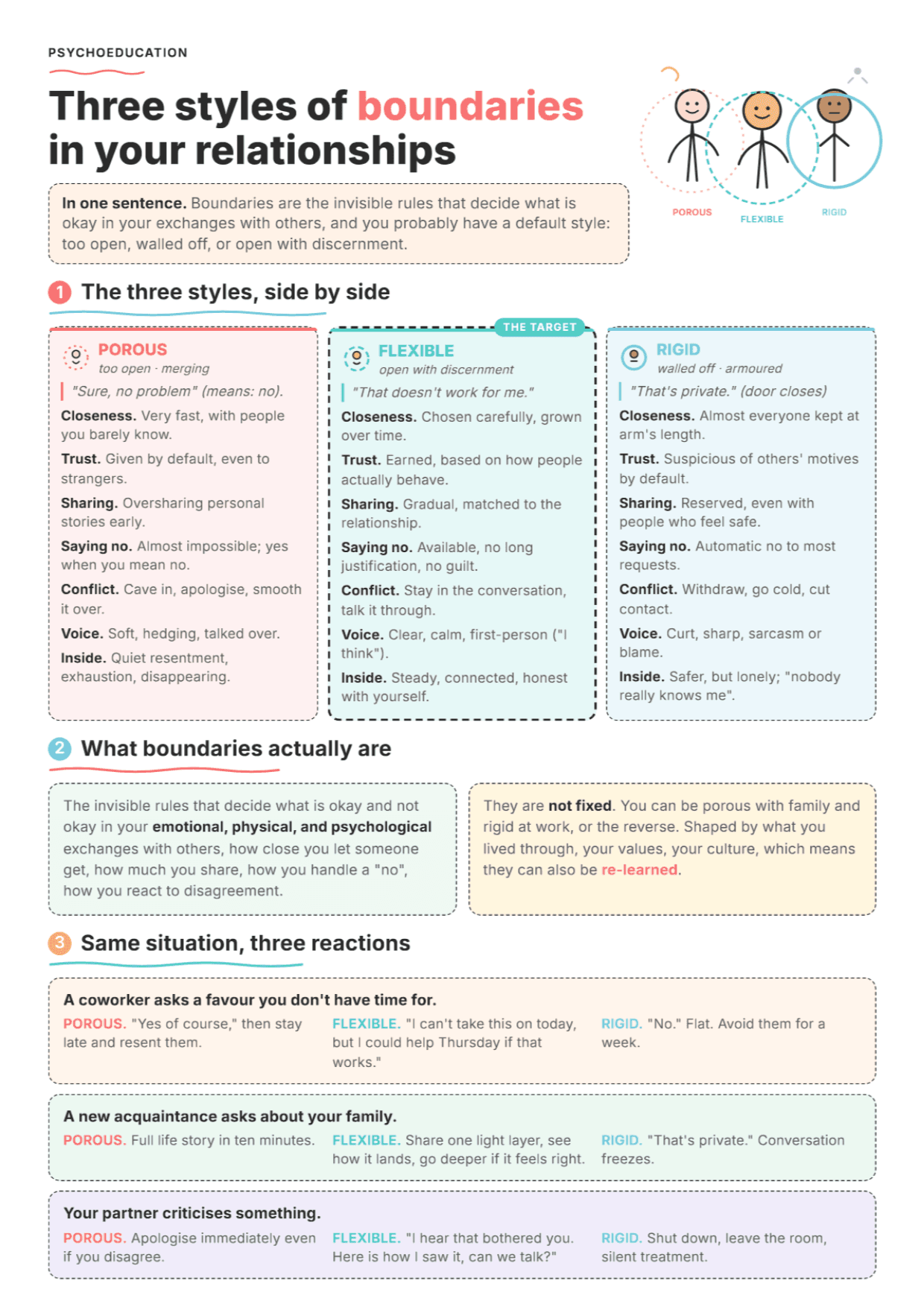
Managing the multi-directional alliance (Pinsof's concept) is the primary technical challenge in systemic work. Each member of the system must feel sufficiently understood and not scapegoated. Resources that make asymmetries explicit (such as the mental load exercise) can destabilise a fragile alliance if introduced too early. The clinician needs to have established a narrative of shared difficulty before any tool that might be read as assigning blame.
Beware also of systemic neutrality collapsing into false equivalence in situations involving clear power differentials: parental burnout, economic dependency, gendered role coercion. Narrative therapy's attention to dominant cultural discourses is a necessary corrective here.
Epistemological and Cultural Considerations
Systemic-narrative models were developed primarily in Western, individualist contexts and carry assumptions about family structure, autonomy, and self-disclosure that may not generalise. Clinicians working with families from collectivist cultures, diaspora communities, or transgenerational trauma contexts need to hold the theoretical frame lightly, adapting the resources to the family's own epistemology rather than imposing a readymade narrative of change.
Finally, printed tools and structured programs are adjuncts, never replacements, for the relational work that happens in the session. Their value is proportional to the quality of the therapeutic relationship in which they are embedded.