
Clinical picture. M. and his partner, both in their late thirties, presented with longstanding conflict avoidance; sessions revealed that arguments typically ended when M. withdrew into silence, which his partner read as contempt. The clinician introduced the psychoeducation program on communication and asked M. to work through Lesson 1 between appointments, paying particular attention to the unit on nonverbal communication and the guided prompt about dominance versus equality in discussions. At the next appointment, M. reported that completing the reflection prompt had surprised him: he had not previously considered that his silence functioned as a communicative act rather than a neutral withdrawal. This shift in attribution became a productive starting point for jointly examining interaction patterns in the couple's sessions.
Communication Skills in Couples: A Psychoeducation Program
A structured 4-lesson program helping patients map verbal and nonverbal communication, identify common pitfalls, and build practical relational skills.
Clinical vignettes
Nonverbal Patterns in a Distressed Couple
Reframing 'Winning' in Couples Conflict
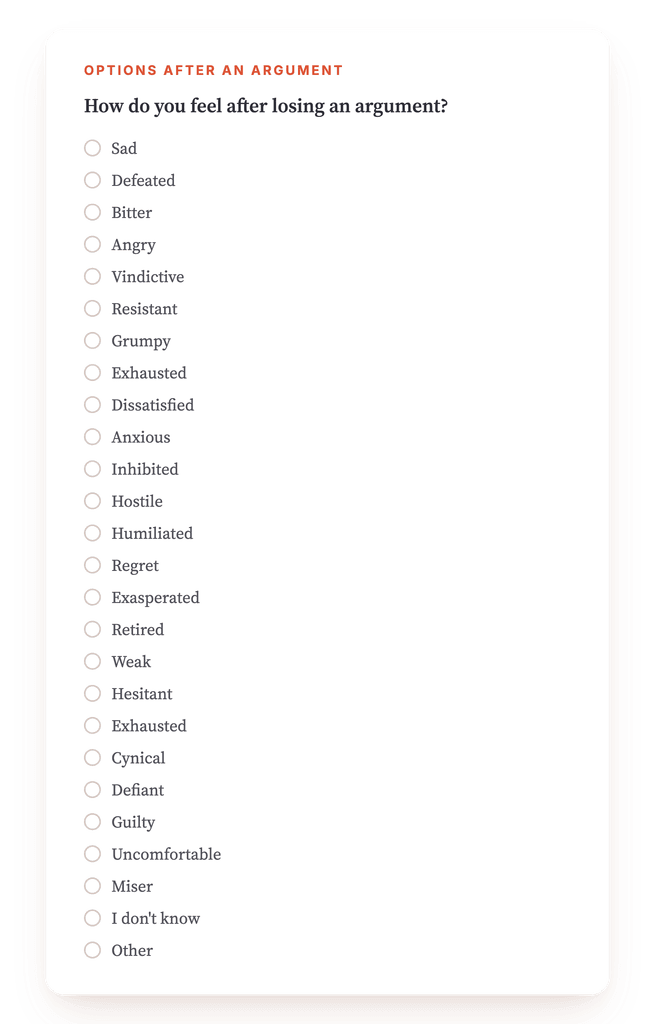
Clinical picture. A. (early fifties) described recurrent arguments with her spouse in which she felt compelled to prove her position correct, yet consistently felt worse after these exchanges rather than relieved. The clinician assigned Lesson 1 of the communication program, directing A. specifically to the unit asking whether being right or being on good terms mattered more in a given moment, along with the multiple-choice question about feelings following a lost argument. A. returned having selected 'bitter' and 'exhausted' from the response options and noted, unprompted, that the exercise had made the cost of her stance concrete in a way verbal discussion had not. The clinician used this to introduce Lesson 2's material on mutual respect, framing it as a natural next step rather than a directive.
Use this resource with your patients
Handout, exercises and materials ready to use, right inside SessionFuel.
The Clinical Challenge: Why "Just Talk to Each Other" Is Never Enough
Couples rarely arrive in your consulting room having no words at all. What they lack is a shared understanding of what communication actually is, how it shapes power dynamics moment to moment, and why their well-intentioned exchanges keep landing wrong. Explaining this verbally in a consultation is possible, but the concepts slip. A patient hears "use I-statements" once and nods; two days later, under pressure at home, none of it holds.
The gap is not motivation. It is structured repetition and self-inquiry outside the session. Psychoeducation on communication needs to travel home with the patient: as something they can read, reflect on, and respond to in their own time, without the relational stress of the room. That is the precise clinical need this program addresses. It pairs well with a visual overview of communication styles or a printable map of the three main channels and four styles you may already use in your work.
750+ clinical tools
A library built with and for clinicians, ready to use in session and extend between appointments.
Access all the toolsWhat the Program Contains
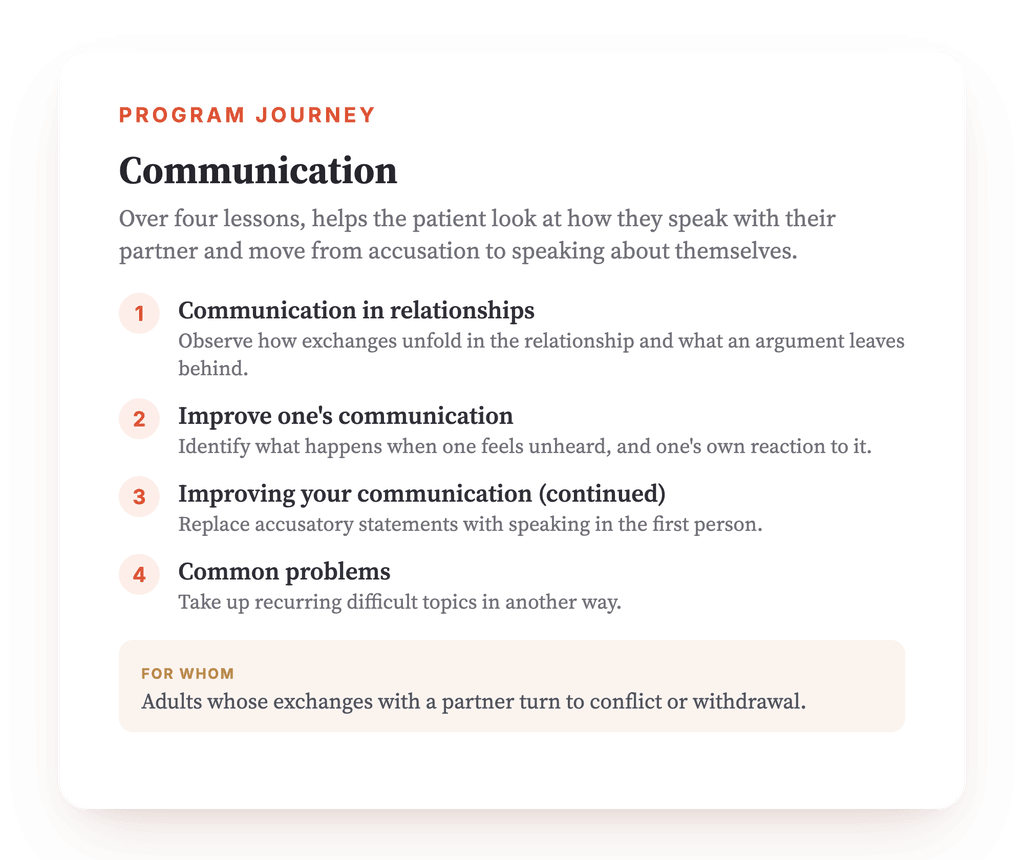
This four-lesson curriculum takes the patient through communication from first principles to concrete repair skills:
- Lesson 1 (Communication in Relationships) covers nonverbal communication, dominance-versus-harmony dynamics in conversation, and the question of whether being right matters more than being connected, with a guided prompt asking the patient to locate themselves and their partner on a communication spectrum.
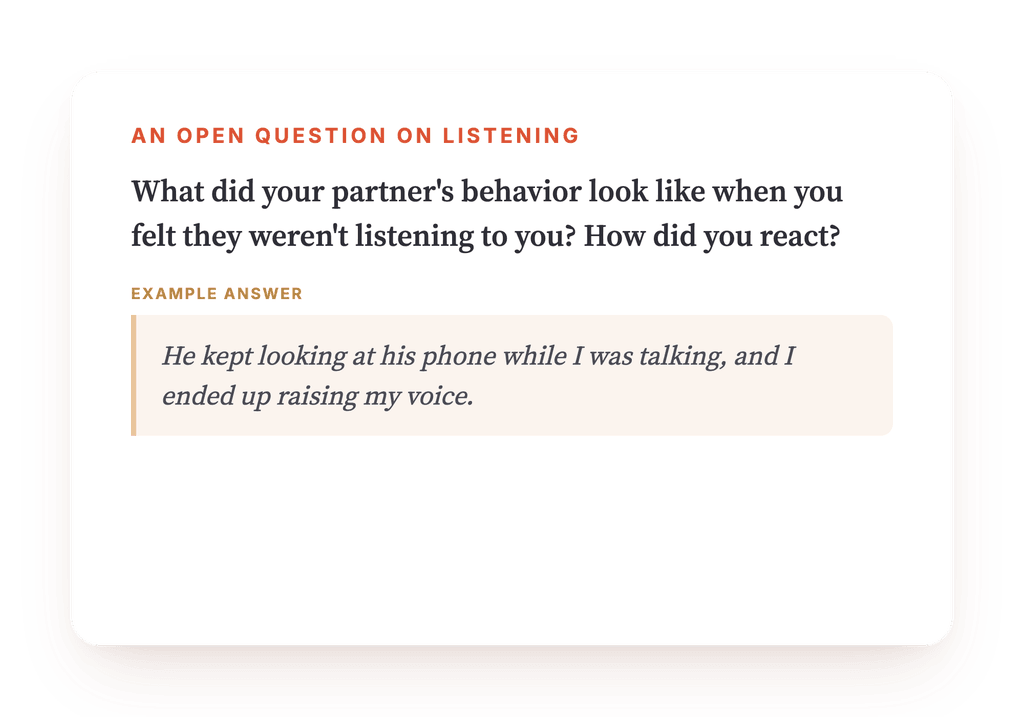
- Lesson 2 (Improving Communication) addresses mutual respect, active listening, eye contact and nonverbal cues, and open-ended questions, with reflective prompts on what the patient notices in their partner's expressions and what topics genuinely engage them both. The Active Listening Skills worksheet and the Reflective Listening fiche are natural companions here.
- Lesson 3 (Improving Communication, continued) introduces the I-statement versus you-statement distinction, stepping back before reacting, giving genuine praise, and the teamwork frame for navigating tension. This lesson works closely with concepts covered in the Nonviolent Communication for Couples fiche and the I-Messages worksheet.
- Lesson 4 (Common Problems) names the most frequent breakdowns: lack of clarity, defensiveness rooted in negativity bias, and the three most common relational communication errors, including conflict avoidance. This connects naturally to the Conflict in Romantic Relationships program and to The Four Horsemen and Their Antidotes.
Each lesson combines psychoeducation text, multiple-choice feeling probes, and open guided prompts the patient answers in writing, making their reflections available for clinical use when they return.
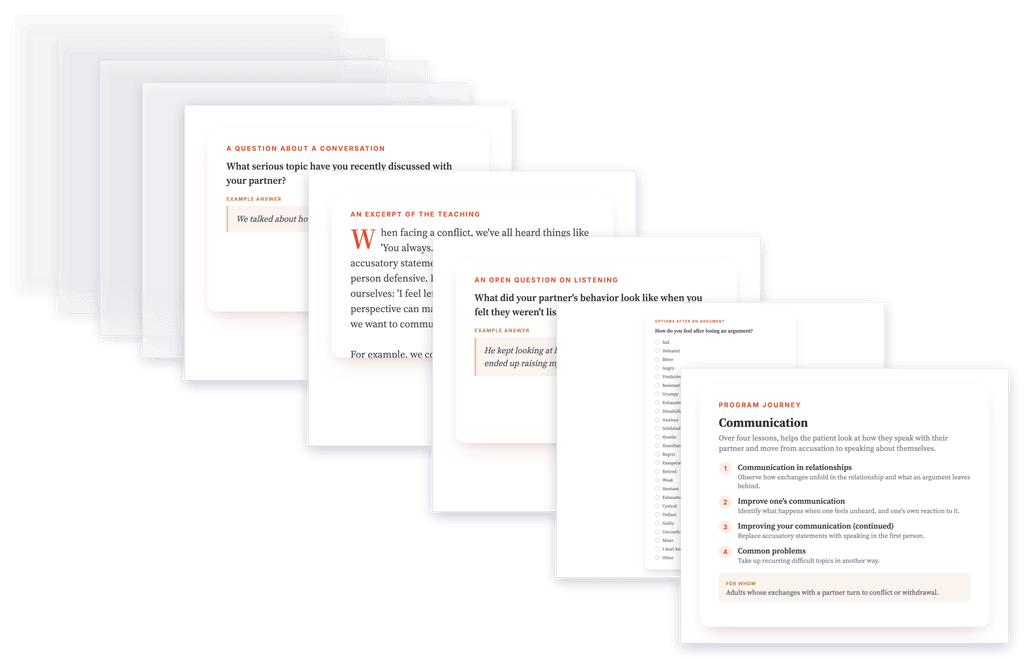
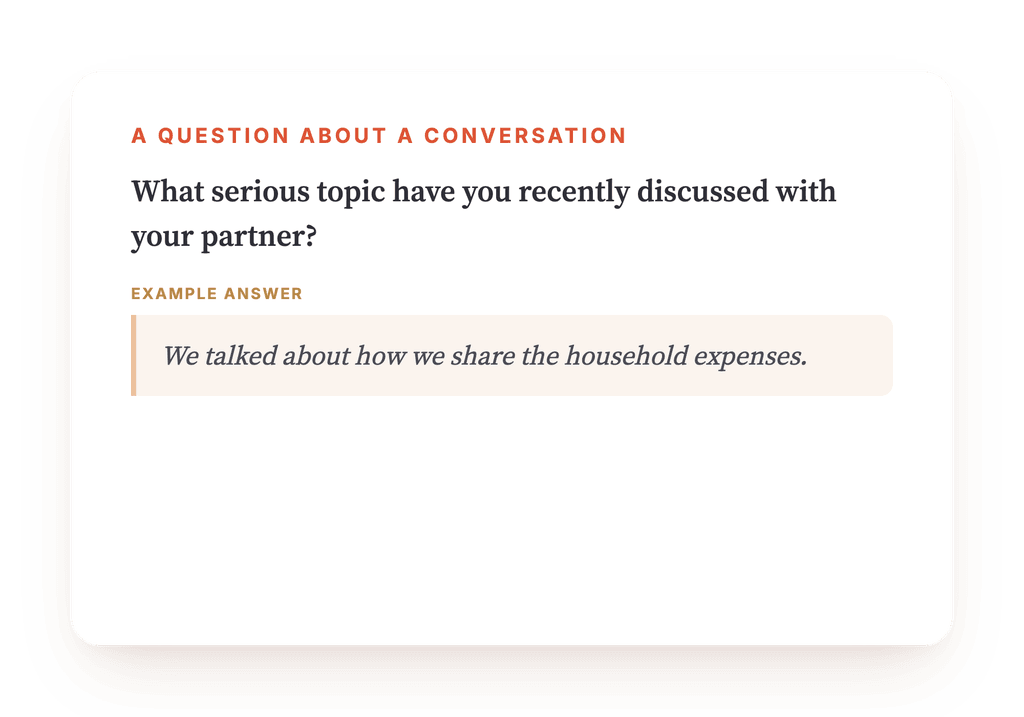
The preview images embedded here (a program overview map and a few sample cards) show only a small fraction of the full curriculum. The complete program is far richer, with many more lessons, steps, exercises, and guided prompts than what these aperçus display.
This program is available to patients through the mobile application that is the dedicated patient-side interface of SessionFuel: you assign the program directly to your patient within SessionFuel, and they complete each lesson autonomously on their phone, between your appointments.
Key insight: The written responses patients produce across the four lessons give you a ready-made clinical map of their relational communication patterns, without spending consultation time building it from scratch.
Use it with your patients
Share this tool in the mobile app and follow the work between sessions.
Integrating the Program as Between-Session Work
This program suits couples in individual or conjoint therapy where communication difficulty is a named concern, as well as individuals exploring why relational exchanges keep going sideways. It is also a solid starting point before engaging the Healthy Relationships program or the Trust in Relationships curriculum.
Introduce it plainly: "Between now and our next appointment, I'd like you to work through the first two lessons of a communication program on your phone. There's nothing to prepare, just read, respond honestly, and note anything that surprises you." No prior motivation for self-help is needed; the step-by-step format carries the patient forward.
When they return, the written prompt responses are your clinical entry points. A patient who writes that they "always feel defeated after an argument" opens a conversation about shame and the cost of the win-lose frame. One who cannot name a single serious topic discussed with their partner recently points toward emotional distance you can map with tools like the EFT Infinity Loop worksheet or the Soft Startups for Couples fiche. The program's attention to nonverbal signals also pairs well with the Assertive Body Language worksheet for patients who struggle to align what they say with how they say it.
For couples where criticism or defensiveness is already entrenched, assigning this program alongside the Fair Fighting Rules fiche gives both members a shared vocabulary before the harder conflict work begins.
Your session continues in your patients' pocket
Use with a patientYour resources, available everywhere
The handouts, exercises, programs and audios above: you choose which ones to make available to your patients, in the mobile app dedicated to them.
And far more than a library
The app goes well beyond resources, to support your patients every day:
Related categories
Explore other clinical resources by category.
Relationships
Clinical worksheets and tools on relational functioning: attachment, schemas, assertiveness, and communication skills for therapists. Printable PDF resources.

Understand
Clinical hub for the therapeutic aim 'Understand': worksheets and tools to build patient insight across CBT, ACT, schema therapy and more.

Build skills
Skill-building resources for clinicians: printable worksheets and exercises for coping, assertiveness, and communication skills training in therapy.
CBT
CBT worksheets, cognitive restructuring exercises & behavioral tools for clinicians. Evidence-based resources for every phase of cognitive behavioral therapy.

Systemic & narrative
Systemic family narrative therapy resources for clinicians: worksheets, psychoeducation programs, and exercises for couples, families, and groups.

Anxiety
Clinical hub for anxiety disorders: CBT and ACT worksheets, psychoeducation sheets, and exercises for assessment and treatment across the anxiety spectrum.