
Build Awareness: Clinical Tools to Deepen Self-Knowledge in Therapy
Build awareness, in the clinical sense of fostering metacognitive self-knowledge and emotional literacy, sits at the foundation of virtually every evidence-based therapeutic orientation. This page is designed for clinicians who want to identify, select, and deploy structured resources that help patients recognise their cognitive patterns, emotional signals, relational schemas, and behavioural repertoires. The fiches, worksheets, and exercises gathered here span CBT, ACT, schema therapy, and psychoeducational approaches, making them applicable across a wide range of presentations and treatment phases. Whether you are introducing a patient to the concept of cognitive distortions or deepening their contact with experiential avoidance, you will find targeted tools ready for in-session use or structured homework.

From Insight to Functional Change
Awareness building is not a single technique; it is a therapeutic aim that underlies the earliest and most decisive work in most structured therapies. Before a patient can modify a belief, regulate an emotion, or shift a behavioural pattern, they must first be able to observe it with some degree of accuracy and without immediate reactivity. This capacity, variously labelled metacognition, psychological mindedness, or self-monitoring, is neither automatic nor uniformly distributed across patient populations.
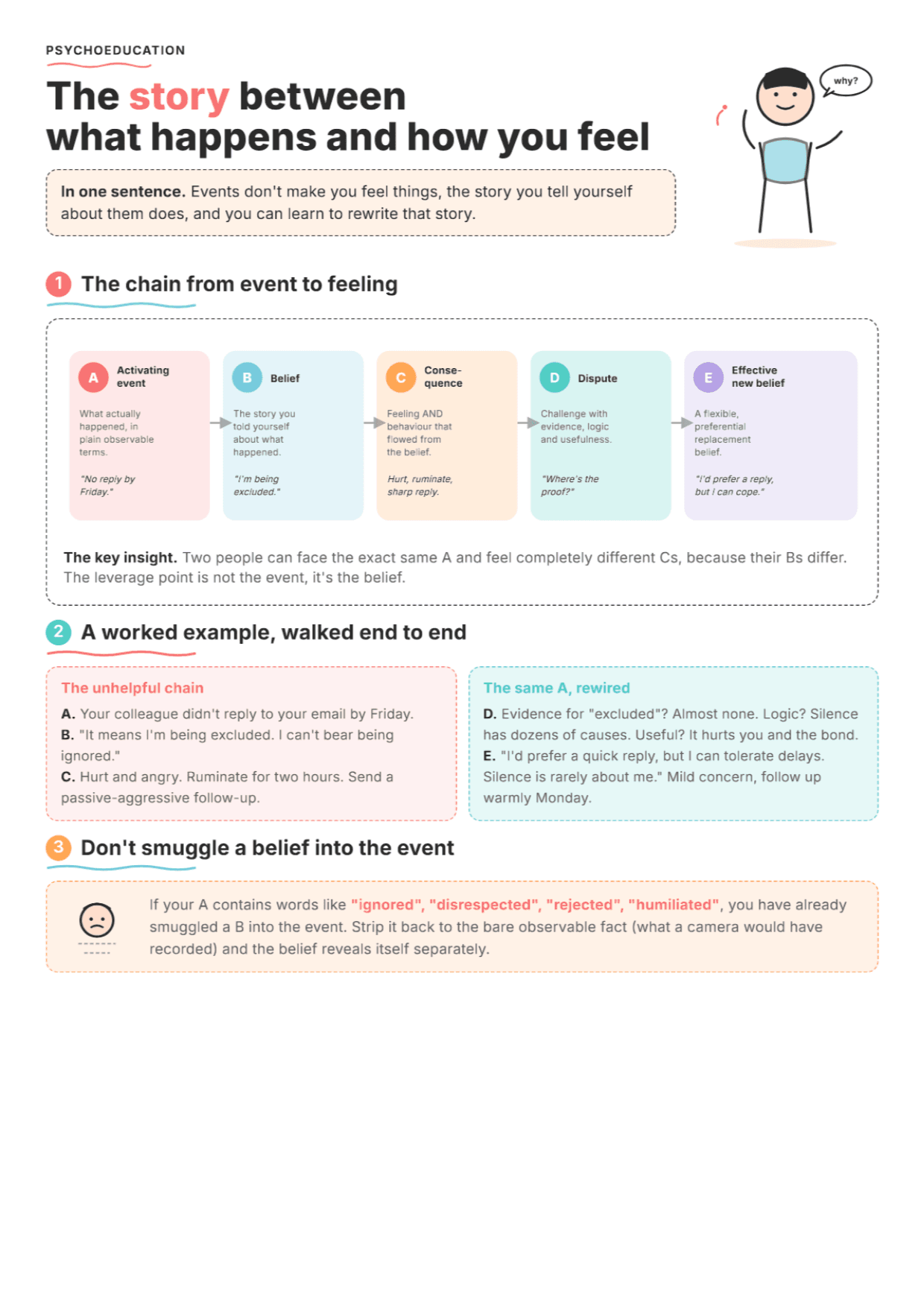
In CBT lineages, awareness-building typically means learning to identify automatic thoughts, surface underlying assumptions, and map the A-B-C chain between activating events, beliefs, and consequences. The ABC Model (REBT): PDF Worksheet, Tools and Exercises for Clinical Practice offers a direct entry point into this chain, structuring what many patients initially experience as a blur of feeling and reaction into discrete, examinable components. In ACT, the same aim is served differently: the goal is cognitive defusion and present-moment contact rather than logical disputation, but the foundational step remains the same. A patient must first notice the thought as a thought before they can hold it more lightly.
The Mechanism: Why Awareness Precedes Change
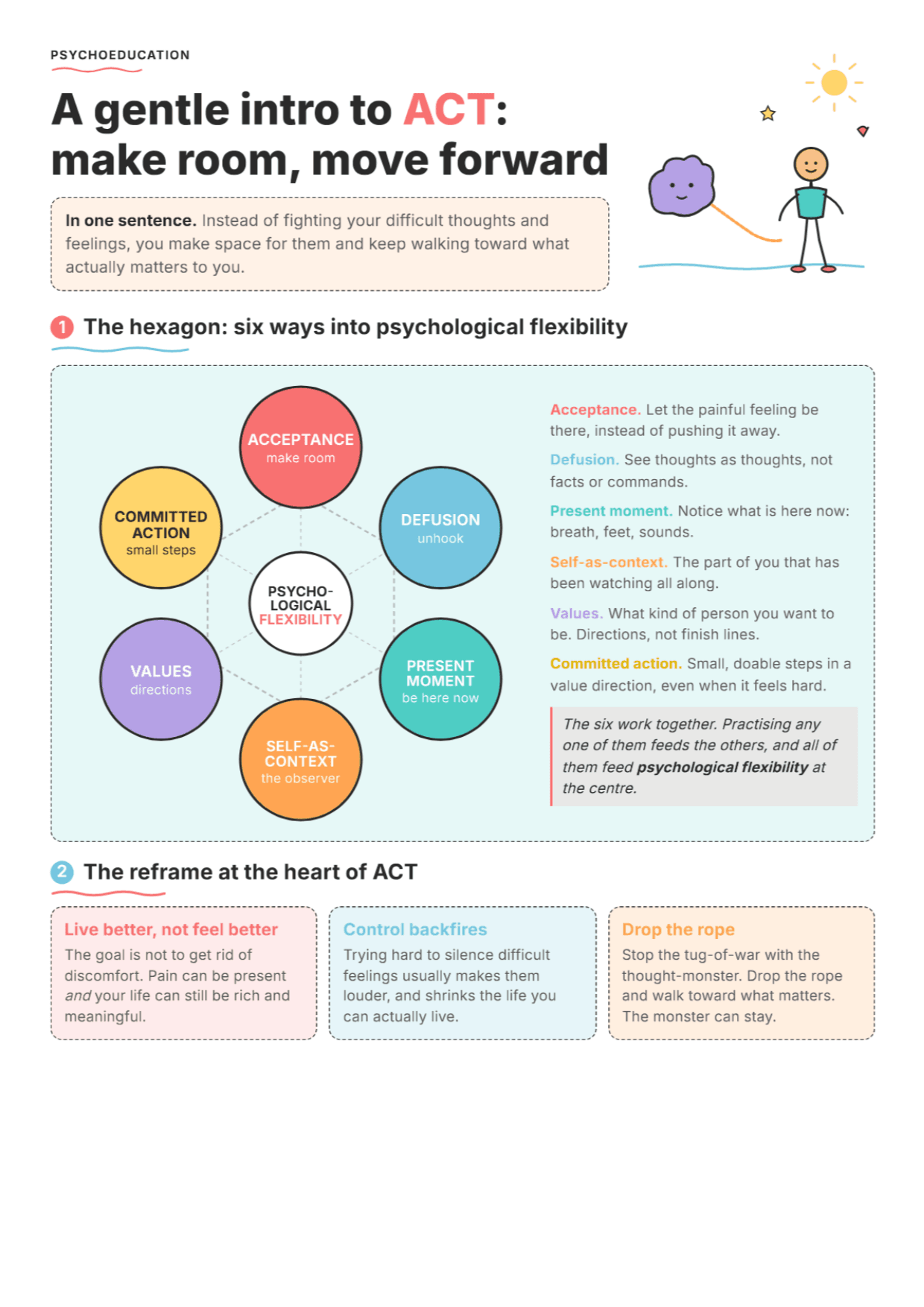
The neurobiological and psychological case for prioritising awareness is well established. When a patient operates entirely within an unexamined schema, the schema is, in a sense, invisible to them; it functions as the lens rather than as an object of perception. Structured awareness work shifts this: it externalises the internal, making covert processes legible. This is why psychoeducational tools are not merely "introductory" in the pejorative sense. Used well, they are precision instruments. The ACT Hexaflex: PDF Worksheet, Tools and Exercises for Clinical Practice is a good example: it maps the six core ACT processes, giving clinician and patient a shared conceptual language that makes session dialogue more precise and progress more measurable.
Recognising the Need for Awareness Work in Assessment
Signs of Low Metacognitive Capacity
Not every patient presents with an obvious deficit in self-awareness, and the clinical picture is rarely binary. Some reliable indicators that awareness-building should be a primary early goal include: recurrent descriptions of events in purely external or behavioural terms, with affective content markedly absent; difficulty tracking the sequence from trigger to response; and a tendency to present symptoms as fully ego-syntonic, without curiosity about their function. Patients with prominent all-or-nothing thinking (sometimes called dichotomous reasoning) often exhibit this pattern. The All-or-Nothing Thinking: PDF Worksheet, Tools and Exercises for Clinical Practice can be introduced as a gentle, non-pathologising mirror early in treatment.
Anger presentations are a particularly important context. Patients who arrive having been referred for anger management frequently lack access to the emotional substrate beneath the anger itself. The Anger Iceberg: PDF Worksheet, Tools and Exercises for Clinical Practice is clinically useful here precisely because it reframes the presenting complaint, inviting the patient to consider that what is visible (the anger, the outburst) rests on a much larger submerged structure of shame, fear, or unmet need. Paired with the Anger Warning Signs: PDF Worksheet, Tools and Exercises for Clinical Practice, it supports the development of a personalised early-warning system.
Awareness Deficits in Specific Populations
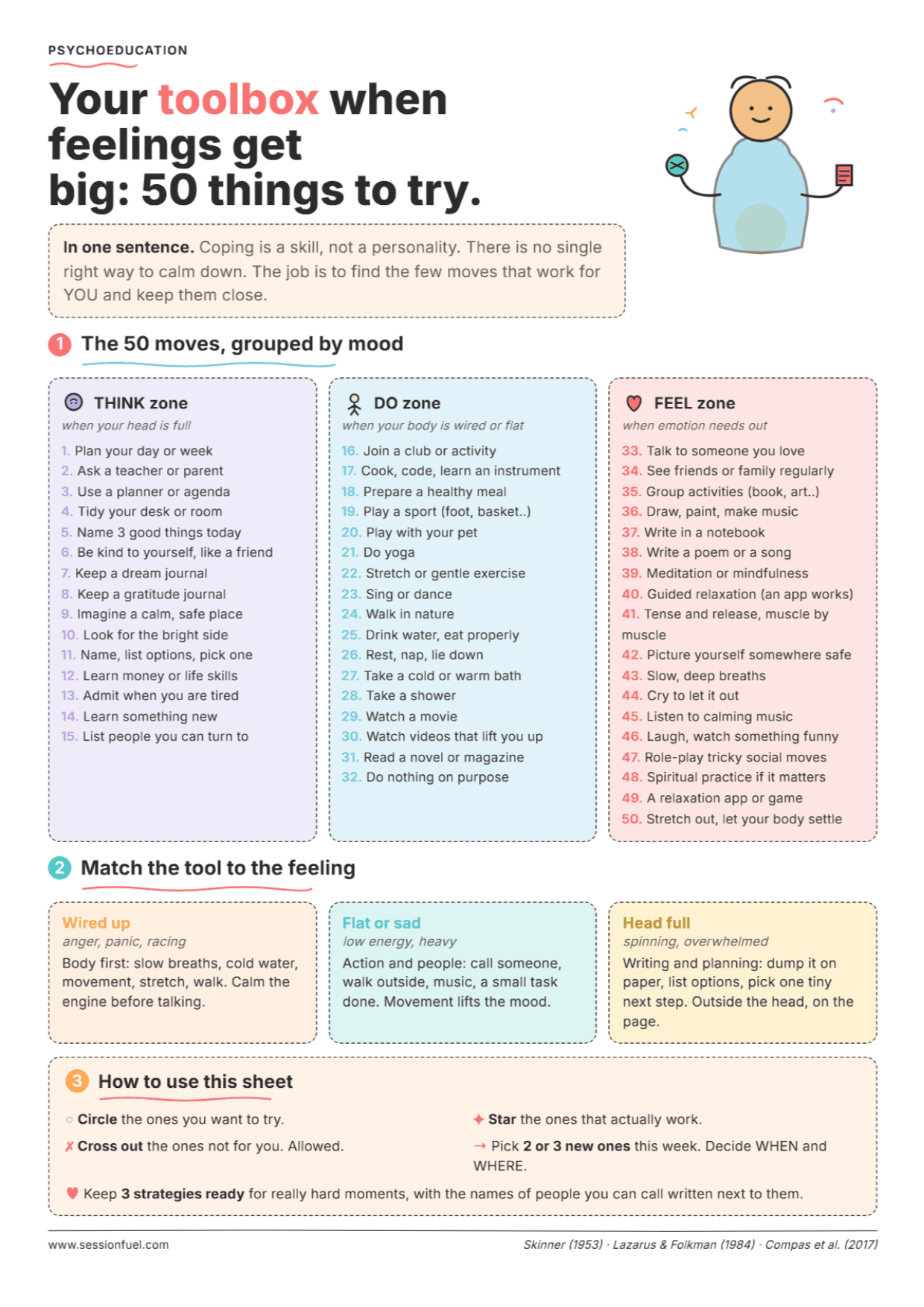
Children and adolescents warrant particular attention. Emotional literacy is developmentally variable; a teenager's limited introspective vocabulary is not necessarily a character trait or a sign of resistance. The 50 Coping Strategies for Children and Adolescents: PDF Worksheet, Tools and Exercises functions partly as a psychoeducational inventory, helping younger patients recognise and name strategies they already use, which itself is an act of awareness-building before any new skills are introduced. The vocabulary it provides often becomes a scaffold for subsequent session dialogue.
Core Clinical Domains Where Awareness Tools Apply
Cognitive Patterns and Distortions
Cognitive distortions represent one of the most well-mapped domains for structured awareness work. The clinical literature is consistent: patients rarely recognise distortions in real time without prior exposure to the concept and repeated practice. A worksheet that names and illustrates a specific distortion reduces the cognitive load required to catch it live. The Mind Reading: PDF Worksheet, Tools and Exercises for Clinical Practice addresses one of the most clinically ubiquitous distortions, particularly in patients with social anxiety, relational conflict, or paranoid ideation. Decatastrophising is another high-yield target; the Decatastrophizing: PDF Worksheet, Tools and Exercises for Clinical Practice provides a structured sequence to help patients evaluate the realistic probability and coping capacity associated with feared outcomes.
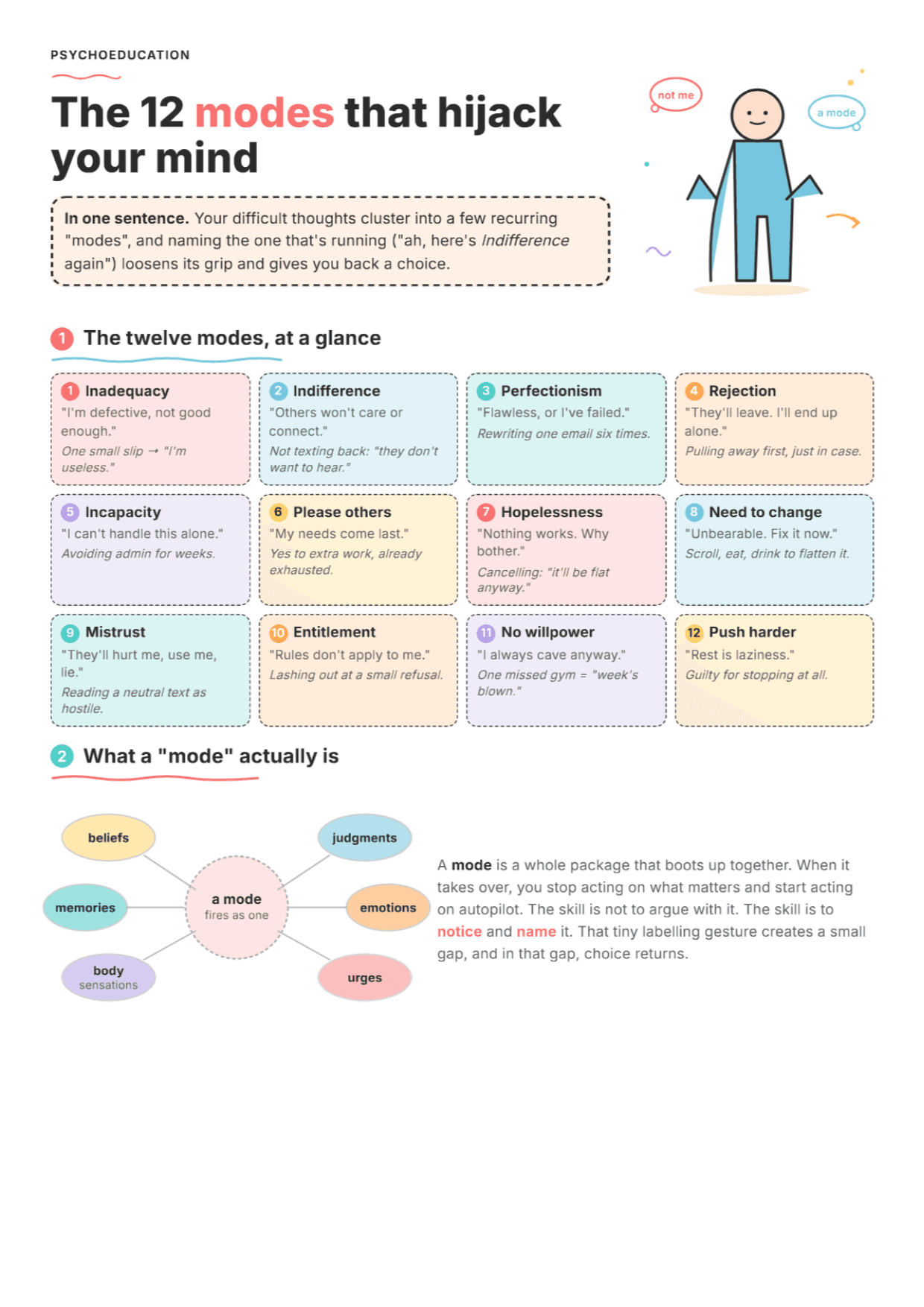
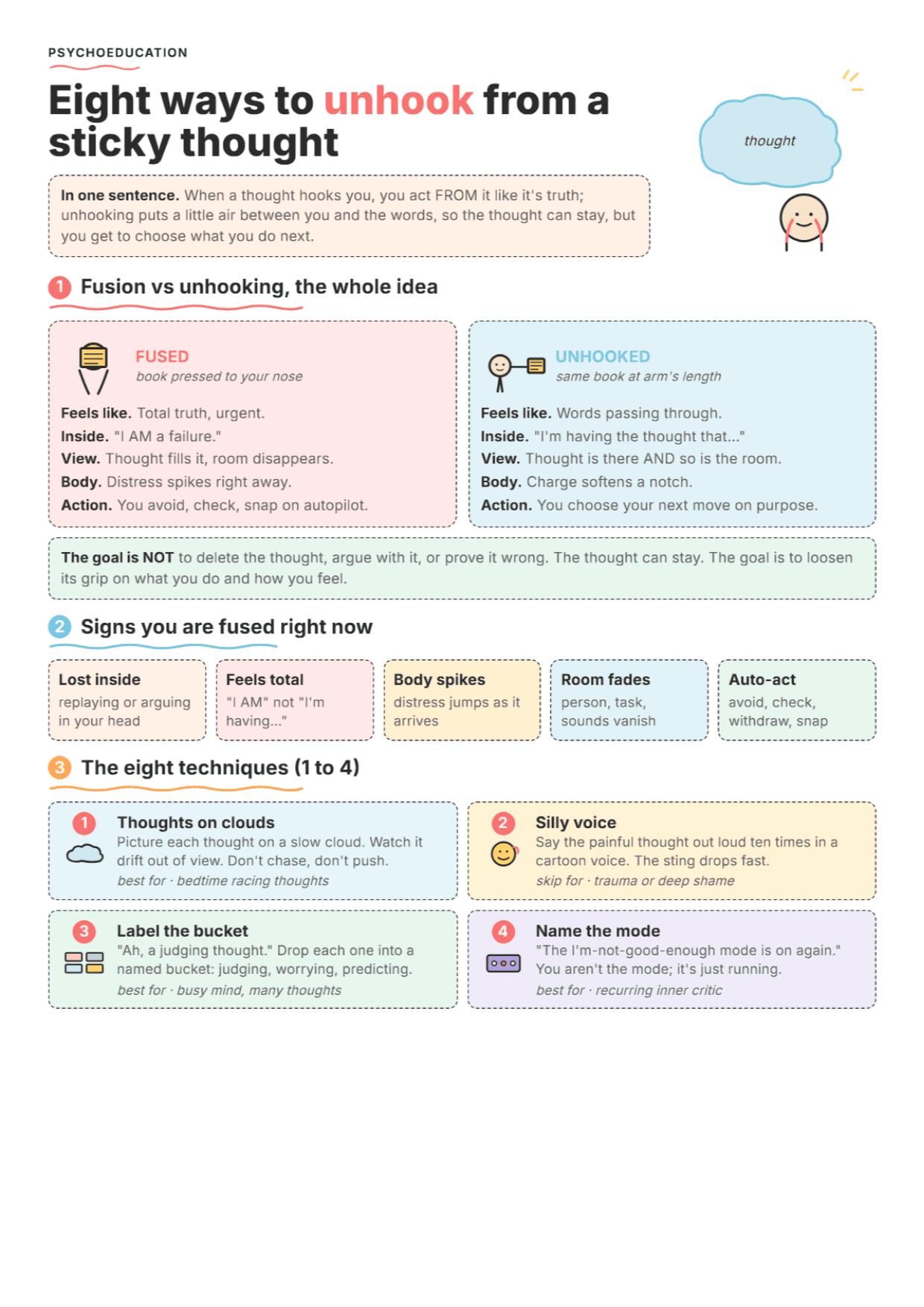
For practitioners working within ACT, cognitive awareness takes a different form: it is less about evaluating the accuracy of a thought and more about recognising fusion as a process. The ACT Cognitive Defusion: PDF Worksheet, Tools and Exercises for Clinical Practice offers exercises that create experiential distance from thought content, while the 12 ACT Schemas and Modes of Thinking: PDF Worksheet, Tools and Exercises helps patients map the recurring narrative structures their mind generates.
Relational Schemas and Attachment Patterns
Relational awareness is frequently the most clinically sensitive domain. Patients may have spent years operating from attachment-driven schemas without any conceptual frame for what is happening. The Attachment Styles in Romantic Relationships: PDF Worksheet, Tools and Exercises introduces the core attachment framework in accessible terms, without diluting the clinical construct. When working with patients whose relational difficulties are organised around early abandonment experiences, the Abandonment Schema: PDF Worksheet, Tools and Exercises for Clinical Practice provides a more granular lens, mapping the schema's triggers, cognitive content, and behavioural consequences. These tools are not diagnostic substitutes; they are starting points for collaborative formulation.
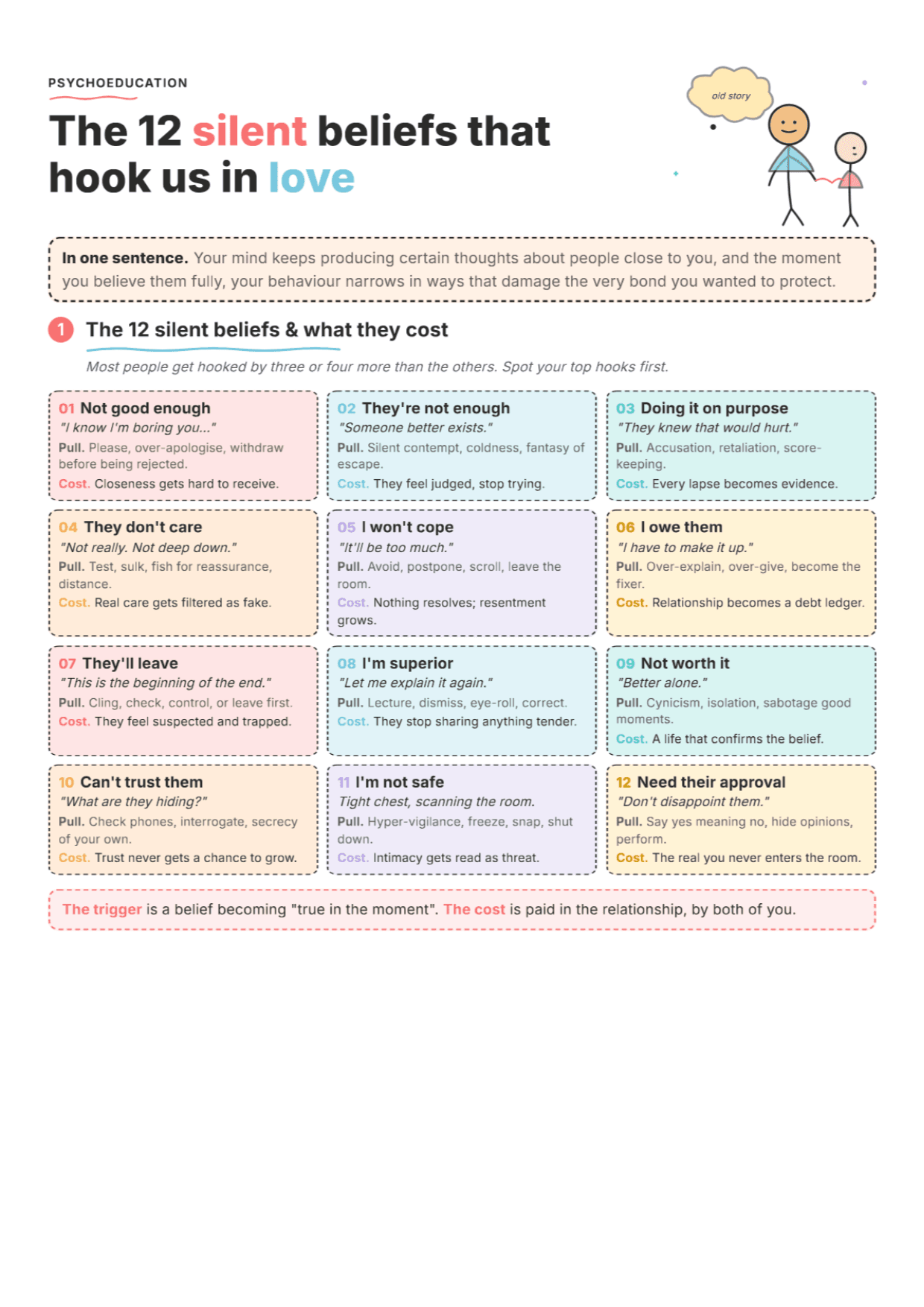
Relational belief systems are also addressable through the 12 Beliefs That Damage Relationships: PDF Worksheet, Tools and Exercises, which targets the dysfunctional assumptions that sustain conflict and disappointment in intimate partnerships. Awareness of these beliefs is a prerequisite for any subsequent couples or individual work aimed at relational repair.
Behavioural and Coping Awareness
Many patients present with a narrow or distorted perception of their own behavioural repertoire. They may see themselves as having no options, or as having tried "everything". The Adaptive vs Maladaptive Coping: PDF Worksheet, Tools and Exercises helps clinicians and patients jointly audit current coping patterns, distinguishing between strategies that provide short-term relief at long-term cost and those that build genuine resilience. This distinction is central to the psychoeducational phase in both CBT and ACT models.
Integrating Awareness-Building Resources into the Care Plan
Sequencing Within the Therapeutic Arc
Awareness-building tools are not exclusively first-session material. While many are well suited to the early psychoeducational phase of treatment, others serve specific mid-treatment functions: deepening formulation, unblocking therapeutic impasses, or recalibrating after a setback. A suggested sequence for a CBT-oriented protocol might look like:
- Introduce the cognitive model using the ABC Model (REBT): PDF Worksheet, Tools and Exercises for Clinical Practice to establish the belief-emotion-behaviour link.
- Map specific distortions relevant to the presenting problem, such as All-or-Nothing Thinking: PDF Worksheet, Tools and Exercises for Clinical Practice or Mind Reading: PDF Worksheet, Tools and Exercises for Clinical Practice.
- Expand the relational or schematic picture with tools focused on attachment or core beliefs, depending on clinical priority.
- Introduce metacognitive or values-based awareness via ACT-oriented resources, particularly when the patient is showing signs of excessive engagement with thought content.
- Consolidate behavioural awareness by auditing coping patterns before moving into skills-building work.
For ACT-oriented practitioners, a parallel sequencing might open with the ACT Hexaflex: PDF Worksheet, Tools and Exercises for Clinical Practice to orient the patient to the model, then use ACT Cognitive Defusion: PDF Worksheet, Tools and Exercises for Clinical Practice and Psychological Flexibility: PDF Worksheet, Tools and Exercises for ACT Practice to build the specific awareness capacities most implicated in the patient's presentation.
In-Session Use Versus Structured Homework
The clinical value of these resources depends substantially on how they are deployed. Used purely as homework without in-session processing, awareness worksheets risk becoming bureaucratic tasks that patients complete (or don't) without genuine reflection. The more powerful use is collaborative in-session completion, where the clinician observes the patient's process in real time: the hesitations, the misattributions, the moments of genuine recognition. These moments are the data.
> A 34-year-old patient with recurrent relational ruptures completed the Attachment Styles in Romantic Relationships: PDF Worksheet, Tools and Exercises in session. Midway through, she paused and said, "I always thought I was the calm one." The worksheet had surfaced a dismissing pattern she had consistently externalised onto her partners. This became the pivot point for the next four sessions.
When homework is clinically appropriate, brief preparatory framing is essential. The patient should understand not only what to do but what to notice while doing it.
Awareness Work in Complex and Comorbid Presentations
Eating Disorders
In bulimia nervosa and related presentations, awareness work targets the cognitive and emotional triggers that precede binge-purge cycles, as well as the body-image distortions and dietary restraint beliefs that maintain the disorder. The CBT Model of Bulimia Nervosa: PDF Worksheet, Tools and Exercises provides a formulation map that patients can use to understand the functional logic of their symptoms, which reduces shame and increases engagement with the treatment rationale.
Assertiveness and Rights-Based Awareness
For patients with difficulties in assertiveness, often presenting as chronic self-silencing, resentment, or recurrent victimisation experiences, awareness work extends to the domain of interpersonal rights. Many such patients have never conceptually articulated that they hold certain rights in social interactions. The Assertive Rights: PDF Worksheet, Tools and Exercises for Clinical Practice addresses this gap directly, providing a structured framework that can challenge deeply held compliance-based beliefs without requiring immediate behavioural change.
Decision-Making and Values Clarification
At certain treatment junctures, particularly around ambivalence and change readiness, awareness of one's own values and priorities becomes the critical therapeutic variable. The Choice Point: PDF Worksheet, Tools and Exercises for ACT Practice is well suited to these moments: it makes visible the fork between towards-values behaviour and away-from-discomfort behaviour, helping patients identify where their actions are aligned or discordant with what matters to them.
Points of Vigilance and Clinical Limits
When Awareness Becomes Rumination
A recurring clinical risk with awareness-building tools is iatrogenic hyperreflexivity. In patients with OCD, health anxiety, or depressive rumination, structured self-monitoring can amplify rather than attenuate distress. The clinician must calibrate the dose and framing carefully: awareness exercises should orient attention, not fixate it. Meta-level interventions, such as distinguishing observing from evaluating, are often necessary adjuncts.
Cultural and Individual Variability
The expectation that introspection is clinically productive is not culturally universal. For some patients, the construct of "self-awareness" carries connotations of self-indulgence or is framed culturally in collective rather than individual terms. Worksheets developed in Western clinical traditions may require significant contextual adaptation. Use them as flexible frameworks, not as scripts.
- Avoid presenting any fiche as a diagnostic tool; they are psychoeducational and exploratory in function.
- Ensure the patient has sufficient affect tolerance before introducing schemas or attachment material; premature exposure can destabilise.
- Debrief homework in session before moving to intervention; the patient's relationship to the exercise is often more clinically informative than the exercise's content.
- In complex trauma presentations, awareness work should be paced within a stabilisation frame; premature exposure to trauma-linked schemas carries clear iatrogenic risk.
Used thoughtfully, the resources grouped on this page represent a clinically robust toolkit for one of the most foundational therapeutic aims in structured psychotherapy.
Tools in this category
Handout
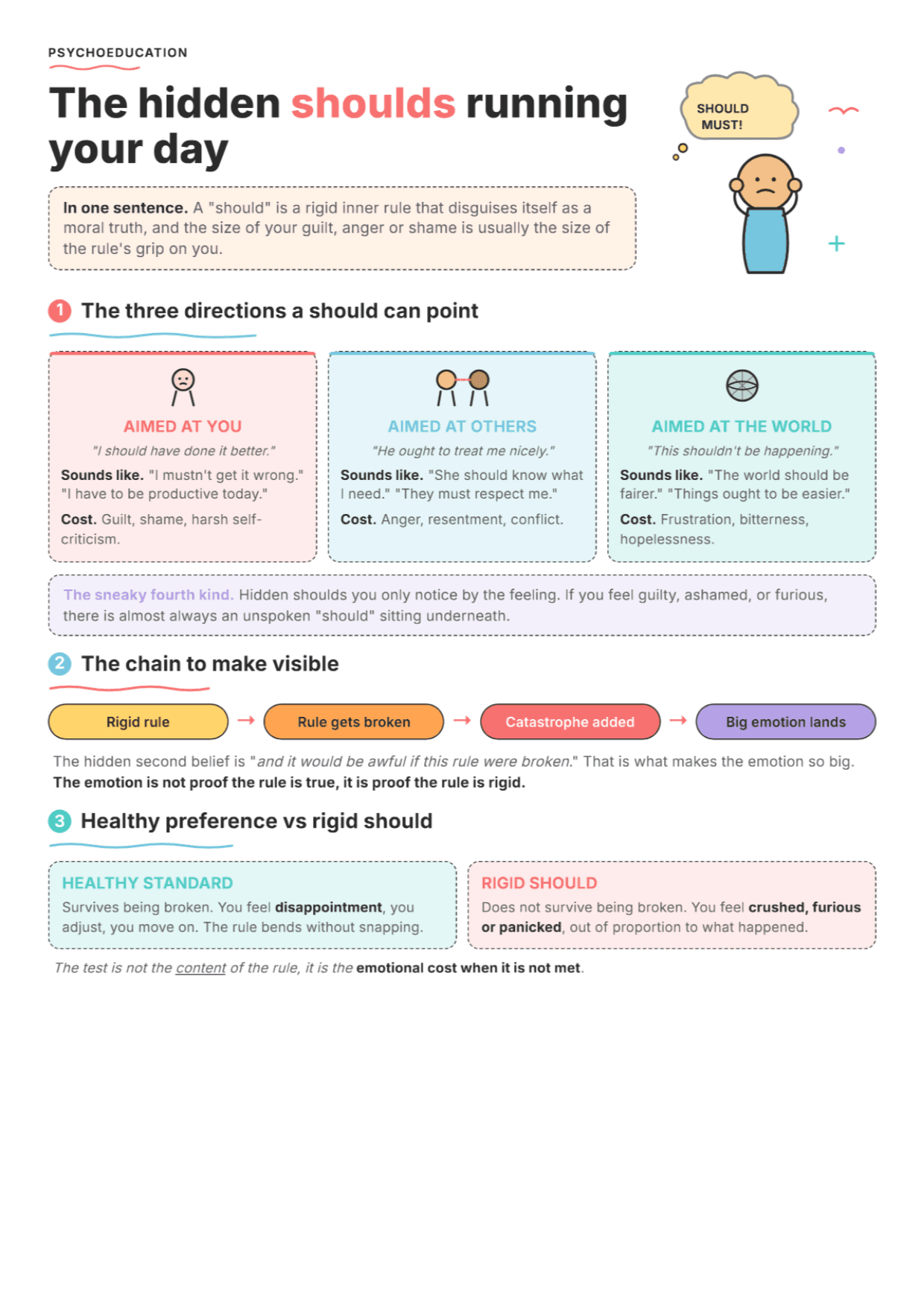
"Should" Statements: PDF Worksheet, Tools and Exercises
A printable PDF fiche to help clinicians explain rigid inner rules in session, giving patients a visual framework to identify, challenge, and soften "should" thinking.
Thoughts & cognitionAnxiety
Handout
12 ACT Schemas and Modes: PDF Worksheet, Tools and Exercises
A visual PDF worksheet with tools and exercises to help clinicians teach patients to name and defuse from their most entrenched cognitive-emotional modes in session.
Self & identityThoughts & cognition
Handout
12 Beliefs That Damage Relationships: PDF Worksheet, Tools and Exercises
A visual PDF worksheet with clinical exercises to help patients identify the silent relational beliefs driving avoidance, conflict, and emotional withdrawal in session.
RelationshipsThoughts & cognition
Handout
50 Coping Strategies for Children and Adolescents: PDF Worksheet, Tools and Exercises
A structured visual PDF worksheet with 50 coping tools organized by emotional state, to use in session with children and adolescents as a concrete psychoeducation support.
Emotions & stressAnxiety
Handout
ABC Model (REBT): PDF Worksheet, Tools and Exercises
A visual PDF worksheet presenting the full A-B-C-D-E chain to explain REBT in session: practical tools, disputation exercises, and a downward-arrow technique for cognitive restructuring.
Thoughts & cognitionEmotions & stress
Handout
Acceptance and Commitment Therapy: PDF Worksheet, Tools and Exercises
A printable psychoeducation sheet introducing the ACT model to patients: the hexaflex, key reframes, stuck patterns, and six concrete exercises to try between sessions.
Self & identityEmotions & stress
Handout
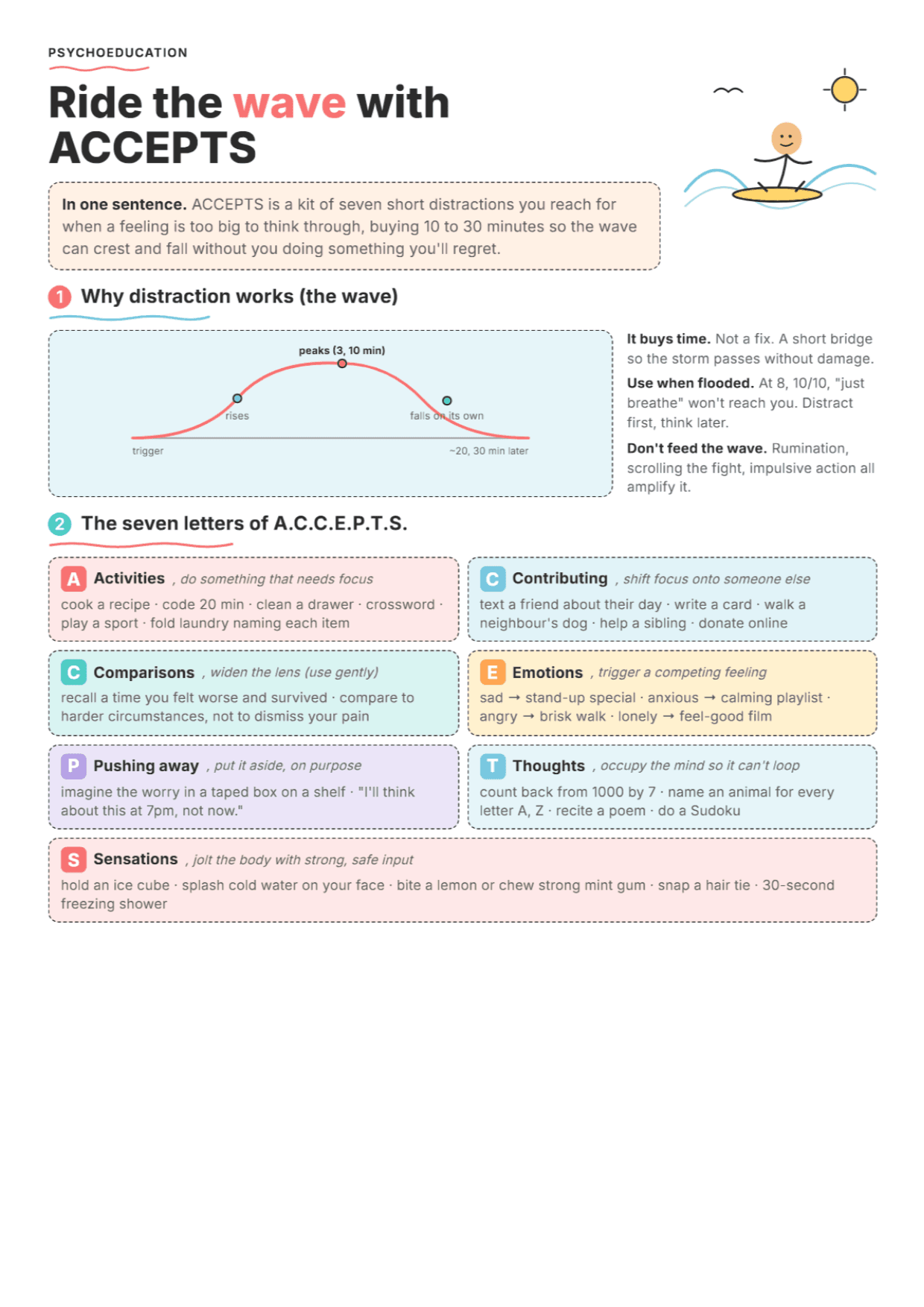
ACCEPTS Distress Tolerance: PDF Worksheet, Tools and Exercises
A visual PDF worksheet clinicians can use in session to teach the seven ACCEPTS skills, build a personalised crisis plan, and give patients a concrete distress tolerance tool to take home.
Emotions & stressAnxiety
Handout
ACT Cognitive Defusion: PDF Worksheet, Tools and Exercises
A visual PDF worksheet presenting eight defusion techniques, a fusion vs. unhooking comparison, and ready-made session prompts for ACT-informed practice.
AnxietyMood & depression
Handout
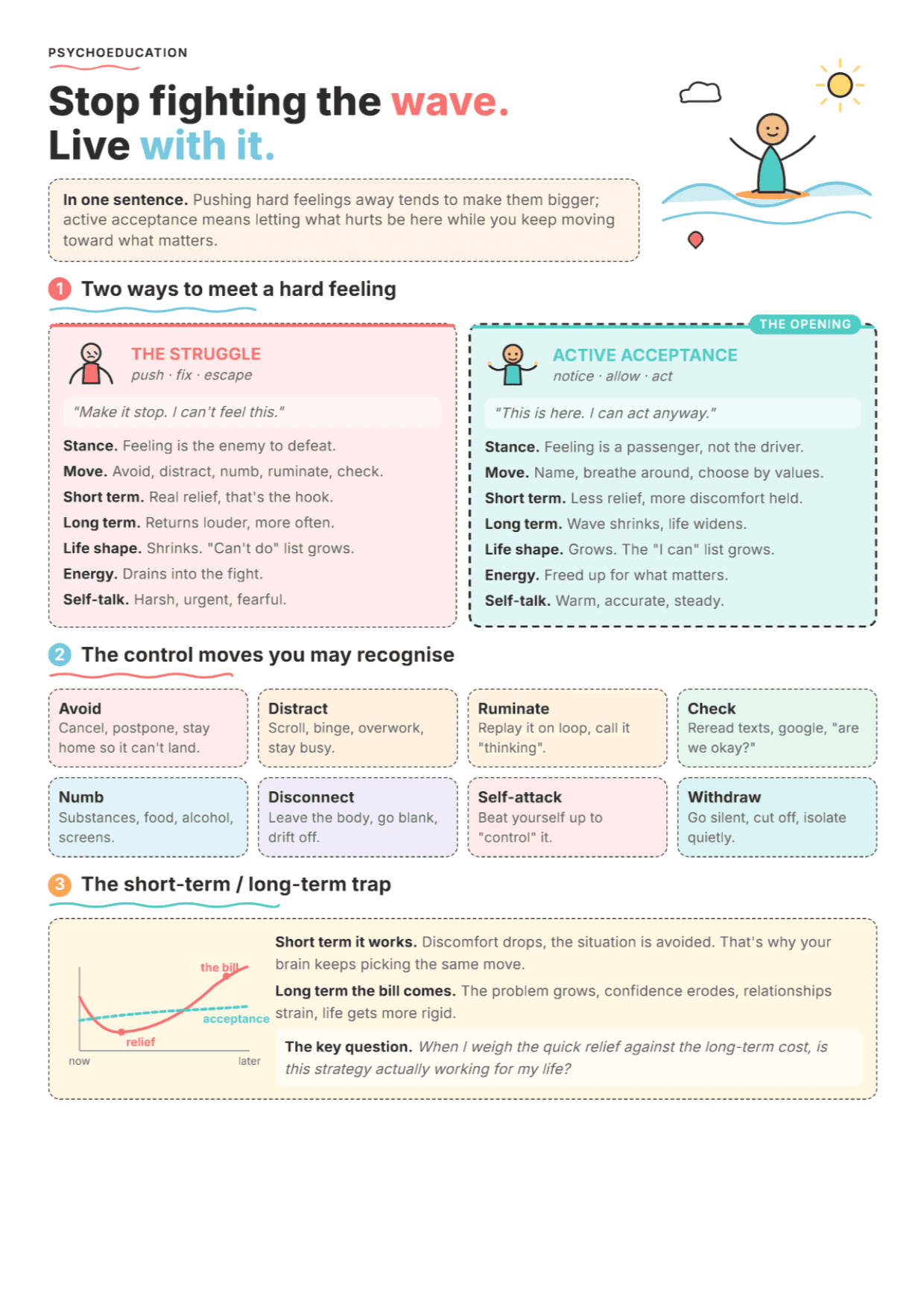
Active Acceptance: PDF Worksheet, Tools and Exercises for ACT Practice
A visual psychoeducation tool helping clinicians explain the struggle-versus-acceptance distinction clearly in session, grounded in ACT and distress tolerance frameworks.
AnxietyMood & depression