
Clinical picture. M., a woman in her early fifties, presented six months after the death of her partner, reporting persistent low mood, social withdrawal, and difficulty returning to work. She described her state simply as "not feeling anything anymore," and resisted the label of depression. The clinician introduced the first lesson of the Sadness psychoeducation program, which distinguishes sadness from depression and maps the broader spectrum of grief-related emotions. Working through the lesson at home, M. completed the multiple-choice prompt on which emotions she had recently experienced, selecting discouragement and resignation alongside grief. She brought her responses to the next session, which allowed the clinician to open a more precise conversation about the texture of her emotional experience rather than its diagnostic category.
Sadness Psychoeducation: A Structured 5-Lesson Clinical Program
Help patients understand, accept, and work constructively with sadness through an autonomous step-by-step homework program grounded in psychoeducation.

Clinical vignettes
Naming Sadness in a Grief Context
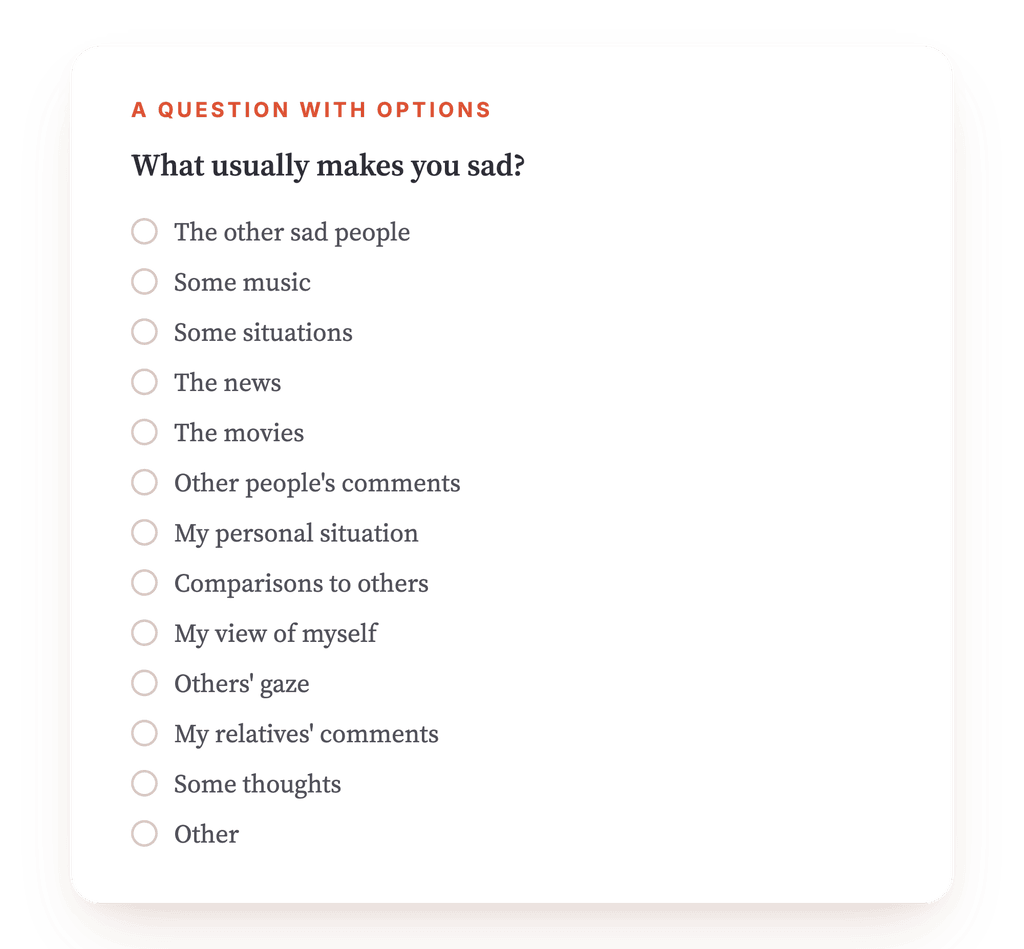
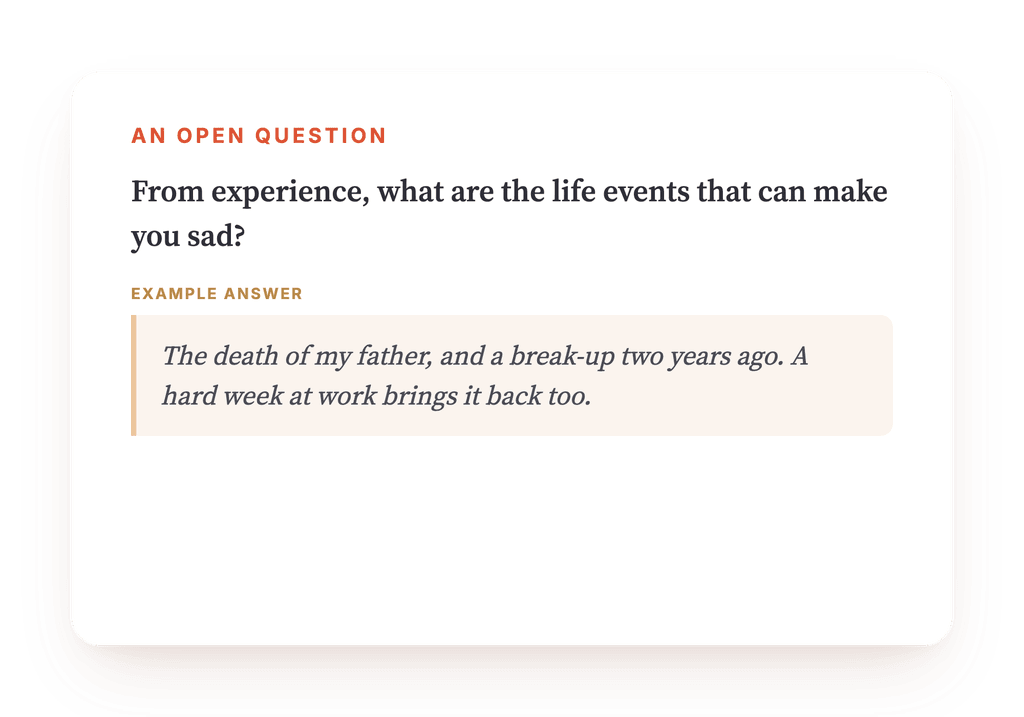
Identifying Personal Sadness Triggers
Clinical picture. K., a man in his late thirties with recurrent low mood and a history of social comparison, was seen in outpatient follow-up between pharmacotherapy reviews. He reported a vague sense of sadness that felt "always there" but could not articulate its sources. The clinician assigned the first lesson of the Sadness program as between-session work, drawing his attention to the guided prompt asking what typically triggers sadness for him. K. returned having selected self-perception, comparisons with others, and certain thoughts, and had written a short free-text response about the impact of sadness on his daily functioning. The structured reflection gave the session a concrete starting point and reduced the patient's tendency to dismiss his emotional state as trivial.
Use this resource with your patients
Handout, exercises and materials ready to use, right inside SessionFuel.
What Makes Sadness Clinically Tricky to Address
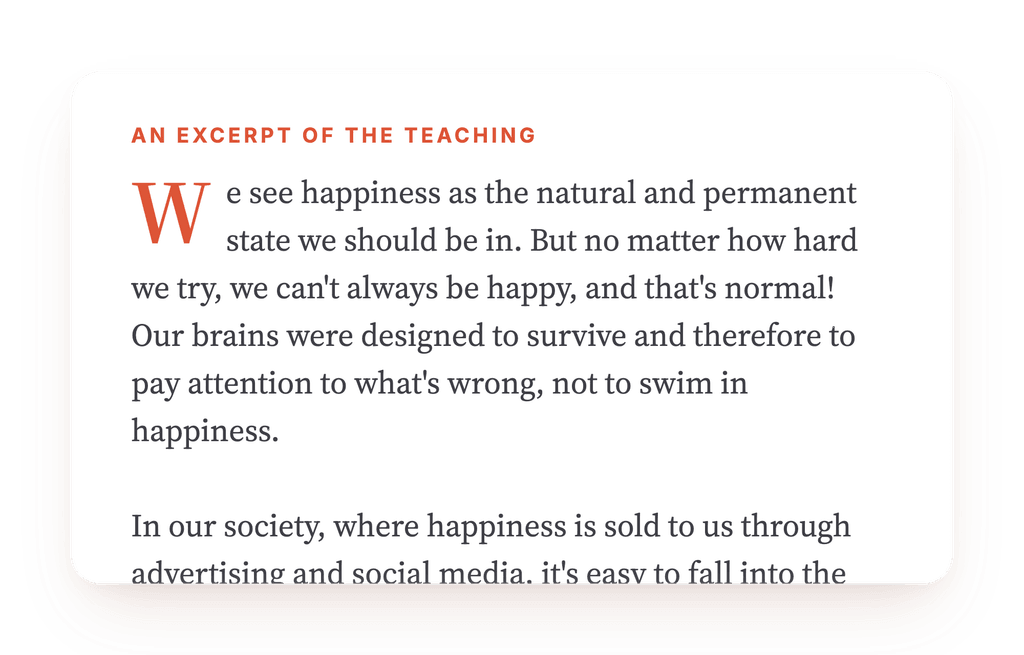
Sadness sits at an awkward intersection in clinical work. It is universal, yet patients frequently arrive convinced that their sadness is a sign of failure, weakness, or pathology. Several things make it genuinely hard to address through words alone. First, the boundary between sadness and depression is routinely blurred, both in culture and in the consulting room. Second, patients carry layers of learned silence around sadness: family scripts, social pressure to "move on," and a pervasive cultural message that happiness is the default state. Third, sadness travels with a large family of related emotions, including disappointment, discouragement, resignation, and despair, and patients often cannot name which one they are actually feeling. That emotional granularity gap limits both self-understanding and therapeutic movement.
Verbal psychoeducation helps, but it rarely gives patients the time and structure to explore these distinctions personally. They need space to sit with the questions, revisit their own history, and produce their own answers. That is exactly the gap this program fills. It pairs well with Understanding and Managing Stress, the Emotions Reference Sheet, and the Emotions: A Hierarchical Map as a broader emotional literacy scaffold.
What the Program Contains
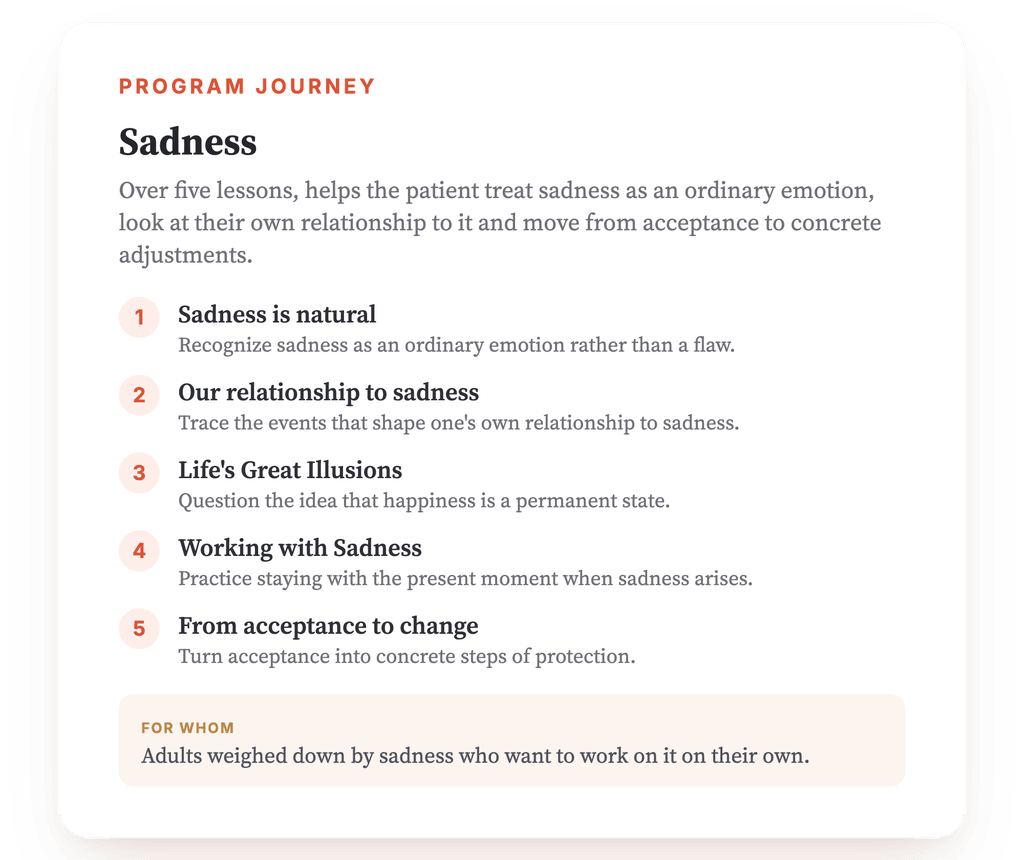
This is a five-lesson structured psychoeducation curriculum patients work through autonomously, step by step. Each lesson builds on the last.
Lesson 1 establishes that sadness is a primary emotion, not a malfunction. It maps the full spectrum of sadness-adjacent emotions (disappointment, discouragement, helplessness, resignation, despair, grief) and explicitly differentiates sadness from depression. Patients complete multiple-choice questions about their own triggers and typical emotional pairings, producing a genuinely personal emotional map.
Lesson 2 turns inward: patients examine how sadness shows up in their own body, how they personally respond to it, what their education and culture taught them about it, and how they would like to change that relationship. The guided prompts here are particularly generative.
Lesson 3 targets the six core cognitive errors patients hold about sadness and happiness: the idea that one should always be happy, that unhappiness signals a personal problem, that sadness means life is worthless, that emotions should be controlled, that suffering must be private, and that life must simply continue regardless. Each error is named and examined, with structured questions that surface the patient's own beliefs.
Lesson 4 moves toward action: expressing sadness constructively, applying mindfulness to emotional experience, noticing sadness somatically, and understanding what "living with" an emotion means in practice. It draws directly on What Is Mindfulness? and connects naturally to Somatic Exercises and Nervous System Regulation.
Lesson 5 consolidates the arc from acceptance to change: recognising sadness without suppression, strengthening resilience, restructuring sad thoughts, and practising cognitive distancing from negative self-talk. The reflective prompts in this lesson are rich clinical data.
These preview images show only a small fraction of the program. The complete curriculum contains far more lessons, steps, guided prompts, and multiple-choice questions than what appears here.
This program is available to patients through the mobile application that is the dedicated patient-side interface of SessionFuel: once you assign it in SessionFuel, your patient completes each lesson directly on their phone, on their own, as autonomous work between your appointments.
750+ clinical tools
A library built with and for clinicians, ready to use in session and extend between appointments.
Access all the toolsHow to Integrate It as Between-Session Homework
Assign this program as structured homework between consultations, not as in-session material. It is designed for autonomous patient work and produces responses you can use as a clinical springboard in the next appointment.
Which patients suit this program? It fits a wide range: patients presenting with low mood who do not yet meet criteria for a depressive episode, those navigating grief or loss alongside the Understanding the Grief Process fiche, patients who suppress or avoid emotions, and those whose relationship with sadness is distorted by cognitive errors identified through Cognitive Distortions work. It also complements the Emotions in Depression program when depressive features are present, or ACT for Depression for patients working toward psychological flexibility with painful emotions.
How to introduce it: Frame it simply. Tell the patient that between now and your next appointment, they will work through the first one or two lessons on their phone, answering the questions honestly, as if in conversation with themselves. Emphasise that there are no right answers. Point specifically to the open prompts in Lessons 1 and 2 as a starting place, because they ask questions that many patients have never been invited to answer.
How to use what the patient brings back: The program generates three types of material you can mine directly. The multiple-choice selections (triggers, emotion pairings, somatic locations, avoidance strategies) give you a structured snapshot that can open the consultation. The open reflective prompts (impact of sadness, life vision, relationship to sadness they want to change, sad thought reframing) can be read aloud together and used to deepen formulation. The Lesson 3 self-beliefs about happiness and emotional control map directly onto cognitive work with The CBT Cognitive Model or ACT Cognitive Defusion.
Use it with your patients
Share this tool in the mobile app and follow the work between sessions.
Articulating This Program with Other Clinical Work
This program sits naturally inside broader emotion-regulation work. The Lesson 4 mindfulness content pairs well with the RAIN Mindfulness Technique and Active Acceptance as companion fiches. The Lesson 5 cognitive distancing exercises extend naturally into Distancing and Decentering or the Practicing Self-Compassion fiche, particularly when the patient's internal monologue is self-critical. For patients whose sadness is entangled with avoidance, the Coping Strategies Map and Adaptive vs Maladaptive Coping offer a complementary framework to explore between sessions.
Key insight: The real clinical value of this program is not the psychoeducation content alone but the patient-produced responses it generates: reflections on triggers, emotional pairings, somatic experience, avoidance patterns, and cognitive restructuring attempts that arrive at your next appointment already in written form, ready to be worked with.
Your session continues in your patients' pocket
Use with a patientYour resources, available everywhere
The handouts, exercises, programs and audios above: you choose which ones to make available to your patients, in the mobile app dedicated to them.
And far more than a library
The app goes well beyond resources, to support your patients every day:
Related categories
Explore other clinical resources by category.

Mood
Evidence-based worksheets and clinical tools for mood disorders: CBT, ACT, and positive psychology resources for psychologists and therapists.

Emotions
Clinical resources on emotion regulation: worksheets, coping tools, CBT, REBT, and ACT exercises for therapists working across diagnoses and age groups.

Understand
Clinical hub for the therapeutic aim 'Understand': worksheets and tools to build patient insight across CBT, ACT, schema therapy and more.

ACT
Clinical hub for Acceptance and Commitment Therapy (ACT): worksheets, exercises, programs and audio resources for practitioners using the ACT model.

CBT
CBT worksheets, cognitive restructuring exercises & behavioral tools for clinicians. Evidence-based resources for every phase of cognitive behavioral therapy.

Anxiety
Clinical hub for anxiety disorders: CBT and ACT worksheets, psychoeducation sheets, and exercises for assessment and treatment across the anxiety spectrum.