
Clinical picture. T., a 14-year-old referred by his paediatrician after six months of recurring headaches and abdominal pain with no identified organic cause, presented with marked irritability and social withdrawal rather than overt sadness. His mother, seen alongside him in the initial assessment, attributed the difficulties to laziness and poor motivation at school. The clinician introduced the psychoeducation program, assigning Lesson 1 as independent work between sessions; the unit on somatic presentations of depression in children and adolescents proved particularly useful, prompting the mother to reframe what she had been observing. At the following appointment she was able to describe specific situational triggers in concrete detail, which meaningfully informed the shared formulation.
Depression in Children and Adolescents: A Clinical Program
A structured psychoeducation program helping parents understand, recognize, and respond to youth depression across developmental stages.

Clinical vignettes
Somatic Complaints Masking Adolescent Depression
Distinguishing Low Mood from Clinical Depression
Clinical picture. M., aged 11, was brought to the clinic by her father after her teacher flagged persistent tearfulness and a sharp drop in academic engagement over two school terms. The father was uncertain whether his daughter was experiencing a depressive episode or simply going through a difficult patch, and he expressed concern about labelling her unnecessarily. The clinician introduced the psychoeducation program as structured between-session work, starting with Lesson 1 on the distinctions between sadness, a depressive episode, and clinical depression, and Lesson 2 on behaviours commonly confused with depression. The father completed the reflective prompts carefully and returned to the next appointment with a clearer, less stigmatising understanding of what M. was experiencing, which reduced his own distress and improved his capacity to support her at home.
Use this resource with your patients
Handout, exercises and materials ready to use, right inside SessionFuel.
The clinical challenge: when depression hides in plain sight
Youth depression is one of the presentations that most reliably catches parents off guard. The textbook picture of adult depression rarely maps onto what families observe: instead of sadness, they see irritability, somatic complaints, defiance, or a withdrawal that reads as laziness. The result is that well-meaning parents inadvertently respond in ways that increase pressure or invalidate the child's inner experience, deepening the very loop you are trying to interrupt.
Conveying this in a single consultation is genuinely difficult. You can explain the distinction between sadness and major depressive disorder, but without repeated exposure, structured reflection, and the chance to connect concepts to their own child's behaviour, most parents leave the room with only a partial picture. The risk is that they then apply folk explanations, including the dangerous "what kills you makes you stronger" logic that Lesson 2 of this program addresses directly.
This is the clinical gap this program was built to fill. It also pairs naturally with tools such as the Anxiety in Children and Adolescents: A Parent Psychoeducation Program, which addresses the high comorbidity between anxiety and depression at these ages.
What the program contains
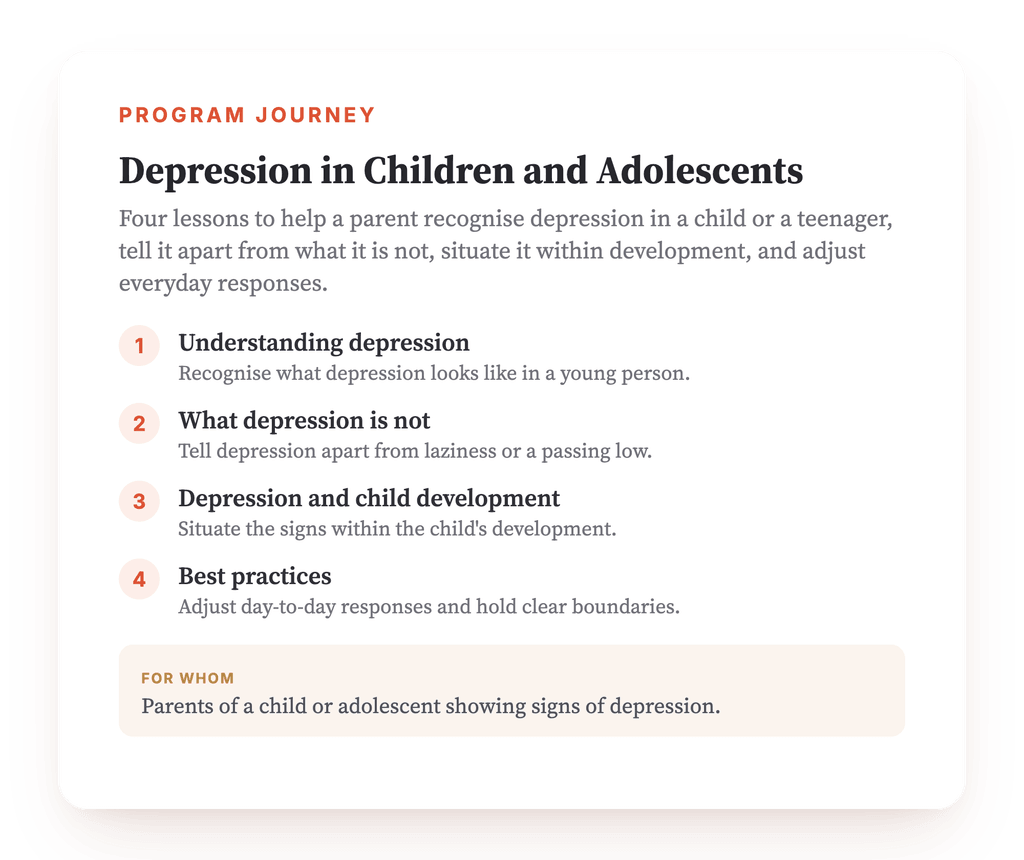
The program unfolds across four structured lessons, each building on the previous one:
- Lesson 1 establishes the conceptual vocabulary: the difference between sadness, a depressive episode, and clinical depression; the somatic and emotional signatures specific to children and adolescents; contributing causes; and the damaging effects of well-intentioned pressure to "get better."
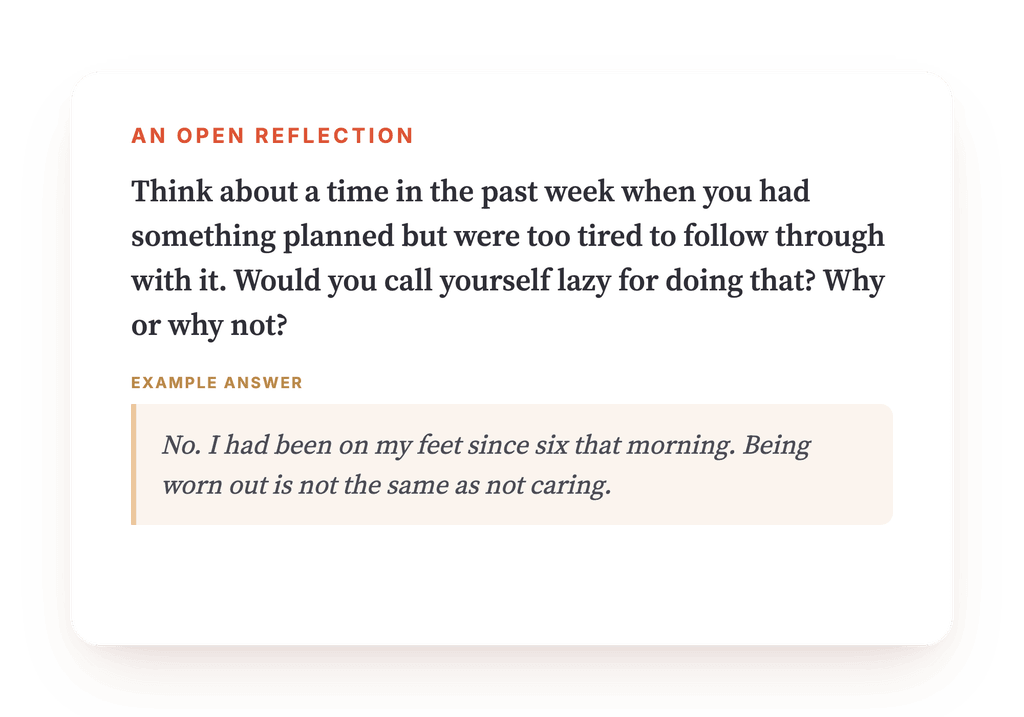
- Lesson 2 targets the most common misconceptions that sustain invalidation: depression confused with laziness, defiance, or a passing mood. It works directly on the parent's own emotional memory through personal reflection prompts, making the reframes experiential rather than purely intellectual.
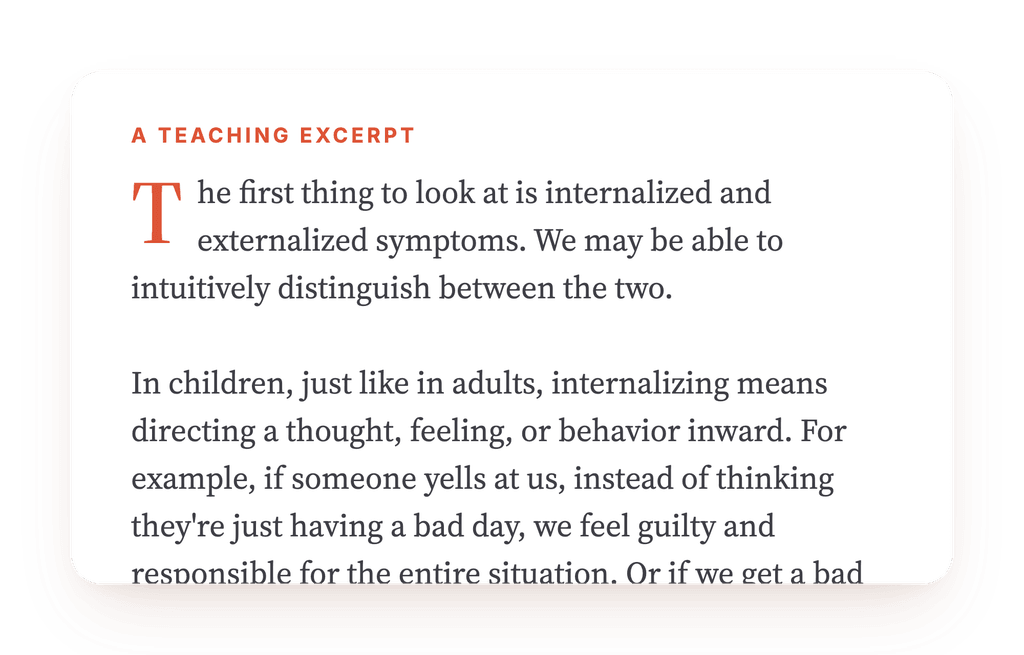
- Lesson 3 introduces the internalising and externalising framework across developmental stages, from early childhood through adolescence. Parents examine how their child's behavioural presentation maps onto these dimensions, a conceptual shift that is difficult to convey in words alone.
- Lesson 4 translates everything into concrete relational practice: being considerate, building patience, respecting the child's limits, and knowing when professional help is non-negotiable.
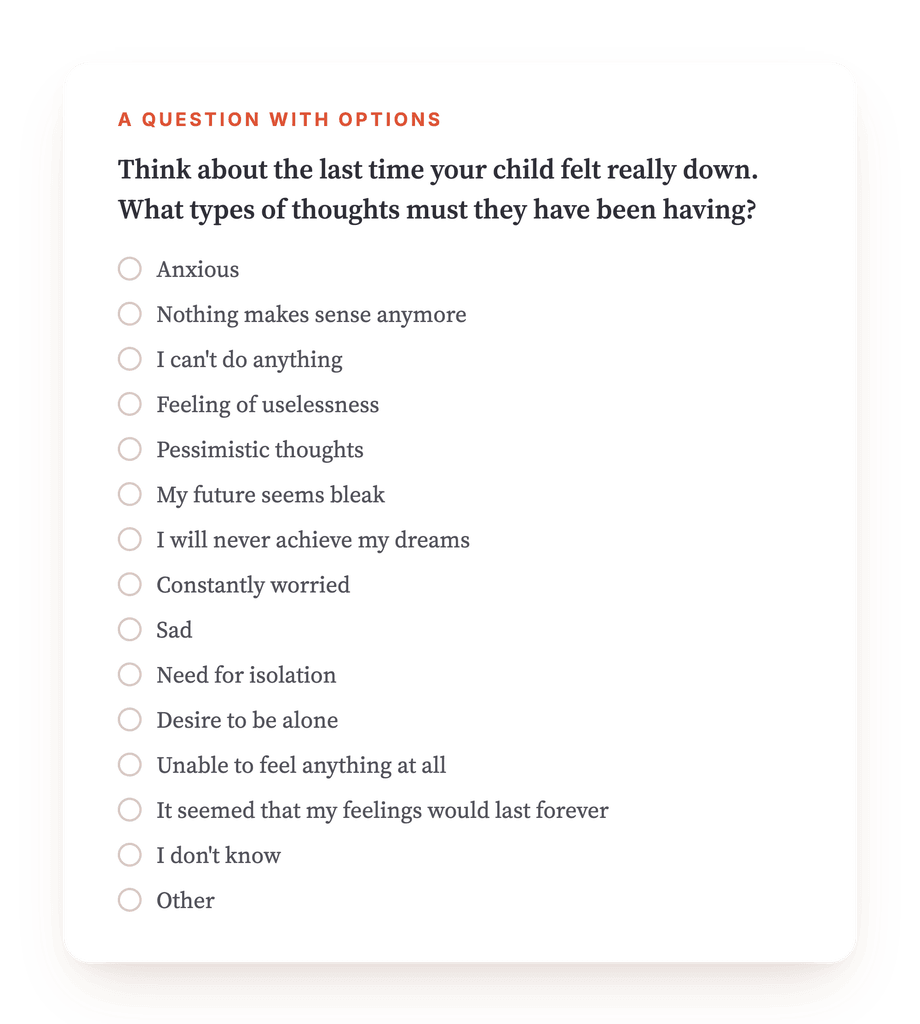
Each lesson combines explanatory text, guided written prompts, and multiple-choice emotional mapping questions that prompt genuine self-observation rather than passive reading.
Note: the preview images embedded in this page show an overview map and a sample of cards. These aperçus represent only a very small fraction of the program. The complete curriculum contains many more lessons, steps, guided prompts, and reflection exercises than what is visible here.
This program is available to patients directly through the mobile application that is the dedicated patient-side interface of SessionFuel: once you assign it in your SessionFuel account, the parent completes each lesson autonomously on their phone, between consultations, at their own pace.
750+ clinical tools
A library built with and for clinicians, ready to use in session and extend between appointments.
Access all the toolsIntegrating it as between-session homework
Which parents to assign it to. This program suits parents of children or adolescents who are already in assessment or early treatment for a depressive presentation, as well as parents who arrive with confusion about whether what they are observing is clinical. It is equally relevant when a parent is a collateral informant in individual work with a young patient.
How to introduce it. Frame it explicitly as structured work to do between appointments. You might say: "Between now and our next consultation, I would like you to work through the first two lessons. There are no right or wrong answers. The prompts ask you to think about your own experience, not just your child's, and that is intentional."
How to use what the parent brings back. The guided prompts and multiple-choice emotion maps are clinical gold. Ask the parent to share one answer that surprised them. The prompt about a recent moment of frustration with their child (Lesson 4) frequently surfaces parental guilt or helplessness that deserves attention in the room. Responses to the triggers question in Lesson 1 can directly enrich your formulation and inform psychoeducation drawn from resources such as What Keeps Depression Going or The Cycle of Depression.
Key insight: When a parent can name the internalising versus externalising dimension of their child's presentation and connect it to a developmental stage, their capacity to respond with curiosity rather than correction shifts measurably. That shift is what this program builds, step by step.
Use it with your patients
Share this tool in the mobile app and follow the work between sessions.
Useful clinical companions
Once the parent has completed the program, you may wish to deepen specific threads. The 50 Coping Strategies for Children and Adolescents fiche gives families a concrete repertoire to work from. For understanding the cognitive dimension of the young person's experience, Thoughts and Depression and CBT for Kids: Thoughts, Feelings and Actions offer complementary psychoeducation anchors. If the child's somatic or behavioural presentation raises differential diagnosis questions, the DMDD Diagnostic Criteria fiche and the How Trauma Can Affect Children and Young People resource are worth having ready. Finally, the Supporting Someone with Depression fiche can serve as a brief, practical companion for parents who need a portable reference between lessons.
Your session continues in your patients' pocket
Use with a patientYour resources, available everywhere
The handouts, exercises, programs and audios above: you choose which ones to make available to your patients, in the mobile app dedicated to them.
And far more than a library
The app goes well beyond resources, to support your patients every day:
Related categories
Explore other clinical resources by category.

Mood
Evidence-based worksheets and clinical tools for mood disorders: CBT, ACT, and positive psychology resources for psychologists and therapists.

Relationships
Clinical worksheets and tools on relational functioning: attachment, schemas, assertiveness, and communication skills for therapists. Printable PDF resources.

Understand
Clinical hub for the therapeutic aim 'Understand': worksheets and tools to build patient insight across CBT, ACT, schema therapy and more.

Anxiety
Clinical hub for anxiety disorders: CBT and ACT worksheets, psychoeducation sheets, and exercises for assessment and treatment across the anxiety spectrum.

Trauma
Clinical hub on trauma and PTSD: assessment, differential diagnosis, treatment phases, and printable resources for practitioners. 155 chars.

Identity
Clinical resources for self-identity work in therapy: CBT, ACT, schema tools for clinicians addressing self-concept, core beliefs, and identity disruption.