
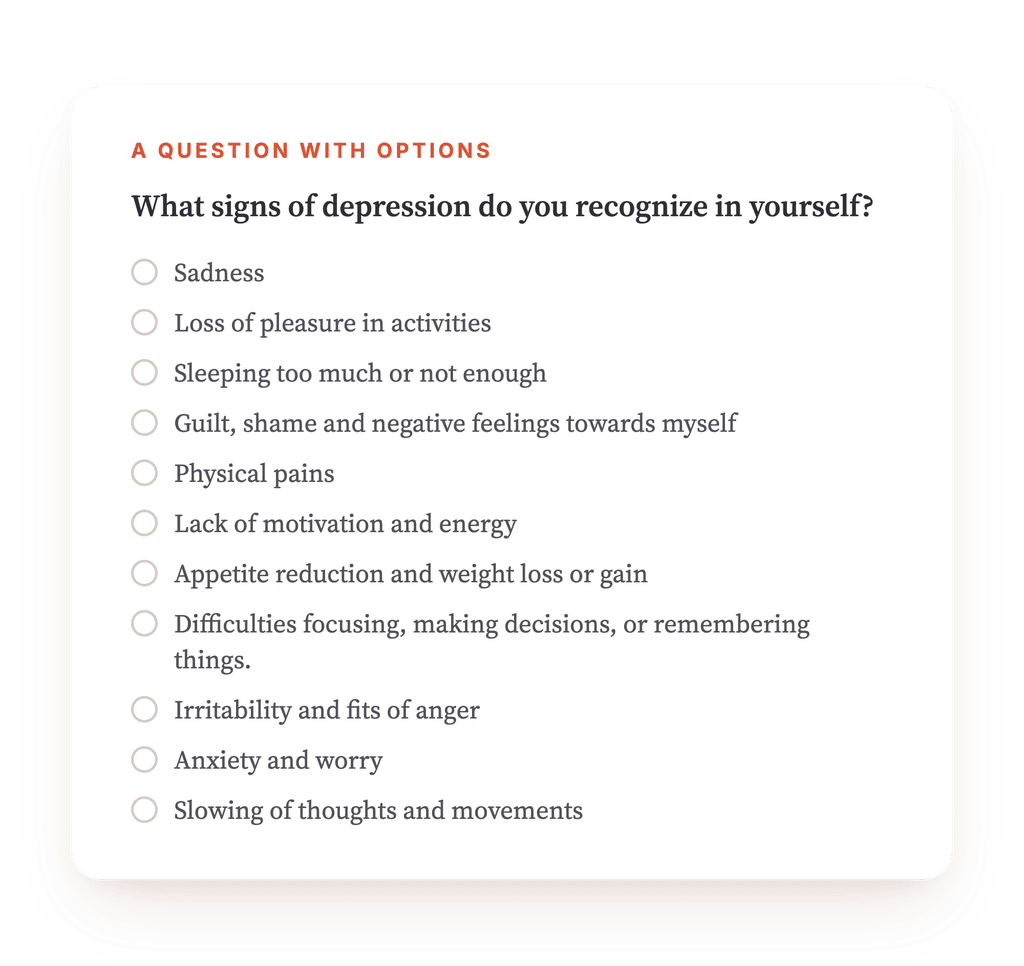
Clinical picture. M., a man in his late thirties, presented with persistent low mood, hypersomnia, and withdrawal from social activities over roughly four months; he described his difficulties as "just being tired of everything" and was reluctant to accept a depressive diagnosis. His clinician introduced the Understanding Depression program and assigned the first lesson as independent work before the next appointment. M. completed the lesson's multiple-choice symptom checklist and identified loss of pleasure, concentration difficulties, and irritability as personally recognizable, which he had not previously linked to depression. At the following session he arrived with his responses in hand, allowing the clinician to move directly into a more focused discussion of his clinical picture rather than spending the session establishing basic psychoeducation from scratch.
Understanding Depression: A 4-Lesson Psychoeducation Program
A structured autonomous homework program helping patients build a clear, working understanding of depression, its origins, its maintenance loops, and how to begin addressing it.
Clinical vignettes
Naming Symptoms Through Structured Psychoeducation
Engaging a Reluctant Patient via Self-Paced Learning
Clinical picture. A., a woman in her mid-fifties referred by her GP after a period of bereavement, minimized her distress and questioned whether her symptoms warranted clinical attention. The clinician proposed the Understanding Depression program, framing the first lesson not as a diagnostic exercise but as a way for A. to form her own understanding of what she was experiencing. Working through the lesson at home, A. encountered the section on depression's adaptive functions, which she found unexpectedly normalizing; the written reflection prompt about people she had known who recovered also prompted her to think concretely about change as possible. She returned to the session less dismissive of her presentation and more willing to discuss the impact of her symptoms on daily functioning.
Use this resource with your patients
Handout, exercises and materials ready to use, right inside SessionFuel.
The clinical challenge: what words alone cannot do
Depression is one of the most common presentations clinicians see, yet it is also one of the hardest to fully convey in a single exchange. Patients frequently arrive with misconceptions, they believe they are simply weak, lazy, or permanently broken. They struggle to connect what is happening in their body, their thoughts, their relationships, and their history into a coherent picture. Telling them "depression is a mood disorder with cognitive and behavioural components" during a consultation accomplishes remarkably little on its own.
What tends to shift things is repeated, structured exposure to the concepts: time to read, reflect, answer questions, and bring something concrete back. That is the gap this program fills. It pairs naturally with worksheets like the Depression: PDF Worksheet, Tools and Exercises for Clinical Practice or the Cognitive Distortions: PDF Worksheet, Tools and Exercises, which you may already use in session to open the conversation.
750+ clinical tools
A library built with and for clinicians, ready to use in session and extend between appointments.
Access all the toolsWhat the program contains
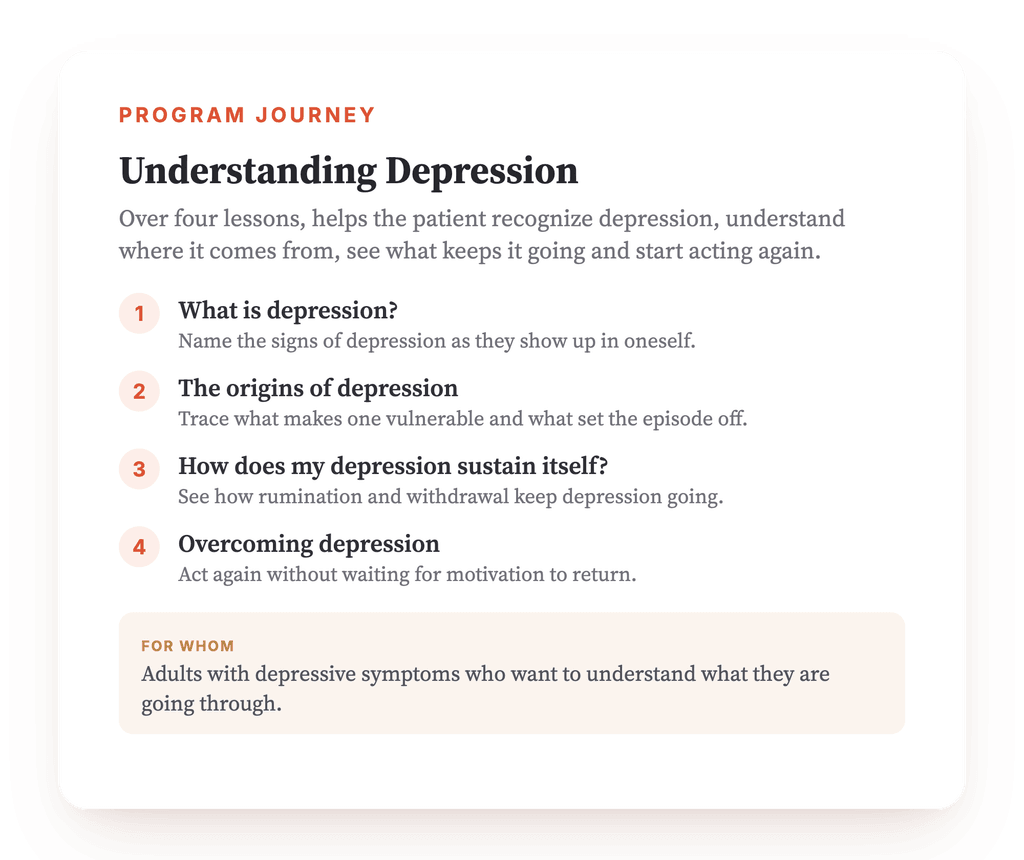
"Comprendre la dépression" is a four-lesson stepped curriculum patients complete autonomously, in order, as structured homework between appointments. The arc is deliberately progressive:
- Lesson 1 builds a shared vocabulary, distinguishing depression from transient sadness, mapping its prevalence, and having patients identify which symptoms and life domains they personally recognise. Multiple-choice questions and open prompts make this immediately self-relevant.
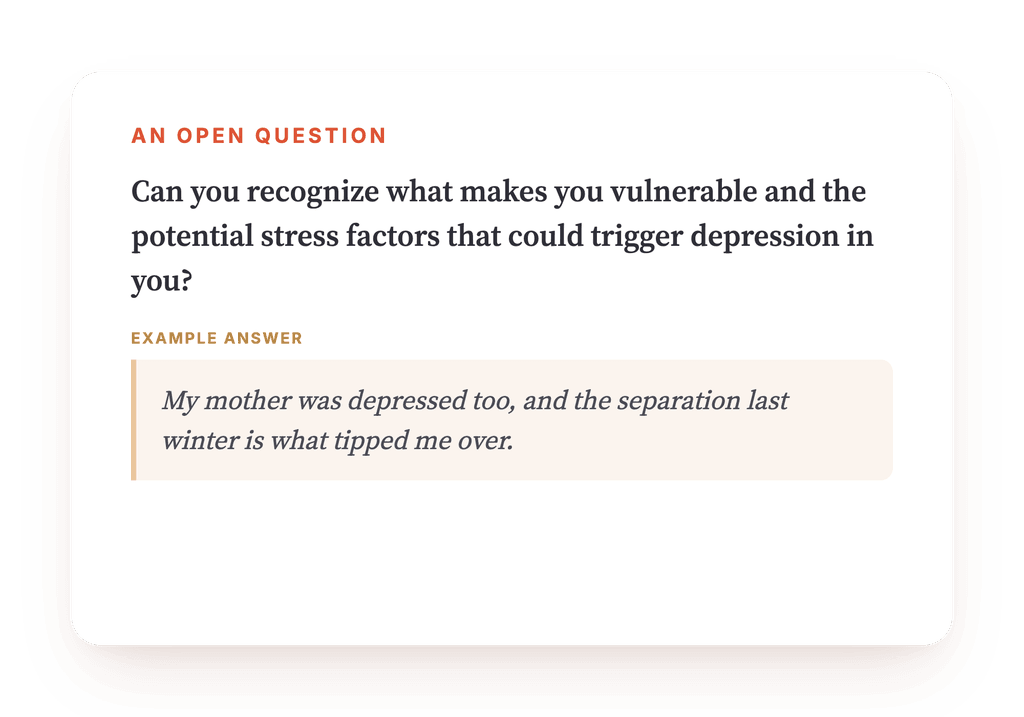
- Lesson 2 addresses origins, childhood vulnerabilities, stress-diathesis factors, core beliefs, and a detailed introduction to cognitive distortions (catastrophising, emotional reasoning, mental filtering, and others). The lesson on cognitive distortions is particularly reinforced here.
- Lesson 3 targets maintenance loops: rumination, the inactivity trap, selective attention, and the paradoxical reassurance-seeking dynamic in relationships. This maps closely to resources like What Keeps Depression Going and Rumination in Depression: A Psychoeducation Program.
- Lesson 4 shifts to action, behavioural activation, challenging limiting beliefs, questioning automatic thoughts against observable facts, and introducing present-moment awareness as an antidote to ruminative withdrawal.
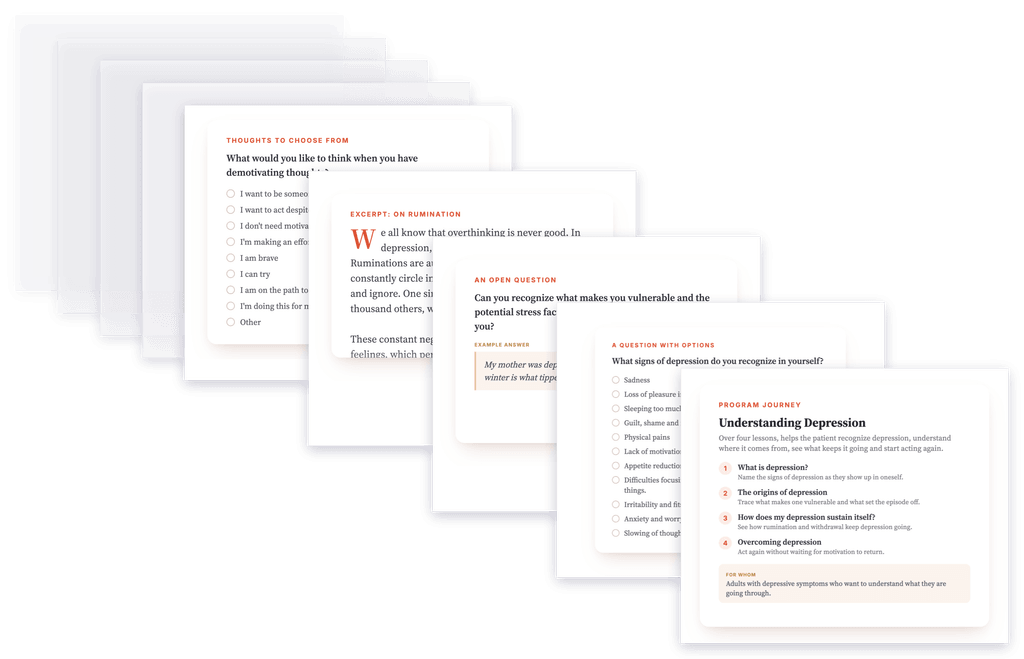
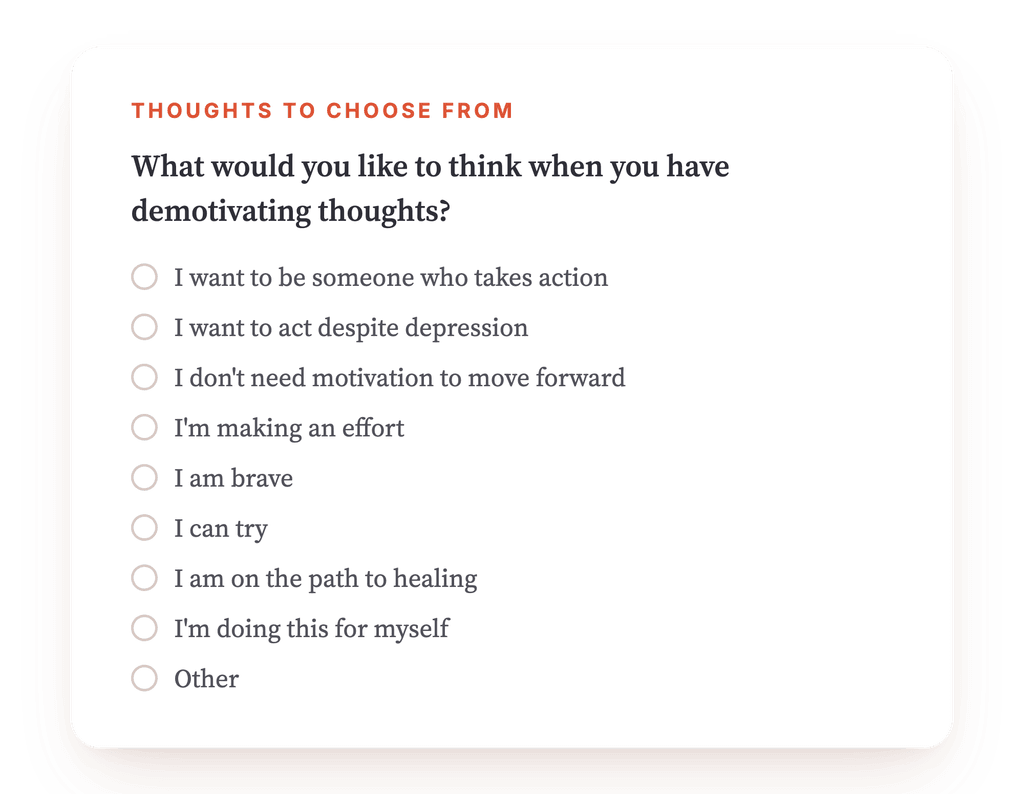
The program contains text cards, guided reflection prompts, and structured multiple-choice questions throughout all four lessons. The preview images embedded here, an overview map plus a handful of sample cards, represent only a small fraction of the program; the complete curriculum is considerably richer, with many more steps, exercises, and prompts than what these excerpts can show.
This program is available to your patients through the mobile application that is the dedicated patient-side interface of SessionFuel: you assign it directly from your SessionFuel account, and your patient then completes it lesson by lesson on their phone, entirely on their own, between appointments.
Key takeaway: A patient who has worked through this program arrives at their next appointment having already mapped their own symptoms, triggers, beliefs, and maintenance patterns, which radically accelerates the clinical work.
Use it with your patients
Share this tool in the mobile app and follow the work between sessions.
Integrating it as between-session homework
This program is assigned as autonomous homework to be completed between two consultations, never during the appointment itself.
Which patients benefit most: those with a confirmed or suspected depressive episode who have enough cognitive capacity to engage with written material, patients who intellectualise and need structured frameworks to shift from insight to action, and patients who feel isolated in their experience and benefit from normalisation. It also works well alongside Emotions in Depression: A Structured Psychoeducation Program or Self-Image and Depression: A 4-Lesson Clinical Program for patients where low self-esteem and depressive cognitions are tightly intertwined.
How to introduce it: Frame the program as structured reading and reflection they do at their own pace. Suggest completing one lesson per week, or roughly one between each appointment. Acknowledge that Lesson 4 contains active exercises, patients should not rush to it before building the conceptual foundation in Lessons 1 to 3.
What to do with what they produce: The prompted responses and multiple-choice answers patients generate are your clinical material for the following session. A patient who has named their own cognitive distortions in Lesson 2 is far more ready to work with The Cycle of Depression: PDF Worksheet, Tools and Exercises, the Thoughts and Depression fiche, or the Four Strategies to Overcome Depression worksheet. Their Lesson 3 reflection on rumination feeds directly into work with Constructive vs Harmful Rumination. The behavioural activation prompt in Lesson 4 can anchor a conversation about the evidence base covered in Exercise for Mental Health: PDF Worksheet, Tools and Exercises.
The program is also a natural predecessor to more targeted curricula: patients who have completed it are well-positioned to move into Depression and Limiting Beliefs: A 4-Lesson Clinical Program or ACT for Depression: A Structured Psychoeducation Program for deeper work on the mechanisms they have begun to recognise.
Your session continues in your patients' pocket
Use with a patientYour resources, available everywhere
The handouts, exercises, programs and audios above: you choose which ones to make available to your patients, in the mobile app dedicated to them.
And far more than a library
The app goes well beyond resources, to support your patients every day:
Related categories
Explore other clinical resources by category.

Mood
Evidence-based worksheets and clinical tools for mood disorders: CBT, ACT, and positive psychology resources for psychologists and therapists.

Understand
Clinical hub for the therapeutic aim 'Understand': worksheets and tools to build patient insight across CBT, ACT, schema therapy and more.

CBT
CBT worksheets, cognitive restructuring exercises & behavioral tools for clinicians. Evidence-based resources for every phase of cognitive behavioral therapy.

Anxiety
Clinical hub for anxiety disorders: CBT and ACT worksheets, psychoeducation sheets, and exercises for assessment and treatment across the anxiety spectrum.

Trauma
Clinical hub on trauma and PTSD: assessment, differential diagnosis, treatment phases, and printable resources for practitioners. 155 chars.

Identity
Clinical resources for self-identity work in therapy: CBT, ACT, schema tools for clinicians addressing self-concept, core beliefs, and identity disruption.