
Clinical picture. M., a woman in her early 40s, presented with persistent relational anxiety following the breakdown of a long-term partnership marked by repeated dishonesty. She described a generalised difficulty distinguishing trustworthy behaviour from performance, which was interfering with a new relationship she described as otherwise stable. The clinician introduced the first lesson of the psychoeducation program on trust, inviting M. to work through the guided prompts between sessions, including the reflection on what had concretely convinced her to extend trust in the past. At the next appointment, M. returned having written at length about the role of consistency and reliability, noting she had not previously articulated the difference between a partner's words and their observable patterns of behaviour. This provided a workable entry point for examining her current relationship with more differentiated criteria rather than global suspicion.
Trust in Relationships: A Structured Psychoeducation Program
Help patients understand how trust forms, what undermines it, and why reciprocity is the foundation of lasting romantic intimacy.
Clinical vignettes
Revisiting Trust After Relational Betrayal
Unilateral Effort and the Two-Sided Nature of Trust
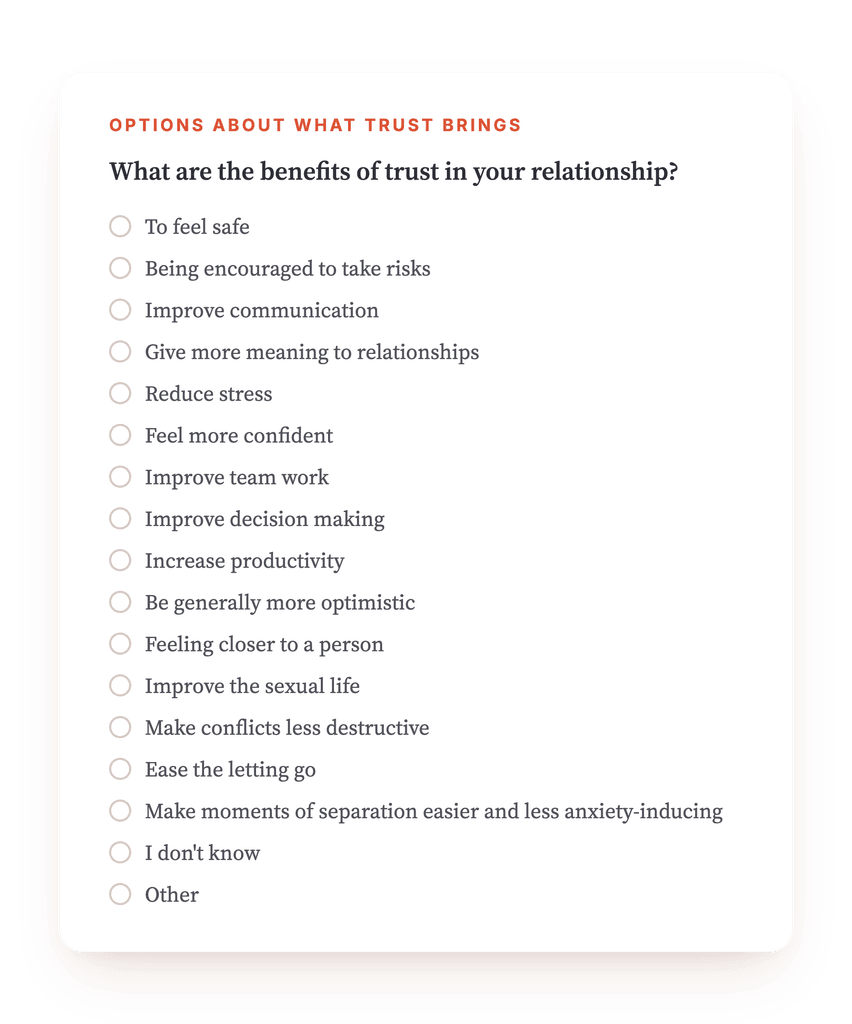
Clinical picture. T., a man in his late 30s, sought support after a friendship of several years had dissolved without explanation, leaving him questioning his own conduct and self-worth. He had a longstanding tendency to assume sole responsibility for relational ruptures. The clinician assigned the opening lesson of the trust program, drawing particular attention to the unit addressing the reciprocal nature of trust-building. T. engaged with the multiple-choice prompt on his usual trust-building behaviours and was struck to recognise that nearly all his selected strategies were unilateral. In the following session he was able to consider, with less self-blame, that the other party's gradual withdrawal may have reflected their own disengagement rather than a failure on his part, which modestly reduced his ruminative self-criticism.

Use this resource with your patients
Handout, exercises and materials ready to use, right inside SessionFuel.
Why trust resists verbal explanation alone
Trust is one of those concepts patients nod at immediately and struggle to operationalise the moment it matters. They know trust matters; they cannot always say what specifically builds it, what erodes it, or why their own reactions feel disproportionate. Clinicians working with couples or individuals in relational distress face a recurring problem: a ten-minute oral explanation lands flat, because trust is not a single idea but a layered process built from constancy, reciprocity, emotional vulnerability, and histories that often pull in opposite directions.
Patients who carry a mistrust or abuse schema, or whose attachment style is organised around hypervigilance, need more than a definition. They need scaffolded exposure to the concept, repeated contact with concrete questions, and space to reflect without the therapist in the room. That is exactly the clinical gap this program addresses.
750+ clinical tools
A library built with and for clinicians, ready to use in session and extend between appointments.
Access all the toolsWhat the program contains
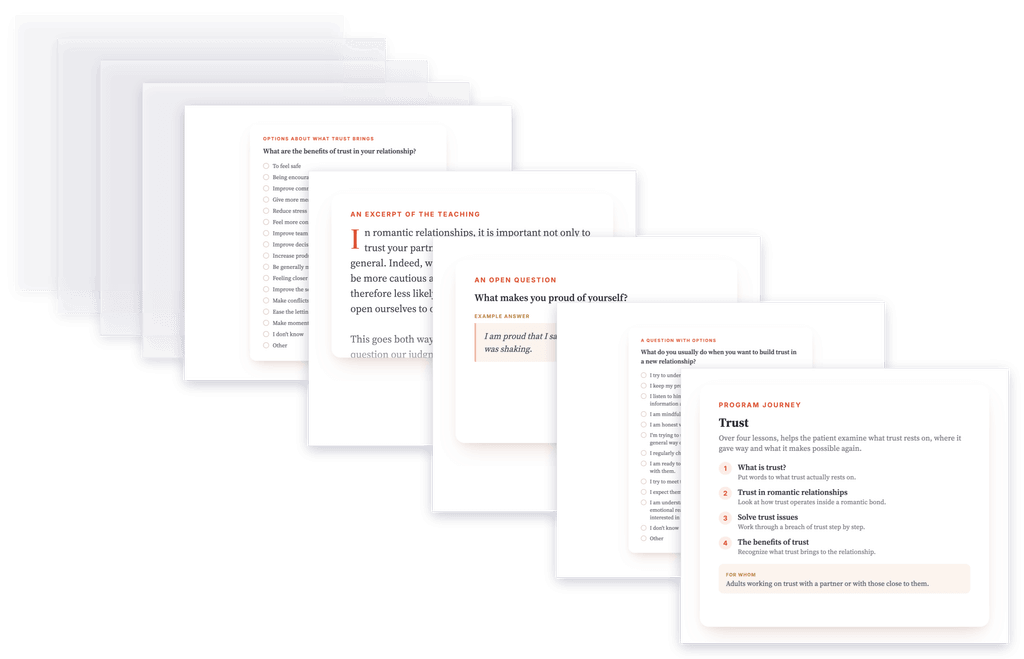
The program moves through four structured lessons, each with a distinct focus. Lesson 1 lays the conceptual groundwork: what happens when trust is extended, which qualities mark a person as trustworthy, how trust develops over time, and why the dynamic must be genuinely mutual. Lesson 2 narrows to romantic relationships specifically, examining the amplified stakes of relational intimacy, the particular difficulties that arise as closeness increases, and what it takes to build and sustain trust with a partner. Lesson 3 is clinically dense: it addresses common trust problems, their origins in personal history and emotional triggers, how patients can learn to identify their own sensitive spots, and how to limit the relational damage that reactive mistrust produces. Lesson 4 closes the arc on a constructive note, exploring the concrete benefits of trust: deeper intimacy, richer self-knowledge, felt security, and overall wellbeing.
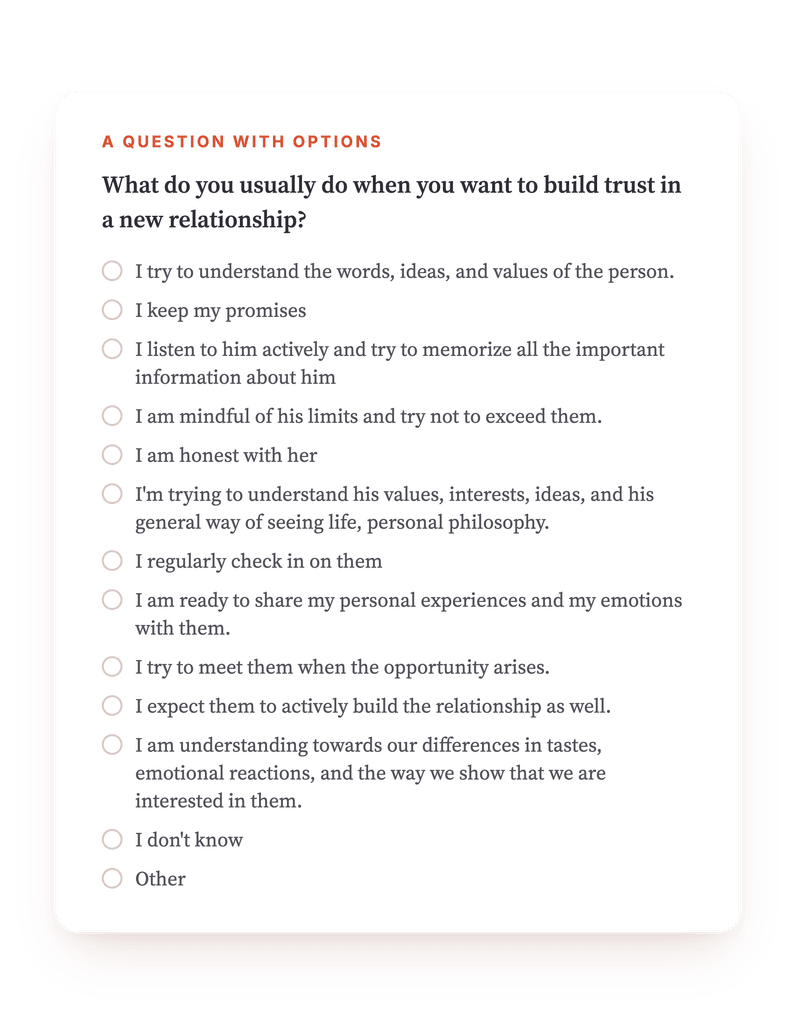
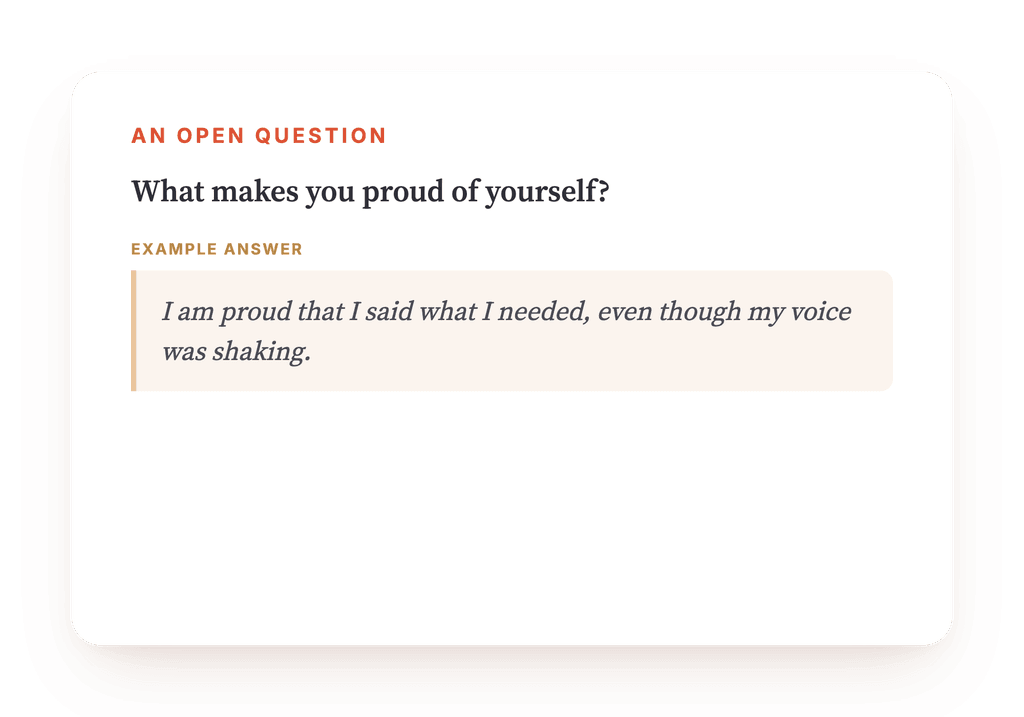
Each lesson combines psychoeducation text, guided reflection prompts (open-ended writing questions), and multiple-choice items that help patients locate themselves honestly. The program pairs naturally with complementary resources such as Expressing Vulnerability in Relationships, the Healthy Relationships program, and the Secure Attachment fiche.
Important: the preview images embedded here, including the overview map and the sample lesson cards, are only a small aperçu of the program. The complete curriculum contains far more lessons, steps, exercises, and guided prompts than what these excerpts can show.
This program is available to patients through the mobile patient app of SessionFuel, the dedicated companion application reserved for the patients of clinicians who use SessionFuel: once you assign it, your patient receives it directly on their phone and works through it step by step, on their own.
Use it with your patients
Share this tool in the mobile app and follow the work between sessions.
Integrating it as between-session homework
Assign this program as structured homework to be completed between consultations, not in the room. The patient progresses through lessons autonomously, at their own pace, and brings what they have produced back to the next appointment.
Which patients benefit most? Those navigating trust ruptures in a current relationship, individuals with anxiety around abandonment or betrayal, patients rebuilding after infidelity, and anyone whose history has produced a chronic vigilance toward others' intentions. It also works well alongside the Conflict in Romantic Relationships or Communication Skills in Couples programs, when the clinical picture involves intertwined conflict and distrust.
How to introduce it: frame the program simply as a way to think more carefully, on their own time, about something you are working on together. Let them know each lesson will raise questions worth bringing back. Link it explicitly to the thread already running in therapy, for instance by naming the attachment patterns or relationship green flags you have already discussed.
How to use what they bring back: the written prompts are the most clinically productive material. A patient's answer to "What convinced you to trust someone?" or "What triggers erode your confidence?" can open an entire session. The multiple-choice items, particularly the one mapping trustworthy qualities in a partner, often surface blind spots worth examining. Used alongside the How to Apologize fiche or the Relationship Maintenance Behaviors fiche, the patient's completed lessons become a genuine relational map rather than an abstract exercise.
Key insight: Trust is a skill set as much as a feeling. This program gives patients the vocabulary and the reflective structure to begin treating it that way, before, during, and after relational difficulty.
Your session continues in your patients' pocket
Use with a patientYour resources, available everywhere
The handouts, exercises, programs and audios above: you choose which ones to make available to your patients, in the mobile app dedicated to them.
And far more than a library
The app goes well beyond resources, to support your patients every day:
Related categories
Explore other clinical resources by category.
Relationships
Clinical worksheets and tools on relational functioning: attachment, schemas, assertiveness, and communication skills for therapists. Printable PDF resources.

Understand
Clinical hub for the therapeutic aim 'Understand': worksheets and tools to build patient insight across CBT, ACT, schema therapy and more.

Build skills
Skill-building resources for clinicians: printable worksheets and exercises for coping, assertiveness, and communication skills training in therapy.
Anxiety
Clinical hub for anxiety disorders: CBT and ACT worksheets, psychoeducation sheets, and exercises for assessment and treatment across the anxiety spectrum.
Trauma
Clinical hub on trauma and PTSD: assessment, differential diagnosis, treatment phases, and printable resources for practitioners. 155 chars.
Mood
Evidence-based worksheets and clinical tools for mood disorders: CBT, ACT, and positive psychology resources for psychologists and therapists.