
Mood Disorders: Evidence-Based Worksheets for Clinical Practice
Mood disorders, including major depressive disorder, persistent depressive disorder (dysthymia), bipolar spectrum conditions, and cyclothymia, represent one of the most prevalent clusters of psychopathology encountered in outpatient and inpatient settings alike. This page is designed for clinicians, whether psychologists, psychiatrists, psychotherapists, or allied mental health practitioners, who are looking for structured, printable tools to support their therapeutic work with this population. The resources gathered here span cognitive-behavioural, acceptance-based, and positive psychology frameworks, covering psychoeducation, cognitive restructuring, coping regulation, and values-based behavioural activation. Each worksheet is designed to be assigned as between-session work or used directly within the consultation.

Defining the Spectrum
Mood disorders constitute a broad diagnostic category characterised by clinically significant disturbances in emotional regulation, hedonic capacity, energy, and cognition. The DSM-5 separates depressive disorders from bipolar and related disorders, though these share overlapping neurobiological and psychological mechanisms. In practice, the clinician frequently encounters presentations that sit uneasily at diagnostic boundaries, requiring a dimensional rather than purely categorical lens.
The core dysfunction across the spectrum involves dysregulation of affective valence (predominantly low or unstable), disrupted circadian and vegetative rhythms, and pervasive cognitive distortions that reinforce the mood state. This self-reinforcing cycle, where negative affect narrows cognitive processing, which in turn deepens dysphoria, is precisely the target of most evidence-based interventions represented by the resources on this page.
The Role of Cognitive and Behavioural Factors
Cognitive models, originating with Beck and extended by Hayes, Linehan, and others, place maladaptive schemas, automatic negative thoughts, and experiential avoidance at the centre of mood disorder maintenance. Behavioural models emphasise the erosion of positive reinforcement through activity withdrawal and social disengagement. The worksheets grouped here address both levels, offering clinicians ready-to-use tools that target cognitive content and behavioural patterns simultaneously.
Identifying Mood Disorders in Consultation: Signs and Clinical Forms
Presentation Across Diagnostic Subtypes
Depression in its unipolar form often presents with the classical constellation: persistent low mood, anhedonia, fatigue, psychomotor retardation or agitation, cognitive slowing, and hopelessness. Bipolar II disorder, frequently underdiagnosed, may come to attention through recurrent depressive episodes with only brief hypomanic periods that the patient does not spontaneously report. Cyclothymia is easily overlooked entirely, misread as personality variability.
Beyond DSM categories, clinicians should attend to subdepressive states that do not meet full criteria but significantly impair functioning, as well as mixed states characterised by simultaneous dysphoria and psychomotor activation. The latter carry elevated suicide risk and complicate pharmacological management.
Cognitive Markers Worth Probing
Certain cognitive signatures are particularly reliable indicators of mood disorder severity and should guide both assessment and resource selection:
- All-or-nothing thinking: rigid binary appraisal of self, others, and the future, a hallmark of depressive cognition well captured by the All-or-Nothing Thinking: PDF Worksheet, Tools and Exercises for Clinical Practice
- Catastrophising: systematic overestimation of negative outcomes and underestimation of coping capacity, addressed directly by the Decatastrophizing: PDF Worksheet, Tools and Exercises for Clinical Practice
- Cognitive rigidity: difficulty updating beliefs in response to disconfirming evidence, linked to rumination and hopelessness
- Negative self-referential processing: pervasive self-critical narrative, often automatic and ego-syntonic by the time the patient presents
Comorbidities and Differential Diagnosis
Frequent Comorbid Presentations
Mood disorders rarely present in isolation. Anxiety disorders co-occur in approximately 50% of depressive episodes, and this comorbidity worsens prognosis and lengthens treatment. Substance use disorders, chronic pain conditions, and metabolic syndromes all bidirectionally interact with mood regulation. In clinical practice, disentangling primary mood pathology from secondary affective dysregulation due to a medical condition or substance requires systematic enquiry.
Personality pathology, particularly cluster B and C features, substantially modifies treatment planning. A patient with comorbid borderline organisation will require a different pacing and framing of cognitive worksheets than one with a straightforward recurrent depressive disorder. The clinician should calibrate the complexity and emotional demand of assigned exercises accordingly.
Differential Diagnosis Considerations
Primary differentials to hold in mind include grief reactions (which may not require formal diagnosis), adjustment disorders, and burnout syndromes. Bipolar spectrum disorders must be screened before initiating antidepressant monotherapy. Hypothyroidism, anaemia, and sleep apnea are among the organic conditions that mimic or sustain depressive symptomatology and warrant routine screening.
Core Psychological Mechanisms Targeted by These Resources
Cognitive Restructuring and Defusion
The foundational intervention in cognitive work with mood disorders is modifying the patient's relationship to their own thought content. Two related but distinct approaches are represented here. Classic cognitive restructuring challenges the content of automatic thoughts, disputing their validity and generating more balanced appraisals. Cognitive defusion, derived from Acceptance and Commitment Therapy (ACT), instead targets the patient's fusion with thoughts, reducing their behavioural impact without necessarily changing their content.
For patients with rigid, ruminative profiles, defusion techniques are often more tractable than direct disputation. The ACT Cognitive Defusion: PDF Worksheet, Tools and Exercises for Clinical Practice provides structured exercises that clinicians can introduce progressively, beginning with less threatening thought categories before applying the technique to core depressive cognitions.
Coping Regulation and Behavioural Flexibility
Coping repertoire is a central variable in mood disorder prognosis. Patients with depression characteristically over-rely on maladaptive strategies (rumination, avoidance, emotional suppression) while underusing adaptive ones (problem-solving, social support, behavioural activation). A structured assessment of this imbalance, as offered by the Adaptive vs Maladaptive Coping: PDF Worksheet, Tools and Exercises, allows the clinician to map the patient's current repertoire and identify specific targets for intervention.
Psychological flexibility, the capacity to contact the present moment and act in accordance with values even in the presence of distressing internal states, is the overarching outcome variable in ACT-based approaches to mood disorders. The Psychological Flexibility: PDF Worksheet, Tools and Exercises for ACT Practice operationalises this construct in a format that is immediately usable in session.
Values, Identity, and Prospective Thinking
Depression erodes the patient's sense of a viable personal future. Positive psychology interventions targeting prospective self-representation can reactivate motivational systems and counterbalance depressogenic forecasting. The Best Possible Self: PDF Worksheet, Tools and Exercises for Clinical Practice is one such tool, inviting the patient to construct a detailed, values-anchored vision of their future self under conditions of optimal functioning. It should be used once depressive symptom severity has reduced sufficiently to allow imaginative projection without triggering hopelessness.
Complementing this, the Adopting a Growth Mindset: PDF Worksheet, Tools and Exercises for Clinical Practice addresses the implicit theory of self that many depressed patients hold, namely, that their traits and capacities are fixed and their struggles confirm an essential inadequacy. Shifting toward a growth-oriented framework reduces self-stigma and increases engagement with therapeutic effort.
Integrating These Worksheets into the Care Plan: A Sequential Approach
The following sequence offers a clinically coherent ordering for introducing resources, though individual case formulation should always govern pacing:
- Psychoeducation and coping mapping: begin with the Adaptive vs Maladaptive Coping: PDF Worksheet, Tools and Exercises to establish shared language around coping and identify low-hanging targets
- Cognitive work: introduce the All-or-Nothing Thinking: PDF Worksheet, Tools and Exercises for Clinical Practice and the Decatastrophizing: PDF Worksheet, Tools and Exercises for Clinical Practice as the patient develops reflective capacity
- Defusion and acceptance: move to the ACT Cognitive Defusion: PDF Worksheet, Tools and Exercises for Clinical Practice when direct cognitive restructuring meets resistance or when rumination is the dominant maintenance factor
- Behavioural and interpersonal activation: introduce assertiveness resources, particularly the Assertiveness Ladder: PDF Worksheet, Tools and Exercises for Clinical Practice and the Assertive Rights: PDF Worksheet, Tools and Exercises for Clinical Practice, as the patient begins re-engaging with their social environment
- Identity and future orientation: close the active phase with prospective tools such as the Best Possible Self: PDF Worksheet, Tools and Exercises for Clinical Practice and the Adopting a Growth Mindset: PDF Worksheet, Tools and Exercises for Clinical Practice to consolidate gains and prepare relapse prevention
- Flexibility consolidation: revisit the Psychological Flexibility: PDF Worksheet, Tools and Exercises for ACT Practice in the termination phase as an integrative frame
> A 38-year-old patient presents with a third depressive episode following a professional setback. Verbal restructuring of hopeless thoughts produces limited traction; the patient intellectualises readily but remains affectively unchanged. Introducing defusion exercises shifts the work. By session five, she reports being able to observe the thought "I will always fail" without identifying with it completely. The assertiveness worksheets are introduced six sessions later, as she begins renegotiating her role at work. The growth mindset material is used in the final sessions to consolidate a non-fixed view of her recovery trajectory.
Assertiveness as a Transdiagnostic Target in Mood Disorders
Why Assertiveness Matters Clinically
Assertiveness deficits are both a vulnerability factor and a maintenance mechanism in mood disorders. Chronic interpersonal submission generates resentment, reduces perceived self-efficacy, and depletes the sense of agency that depressed patients already struggle to sustain. In bipolar presentations, assertiveness training requires careful titration: in hypomanic phases, disinhibition can masquerade as assertiveness, whereas in depressive phases, the patient may be unable to access even basic self-advocacy.
The Assertiveness Ladder: PDF Worksheet, Tools and Exercises for Clinical Practice operationalises skill-building as a graded hierarchy, which is particularly well-suited to patients whose anxiety about interpersonal conflict has contributed to social withdrawal. Paired with the Assertive Rights: PDF Worksheet, Tools and Exercises for Clinical Practice, it addresses both the behavioural skill and the underlying belief system that inhibits its use.
Points of Vigilance and Clinical Limits
When Worksheet-Based Work Requires Caution
Printable worksheets are adjuncts to, not substitutes for, a robust therapeutic relationship and sound clinical formulation. Several situations call for explicit caution:
- Active suicidal ideation: no worksheet replaces a thorough safety assessment and, where indicated, crisis planning or referral. Assigning reflective written exercises to a patient in acute suicidal crisis risks deepening rumination.
- Severe depressive episode with psychomotor retardation or psychotic features: cognitive demands of structured exercises may exceed the patient's current processing capacity. Psychoeducation for carers may be more appropriate at this stage.
- Manic or mixed-state phases in bipolar disorder: exercises targeting values, identity, or future self-representation can amplify grandiosity. Prioritise stabilisation before engaging with these materials.
- Trauma comorbidity: cognitive restructuring applied to trauma-related beliefs without a stabilisation phase can precipitate decompensation.
Monitoring and Adjusting
Between-session homework completion is itself clinically informative. Non-completion should not be interpreted as resistance without enquiry: it may signal that the exercise is poorly matched to current symptom severity, that the alliance requires attention, or that a cognitive or motivational barrier (itself a treatment target) is at play. Reviewing the worksheet in session, rather than only assigning it for home use, substantially increases its therapeutic value and models the reflective process the patient is being asked to internalise.
Tools in this category
Feature
Box Breathing: A Guided Tool for Physiological Regulation
A four-phase animated breathing exercise that down-regulates sympathetic arousal and builds a portable self-regulation skill patients can practise autonomously.
AnxietyMood & depression
Feature
Cardiac Coherence: Paced Breathing for HRV Regulation
How to prescribe a daily six-breaths-per-minute practice to build lasting parasympathetic tone and support stress regulation between sessions.
AnxietyMood & depression
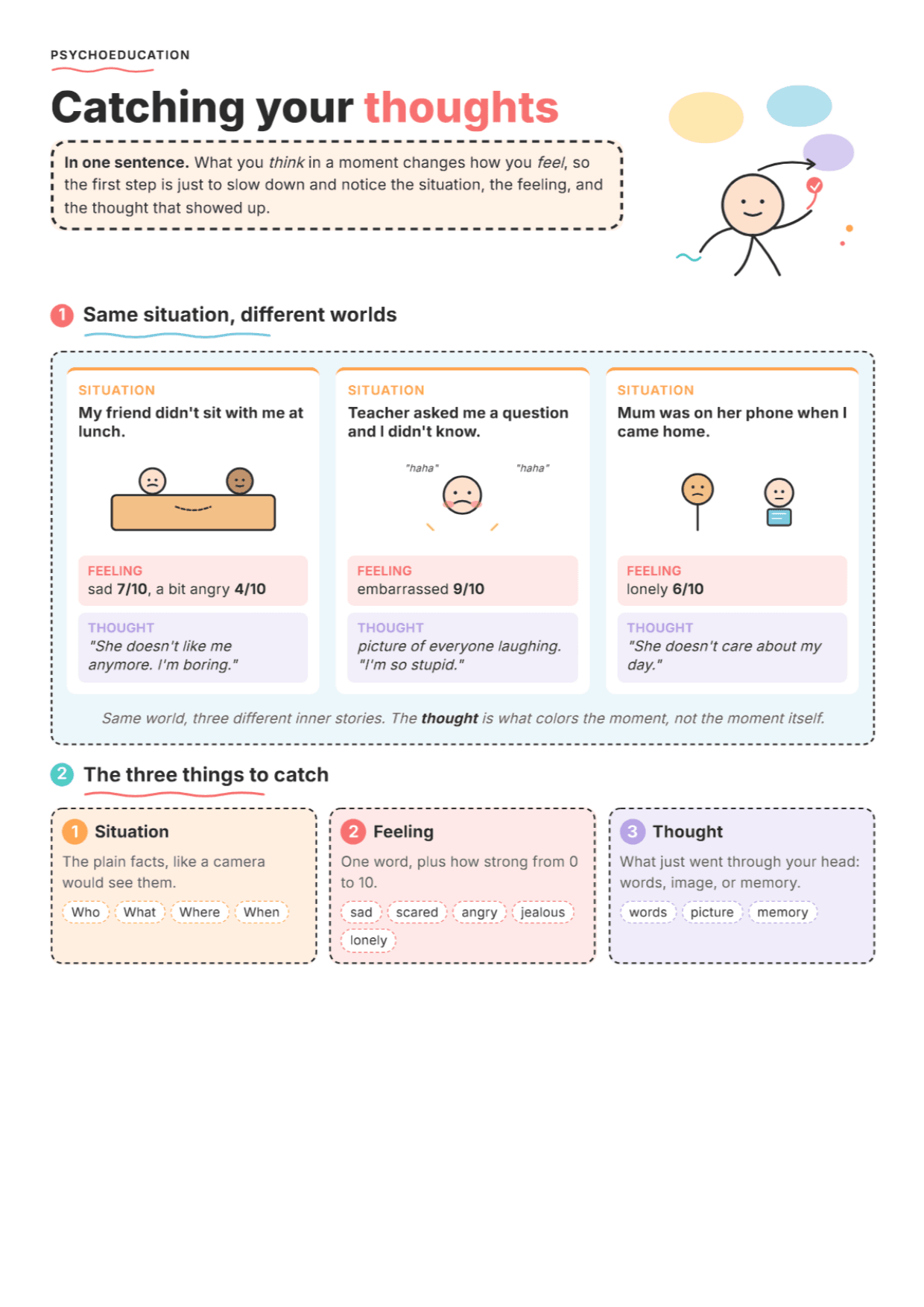
Handout
Catching Your Thoughts: PDF Worksheet, Tools and Exercises
A structured visual worksheet helping clinicians introduce thought monitoring to children and adolescents in CBT, with concrete tools, exercises, and a printable PDF to use in session.
AnxietyMood & depression
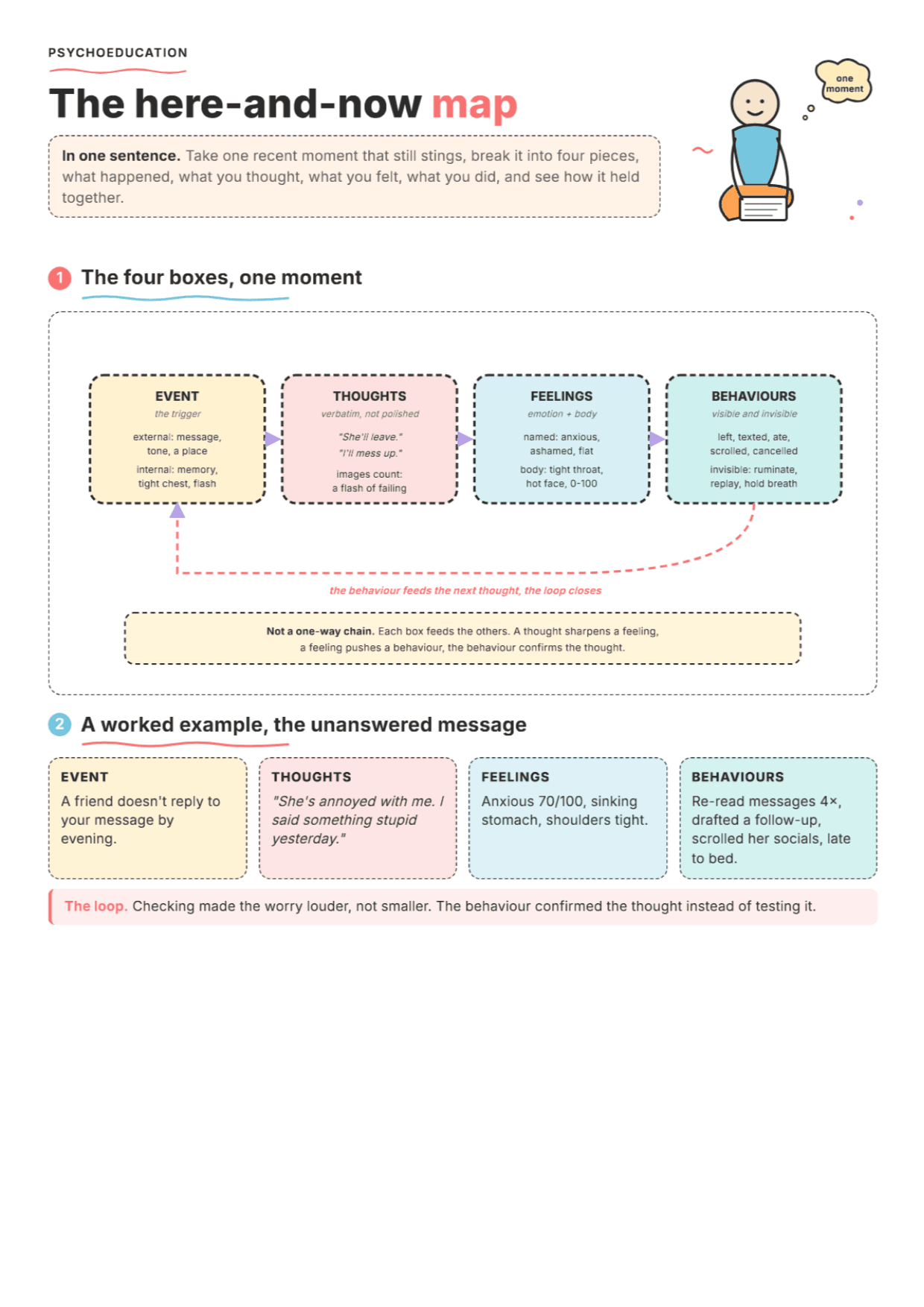
Handout
CBT Here-and-Now Model: PDF Worksheet, Tools and Exercises
A printable PDF worksheet and clinical tools to map thoughts, feelings, and behaviours in one specific moment, for use in CBT sessions.
AnxietyMood & depression
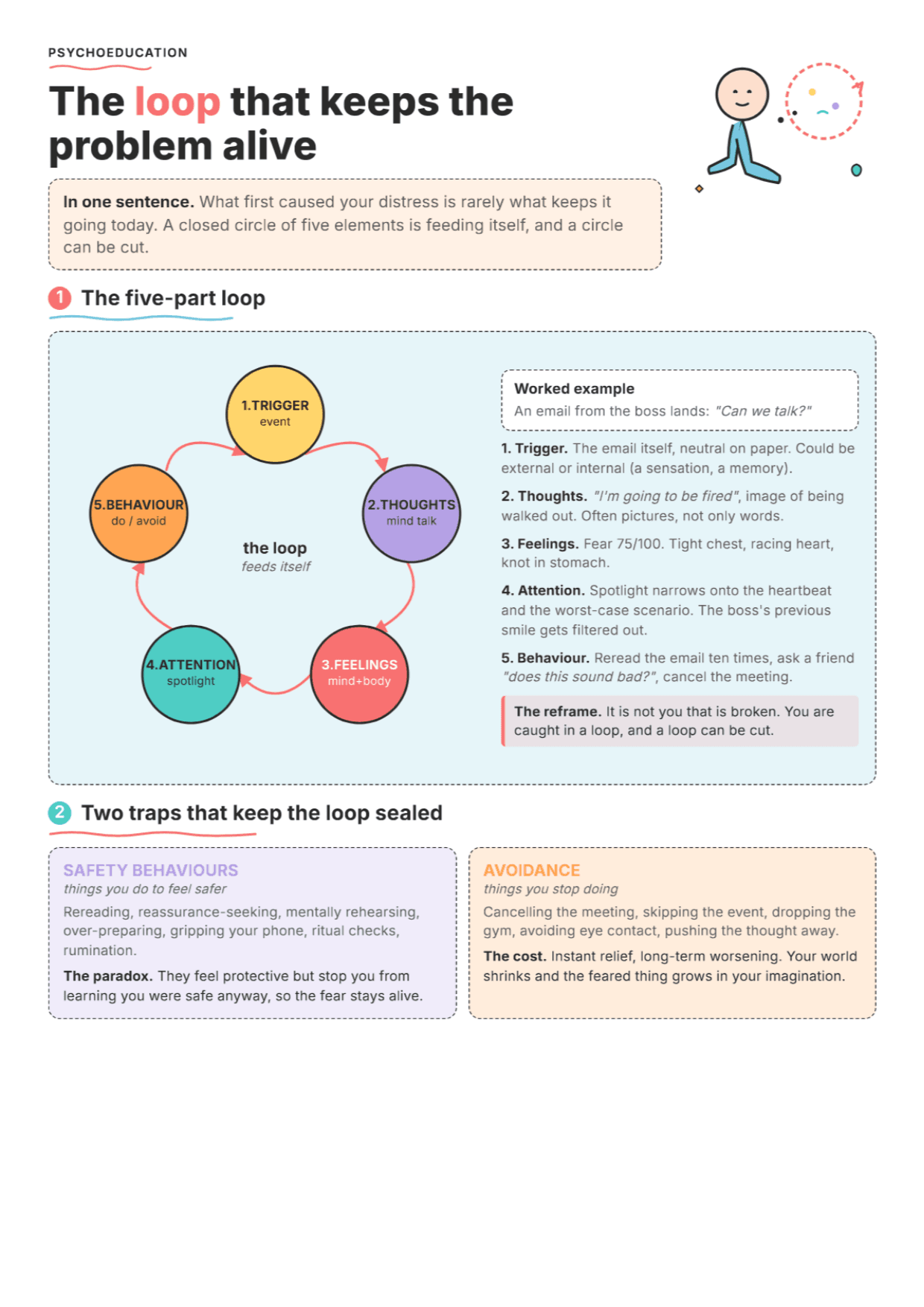
Handout
CBT Maintaining Processes: PDF Worksheet, Tools and Exercises
A visual PDF worksheet clinicians can use in session to map the five-part maintenance loop, distinguish safety behaviours from avoidance, and anchor psychoeducation in a concrete shared diagram.
AnxietyMood & depression
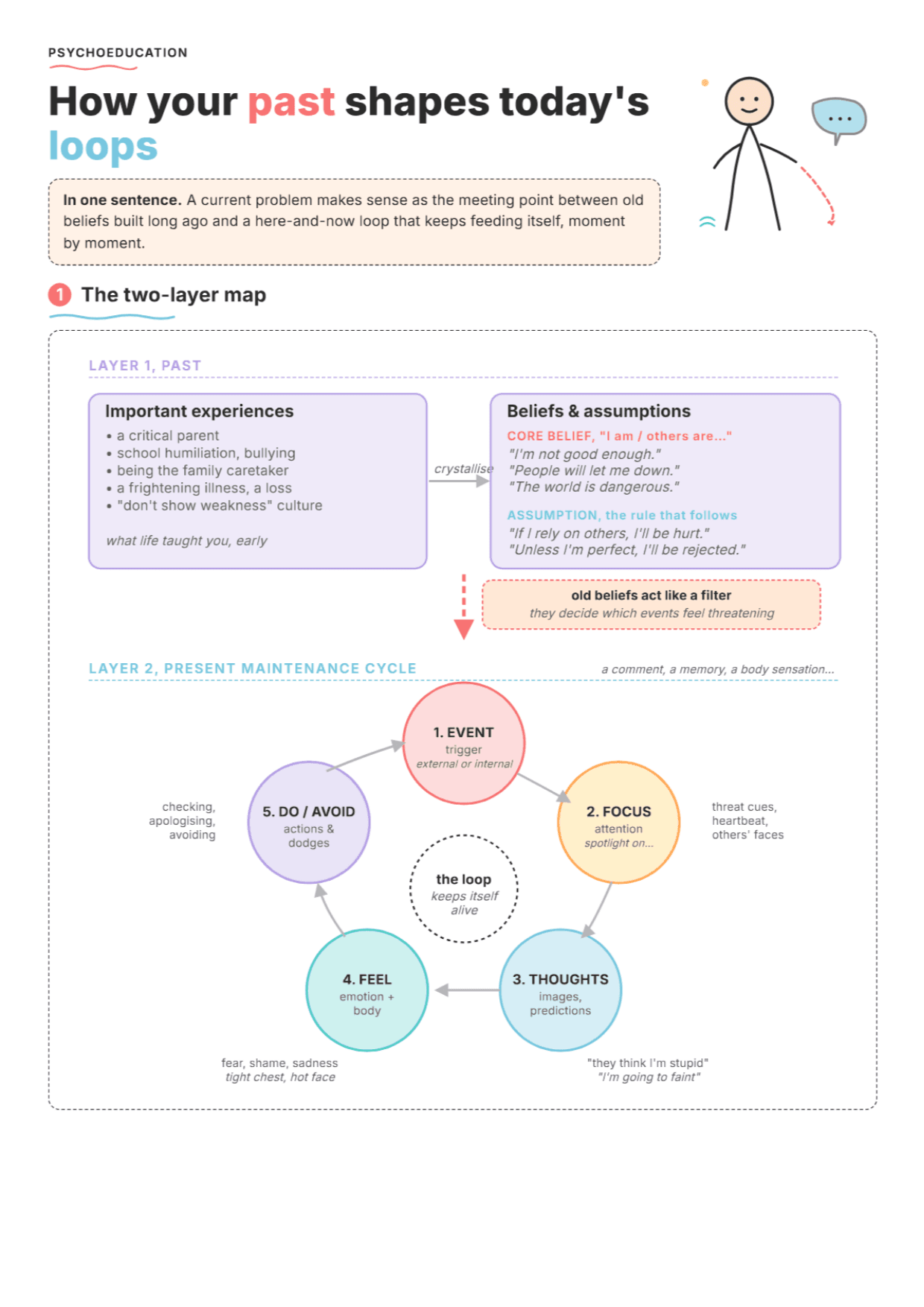
Handout
CBT Maintaining Processes: PDF Worksheet, Tools and Exercises
A printable visual aid helping clinicians explain, in session, how past beliefs and present maintenance cycles keep psychological difficulties alive.
AnxietyMood & depression
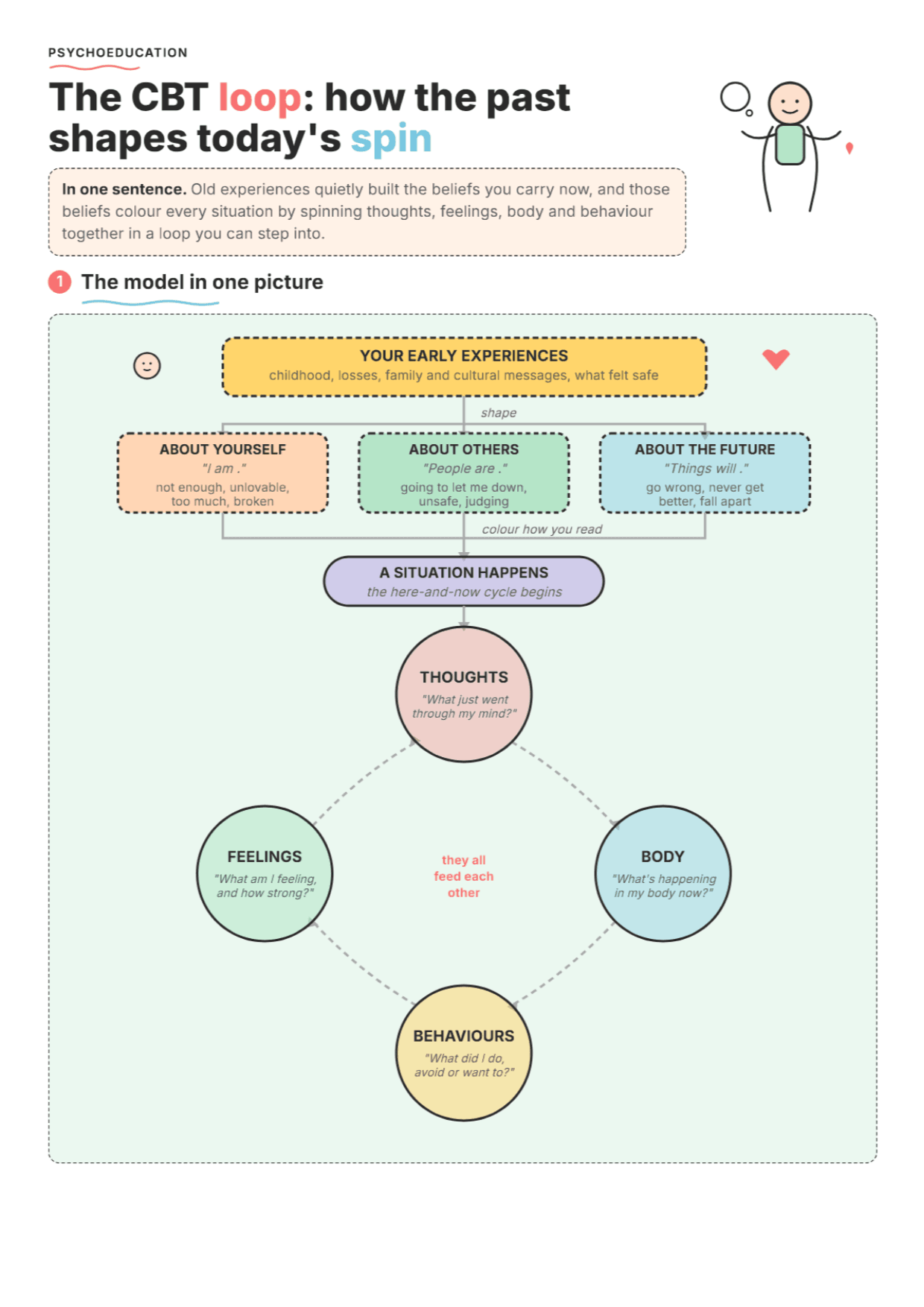
Handout
CBT Overview: PDF Worksheet, Tools and Exercises for Clinical Practice
A printable PDF worksheet, clinical tools and exercises to explain the CBT model visually in session and build a shared therapeutic language from the first consultations.
AnxietyMood & depression
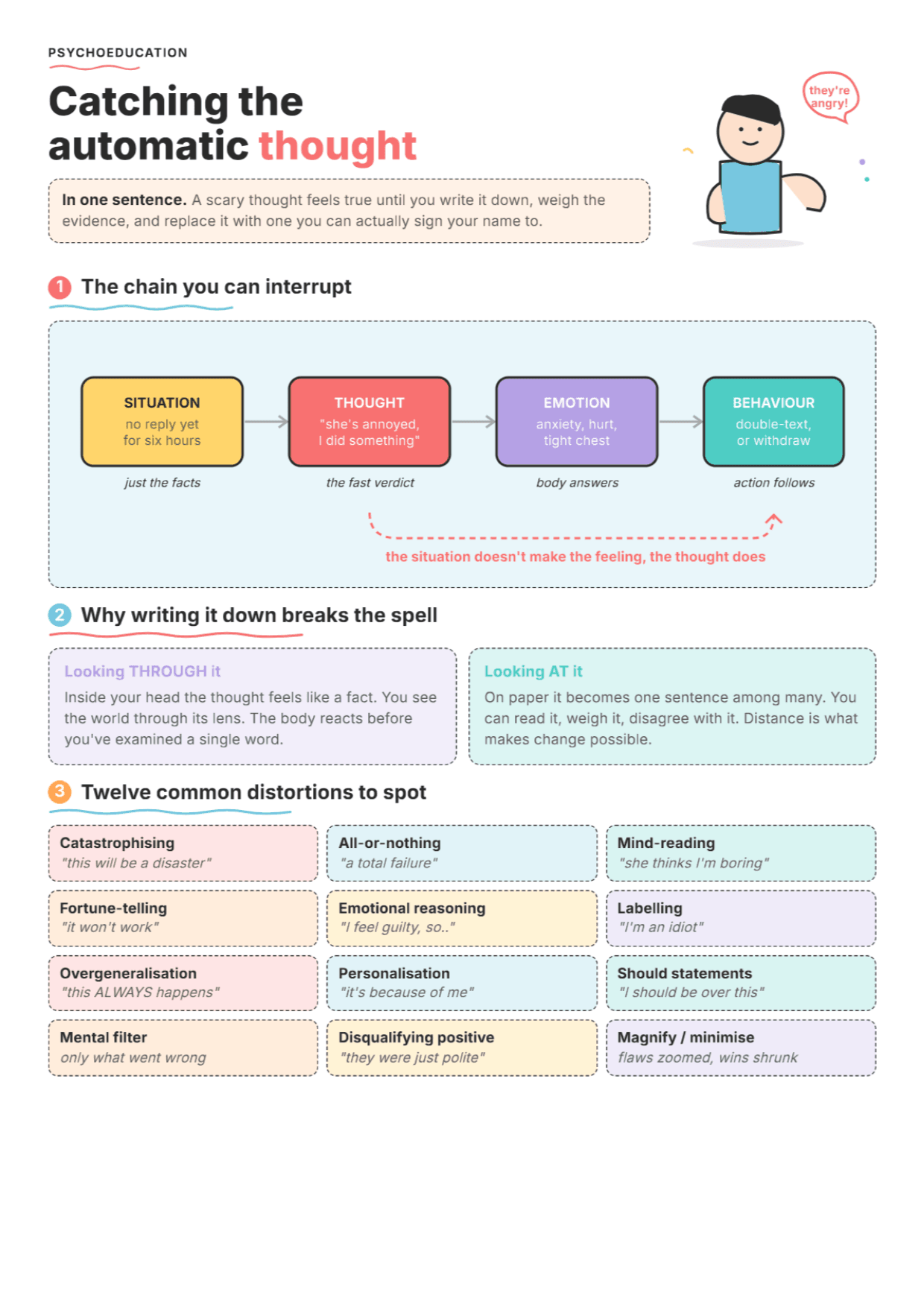
Handout
Challenging Automatic Thoughts: PDF Worksheet, Tools and Exercises
A structured visual PDF worksheet to help clinicians teach cognitive restructuring in session, from spotting distortions to building a balanced alternative thought.
AnxietyMood & depression
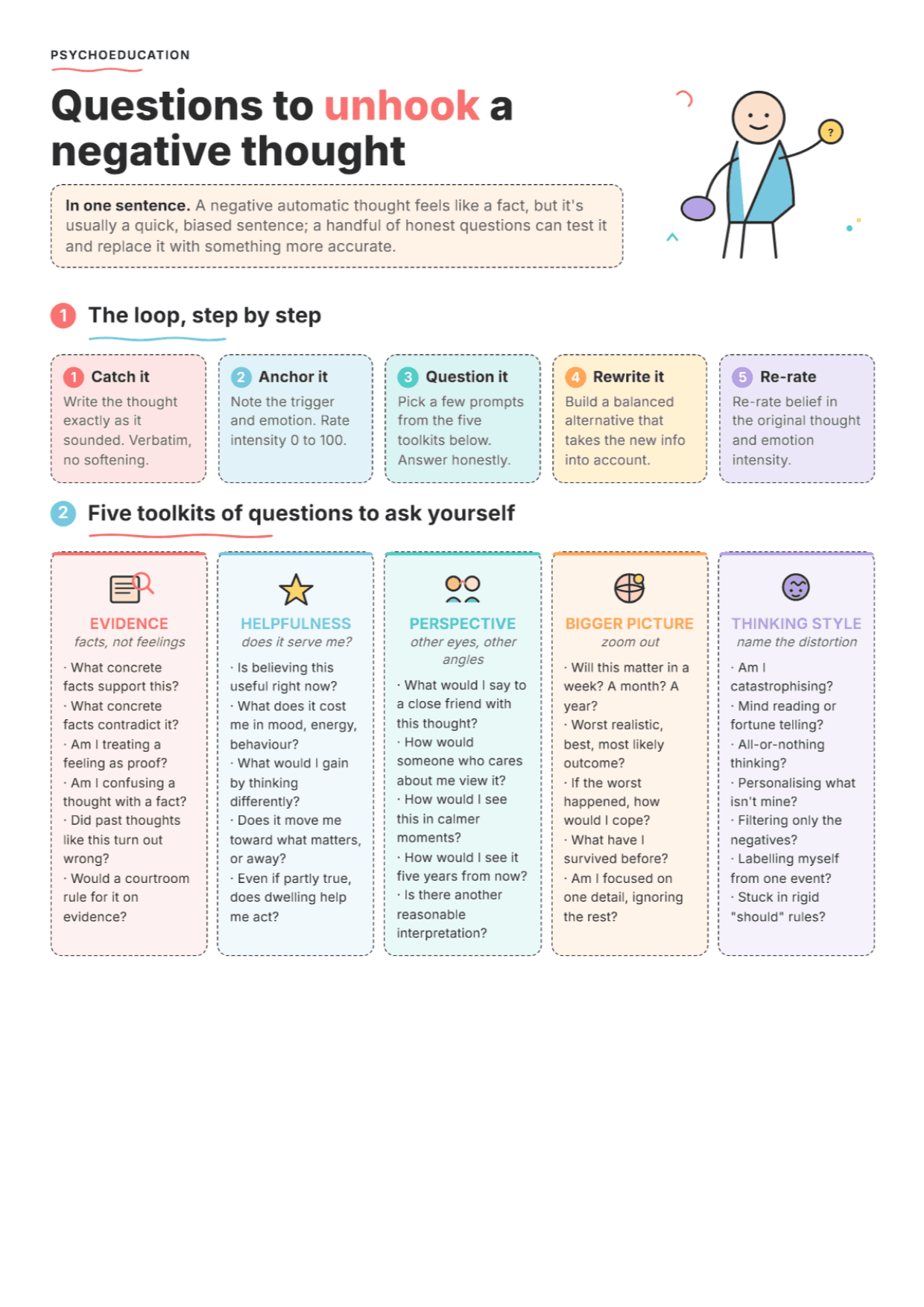
Handout
Challenging Negative Thinking: PDF Worksheet, Tools and Exercises
A structured PDF worksheet with five questioning toolkits, eight cognitive distortions, and a worked example to make cognitive restructuring concrete in session.
AnxietyMood & depression