Integrative Therapy: Clinical Resources for Eclectic Practice
Integrative therapy, also referred to as integrative psychotherapy or the eclectic approach, designates a deliberate, theoretically grounded synthesis of methods drawn from multiple orientations: CBT, psychodynamic frameworks, attachment theory, humanistic models, schema therapy, and systemic perspectives. This page is designed for clinicians who already work across theoretical boundaries and are looking for structured, printable resources that travel equally well between modalities. The worksheets, psychoeducation programs, exercises, and guided audio collected here share a common clinical logic: they target trans-diagnostic processes (affect regulation, relational patterns, coping, schema activation) without being anchored to a single theoretical school. Whether you are building a multimodal care plan, supervising in an integrative training program, or simply extending your toolkit, you will find purpose-built materials organized by clinical function.
Integrative Psychotherapy: Theoretical Framing and Clinical Rationale
Integrative psychotherapy is not a single model but a meta-level orientation toward clinical practice. Three broad integration strategies are recognized in the literature: technical integration (borrowing specific tools while retaining one primary theoretical home base), theoretical integration (building a new conceptual framework from two or more systems, as in schema therapy or CBASP), and assimilative integration (grounding practice in one orientation and selectively absorbing elements from others when the case formulation demands it). Understanding which strategy you are using matters for treatment fidelity, supervision, and documentation.
Single-school orthodoxy rarely reflects how experienced clinicians actually work. Survey data have consistently shown that the majority of practitioners in outpatient settings identify as integrative or eclectic, and training programs increasingly acknowledge that no single model accounts for all presentations. The therapeutic relationship itself, the most robust predictor of outcome across all modalities, is a construct that CBT, psychodynamic, and systemic schools each conceptualize differently. An integrative stance makes that multiplicity explicit rather than leaving it implicit.
Why Coherence Matters More Than Breadth
The central risk of integration is theoretical drift: accumulating techniques without a case conceptualization that justifies their use. Each tool introduced into the treatment should be traceable to a specific hypothesis about the patient's maintaining mechanisms and a theory of change. The integrative clinician is not a technician working through a menu; they are a formulation-driven practitioner who can articulate why a given intervention is being used at a given moment in the therapeutic process.
Identifying Presentations That Call for an Integrative Approach
Complex, Comorbid, and Chronic Presentations
Many patients presenting in outpatient settings do not fit the single-disorder RCT model for which manualized treatments were originally developed. A patient with generalized anxiety co-occurring with early attachment disruption, relational conflict, and poor distress tolerance is unlikely to respond fully to a purely protocol-driven approach. Recognizing this gap is the primary clinical justification for integration.
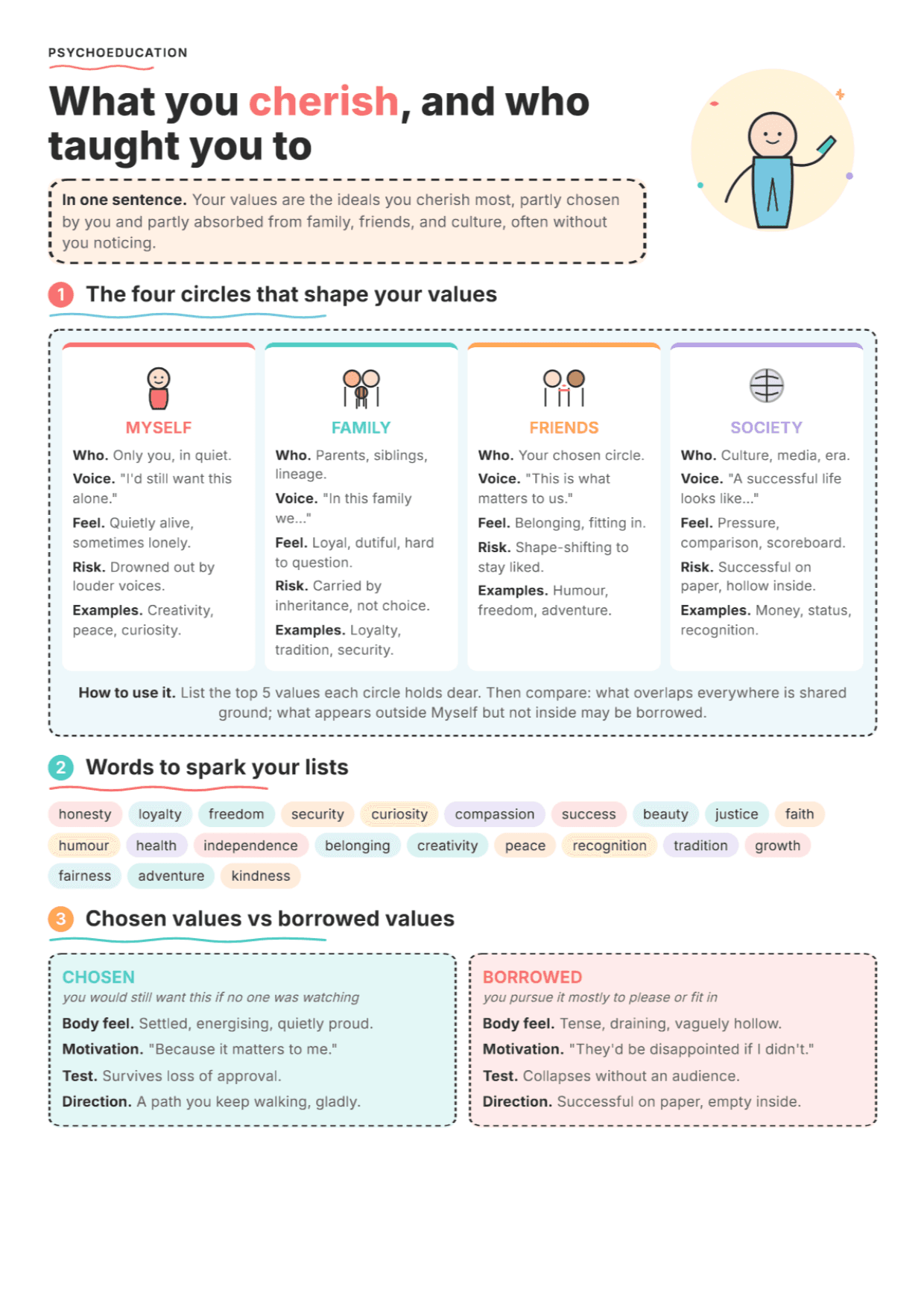
Attachment patterns are a particularly useful organizing lens. A clinician attuned to the patient's relational template can anticipate alliance ruptures, understand affect dysregulation in context, and select interventions accordingly. The Attachment Styles in Romantic Relationships: PDF Worksheet, Tools and Exercises helps patients make explicit what is often implicit in their relational life, opening attachment material for in-session processing.
Schema Activation and Early Maladaptive Beliefs
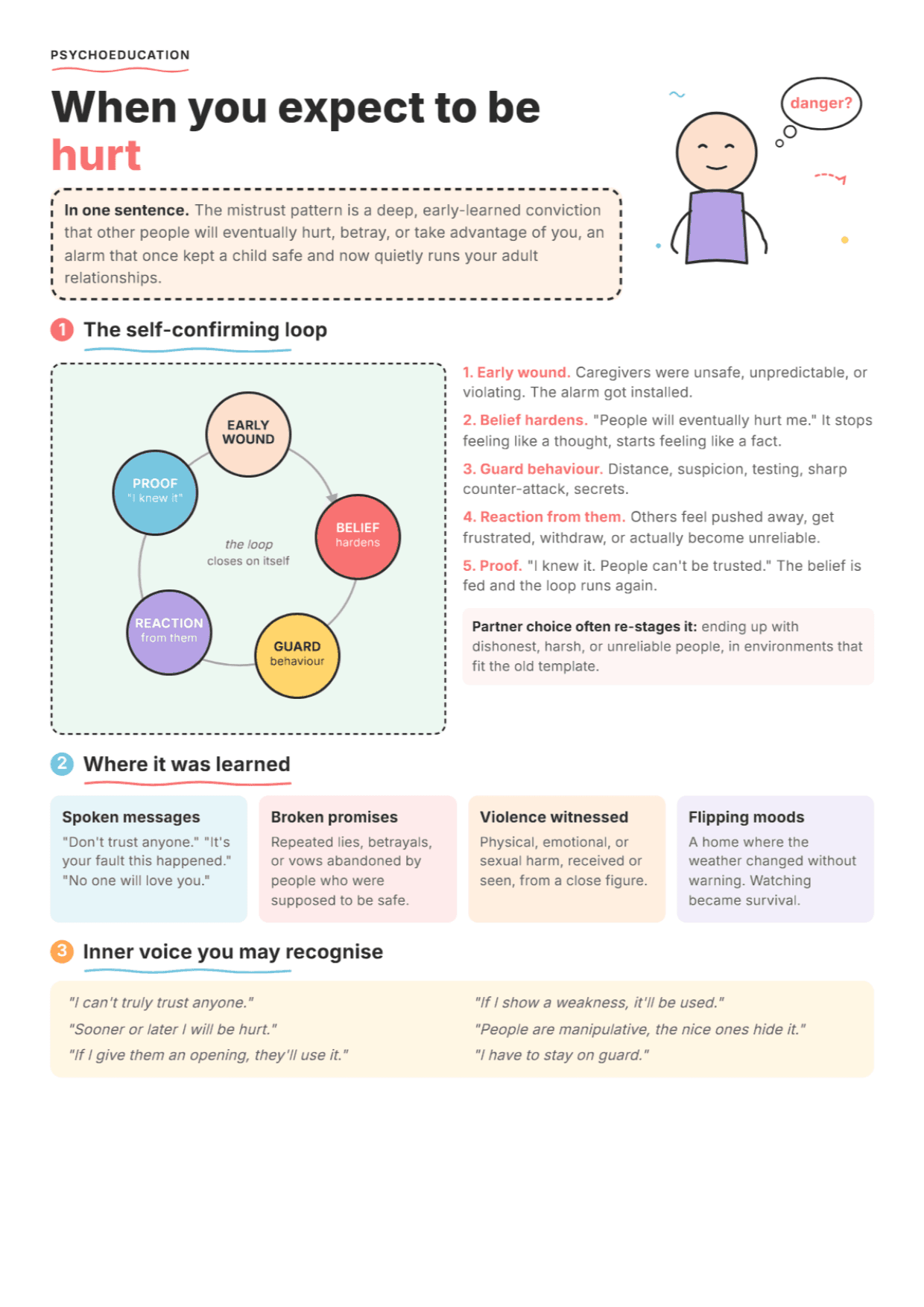
Early maladaptive schemas, as defined in schema therapy, cut across diagnostic categories and frequently underlie chronic relational and affective patterns. An integrative clinician may use psychodynamic listening to detect schema activation in the here-and-now of the session, CBT-style cognitive restructuring to challenge the belief, and experiential techniques to address the emotional core. The The Abandonment Schema: PDF Worksheet, Tools and Exercises for Clinical Practice provides structured psychoeducation on the developmental origins of abandonment fears without pathologizing the patient's experience, making it suitable for individual, group, and couples contexts alike.
Core Mechanisms: How Integrative Therapy Produces Change
Common Factors and Trans-Diagnostic Targets
Research across meta-analyses consistently shows that common factors (therapeutic alliance, empathy, collaboration, expectation of change) account for a substantial proportion of variance in outcome, often more than the specific techniques of any single model. An integrative stance positions the clinician to deploy these factors deliberately rather than treating them as incidental background conditions.
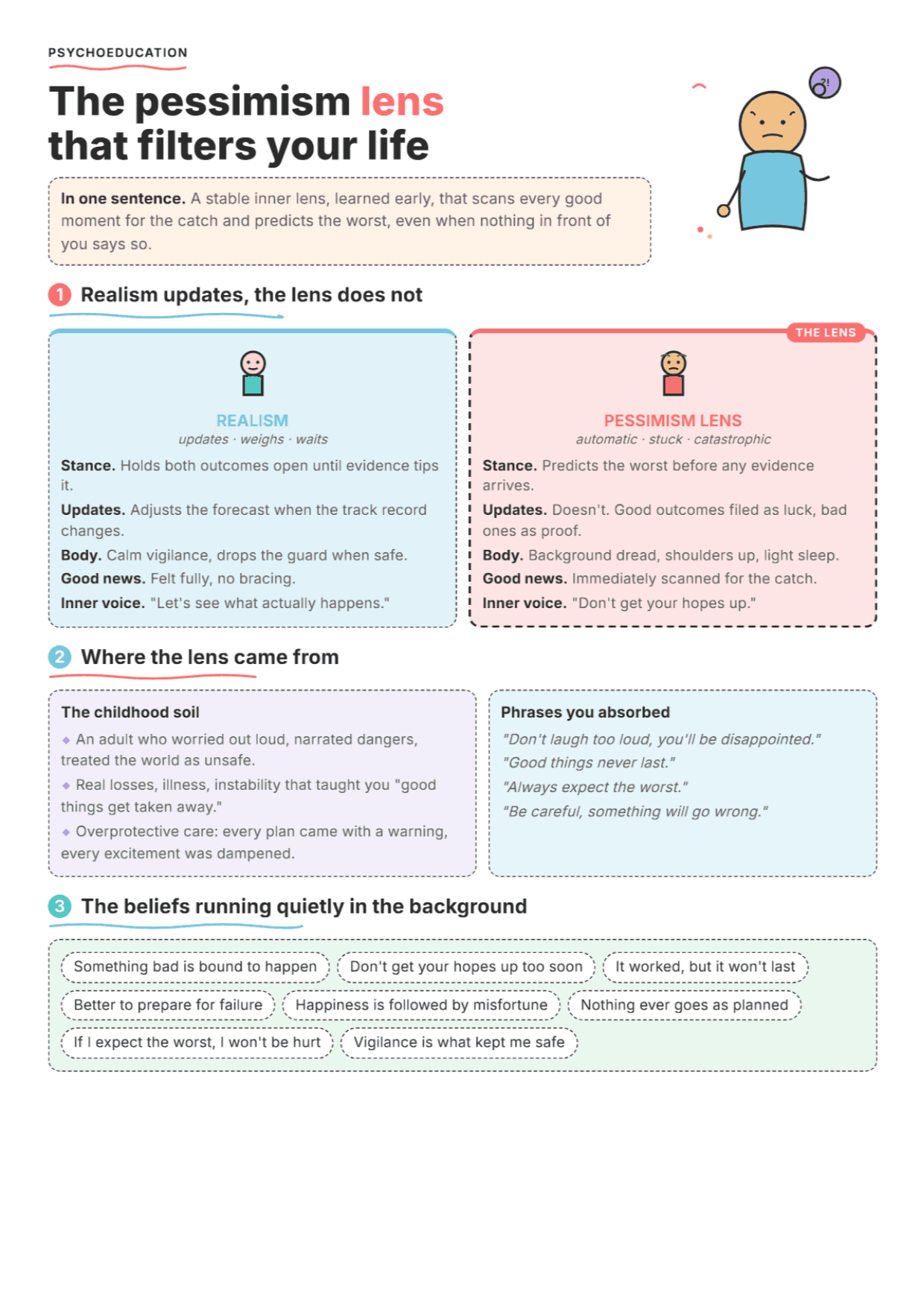
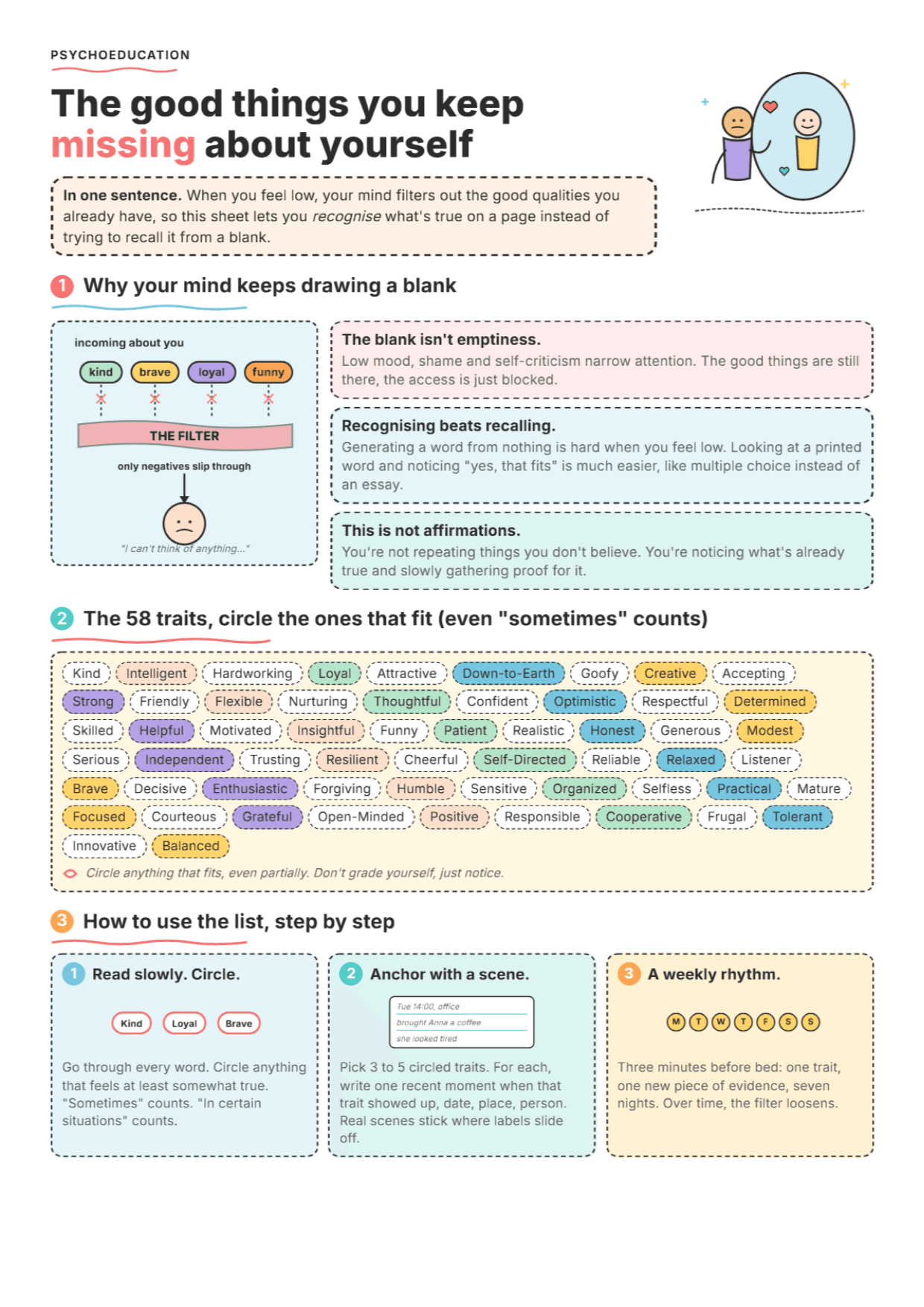
Affect regulation is the trans-diagnostic target most frequently addressed across orientations. Clarifying the distinction between adaptive coping (problem-focused, meaning-focused, acceptance-based) and maladaptive coping (avoidance, rumination, behavioral disengagement) is foundational whether you work in CBT, ACT, or a psychodynamic frame. The Adaptive vs Maladaptive Coping: PDF Worksheet, Tools and Exercises operationalizes this distinction in a format accessible across modalities, and the 50 Coping Strategies for Children and Adolescents: PDF Worksheet, Tools and Exercises extends the same framework to developmental populations.
Working With Emotion Across Depth and Surface
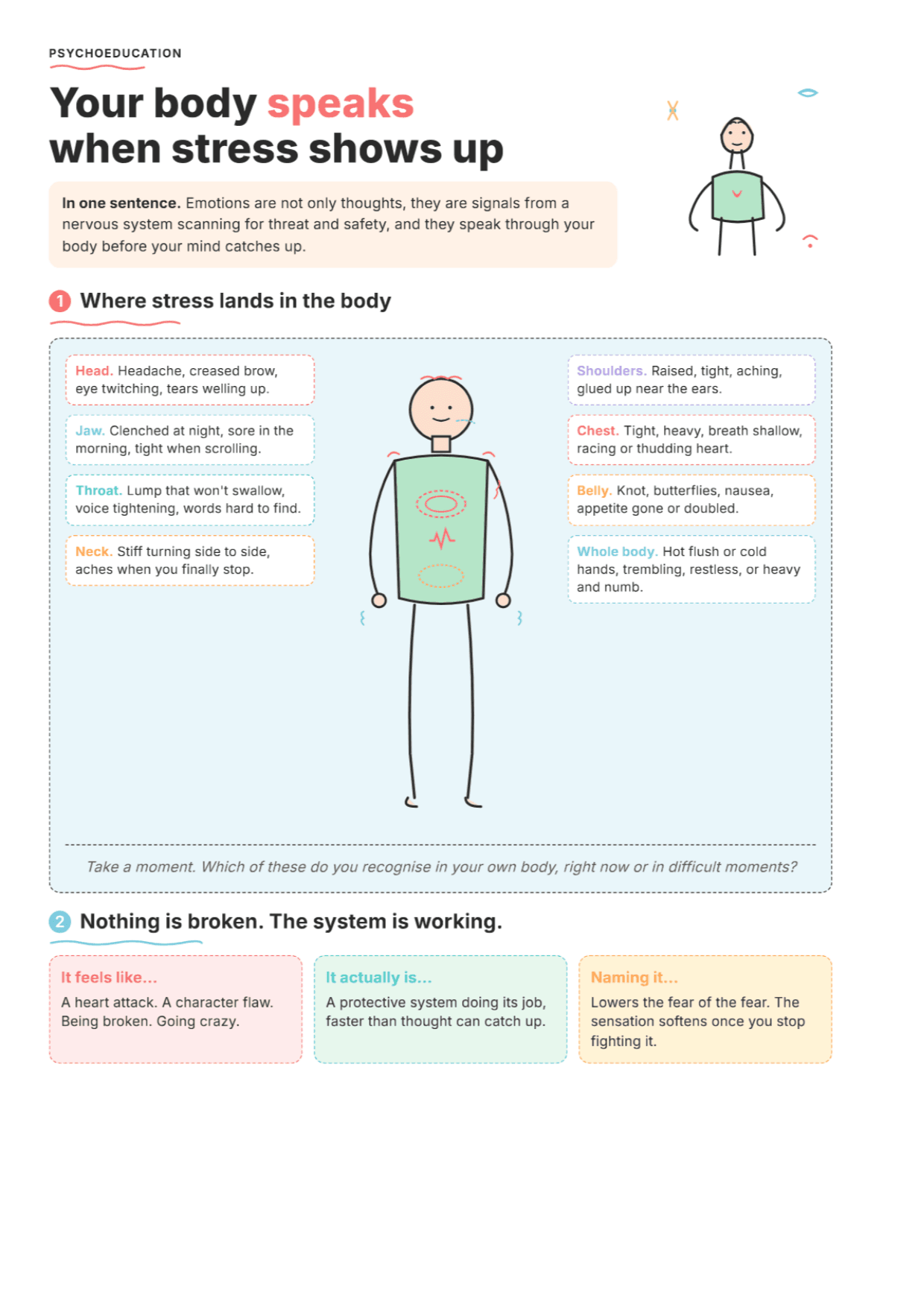
Integrative work routinely requires shifting between surface-level interventions (behavioral activation, coping skill rehearsal) and depth-oriented work (processing underlying affect, exploring relational patterns). The anger iceberg metaphor exemplifies this movement: it bridges observable behavior and underlying vulnerability states in terms that patients across developmental and educational backgrounds can use. The The Anger Iceberg: PDF Worksheet, Tools and Exercises for Clinical Practice supports this psychoeducational bridge and remains clinically coherent whether the treatment frame is cognitive, psychodynamic, or schema-focused.
Comorbidities, Differential Considerations, and Population Adaptations
Anxiety, Guilt, and Emotional Dysregulation
Anxiety is among the most common presentations in integrative practice, and it rarely appears without comorbid relational, somatic, or existential dimensions. The Anxiety Psychoeducation: A Structured 4-Session Program provides a ready-to-use scaffold that complements exposure-based, ACT, or relational work without locking the clinician into a single model. Guilt is another frequently underaddressed target: it appears as both a symptom and a maintaining factor across depression, OCD, trauma-related presentations, and personality disorders. The Guilt Psychoeducation Program: 6 Structured Clinical Sessions addresses cognitive, affective, and relational dimensions in a sequenced format that fits naturally into an integrative care plan.
Children, Adolescents, and the Family System
Integrative work extends naturally to developmental and systemic contexts, where individual, family, and environmental variables must be held in parallel. For younger patients, coping interventions must be calibrated to developmental stage, neurodevelopmental profile, and family dynamics simultaneously. For parental guidance on behavioral and communication challenges, Communicating With Children: A Psychoeducation Program for Parents and Whining and Complaining in Children: A 5-Session Parent Program address common presenting complaints within a systemic and developmental frame, making them suitable for individual parent work or parenting groups.
Using These Resources in Session: Integration Strategies
Sequencing Psychoeducation and Experiential Work
A recurring clinical challenge is sequencing psychoeducation so that it builds shared language without substituting for experiential or relational work. A reliable four-step logic:
Introduce the concept psychoeducationally (using a fiche or program handout) to establish a working vocabulary.
Anchor it to the patient's own history or current relational patterns through collaborative exploration.
Rehearse or practice the skill in session before assigning it between sessions.
Review what the exercise elicited emotionally and relationally, not only behaviorally.
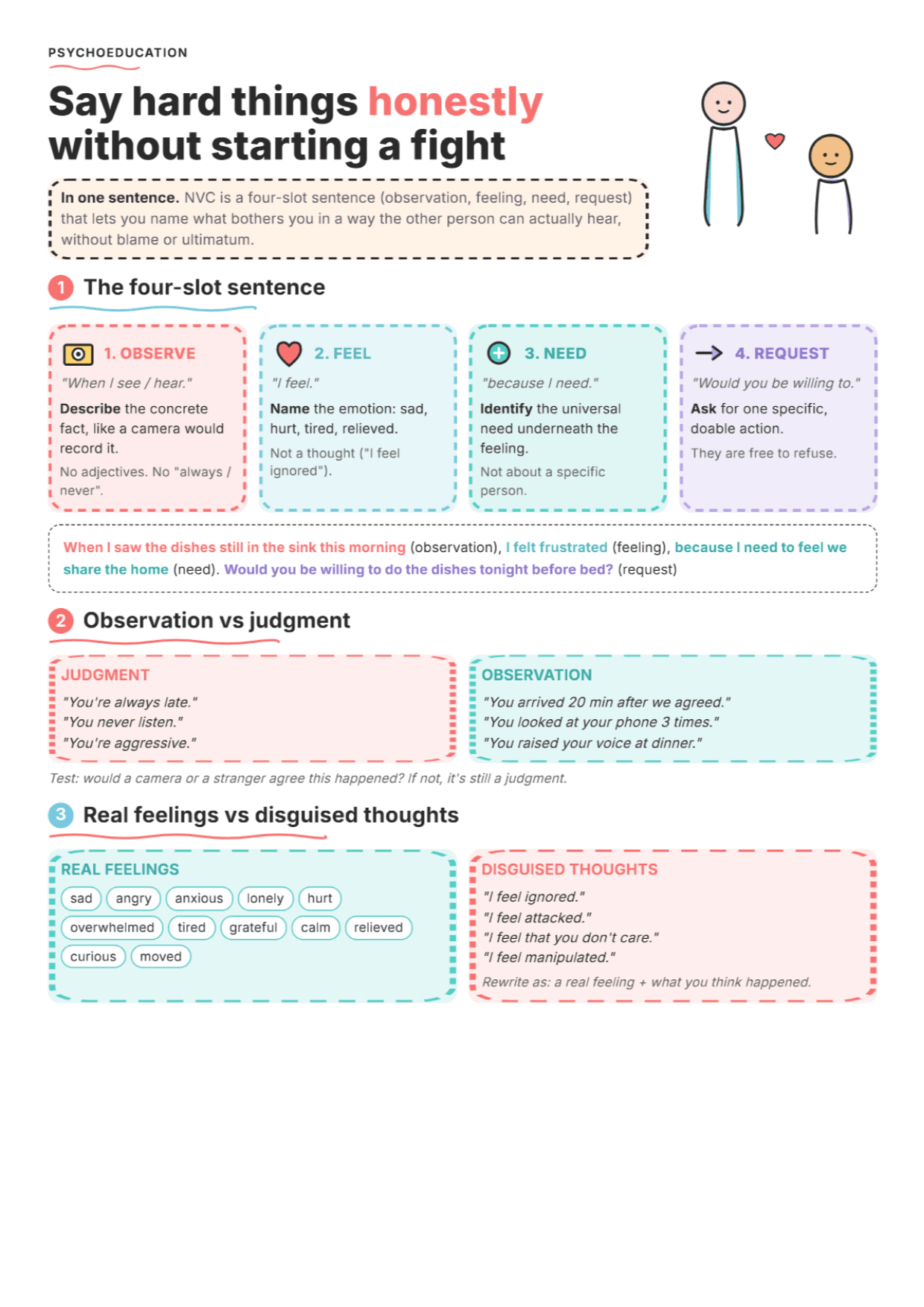
Integrative approaches are especially well-suited to couples therapy, where systemic, attachment, and behavioral lenses must be held simultaneously. The resources grouped here cover complementary clinical angles:
Guided visualization is increasingly incorporated into contemporary practice across CBT (imagery rescripting), EMDR (safe-place installation), and psychodynamic (reverie and containment) frameworks. The Desert Heat Guided Visualization Audio for Therapy can serve as a grounding or affect-regulation resource, particularly in sessions addressing hyperarousal, dissociative symptoms, or interoceptive avoidance. It also functions well as a between-session tool to reinforce window-of-tolerance work.
Building an Integrative Care Plan: Structure and Sequencing
Matching Each Resource to a Therapeutic Function
> A 34-year-old patient presents with chronic relational instability, subclinical depression, and a history of early loss. In the first phase, attachment psychoeducation and schema identification anchor the conceptualization. In the second, coping skills and assertiveness training build functional capacity. In the third, conflict resolution exercises and relational programs address interpersonal patterns directly. No single manual covers this trajectory. The integrative care plan does.
An effective integrative care plan maps each resource to a therapeutic function: psychoeducation, skill building, insight generation, exposure, or relational repair. The Mental Health Foundations: A 4-Session Psychoeducation Program is well-placed early in treatment to build shared conceptual vocabulary and assess health literacy. The anger management and affect regulation materials belong to mid-treatment skill-building phases. Relational programs and schema-focused fiches typically serve later phases, once the alliance is sufficiently established. The Anger Management: A Psychoeducation Program for Clinicians provides a structured approach to one of the most common presenting complaints across diagnostic categories.
Monitoring Progress Without a Single Protocol
Because integrative treatment does not follow a built-in protocol progress monitoring structure, the clinician must construct their own. Regular assessment of alliance quality, symptom-level change, and functional outcomes is non-negotiable. Resources used in session also function as informal progress markers: a patient's response to the anger iceberg worksheet, the degree of engagement with the abandonment schema material, or the capacity to complete the conflict resolution exercise without dysregulation all constitute clinical data in their own right.
Points of Vigilance and Limits of Integrative Practice
Integration without a coherent formulation becomes eclecticism at best and clinical drift at worst. Every technique introduced should be justifiable by a specific hypothesis about the patient's maintaining processes. Supervision focused on case formulation, not only technique selection, is the most reliable safeguard.
Manualized evidence-based protocols retain their place. For presentations such as PTSD with complex trauma, OCD, or first-episode psychosis, established protocols with defined sequence and dose should not be replaced by an integrative approach without explicit clinical rationale. Integration works best when it supplements indicated treatments, not when it displaces them.
The relational field mediates everything. Every resource introduced into the session is filtered through the therapeutic relationship. A psychoeducation handout offered at the wrong relational moment can reinforce a patient's experience of not being heard. Timing, attunement, and the patient's attachment-driven response to being given structured material are clinical data in their own right, and attending to them is itself an integrative act.