
Clinical picture. M., a man in his early forties, presented with persistent low mood, disrupted sleep, and strong resistance to any form of introspective work, describing psychological concepts as "not for him." His clinician introduced the first lesson of The Basics, framing it as background reading rather than therapy, and asked him to complete it before the next appointment. M. returned having worked through the unit on the physical-mental health connection and, unprompted, noted that he had not considered sleep a mental health variable before. This small shift in perspective opened a productive discussion about his irregular schedule and provided a concrete, non-stigmatising entry point into the therapeutic work.
ProgramEmotions & stressAnxietyTrauma & PTSDMood & depressionSelf & identityBehaviours & addictionsUnderstandMindfulness (MBSR/MBCT)Humanistic
Mental Health Foundations: A 4-Lesson Psychoeducation Program
A structured autonomous curriculum introducing emotions, avoidance, lifestyle basics, and mindfulness as the first building blocks of psychological wellbeing.
Clinical vignettes
Psychoeducation as a Starting Point for Avoidant Patient
Lifestyle Foundations Before Symptom-Focused Work
Clinical picture. A., a woman in her late twenties with a diagnosis of generalised anxiety disorder, had already completed several sessions of cognitive-behavioural therapy with limited gains; her clinician suspected that poor sleep hygiene and an erratic diet were maintaining her baseline arousal. She was assigned the first lesson of The Basics as between-session work, with a specific request to engage with the guided prompts on sleep and nutrition. At the following appointment, A. brought a list of two concrete actions she had chosen from the multiple-choice steps, including removing her phone from the bedroom, and reported three consecutive nights of marginally improved sleep. The lesson content gave the clinician and patient a shared, structured language for discussing lifestyle factors without those factors appearing secondary to "real" treatment.
Use this resource with your patients
Handout, exercises and materials ready to use, right inside SessionFuel.
The Clinical Challenge: Explaining the Basics Without Losing the Patient
Many patients arrive with no working vocabulary for mental health. They experience distress but cannot name it, they recognize avoidance patterns only in retrospect, and they have never seriously questioned the link between their sleep, their body, and their inner life. Explaining these foundations verbally works up to a point; what resists oral explanation alone is the experiential side. A patient needs to sit with a prompt about their own avoidance behavior, or map which emotions colored their day, before the concept actually lands. That is the gap this program addresses.
The Basics is a four-lesson foundational curriculum designed as structured autonomous work for patients who are just beginning to develop psychological self-awareness. It builds in sequence: from the mental-physical health connection, through emotional intelligence, into avoidance and values, and finally into present-moment practice. Each lesson combines short psychoeducation texts with multiple-choice questions and open reflective prompts that the patient completes on their own.
Clinical library
750+ clinical tools
A library built with and for clinicians, ready to use in session and extend between appointments.
Access all the toolsSeveral resource types
Psychoeducation handouts
Understand at a glance
Interactive exercises
To do and fill in
Interactive programs
A structured path
Audios
Meditation and relaxation
Psychometric tests
Automatic scoring
What the Program Contains
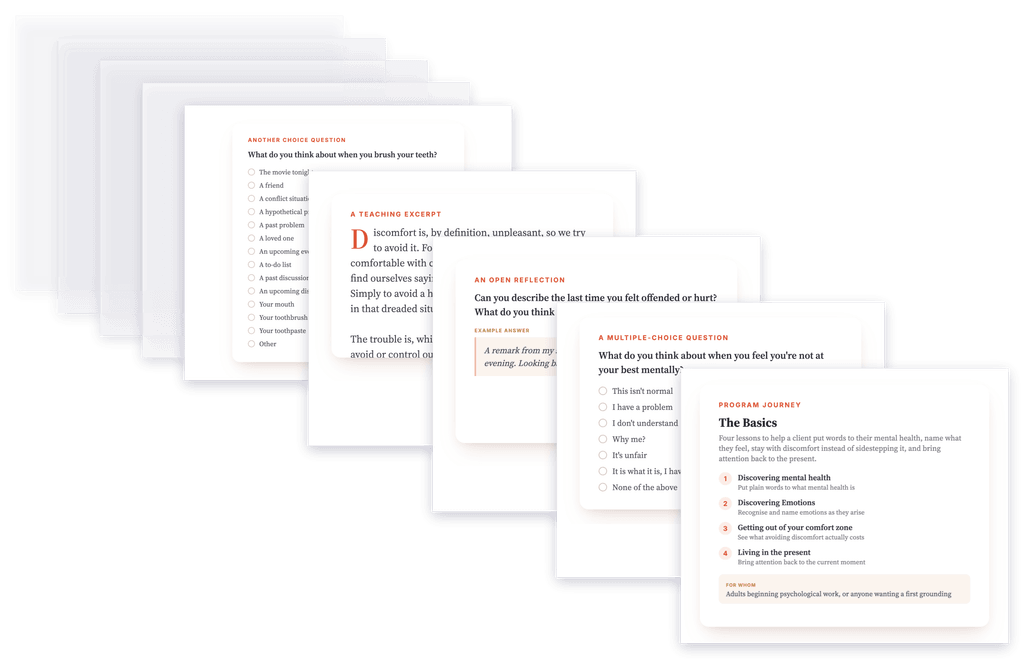
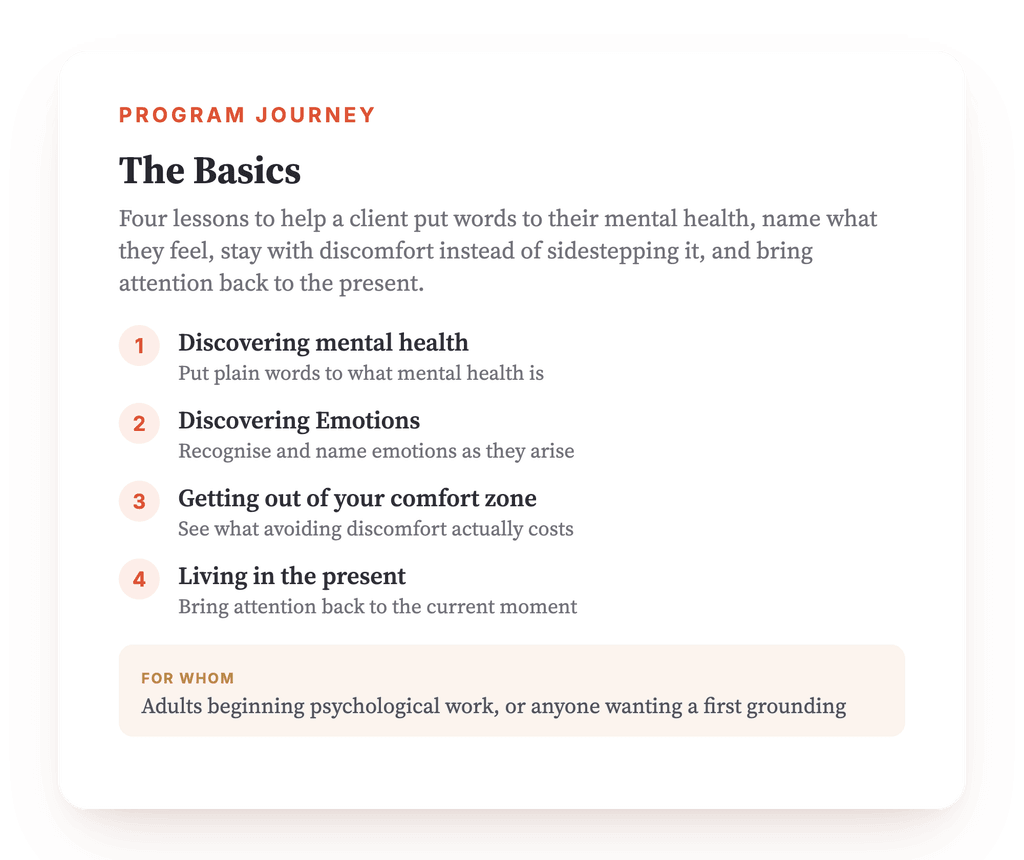
The curriculum moves across four lessons with a clear arc.
Lesson 1 grounds the patient in the idea that mental health is cultivable, not fixed, drawing the parallel with physical health. It then introduces the three behavioral pillars most clinicians mention but rarely have patients reflect on concretely: sleep hygiene, nutrition, and physical activity. Each pillar ends with a commitment question ("What one action can I take today?"), making the abstract immediately actionable.
Lesson 2 opens the emotional landscape. Patients name the emotions that colored their day, explore the needs behind those emotions, and encounter the concept of emotional intelligence as a learnable skill. Two key steps introduce accepting and then analyzing emotions, including a worked example of how a colleague's ambiguous comment can be read as criticism or curiosity depending on the underlying belief. The Emotions Reference Sheet and The Function of Emotions pair naturally with this lesson as supplementary references.
Lesson 3 targets avoidance and the comfort zone. Patients identify what they tend to avoid, name one avoidance behavior in detail, explore its short-term relief and long-term cost, and articulate how they would prefer to respond. The lesson closes by introducing values as a compass. Clinicians working in an ACT framework will recognize the structure; the Acceptance and Commitment Therapy fiche and The Choice Point worksheet are natural companions. The Adaptive vs Maladaptive Coping fiche can also consolidate the avoidance discussion.
Lesson 4 introduces mindfulness through the simplest possible anchor: where is the patient's mind when they brush their teeth? From there, the lesson distinguishes past, present, and future problems, introduces non-judgmental observation, and closes with two commitment questions about which daily activities to practice mindfully. For additional depth, the What Is Mindfulness? fiche and Mindfulness Meditation worksheet extend what the lesson introduces.
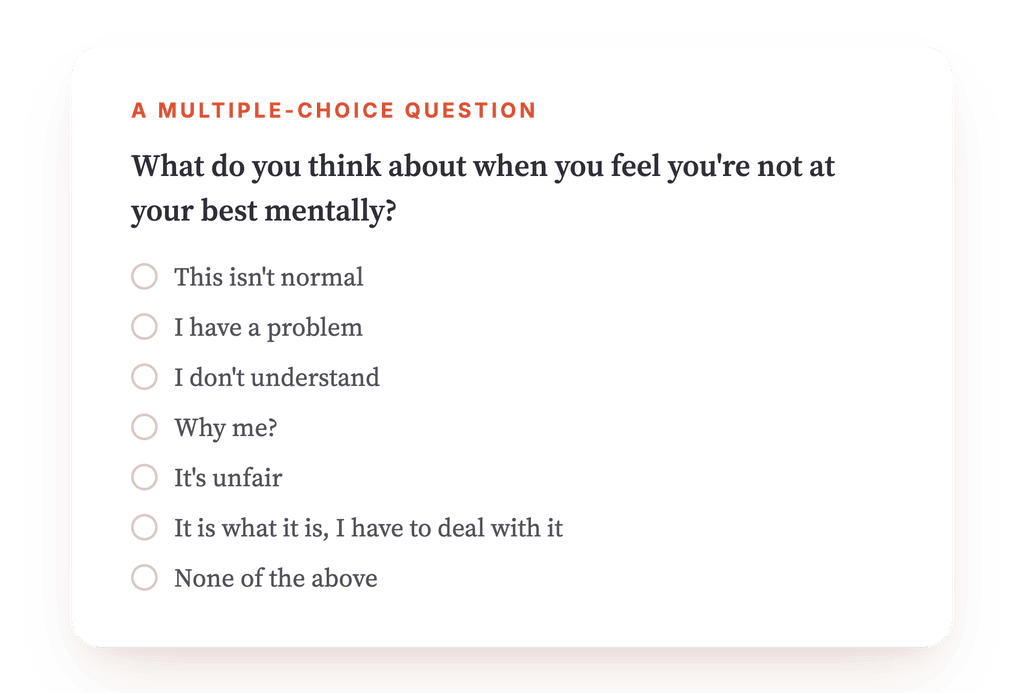
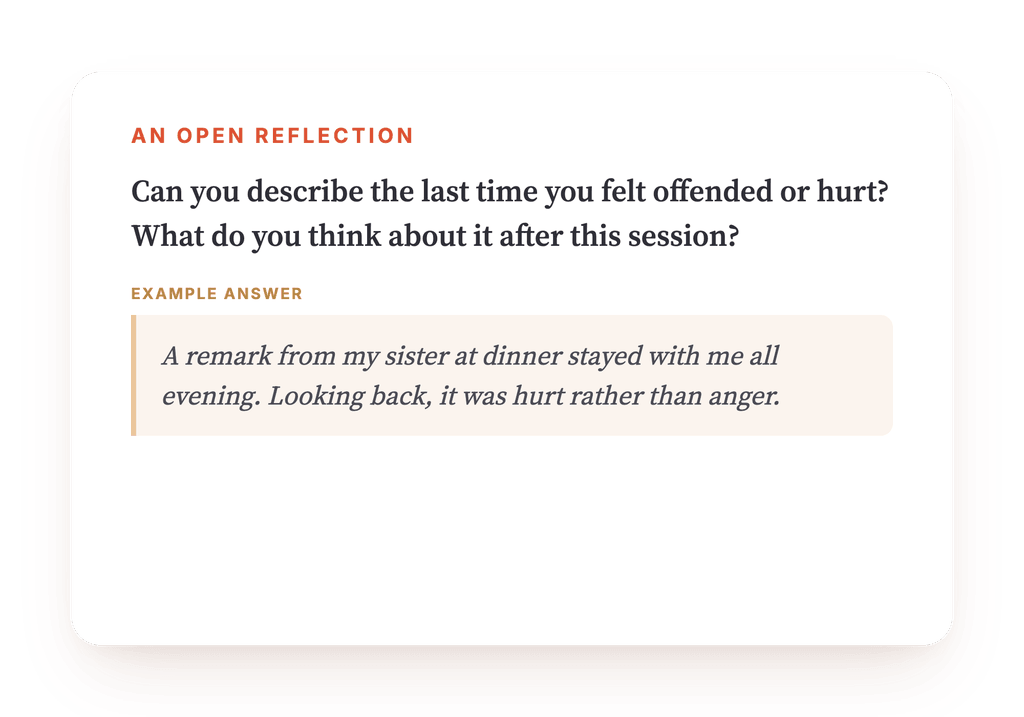
The preview images embedded here show only the program overview map and two sample cards. These aperçus show only a fraction of the program; the complete curriculum contains many more steps, texts, guided prompts, and multiple-choice exercises than what is visible here.
This program is available to patients through the mobile application that is the dedicated patient-side interface of SessionFuel: once you assign it in your SessionFuel account, your patient receives it directly on their phone and works through each lesson on their own, at their own pace.
Key insight: A patient who has named their avoidance patterns, mapped an emotion back to an unmet need, and tried one mindful meal arrives at their next appointment with material, not just vague impressions.
Use it with your patients
Share this tool in the mobile app and follow the work between sessions.
Integrating the Program as Between-Session Homework
This program suits a broad intake population: patients at the start of therapy who lack psychological vocabulary, those with mild to moderate anxiety or low mood where foundational psychoeducation is a necessary precondition for deeper work, and patients who benefit from structure and want something concrete to do between consultations. It also works well alongside the Resilience Psychoeducation or Emotion Regulation Psychoeducation programs as a first step before more targeted work.
Introduce it simply: "Between now and our next appointment, I'd like you to work through the first one or two lessons on the app. There's no right or wrong answer, just your own honest reflection." Assign one or two lessons at a time rather than the whole program at once.
When the patient returns, the open prompts they have completed become direct clinical material. Ask what came up in the avoidance prompt, or which emotion surprised them when they tried to name it. The Behavior, Emotion, Underlying Need fiche and the Comfort, Stretch and Panic Zones worksheet can deepen the conversation the patient's homework opens. For patients where the mindfulness lesson resonates, the RAIN Mindfulness Technique is a ready next step.
The program does not replace clinical guidance. It creates a shared language before the session begins.

Patient mobile app
Your session continues in your patients' pocket
Use with a patientYour resources, available everywhere
The handouts, exercises, programs and audios above: you choose which ones to make available to your patients, in the mobile app dedicated to them.
Psychoeducation handoutsInteractive exercisesInteractive programsAudiosPsychometric tests
And far more than a library
The app goes well beyond resources, to support your patients every day:
Standardized tests
Therapy journal
Gamification
Wellbeing challenges
Introspection prompts
Therapist homework
Related categories
Explore other clinical resources by category.

Anxiety
Clinical hub for anxiety disorders: CBT and ACT worksheets, psychoeducation sheets, and exercises for assessment and treatment across the anxiety spectrum.

Trauma
Clinical hub on trauma and PTSD: assessment, differential diagnosis, treatment phases, and printable resources for practitioners. 155 chars.

Mood
Evidence-based worksheets and clinical tools for mood disorders: CBT, ACT, and positive psychology resources for psychologists and therapists.

Identity
Clinical resources for self-identity work in therapy: CBT, ACT, schema tools for clinicians addressing self-concept, core beliefs, and identity disruption.

Emotions
Clinical resources on emotion regulation: worksheets, coping tools, CBT, REBT, and ACT exercises for therapists working across diagnoses and age groups.

Behaviours
Clinical hub for behaviors in therapy: worksheets and tools for coping, eating disorders, CBT formulation, and maladaptive behavioral patterns.