
Skill Building in Therapy: Clinical Resources for Practitioners
Skill building, also referred to as skills training or competency development, is a cornerstone therapeutic aim across cognitive-behavioural, dialectical behaviour, and third-wave approaches, and this page is designed for clinicians seeking structured, printable tools to support that work. The resources grouped here span communication, coping, and interpersonal effectiveness, covering the most frequently targeted skill domains in outpatient and intensive outpatient settings. Each worksheet, exercise, or psychoeducation sheet has been selected to be used directly in session or assigned as between-session practice. Whether you are introducing a skill for the first time or consolidating generalisation across contexts, you will find resources here that slot into an active treatment plan.

What Distinguishes a Skill-Building Intervention
Skill building refers to the deliberate, structured acquisition of cognitive, behavioural, or interpersonal competencies that a patient currently lacks or applies inconsistently. Unlike insight-oriented work, whose primary mechanism is meaning-making, skill-building interventions operate through a behavioural learning cycle: psychoeducation, modelling, rehearsal, feedback, and generalisation. The therapeutic aim is not awareness alone but durable, transferable behaviour change.
This distinction matters for treatment planning. A patient can have full insight into their avoidance pattern and still be unable to tolerate distress without targeted practice. Skill-building resources formalise that practice, giving patients a concrete reference point outside of the consulting room.
Theoretical Grounding Across Orientations
Skill training has robust support in cognitive-behavioural therapy (CBT), where it is embedded in protocols for anxiety, depression, and anger management. Dialectical behaviour therapy (DBT) elevated skills acquisition to a primary treatment mode, organising entire modules around distress tolerance, interpersonal effectiveness, and emotion regulation. Third-wave approaches such as Acceptance and Commitment Therapy (ACT) frame skills as psychological flexibility capacities rather than techniques per se, but the training mechanism remains the same.
Across orientations, the practitioner's role in skill building is active and directive. You model, coach, and provide corrective feedback. The worksheets and structured exercises on this page support precisely that role, reducing session preparation time while ensuring procedural fidelity.
Clinical Identification: When Skill Deficits Drive the Presentation
Signs of Skill Deficit Versus Motivational or Structural Barriers
Not every patient who behaves maladaptively has a skill deficit. Distinguishing between skill deficit (the patient has never learned or adequately practised the behaviour), performance deficit (the skill exists but is blocked by anxiety, beliefs, or environmental contingencies), and motivational ambivalence is a foundational diagnostic step before prescribing skill-building work.
Key indicators of genuine skill deficit in session include: inability to generate alternative responses during Socratic dialogue, consistent failure to complete rehearsal despite adequate motivation, or descriptions of social situations that reveal a narrow behavioural repertoire. When a patient reports feeling perpetually overwhelmed by interpersonal conflict and cannot describe a single de-escalation strategy, skill building is almost certainly indicated.
Common Skill Domains Targeted in Outpatient Practice
The skill domains most frequently targeted in general outpatient work cluster around three areas:
- Coping skills: the ability to manage acute distress, regulate arousal, and tolerate negative affect without resorting to avoidance or self-harm. This includes both problem-focused and emotion-focused strategies. Patients often conflate all coping as equivalent; differentiating adaptive vs maladaptive coping strategies is frequently a necessary first step before more advanced training.
- Communication and interpersonal skills: active listening, assertive self-expression, conflict negotiation, and limit-setting. Deficits here are common in patients with attachment difficulties, social anxiety, and personality pathology.
- Self-regulatory skills: cognitive restructuring, behavioural activation, attention regulation, and values-based decision-making.
Comorbidities and Differential Considerations in Skill-Based Work
When Skill Deficits Are Embedded in Axis-I and Axis-II Presentations
Skill deficits rarely present in isolation. In borderline personality disorder (BPD), pervasive deficits in distress tolerance and interpersonal effectiveness are part of the core clinical picture, not merely secondary features. In social anxiety disorder, the presentation may mimic skill deficit when the underlying problem is anticipatory anxiety inhibiting the use of existing skills. In ADHD, working-memory limitations interfere with the consistent execution of skills the patient can articulate verbatim.
This means that skill-building resources must be calibrated to cognitive load, affect regulation capacity, and motivation to change. A patient in early-stage treatment with high emotional dysregulation will need shorter, more scaffolded exercises than a patient consolidating gains at termination.
Differential: Skill Deficit Versus Schema-Driven Avoidance
A common clinical pitfall is assigning skill-building homework when the obstacle is a deeply held schema (for example, "I do not deserve to have needs met") rather than procedural ignorance. In such cases, introducing an assertiveness worksheet too early may be experienced as invalidating or may simply fail to produce behavioural change. Schema work or values clarification often needs to precede or parallel skill training.
Using Skill-Building Resources in Session
Psychoeducation as the Entry Point
Before any rehearsal, the patient needs a conceptual map. Psychoeducation sheets establish shared vocabulary, normalise the skill-deficit experience, and frame practice as competency development rather than correction of pathology. For coping, a structured overview of the distinction between adaptive and maladaptive coping orients the patient to why certain habitual strategies perpetuate distress even when they provide short-term relief.
The Adaptive vs Maladaptive Coping worksheet available in this category is well-suited to this introductory phase. It can anchor a session in which you map the patient's existing repertoire before introducing new strategies.
Structured Rehearsal and Graduated Practice
Once psychoeducation is complete, the training sequence typically follows these steps:
- Introduce the skill with a clear behavioural definition and rationale.
- Model the skill in session, using role-play or worked examples on the worksheet.
- Rehearse with feedback: the patient practises, you offer specific, behaviour-focused feedback.
- Assign graduated between-session practice, starting with low-stakes situations.
- Review at the next session, troubleshoot obstacles, and increase complexity.
- Consolidate generalisation by applying the skill across multiple contexts.
For assertiveness in particular, a graduated approach is essential. The Assertiveness Ladder worksheet structures exactly this progression, helping patients rank interpersonal situations by difficulty and work up from lower-stakes interactions before addressing high-conflict relationships.
Communication Skills: A Frequently Underserved Domain
Reflective listening is among the communication skills most commonly targeted in couples therapy, family therapy, and interpersonal skills groups, yet it is rarely taught explicitly in individual therapy despite its breadth of application. In many presentations, patients who present as "poor communicators" have never received structured instruction in how to convey accurate understanding to an interlocutor.
The Reflections communication skill worksheet addresses this gap directly, breaking down the technique into its component steps with clinical examples. It can be introduced with couples, used in social skills groups, or assigned individually to patients working on relationship repair.
Integrating Skill Building Into the Overall Care Plan
Sequencing Skill Work Within a Treatment Arc
Skill building is rarely the first phase of treatment. Safety stabilisation, alliance formation, and affect tolerance assessment typically precede targeted skills training. That said, some low-intensity skill work, particularly psychoeducation about coping strategies, can begin early and itself serve a stabilising function.
In a structured CBT or DBT-informed care plan, the skill-building phase usually occupies the middle of treatment, after case conceptualisation and before relapse prevention. Resources in this category can serve as a through-line across that middle phase, providing consistent structure while you address session-to-session content variably.
Group Versus Individual Delivery
Many skill-building resources are designed with sufficient clarity to be used in psychoeducation groups or skills training groups without extensive facilitator adaptation. A worksheet such as the assertiveness exercises collection translates readily to a group format: individual reflection followed by dyadic role-play followed by whole-group debrief.
In individual therapy, the same resource functions differently, as a scaffold for the therapeutic relationship itself. The clinician models assertive communication, names the skill explicitly, and invites the patient to apply it within the session before attempting it outside.
A Brief Clinical Vignette
> A 34-year-old patient presented with recurrent depressive episodes and a longstanding pattern of workplace conflict. Assessment revealed a clear performance deficit in limit-setting: she could articulate what she needed, but described an "inability" to voice it without immediately apologising or capitulating. Conceptualisation identified a combination of schema-level beliefs about unworthiness and genuine assertiveness skill deficit. Treatment began with values clarification, then moved to the Assertiveness Ladder to map a graduated exposure hierarchy for limit-setting situations, before progressing to rehearsal of the most challenging scenario, a direct conversation with her supervisor. By session twelve, she reported having set a limit successfully and experiencing markedly reduced post-interaction rumination.
Points of Vigilance and Clinical Limits
Risk of Premature Skills Focus
Assigning skill-building homework before adequate affect regulation capacity is in place can backfire. A patient who is acutely dysregulated or who has not yet developed sufficient distress tolerance may experience failure on a coping worksheet as confirmatory evidence of incompetence. Pace the introduction of written exercises to the patient's current window of tolerance.
Cultural and Contextual Fit
Assertiveness, in particular, carries strong cultural valence. Norms around directness, hierarchy, and conflict vary substantially across cultural contexts. What reads as healthy limit-setting in one relational environment may carry social costs in another. When using assertiveness resources, contextualise the skills explicitly and invite the patient to adapt the language and approach to their specific cultural and relational context. This is not a dilution of the technique; it is clinically sound individualisation.
Resources as Adjuncts, Not Protocols
Printable worksheets and structured exercises support the therapeutic relationship; they do not replace clinical judgment, case conceptualisation, or the repair of alliance ruptures. Use them as scaffolding within a coherent treatment plan, and be prepared to set them aside when the session material calls for something different.
Tools in this category
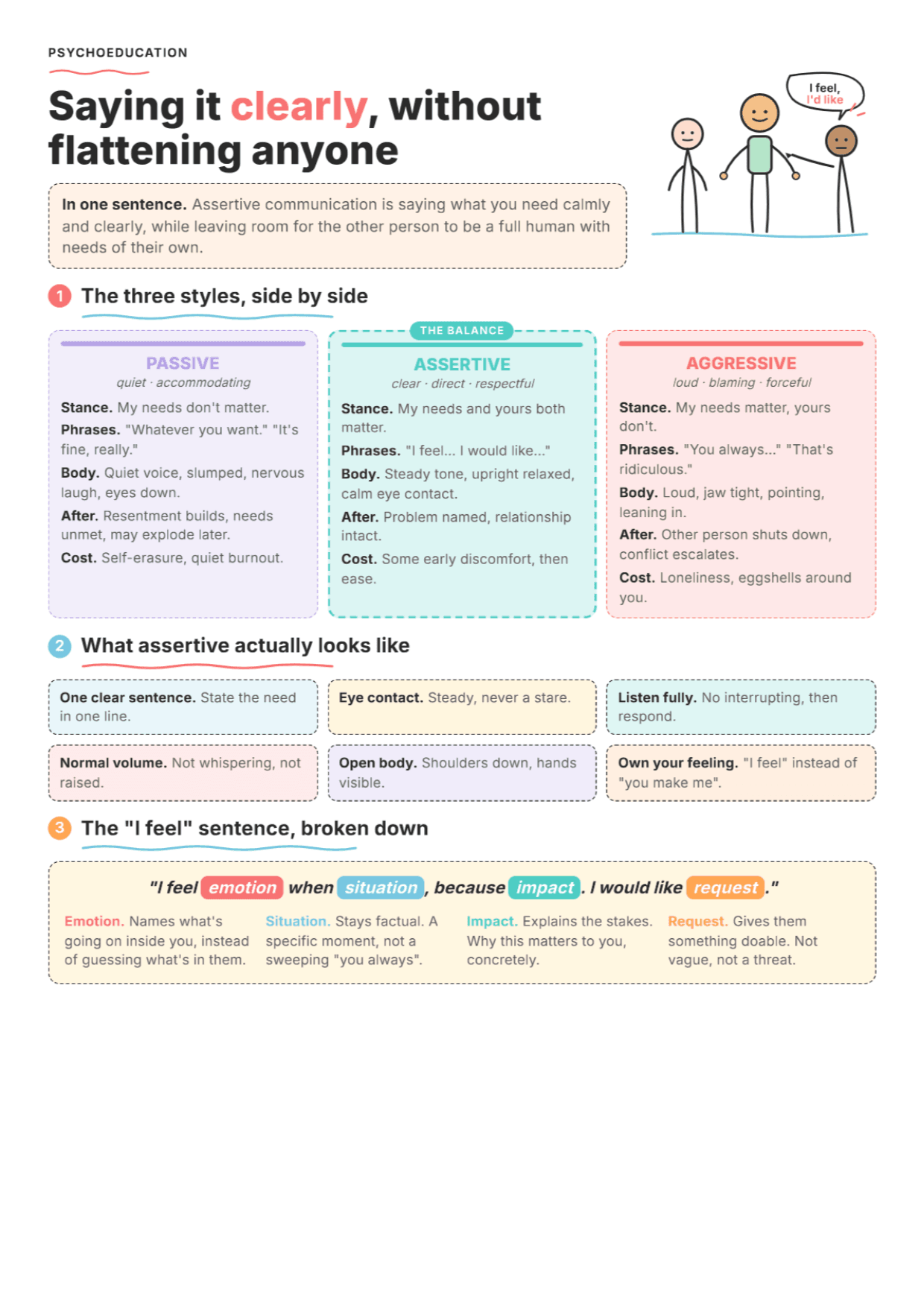
Handout
Assertive Communication: PDF Worksheet, Tools and Exercises
A visual PDF worksheet to explain the three communication styles in session, with concrete tools, worked examples, and exercises clinicians can use immediately.
Self & identityRelationships
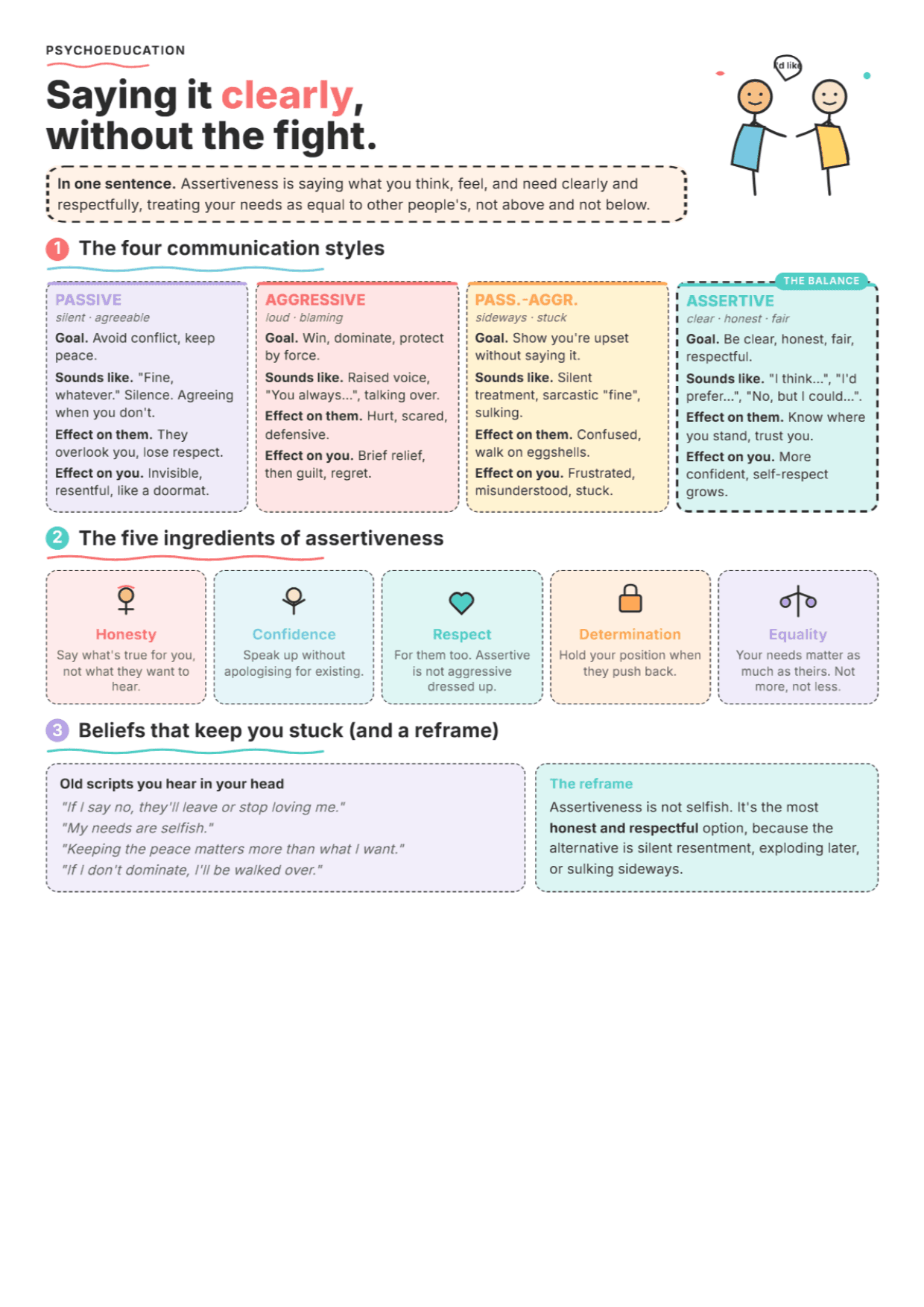
Handout
Assertive Communication: PDF Worksheet, Tools and Exercises
A visual PDF worksheet, practical tools, and ready-to-use exercises to explain assertive communication clearly and build it session by session.
Self & identityRelationships
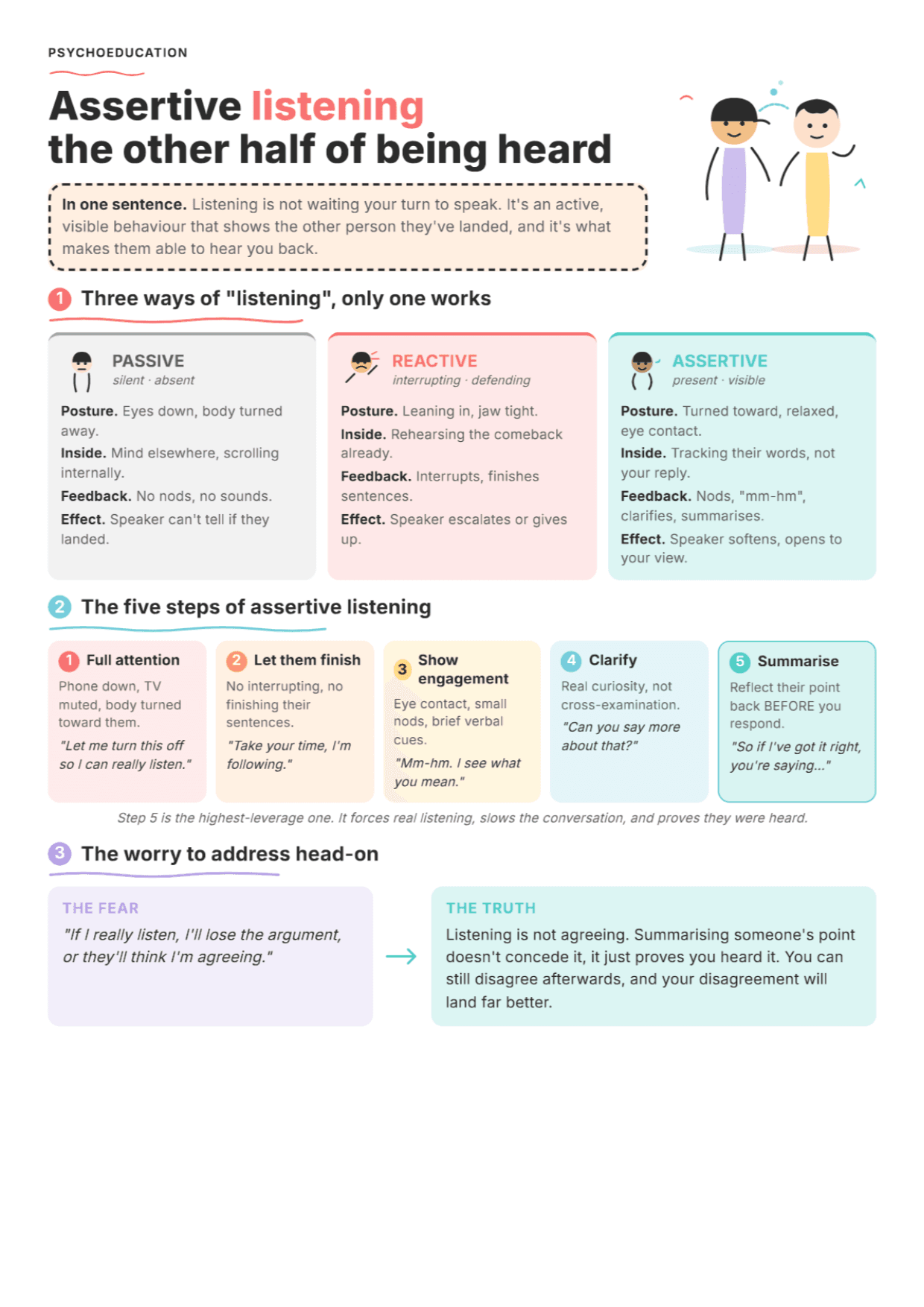
Handout
Assertive Listening: PDF Worksheet, Tools and Exercises for Clinical Practice
A visual PDF worksheet, concrete exercises, and clinical tools to teach assertive listening as a practised behaviour, not a passive stance.
Self & identityRelationships
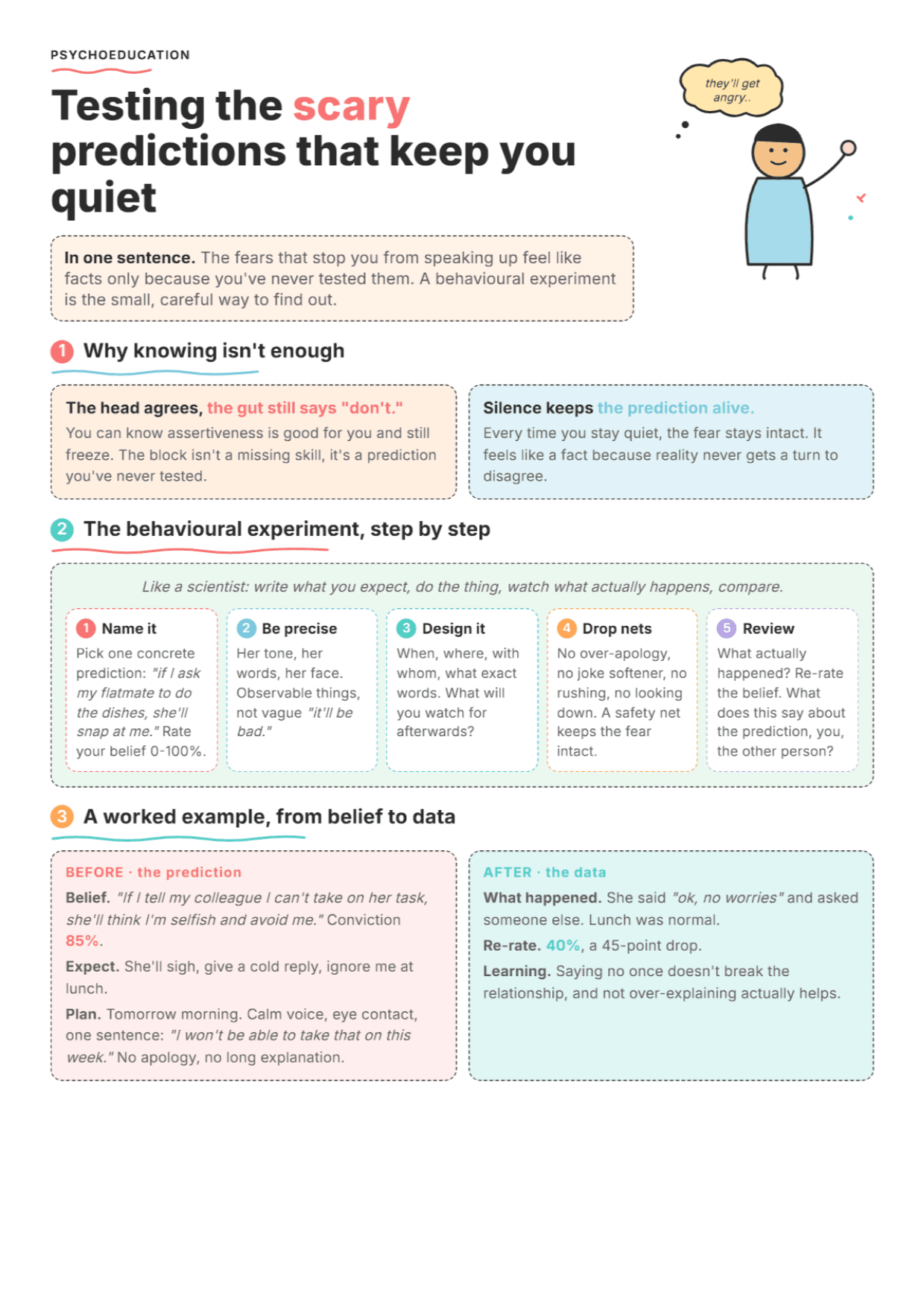
Handout
Assertiveness Behavioral Experiment: PDF Worksheet, Tools and Exercises
A visual PDF worksheet clinicians can use in session to help patients design, run, and debrief assertiveness experiments, building real behavioral evidence against fear-driven predictions.
Self & identityAnxiety
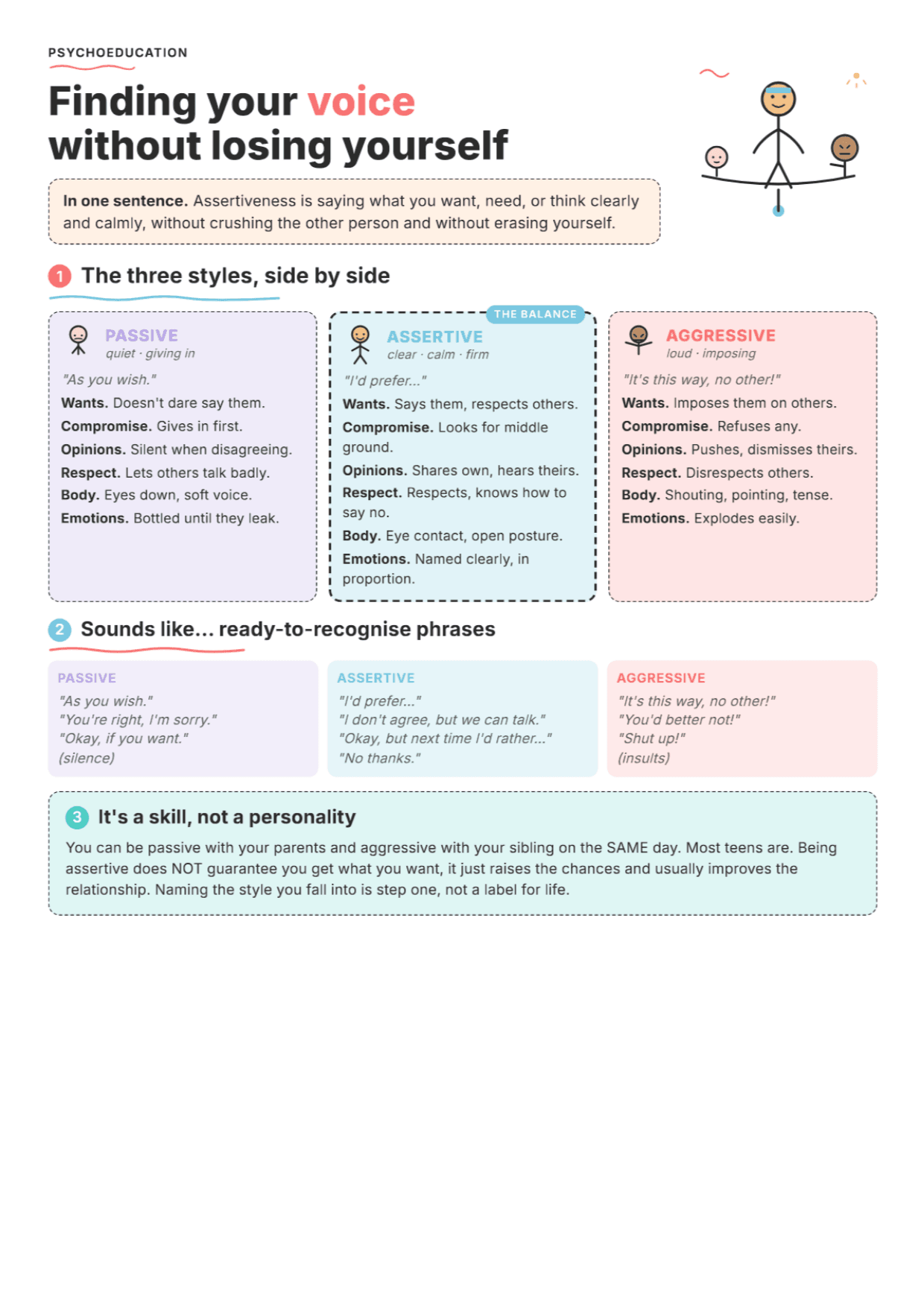
Handout
Assertiveness for Teens: PDF Worksheet, Tools and Exercises for Clinical Practice
A visual psychoeducation tool to help adolescent patients understand passive, assertive, and aggressive styles, and start practising assertive communication in session.
Self & identityRelationships
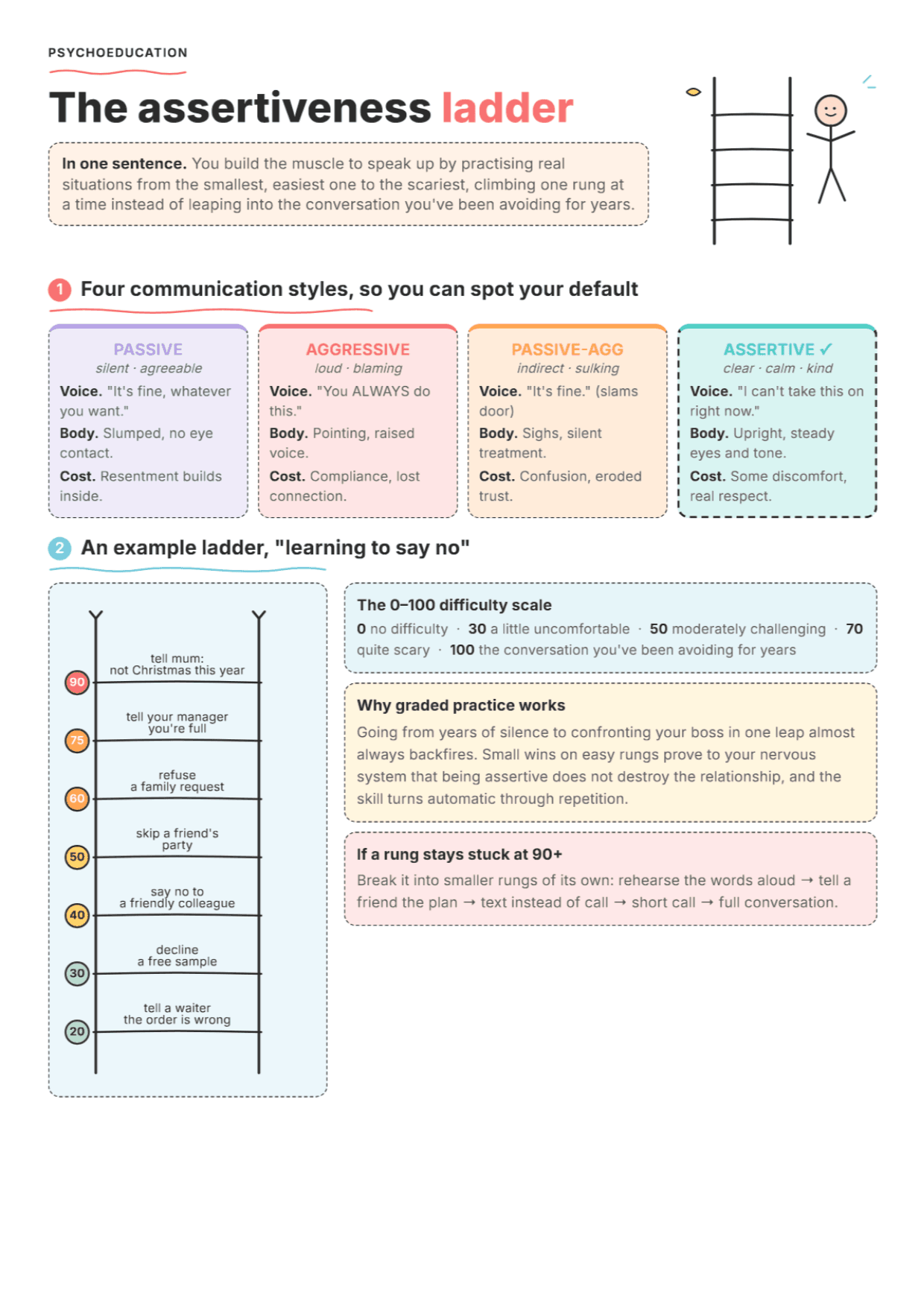
Handout
Assertiveness Ladder: PDF Worksheet, Tools and Exercises
A visual PDF worksheet clinicians can use in session to explain graduated assertiveness practice, build a personalized hierarchy, and give patients a concrete reference between appointments.
Self & identityAnxiety
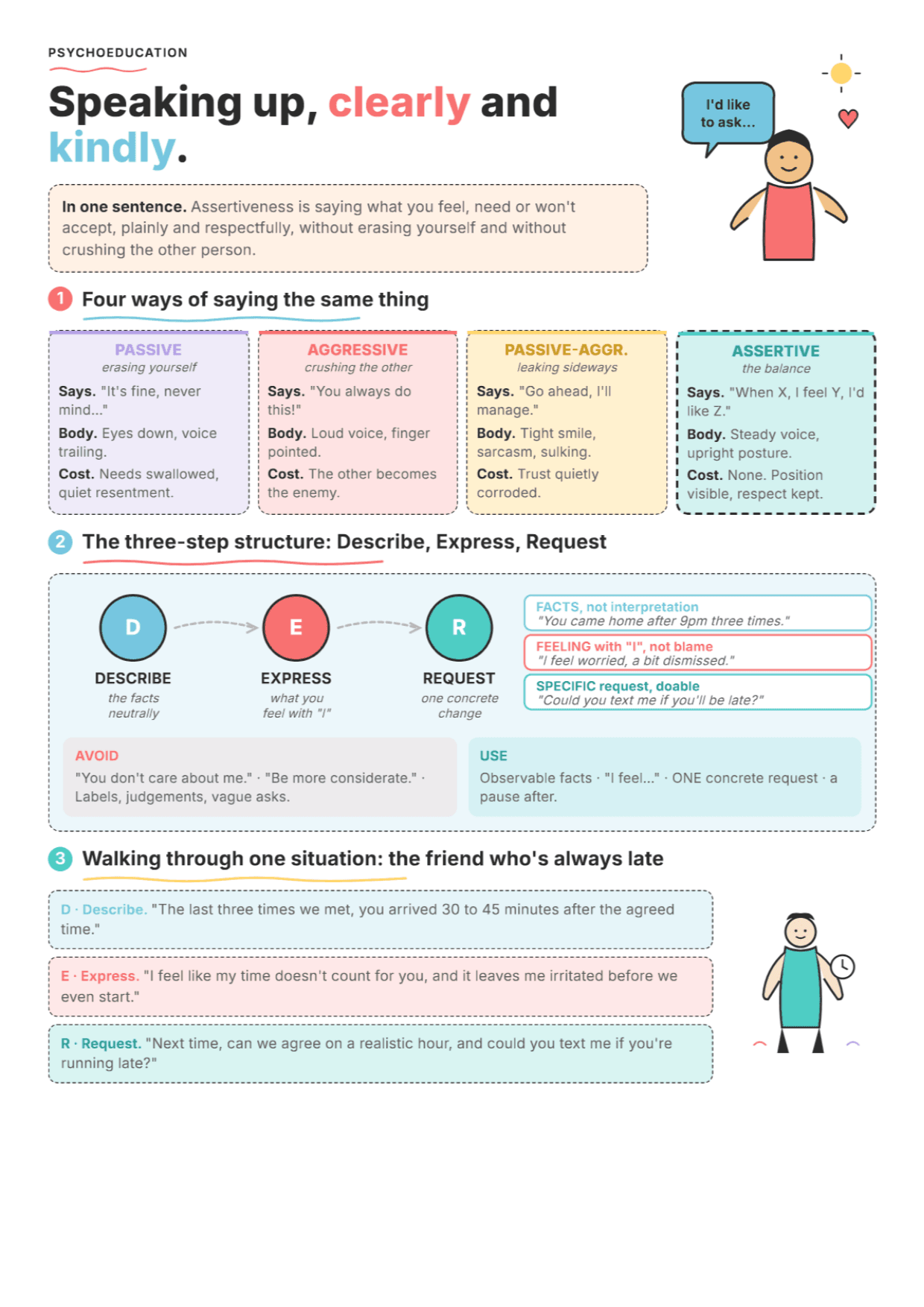
Handout
Assertiveness Training: PDF Worksheet, Tools and Exercises for 10 Scenarios
A structured PDF worksheet with four communication styles, the DER framework, and ten rehearsable scenarios to make assertiveness training concrete and fast in session.
Self & identityRelationships
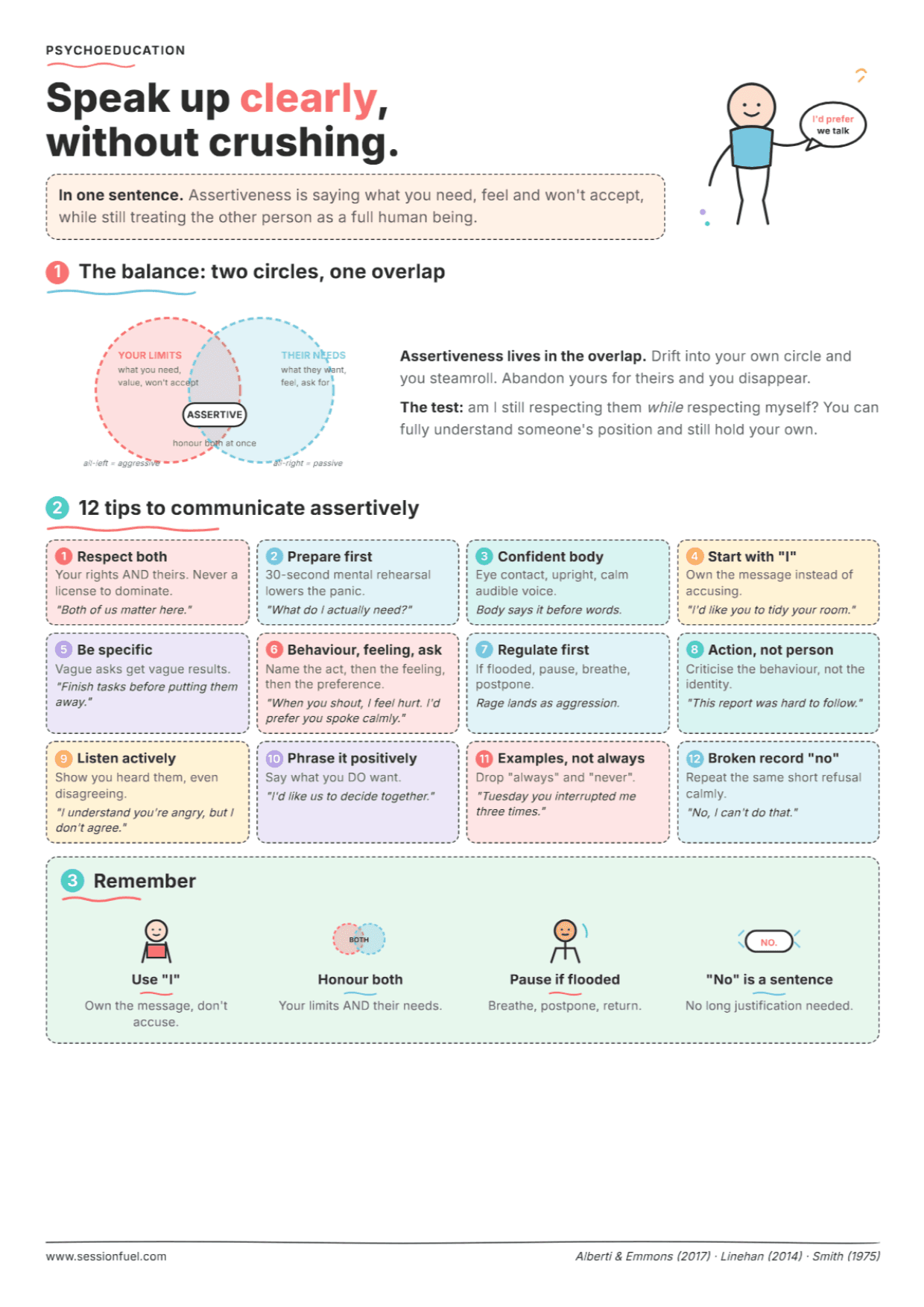
Handout
Assertiveness: PDF Worksheet, Tools and Exercises for Clinical Practice
A visual PDF worksheet, practical tools, and concrete exercises to help clinicians explain assertiveness clearly in session and give patients a reference they can actually use.
Self & identityRelationships
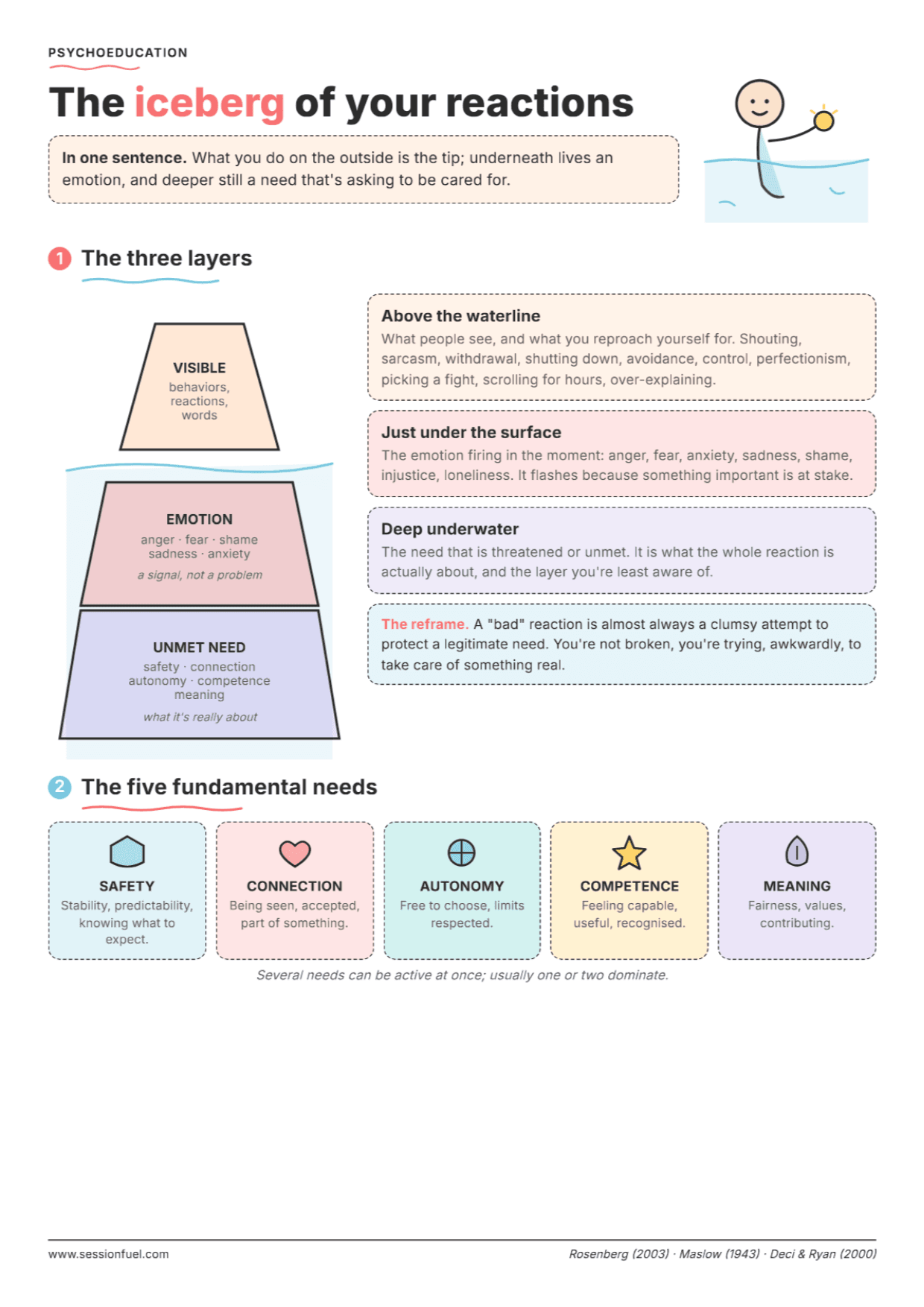
Handout
Behavior, Emotion, Underlying Need: PDF Worksheet, Tools and Exercises
A visual PDF worksheet, clinical tools, and worked exercises to help patients decode what drives their reactions, from surface behavior down to the unmet need beneath.
Emotions & stressSelf & identity