
Process Trauma: Clinical Resources for Trauma-Focused Practice
Process trauma, a central therapeutic aim in the treatment of post-traumatic stress, trauma-related dissociation, and complex traumatic presentations, groups every clinical intervention designed to help a patient metabolise, integrate, and contextualise aversive experiences that have overwhelmed ordinary adaptive capacities. This page is intended for psychologists, psychotherapists, psychiatrists, and allied mental health clinicians who are building or refining a trauma-focused approach with individual patients. The resources gathered here span psychoeducation, structured worksheets, somatic and cognitive exercises, and guided audio protocols, each aligned with current evidence-based frameworks. Whether you work within EMDR, Trauma-Focused CBT, schema therapy, or a stabilisation-first phased model, you will find tools here that fit directly into your session workflow.

Beyond Symptom Reduction: the Goal of Integration
The phrase trauma processing is sometimes used loosely to mean any therapeutic work that touches on difficult past events. Clinically, it refers to something more specific: the set of procedures by which a traumatic memory loses its intrusive, dysregulating charge and becomes encoded as a coherent autobiographical event, located in the past, no longer perceived as an ongoing threat. This shift, described across frameworks as integration, resolution, or emotional processing, is distinct from simple exposure or from verbal narration. A patient can recount a traumatic event at length without processing it at all; the criterion is change in the way the memory is held, not the number of times it has been spoken.
The mechanisms underlying successful trauma processing are debated across theoretical orientations, but converge on a few key principles: corrective emotional experience within a safe therapeutic relationship, modification of threat-related appraisals, reduction of physiological hyperreactivity to trauma cues, and re-encoding of fragmented sensory-perceptual material into a more coherent narrative. Resources in this category are designed to support one or more of these mechanisms, at different phases of treatment.
The Phased Model and Its Clinical Rationale
Most contemporary trauma guidelines, including those from ISTSS and the NICE trauma framework, recommend a phased or sequenced approach to trauma treatment. Phase one centres on safety, stabilisation, and symptom management. Phase two is the active processing or working-through phase. Phase three concerns consolidation, grief, and reconnection with life beyond the trauma. The resources grouped in this category are predominantly relevant to phase two, though several bridge phases one and two, supporting the gradual preparation for deeper processing work.
This sequencing matters clinically because premature exposure to traumatic material in an unstabilised patient can precipitate decompensation, dissociative flooding, or treatment dropout. The clinician's task in selecting and introducing any processing resource is therefore not only to choose a technique, but to assess the patient's current window of tolerance, attachment capacity, and readiness for affect activation.
Identifying When Trauma Processing Is Indicated
Clinical Signs That Point Toward Phase-Two Work
Recognising that a patient is ready to move from stabilisation toward active trauma processing requires attention to several convergent markers. Symptom stabilisation alone is not sufficient; you are looking for evidence that the patient can tolerate moderate affect without dissociating or engaging in crisis behaviour, can maintain a dual awareness of past and present, and has internalised at least some capacity for self-regulation between sessions.
Key clinical indicators include:
- Reduction in frequency and intensity of intrusive symptoms (nightmares, flashbacks, sensory intrusions) without full remission
- Capacity to speak about traumatic themes with affect that is present but manageable, without shutting down or flooding
- Stable enough external circumstances (housing, safety, substance use) that the patient can tolerate temporary increases in distress
- A working therapeutic alliance and sufficient trust in the clinician to engage with vulnerable material
- Ability to use grounding or containment strategies reliably
Where several of these indicators are absent, continuing stabilisation work and returning to this category of resources at a later stage is the clinically sound choice.
Differential Considerations: Complex Trauma and Dissociation
For patients with complex post-traumatic presentations, developmental trauma, or significant dissociative symptoms, standard single-incident processing protocols require adaptation. The structural dissociation model and related frameworks (such as ego-state approaches) caution against direct trauma processing with patients who lack sufficient integration of personality parts. In these cases, the resources in this category may be introduced selectively and more slowly, often as supplements to a phase-oriented, dissociation-informed treatment rather than as standalone interventions.
Diagnoses to hold in mind when pacing the introduction of processing work include: PTSD with prominent dissociation, CPTSD (ICD-11), borderline personality disorder with trauma histories, and presentations where somatic symptoms are a primary vehicle for traumatic material. In each case, the processing aim remains valid; the route and pace change substantially.
Core Therapeutic Mechanisms Targeted by These Resources
Cognitive Reappraisal and Meaning-Making
Maladaptive trauma-related cognitions are among the most robust predictors of persistent post-traumatic symptomatology. These cognitions typically cluster around themes of permanent self-damage, ongoing threat, self-blame, and betrayal of the assumptive world. Worksheets and psychoeducation materials in this category that target cognitive mechanisms are designed to surface these appraisals, examine their basis, and support the construction of more adaptive, realistic meanings. This is not about minimising what happened; it is about contextualising it.
Cognitive restructuring in trauma work differs from standard CBT cognitive work in that it must account for the affective intensity attached to trauma memories, the possibility that some cognitions are grounded in real betrayal or injustice (warranting validation before challenge), and the risk of inadvertent shame activation if the clinician moves too fast.
Affect Regulation and Somatic Processing
Many patients presenting with trauma-related dysregulation have nervous systems that have been chronically tuned toward threat detection. Somatic and body-oriented processing exercises, guided imagery protocols, and breathing-based audio resources in this category work at the level of autonomic regulation, supporting the patient's capacity to tolerate trauma-linked arousal without either shutting down or becoming overwhelmed. These resources complement cognitively oriented work rather than replacing it.
Narrative Construction and Autobiographical Memory
A central feature of unprocessed traumatic memory is its fragmented, non-narrative character: sensory fragments, emotional states, and behavioural responses that are not linked into a coherent story located in the past. Narrative-based resources, such as structured writing exercises and guided recall worksheets, support the patient in constructing a coherent account, an account that has a beginning, middle, and end, and that can be placed in biographical context. The research literature on written disclosure and narrative exposure consistently supports this mechanism as a driver of symptom change.
Integrating Trauma Processing Resources into the Care Plan
Selecting Resources by Phase and Patient Profile
When integrating the materials in this category into a care plan, a stepwise selection process improves clinical utility:
- Assess current phase: confirm the patient has sufficient stabilisation before introducing any direct processing resource.
- Identify the primary mechanism to target: cognitive (appraisals), somatic (dysregulation), or narrative (memory fragmentation).
- Match the resource format to the patient's presentation: some patients engage more readily with structured worksheets; others benefit more from guided audio or body-based exercises.
- Introduce the resource collaboratively: frame it as a tool the two of you are trying together, not a homework assignment. Discuss the patient's reaction in the following session.
- Monitor for adverse reactions: any significant increase in intrusive symptoms, avoidance, or dissociative episodes following the introduction of a processing resource should prompt a reassessment of phase and readiness.
- Document and iterate: note which resources are helpful and at what points in the process, building an individualised protocol over the course of treatment.
Between-Session Use and Its Limits
Many of these resources are designed for use between sessions, extending therapeutic work into the patient's daily life. Between-session practice can consolidate in-session gains and give patients a sense of agency over their own recovery. However, this assumes sufficient stabilisation. For patients in early or fragile stages of treatment, assigning processing-oriented materials for independent use between sessions can increase destabilisation rather than reduce it. A conservative default for complex presentations is to use processing resources within the session first, then consider gradual between-session extension only once the patient has demonstrated the capacity to manage the associated affect independently.
A Clinical Vignette
> A 38-year-old patient with CPTSD following childhood relational trauma has been in stabilisation-focused therapy for seven months. She presents with persistent self-blame cognitions, fragmented recall of specific incidents, and a strong freeze response when any trauma-related content is approached directly. Over the preceding two months she has consistently used grounding techniques between sessions without decompensating. In session, the clinician introduces a structured worksheet targeting self-blame appraisals, working through it slowly together. The patient becomes tearful but maintains dual awareness throughout. In the debrief, she reports that it is the first time she has looked at that belief as a belief rather than a fact. The clinician notes this as a marker of emerging processing capacity and plans to introduce a brief narrative exercise in the following session.
Comorbidities and Diagnostic Complexity
Trauma and Depression
Major depressive disorder is the most common comorbidity in trauma-presenting patients, occurring in roughly half of those with PTSD. In combined presentations, the cognitive processing of trauma is often complicated by hopelessness and anhedonia, which reduce engagement and slow the pace of meaning-making work. Resources in this category remain applicable, but may need to be introduced at a reduced intensity and paired with behavioural activation or pharmacological support where indicated.
Trauma and Substance Use
Substance use disorders frequently develop in the context of trauma, functioning as affect-regulation strategies in the absence of adaptive alternatives. Active substance use significantly complicates direct trauma processing work: intoxication and withdrawal both impair the memory consolidation processes on which processing depends, and some substances (particularly alcohol and benzodiazepines) specifically interfere with fear extinction mechanisms. In most presentations with active, significant substance use, stabilisation and substance treatment take precedence before phase-two processing resources are introduced.
Clinical Limits and Points of Vigilance
When Standard Processing Approaches Are Contraindicated
No processing resource, however well designed, is appropriate for every patient or every moment in treatment. Active suicidal crisis, acute psychosis, severe dissociative disorder requiring specialised phase-oriented care, and ongoing exposure to traumatic situations (domestic violence, current persecution) all represent conditions under which direct processing work should be paused or substantially modified. The clinician's clinical judgement, not the existence of a useful worksheet, governs the decision.
The Risk of Re-traumatisation
The concept of re-traumatisation in therapy refers to the iatrogenic activation of traumatic material at an intensity that exceeds the patient's regulatory capacity and produces further harm rather than healing. This is not an argument against trauma processing; it is an argument for careful, titrated, relationship-anchored introduction of processing resources. Any resource in this category should be considered a clinical intervention, not an administrative add-on, and should be introduced with the same care as any other procedure.
Tools in this category
Handout
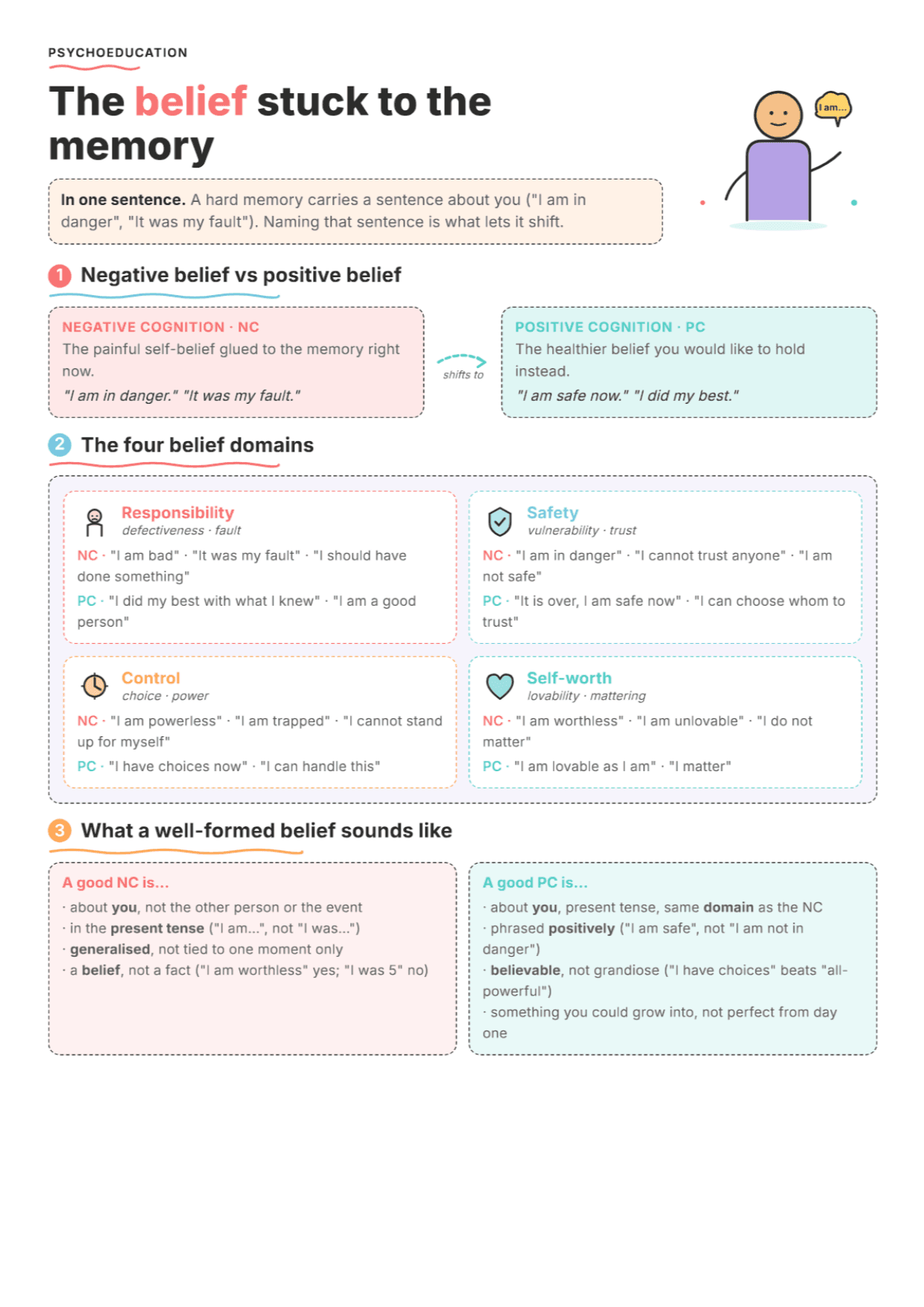
EMDR Negative and Positive Cognitions: PDF Worksheet, Tools and Exercises
A visual PDF worksheet to help clinicians explain NC/PC identification clearly in EMDR sessions, establish shared vocabulary, and leave patients with a concrete reference they can actually use.
Trauma & PTSD
Handout
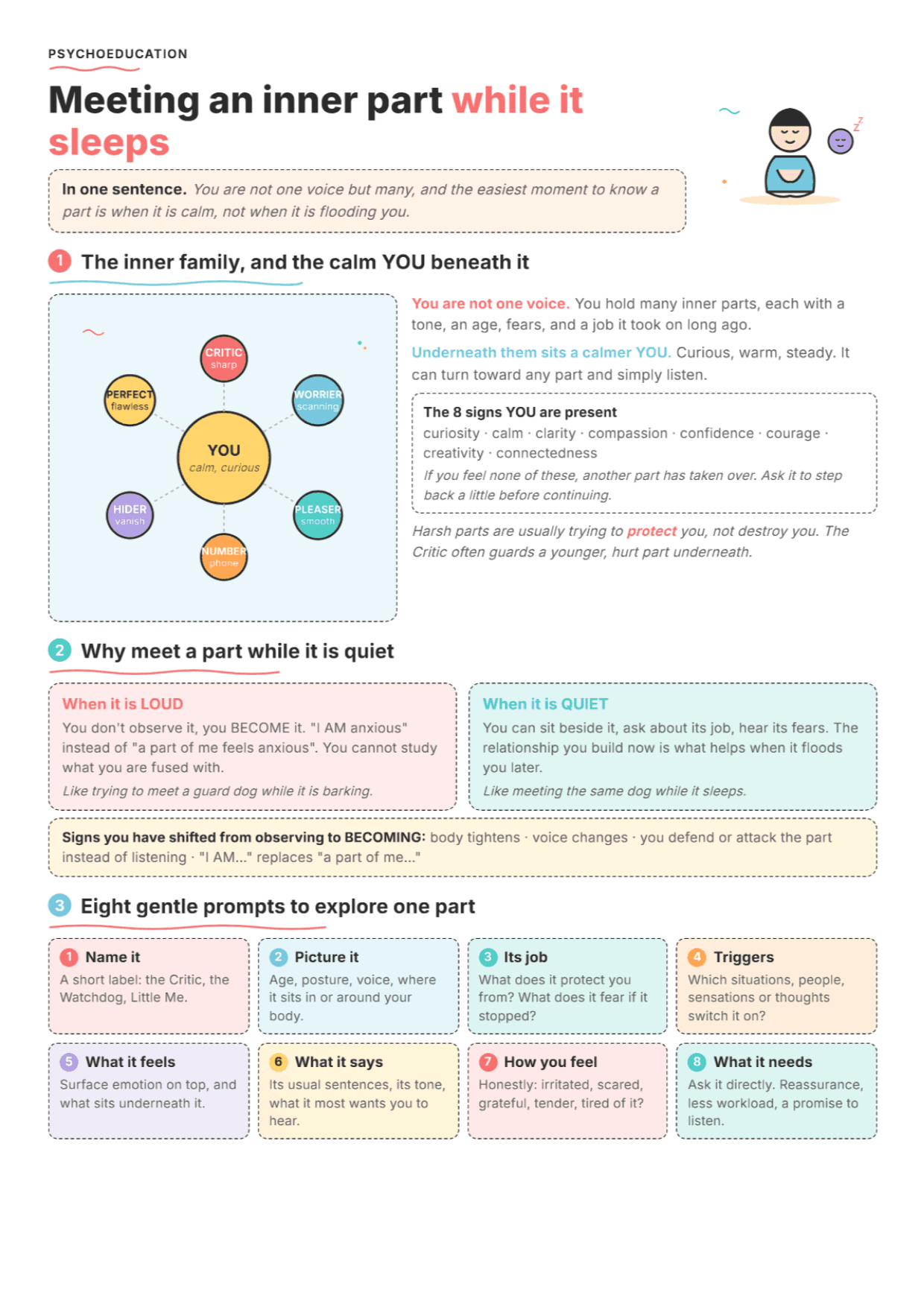
Exploring a Non-Activated IFS Part: PDF Worksheet, Tools and Exercises
A visual clinical tool to help patients meet inner parts while calm, build Self-leadership, and prepare for therapeutic encounters with protector and exile parts in IFS practice.
Self & identityTrauma & PTSD
Handout
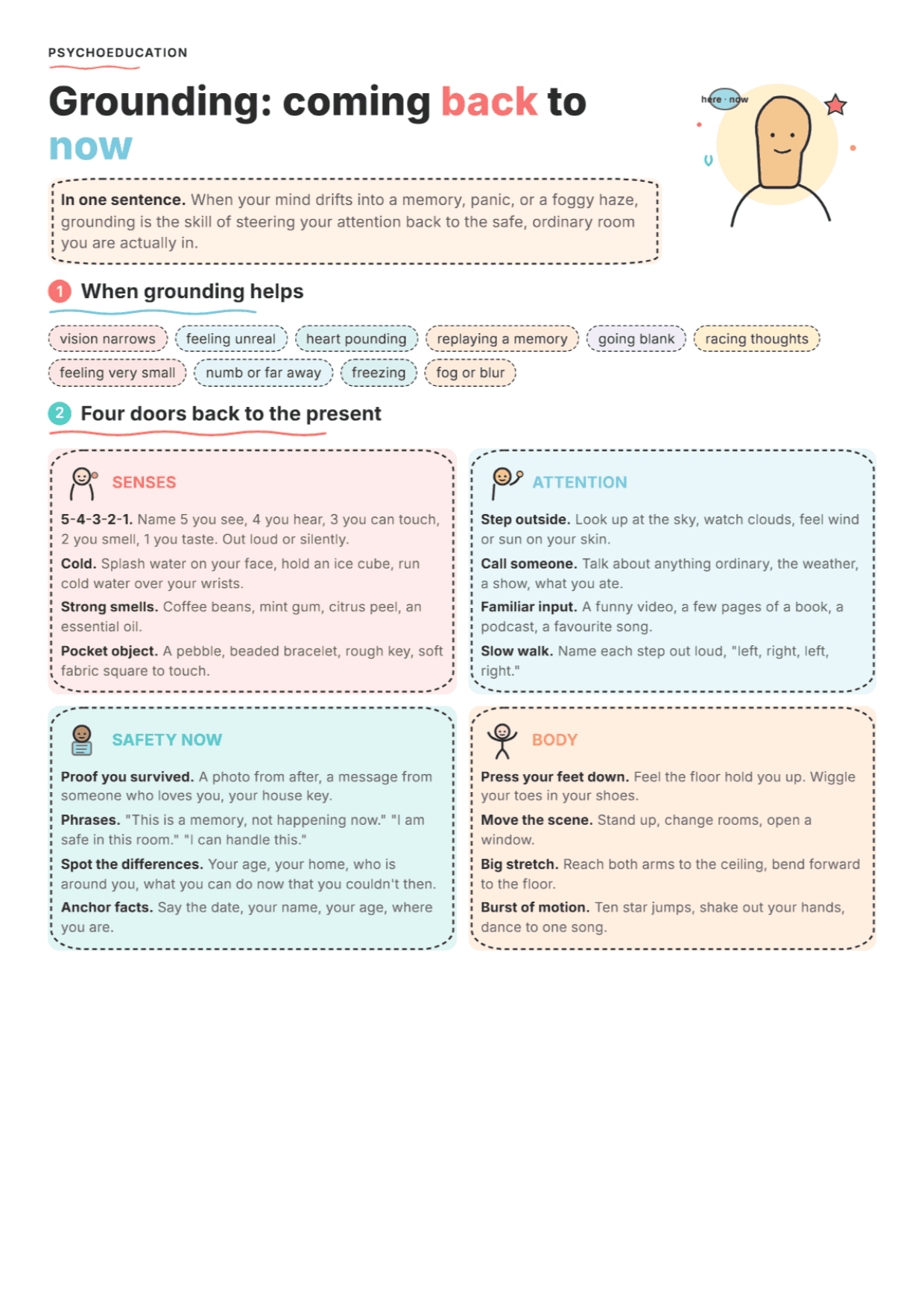
Grounding Techniques: PDF Worksheet, Tools and Exercises for Clinical Practice
A structured visual menu of grounding exercises clinicians can use in session to help patients with dissociation, flashbacks, and acute distress return to the present moment.
Trauma & PTSDAnxiety
Handout
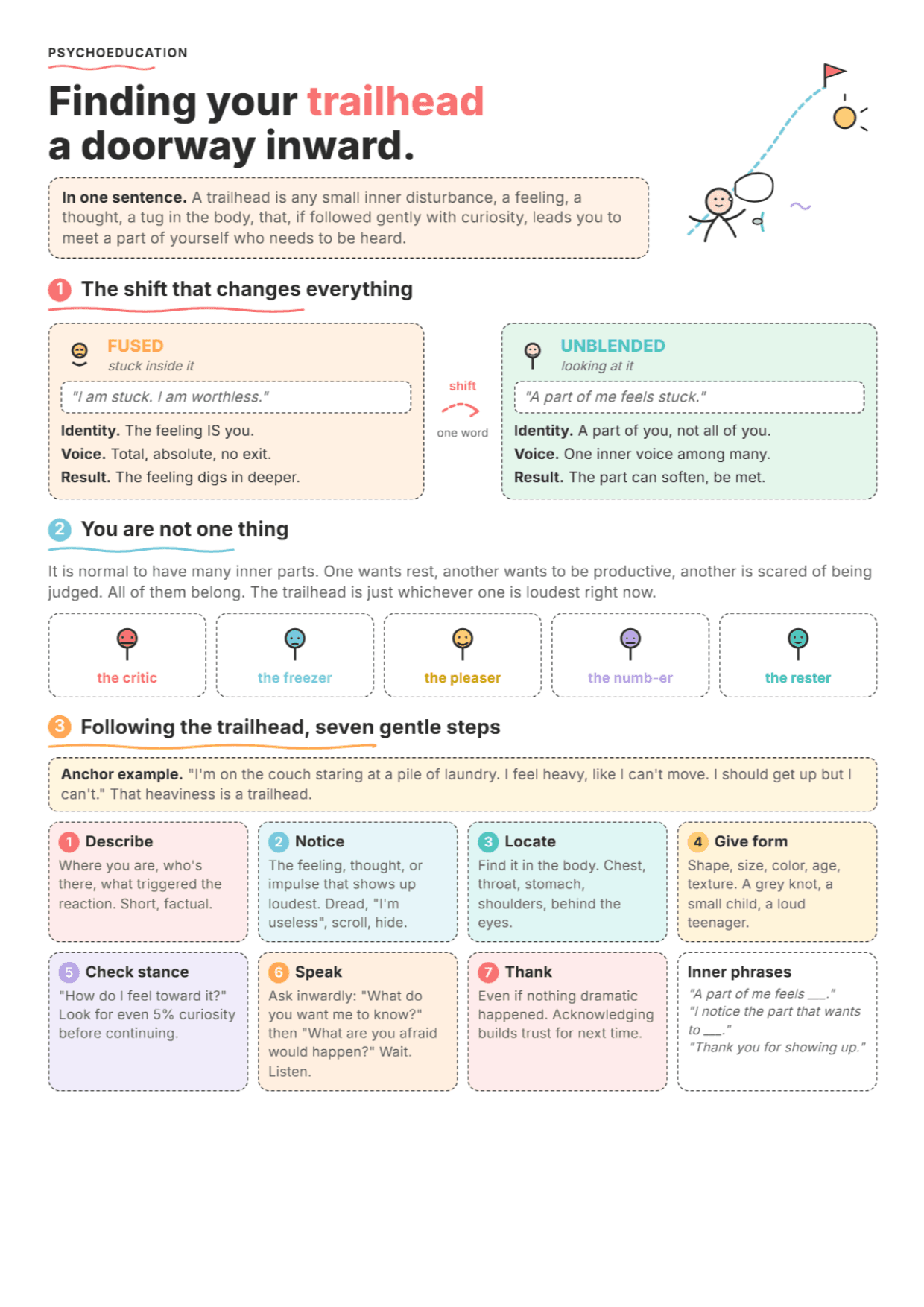
IFS Trailhead: PDF Worksheet, Tools and Exercises for Clinical Practice
A printable PDF worksheet, tools and exercises to help clinicians introduce the trailhead concept, guide unblending in session, and give patients a concrete map for parts work.
Self & identityTrauma & PTSD
Handout
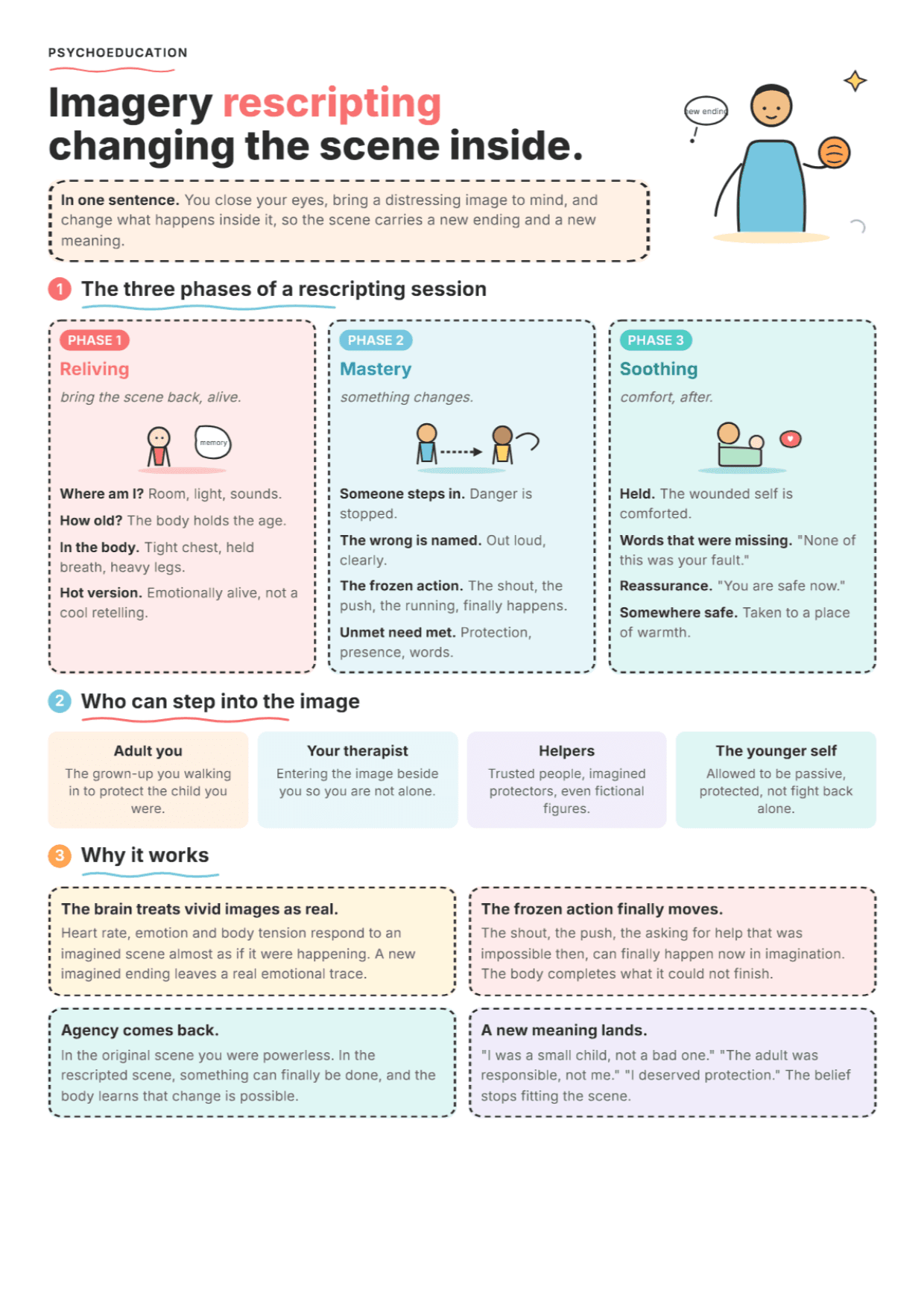
Imagery Rescripting: PDF Worksheet, Tools and Exercises for Clinical Practice
A visual psychoeducation worksheet clinicians can use in session to explain the three-phase rescripting structure, ground the procedure in mechanism, and prepare patients for imagery work.
Trauma & PTSDMood & depression
Handout
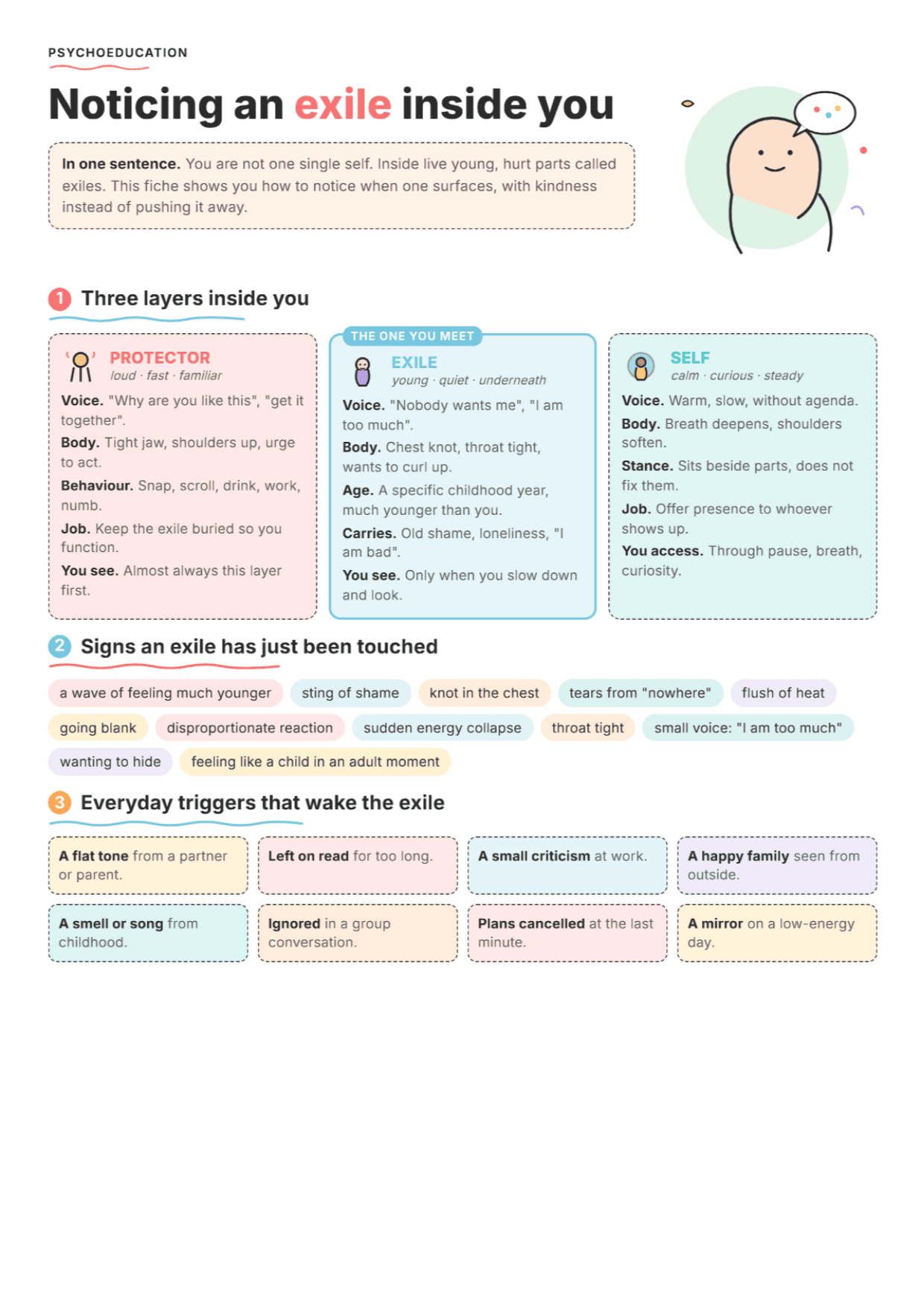
Noticing an Exile (IFS): PDF Worksheet, Tools and Exercises
A visual psychoeducation tool and structured exercises to help clinicians introduce exiles, protectors, and Self-energy in IFS-informed sessions.
Trauma & PTSDAnxiety
Handout
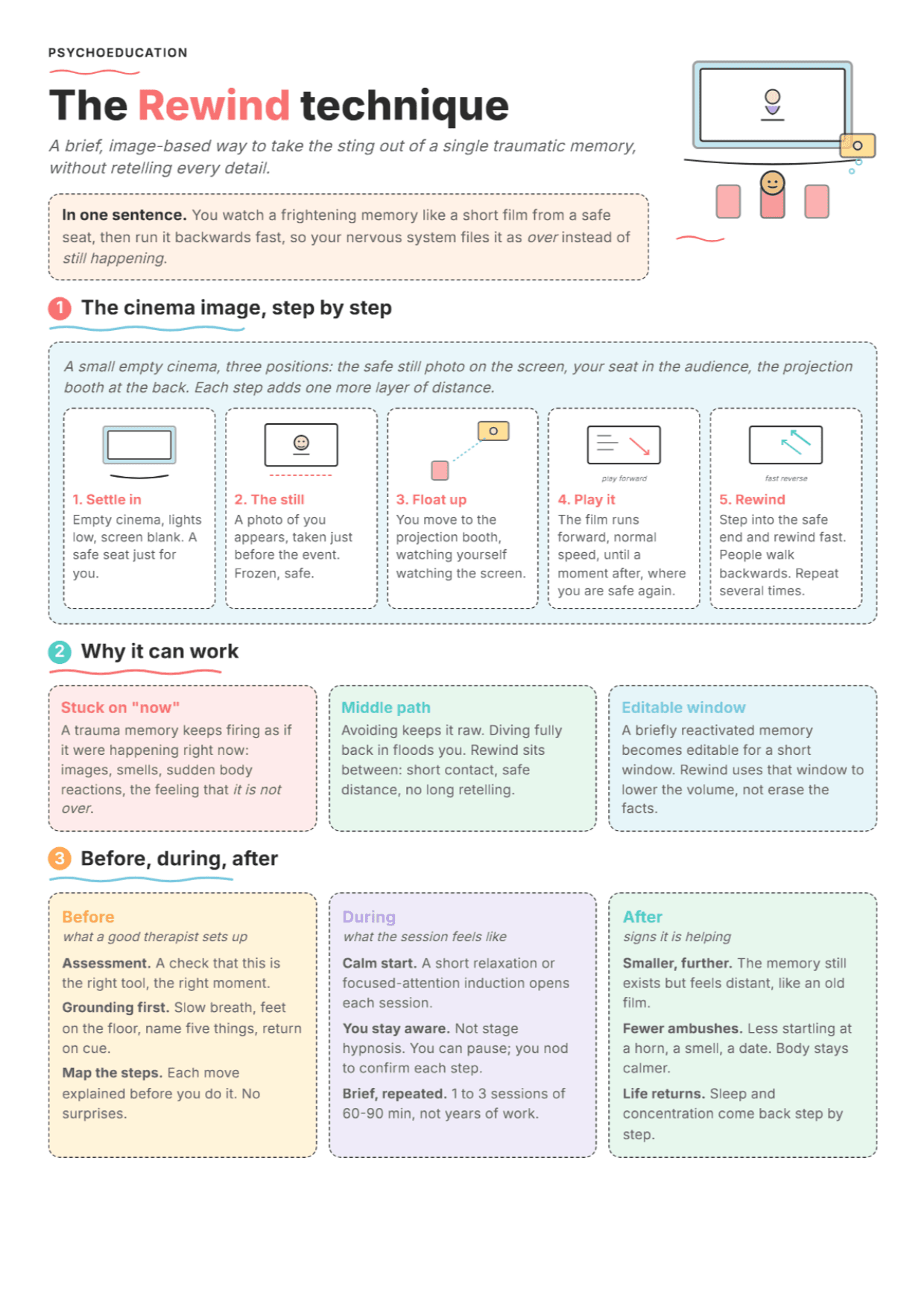
Rewind Technique for PTSD: PDF Worksheet, Tools and Exercises
A printable psychoeducation fiche to explain the Rewind Technique in session, give patients a visual map of each step, and lay the groundwork for trauma processing.
Trauma & PTSD
Handout
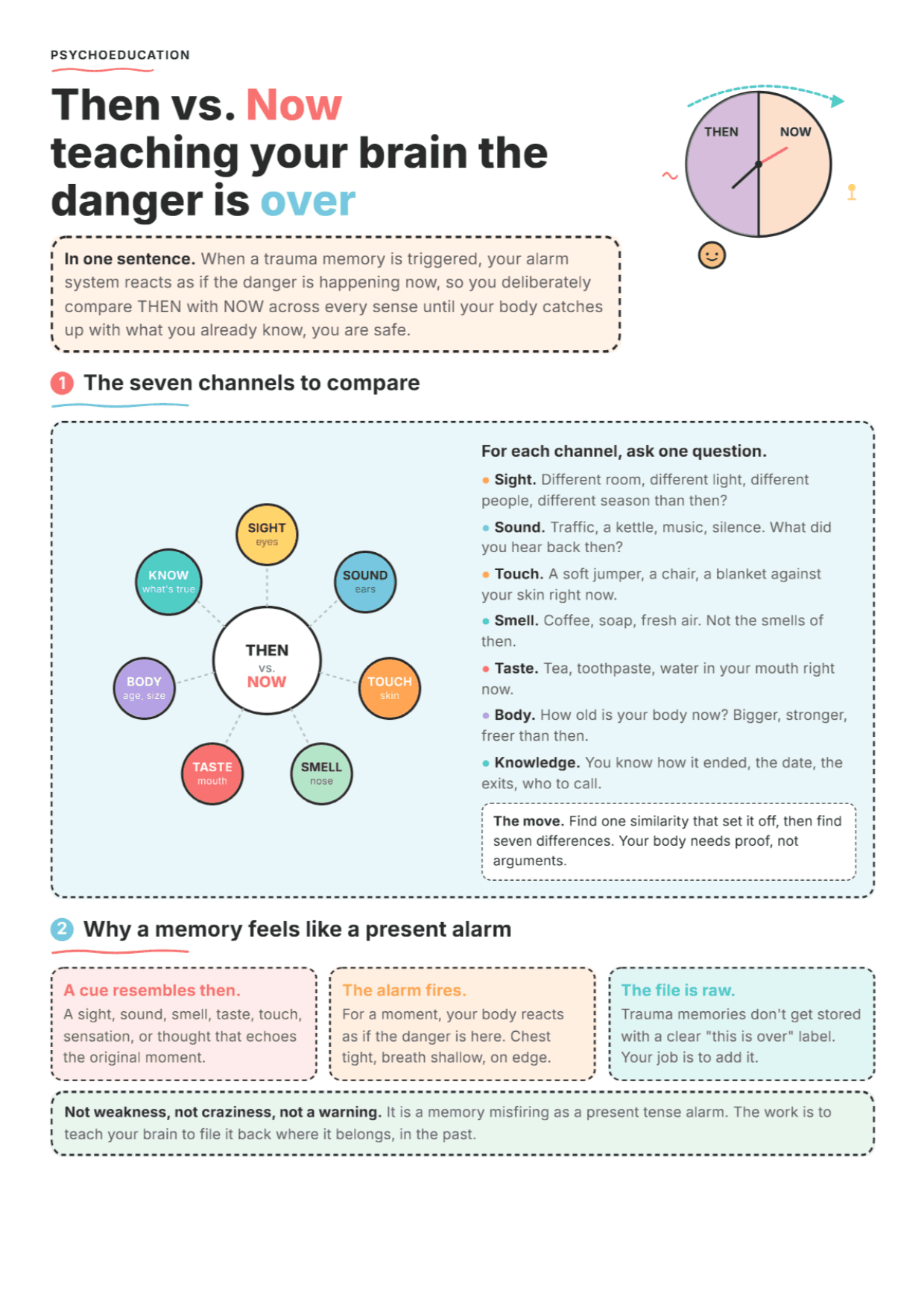
Stimulus Discrimination (Then vs. Now): PDF Worksheet, Tools and Exercises
A visual PDF worksheet, practical tools, and in-session exercises to help patients teach their nervous system that the past danger is over.
Trauma & PTSD
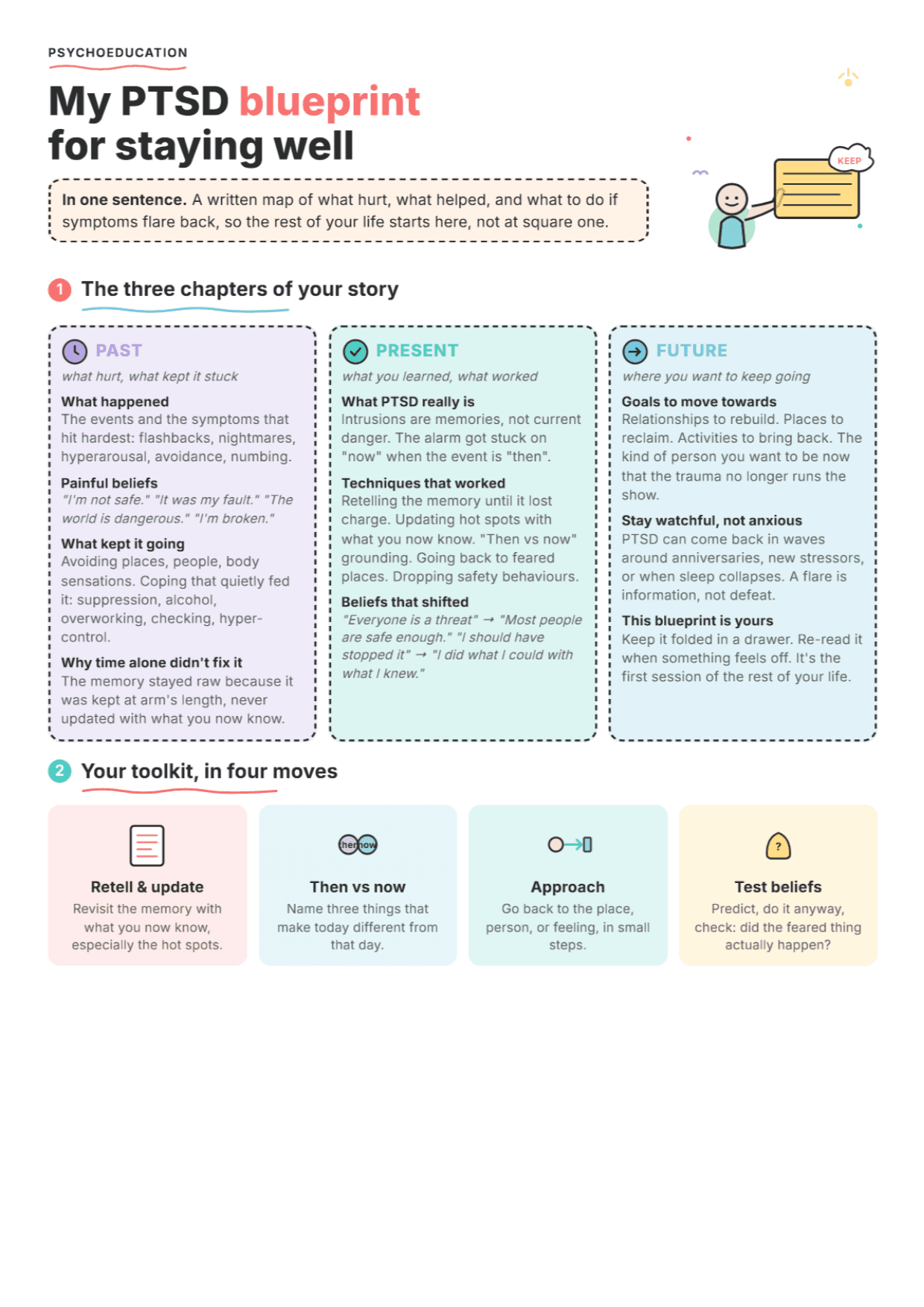
Handout
Therapy Blueprint for PTSD: PDF Worksheet, Tools and Exercises
A printable PDF fiche, clinical tools, and relapse-prevention exercises to consolidate PTSD treatment and give patients a concrete, lasting self-management map.
Trauma & PTSD