
Relational Functioning: Clinical Resources for Therapists
Relational functioning, encompassing interpersonal patterns, attachment dynamics, and dyadic communication, sits at the heart of a wide range of presentations clinicians encounter across modalities and settings. This page is designed for practitioners seeking structured, evidence-informed printable tools to support assessment and intervention work targeting relational difficulties. The resources gathered here span psychoeducation, schema-focused exercises, assertiveness training, and communication skills, each designed to be integrated into individual or couples therapy. Whether you are addressing long-standing interpersonal schemas or acute relational conflict, this collection offers materials calibrated to different phases of treatment.

Defining the Relational Dimension
Relational functioning refers to the quality, flexibility, and adaptability of a patient's interpersonal behaviour across contexts: close partnerships, family systems, friendships, and the workplace. Unlike symptom-focused dimensions, this domain cuts horizontally across diagnostic categories. A patient presenting with generalised anxiety, dysthymia, or a personality disorder may share structurally similar relational deficits with someone whose Axis I presentation is relatively mild but whose interpersonal patterns are chronically distressing.
Clinicians using a transdiagnostic lens have long recognised that relational difficulties are rarely incidental. They maintain symptom cycles, undermine treatment compliance, and constitute suffering in their own right. Mapping this domain early in assessment orients the care plan toward meaningful functional goals, beyond symptom reduction alone.
Why Relational Patterns Persist
Relational schemas, the implicit cognitive-affective structures shaping how a patient anticipates, perceives, and responds to others, are typically consolidated in early attachment contexts and reinforced through repeated interpersonal experience. Their very automaticity is what gives them clinical weight: the patient does not choose to push partners away or capitulate under social pressure; the pattern runs before conscious appraisal catches up.
This is precisely why psychoeducational and structured worksheet-based interventions are useful adjuncts to verbal processing. Externalising a schema onto paper, naming it, tracing its developmental origin, and testing its current validity are steps that consolidate insight in a way that conversation alone often cannot.
Identifying Relational Difficulties in Assessment
Attachment History and Its Clinical Signatures
Attachment style is one of the most clinically tractable entry points into the relational domain. Patients with anxious attachment typically present with hyperactivating strategies: preoccupation with partner availability, reassurance-seeking, and catastrophising around perceived rejection. Avoidant patients deactivate: they minimise relational need, report discomfort with closeness, and frequently appear self-sufficient in a way that masks underlying loneliness. Disorganised presentations blend both, often in the context of early trauma.
For patients in romantic partnerships, Attachment Styles in Romantic Relationships: PDF Worksheet, Tools and Exercises offers a structured psychoeducational framework that clinicians can use to map these patterns with patients, normalise the developmental origin of the style, and open a conversation about how it operates in the current relationship.
Relational Schemas and Core Beliefs
Beyond attachment style, the specific maladaptive relational beliefs a patient holds deserve systematic attention. Beliefs such as "if I express needs I will be rejected," "closeness always leads to being hurt," or "I must earn love through compliance" operate as self-fulfilling prophecies: they shape behaviour in ways that confirm the original schema.
The 12 Beliefs That Damage Relationships: PDF Worksheet, Tools and Exercises is particularly useful at this assessment stage. Walking through the belief inventory in session helps the patient identify which schemas are most active, and gives the clinician concrete hypotheses to pursue in formulation.
The Abandonment Schema: A High-Prevalence Pattern
Among the relational schemas most frequently encountered in clinical populations, the abandonment schema warrants particular attention. It is associated with intense fear of loss, emotional dysregulation in attachment contexts, and behaviours (clinging, testing, preemptive withdrawal) that paradoxically increase relational instability. The The Abandonment Schema: PDF Worksheet, Tools and Exercises for Clinical Practice supports both psychoeducation and schema-challenging work, and can be introduced once a sufficient therapeutic alliance is established.
Comorbidities and Differential Considerations
When Relational Difficulties Are Primary Versus Secondary
A critical clinical question is whether relational dysfunction drives symptomatology or whether it is downstream of another primary condition. Social withdrawal in major depression, for instance, looks superficially like avoidant interpersonal style, but it is typically egodystonic and remits with mood. By contrast, the relational rigidity seen in Cluster B or Cluster C personality pathology is ego-syntonic and persistent across mood states.
Mixed presentations are common. A patient with social anxiety disorder may develop genuine assertiveness deficits over years of avoidance, such that the anxiety requires treatment in parallel with explicit skills training. Waiting for anxiety remission before addressing the skills deficit prolongs disability unnecessarily.
Personality Structure and Relational Functioning
Borderline personality organisation brings specific relational challenges: splitting, identity diffusion, and attachment dysregulation interact to create unstable, intense relational cycles. Narcissistic and dependent structures, while phenomenologically distinct, share a vulnerability to perceived relational threats that destabilises functioning. In these cases, relational worksheets serve a different function: less skills-building, more mentalisation scaffolding and schema awareness.
Core Intervention Mechanisms: Schemas, Attachment, and Communication
Cognitive Restructuring of Relational Beliefs
Schema-focused work on relational beliefs follows a familiar CBT architecture: identify the belief, trace its developmental history, examine the evidence for and against it in current relationships, and construct an alternative, more adaptive belief. What distinguishes relational schema work from standard cognitive restructuring is the emotional charge attached to these beliefs. Patients often experience schema activation as visceral, not intellectual, so the pace of restructuring must be calibrated accordingly.
The 12 Beliefs That Damage Relationships: PDF Worksheet, Tools and Exercises supports this process by giving patients a concrete inventory to return to between sessions, tracking which beliefs are triggered by specific relational events.
Communication Skills: Reflective Listening
Deficits in dyadic communication maintain relational conflict independently of schema content. Patients who cannot demonstrate understanding of a partner's position, who escalate quickly under emotional arousal, or who habitually shift to problem-solving before validation, will struggle relationally even when their underlying beliefs are relatively adaptive. Teaching reflective listening as an explicit skill addresses this gap.
The Reflections: A Communication Skill, PDF Worksheet, Tools and Exercises provides a step-by-step guide to the reflection technique, with practice prompts that can be assigned as between-session homework for individual patients or used as a structured exercise with couples.
Assertiveness: A Central Relational Competency
The Clinical Case for Assertiveness Training
Assertiveness occupies a specific and important position in the relational competency landscape. It sits between passivity (suppressing needs to avoid conflict, at the cost of resentment and loss of self) and aggression (overriding others' boundaries, at the cost of relational rupture). Many patients with anxiety, depression, or codependent relational patterns present with a chronic assertiveness deficit that both reflects and maintains their relational difficulties.
Assertiveness training is not simply about learning to say no. It involves developing a coherent sense of one's rights in relationships, tolerating the discomfort of potential disapproval, and communicating needs in a way that is direct without being coercive. The Assertiveness: PDF Worksheet, Tools and Exercises for Clinical Practice offers a broad clinical introduction to these concepts, suitable for early psychoeducation.
Sequencing Assertiveness Interventions
Clinicians often find it productive to sequence assertiveness work in stages:
- Establish the conceptual foundation: what assertiveness is and is not, distinguishing it from aggression and passivity.
- Identify the patient's assertive rights: the Assertive Rights: PDF Worksheet, Tools and Exercises for Clinical Practice is well suited to this step, helping patients internalise a framework of legitimate interpersonal needs.
- Build graduated behavioural practice using the Assertiveness Ladder: PDF Worksheet, Tools and Exercises for Clinical Practice, which structures exposure to progressively more challenging assertive situations.
- Process obstacles: avoidance schemas, anticipated catastrophes, past experiences of assertiveness being punished.
- Consolidate generalisation across contexts: work, family, intimate relationships.
This sequencing avoids the common pitfall of assigning behavioural practice before the patient has sufficient conceptual and emotional preparation.
Integrating Relational Resources into the Care Plan
Timing and Pacing
Relational work tends to be most effective once the therapeutic alliance is solid enough to support the emotional activation that schema or attachment-focused content routinely generates. Introducing a psychoeducation sheet on attachment in the first session, before trust is established, risks intellectualisation or premature defensiveness. As a rule, psychoeducational tools (beliefs inventories, attachment style overviews) precede experiential or skills-based tools (communication exercises, assertiveness ladders).
> A patient in her mid-thirties presented with recurrent depressive episodes and a history of relationships ending when she felt "too much" for her partners. Mid-treatment, after mapping her abandonment schema together, the clinician introduced the abandonment schema worksheet as a between-session reflection tool. The patient returned the following week having annotated it extensively, connecting specific relational memories to the schema for the first time. This became the foundation for several subsequent sessions of schema restructuring.
Monitoring Relational Change
Because relational change is slower and less quantifiable than symptom change, clinicians benefit from identifying functional relational goals at the outset: "I will be able to disagree with my partner without shutting down," or "I will ask for what I need at work at least once per week." Revisiting these goals at regular intervals, and using worksheets as artefacts of progress, helps patients and clinicians alike track movement in a domain that is otherwise easy to underestimate.
Clinical Vigilance and Limits
Contraindications and Relational Risk
Not all relational work is benign. Assertiveness training in the context of a coercive or violent partnership requires careful risk assessment before any between-session practice is assigned. Increases in assertive behaviour can, in some relational systems, precipitate escalation from a controlling partner. This is not a reason to withhold the work, but it is a reason to sequence it carefully and to ensure safety planning is in place.
Similarly, schema-focused exploration of early attachment injuries carries the risk of destabilisation in patients with fragile affect regulation. Pacing is a clinical decision, not a patient preference: some patients request intensive relational work before they have the regulatory capacity to process it without decompensating.
The Therapeutic Relationship as Relational Data
Finally, the relational patterns the patient enacts outside the consulting room will inevitably manifest within it. Dependency pulls, dismissiveness, testing, idealisation and devaluation cycles: all of these are clinical material, not distractions from the work. The worksheets and exercises in this category are most potent when the clinician connects them explicitly to what is happening in the therapeutic relationship itself, using the here-and-now as a living laboratory for relational change.
Tools in this category
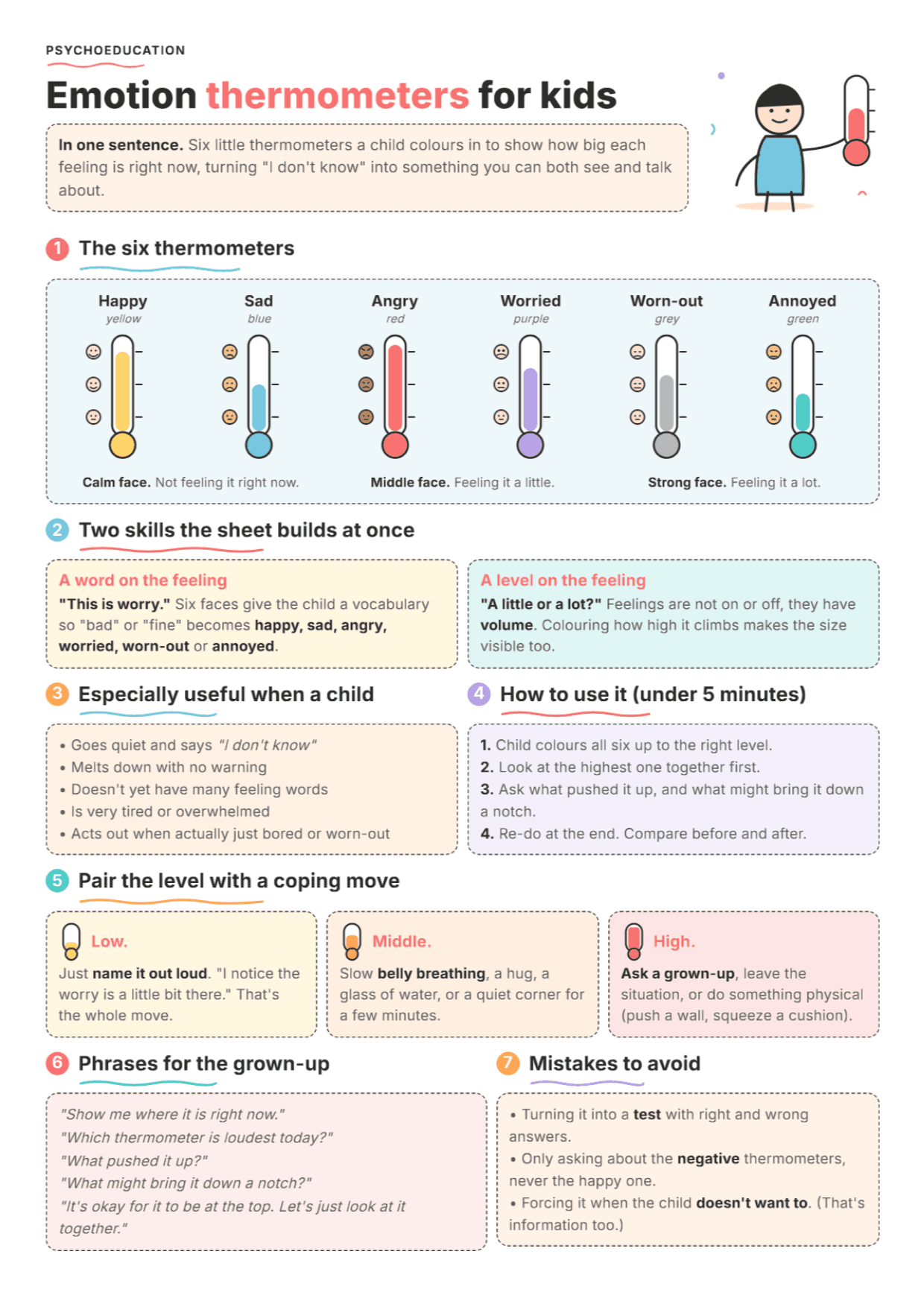
Handout
Emotion Thermometers: PDF Worksheet, Tools and Exercises
A printable visual tool helping clinicians turn a child's 'I don't know' into six colour-coded feeling levels that can be seen, named, and discussed together in session.
Emotions & stressRelationships
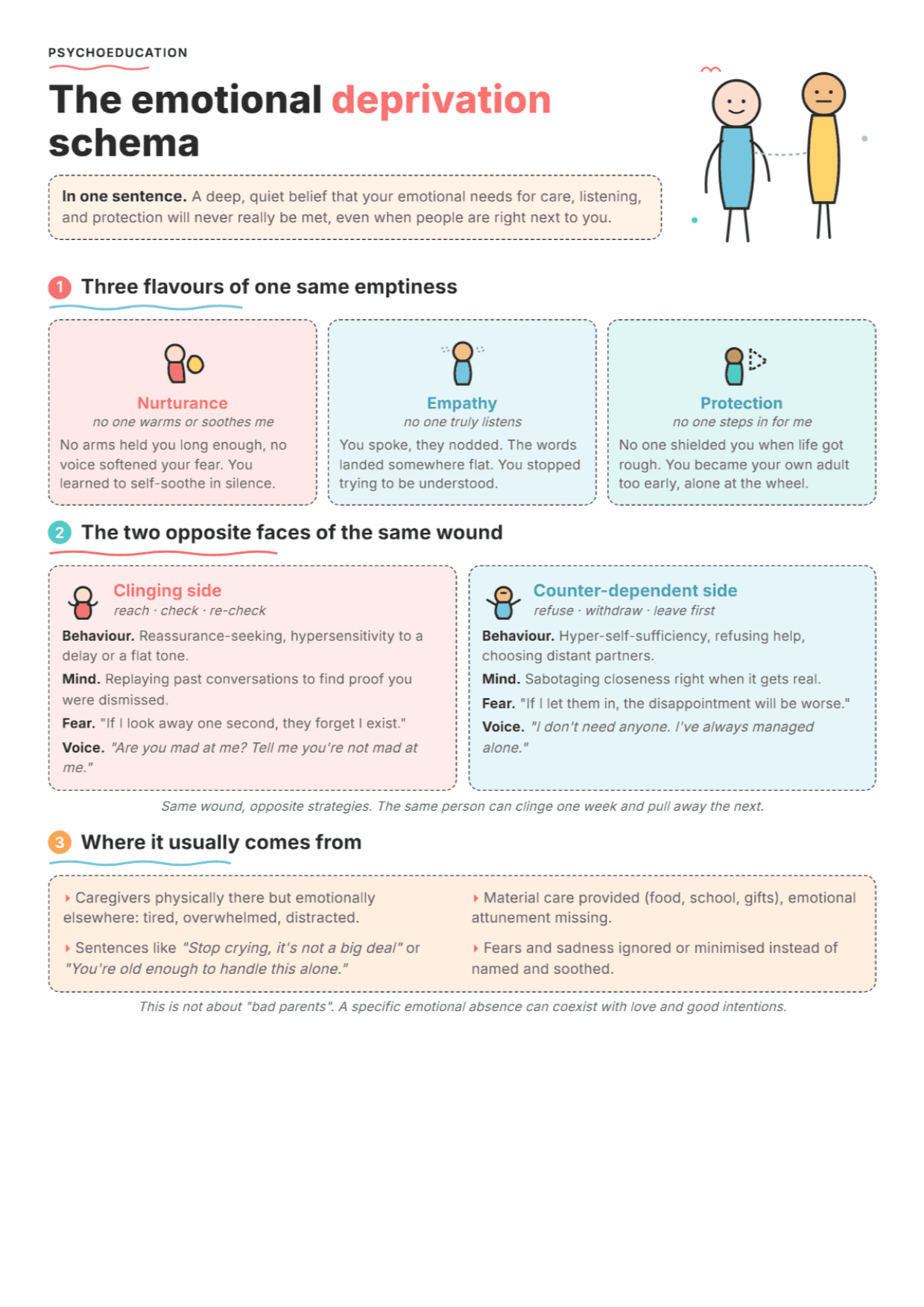
Handout
Emotional Deprivation Schema: PDF Worksheet, Tools and Exercises
A visual PDF worksheet to explain the emotional deprivation schema in session, name its two coping faces, and give patients a concrete psychoeducation anchor.
Self & identityRelationships
Feature
Emotional Firefighter: Grounding Affirmations for Acute Crisis
A one-tap clinical tool delivering calming grounding statements at peak anxiety, panic, or rumination between therapy sessions.
AnxietyMood & depression
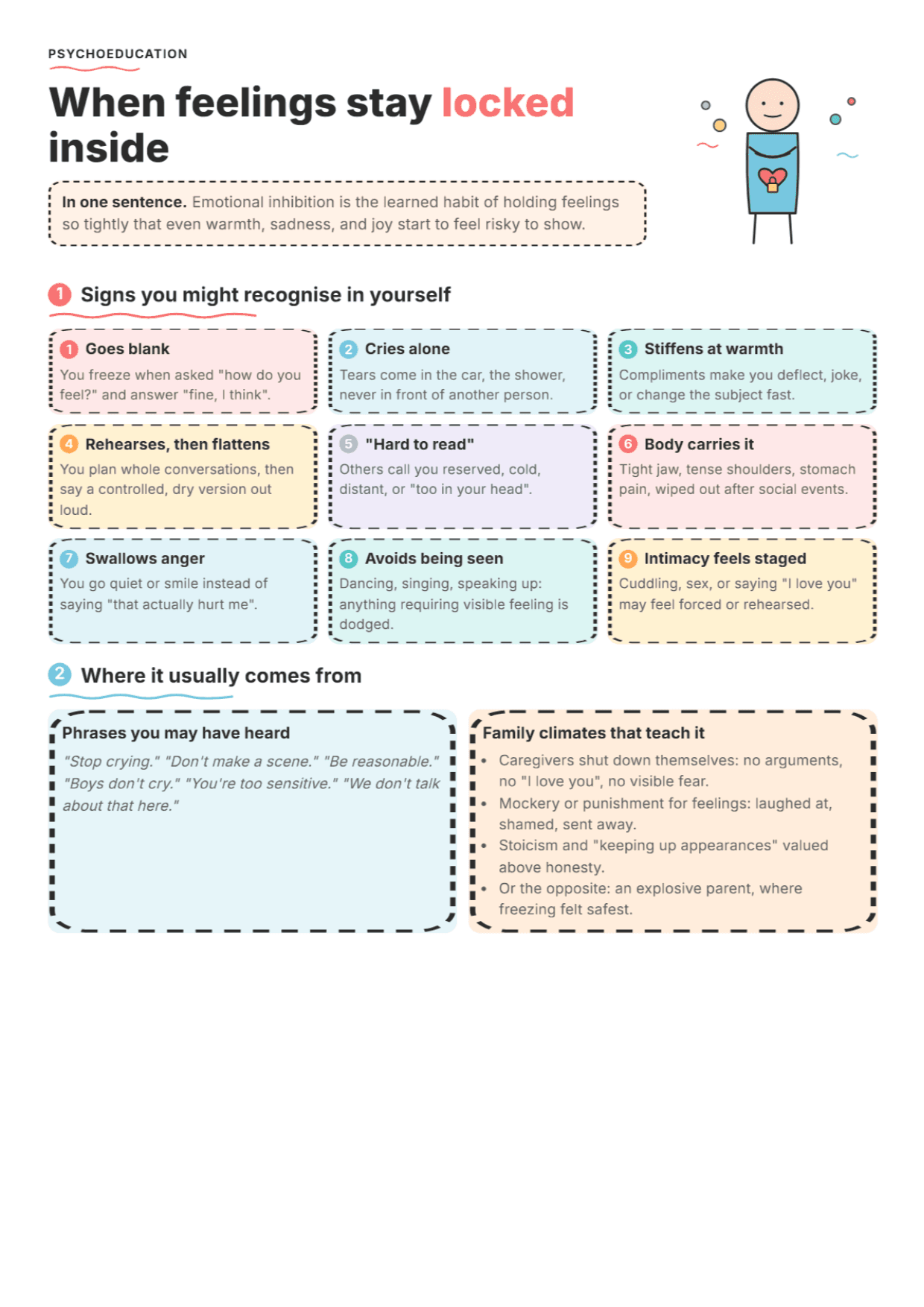
Handout
Emotional Inhibition Schema: PDF Worksheet, Tools and Exercises
A printable PDF worksheet with clinical tools and exercises to explain the emotional inhibition schema in session, support schema identification, and introduce graded emotional expression.
Self & identityEmotions & stress
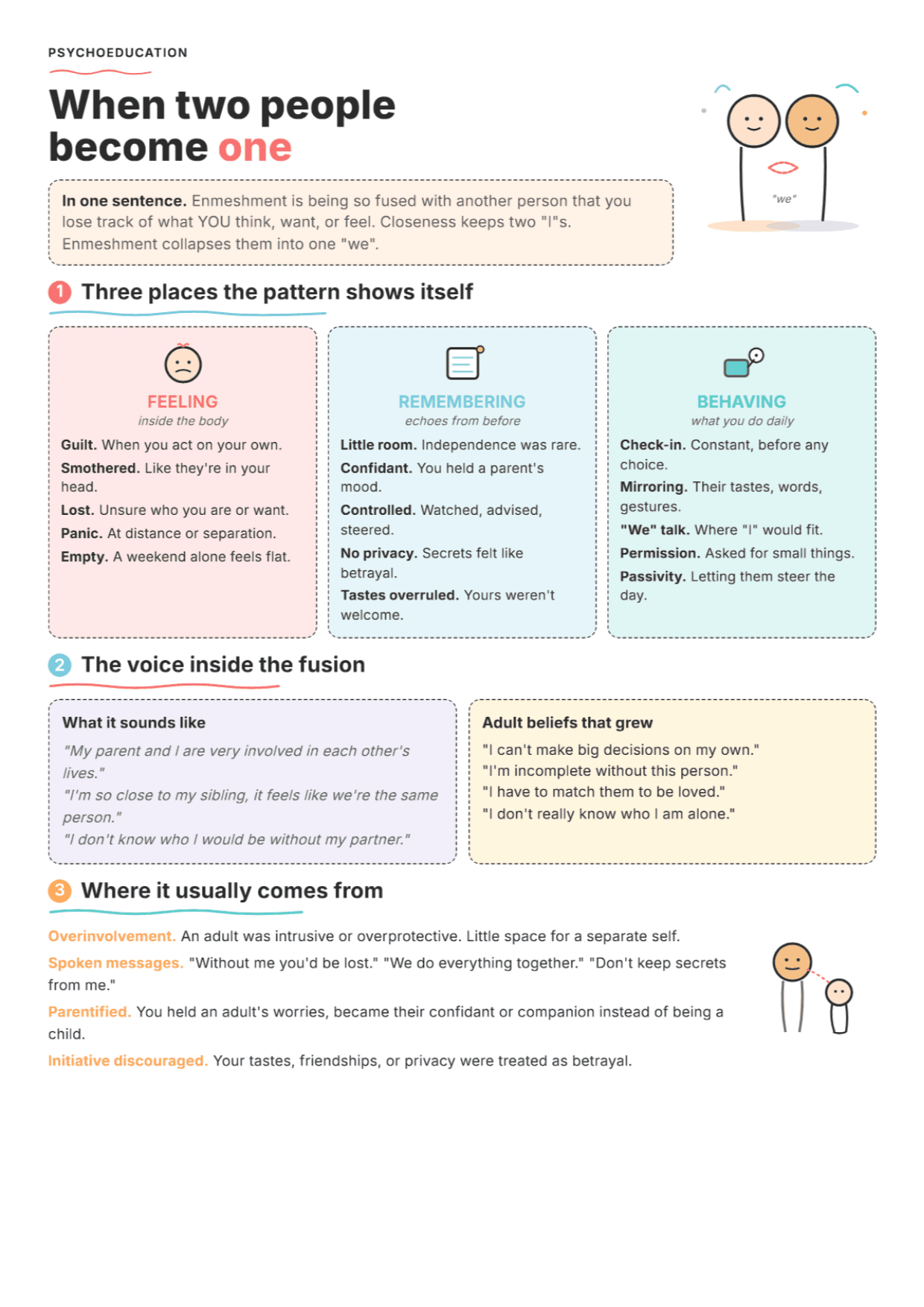
Handout
Enmeshment / Undeveloped Self Schema: PDF Worksheet, Tools and Exercises
A visual PDF worksheet and clinical tools to explain the enmeshment schema in session, name its coping modes, and begin building a genuinely separate self with your patients.
Self & identityRelationships
Handout
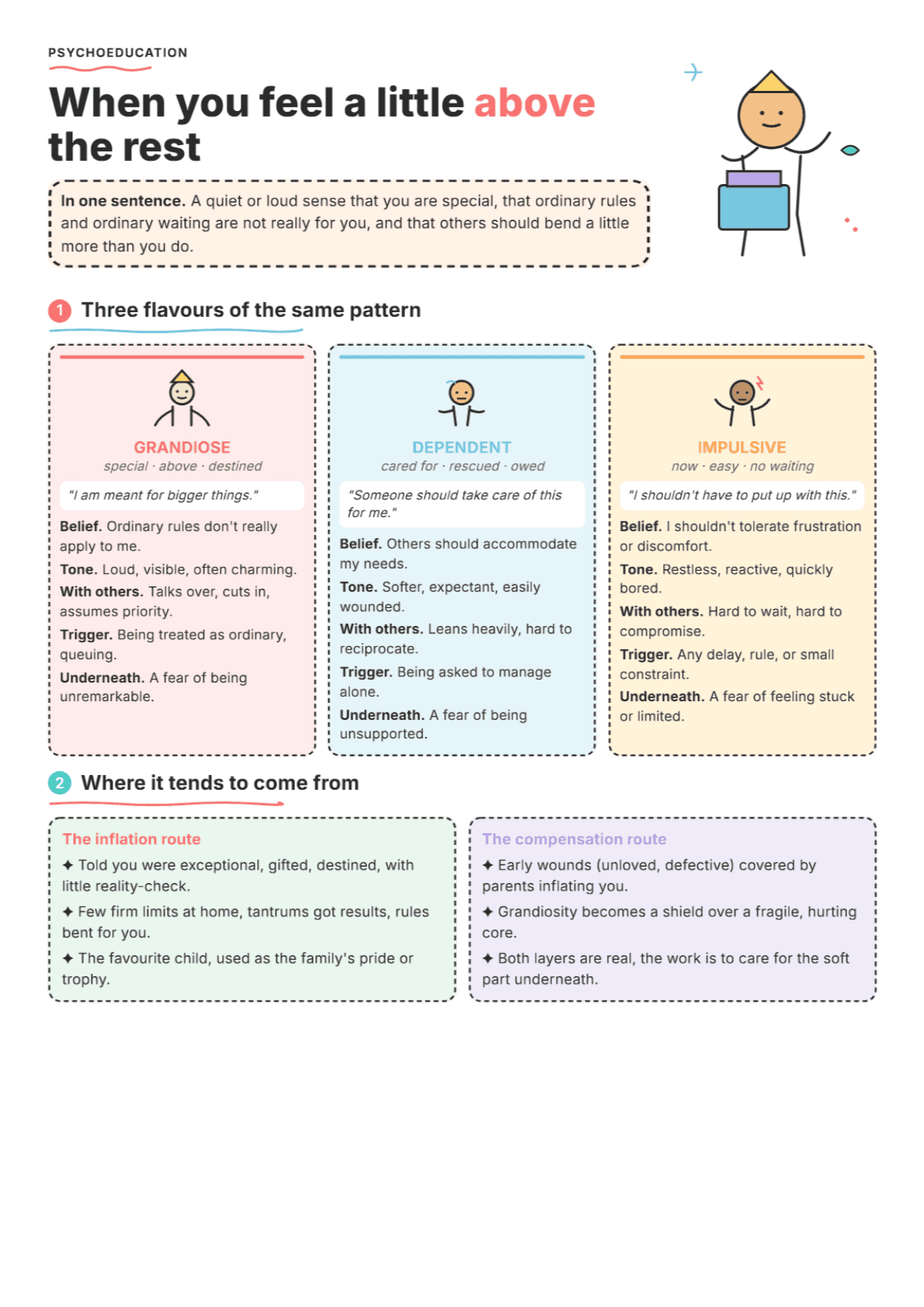
Entitlement / Grandiosity Schema: PDF Worksheet, Tools and Exercises
A visual PDF worksheet to explain the entitlement schema in session, its three presentations, hidden collapse layer, and concrete exercises for lasting schema work.
Self & identityPersonality

Handout
Entitlement Schema: PDF Worksheet, Tools and Exercises for Clinicians
A visual psychoeducation tool helping clinicians explain the entitlement pattern in session, name its three variants, and open productive therapeutic work.
PersonalitySelf & identity
Handout
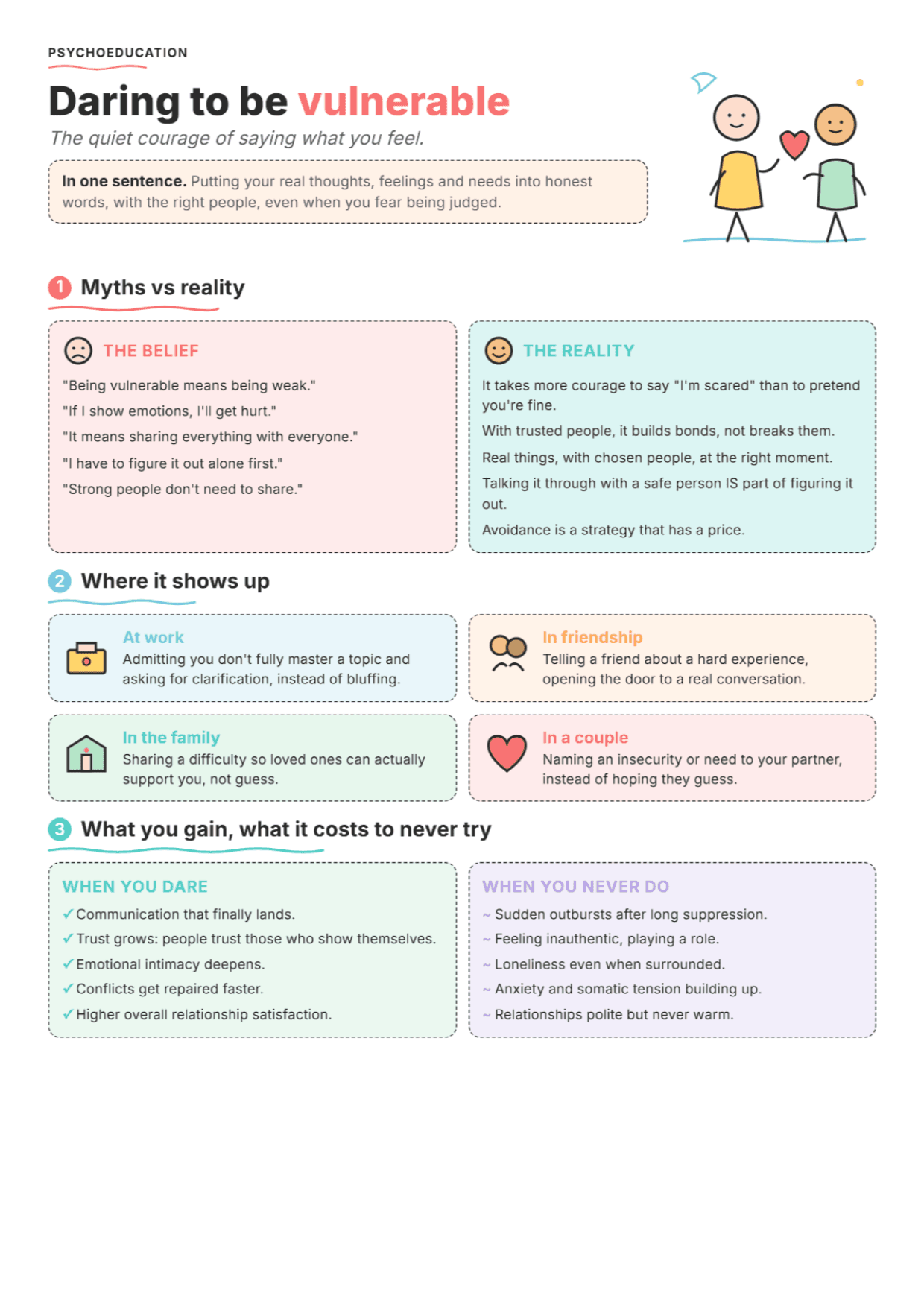
Expressing Vulnerability in Relationships: PDF Worksheet, Tools and Exercises
A visual PDF worksheet, practical tools, and ready-to-use exercises to help patients put vulnerability into words, overcome relational avoidance, and build genuine emotional intimacy.
Self & identityRelationships

Handout
Externalizing: PDF Worksheet, Tools and Exercises for Clinical Practice
A printable PDF fiche with visual tools and exercises helping clinicians explain, map, and work through the automatic blame habit in CBT and schema therapy sessions.
Thoughts & cognitionEmotions & stress