
All the tools
750+ clinical tools
A library built with and for clinicians, ready to use in session and extend between appointments.
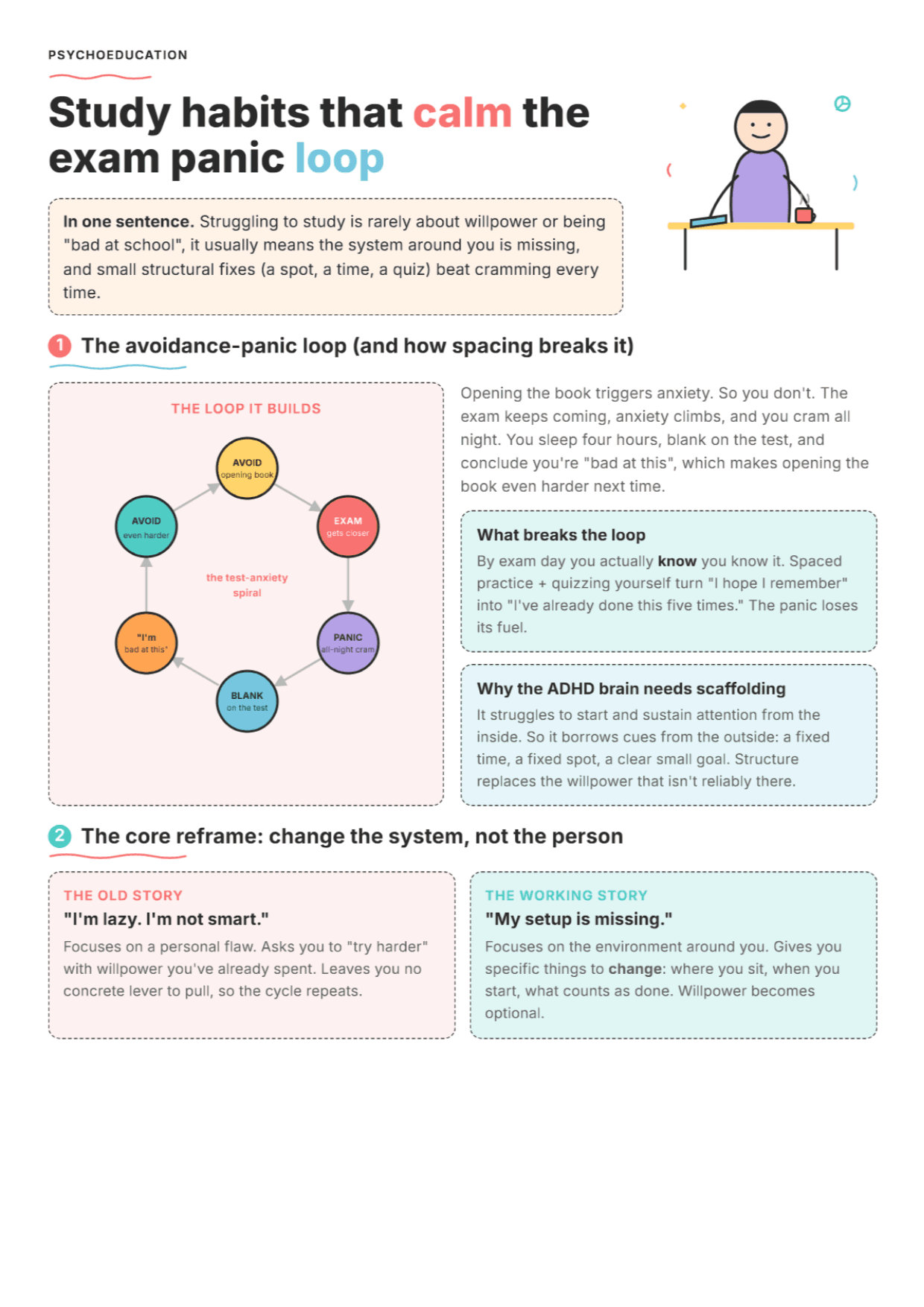
Study Tips for ADHD and Test Anxiety: PDF Worksheet, Tools and Exercises
A printable psychoeducation fiche clinicians can use in session to break the avoidance-panic loop, reframe the 'lazy' narrative, and give ADHD and test-anxious patients concrete structural anchors.

Subjugation Schema: PDF Worksheet, Tools and Exercises for Clinical Practice
A visual PDF worksheet, tools and exercises to help clinicians explain the subjugation schema in session and give patients a concrete reference point for change.
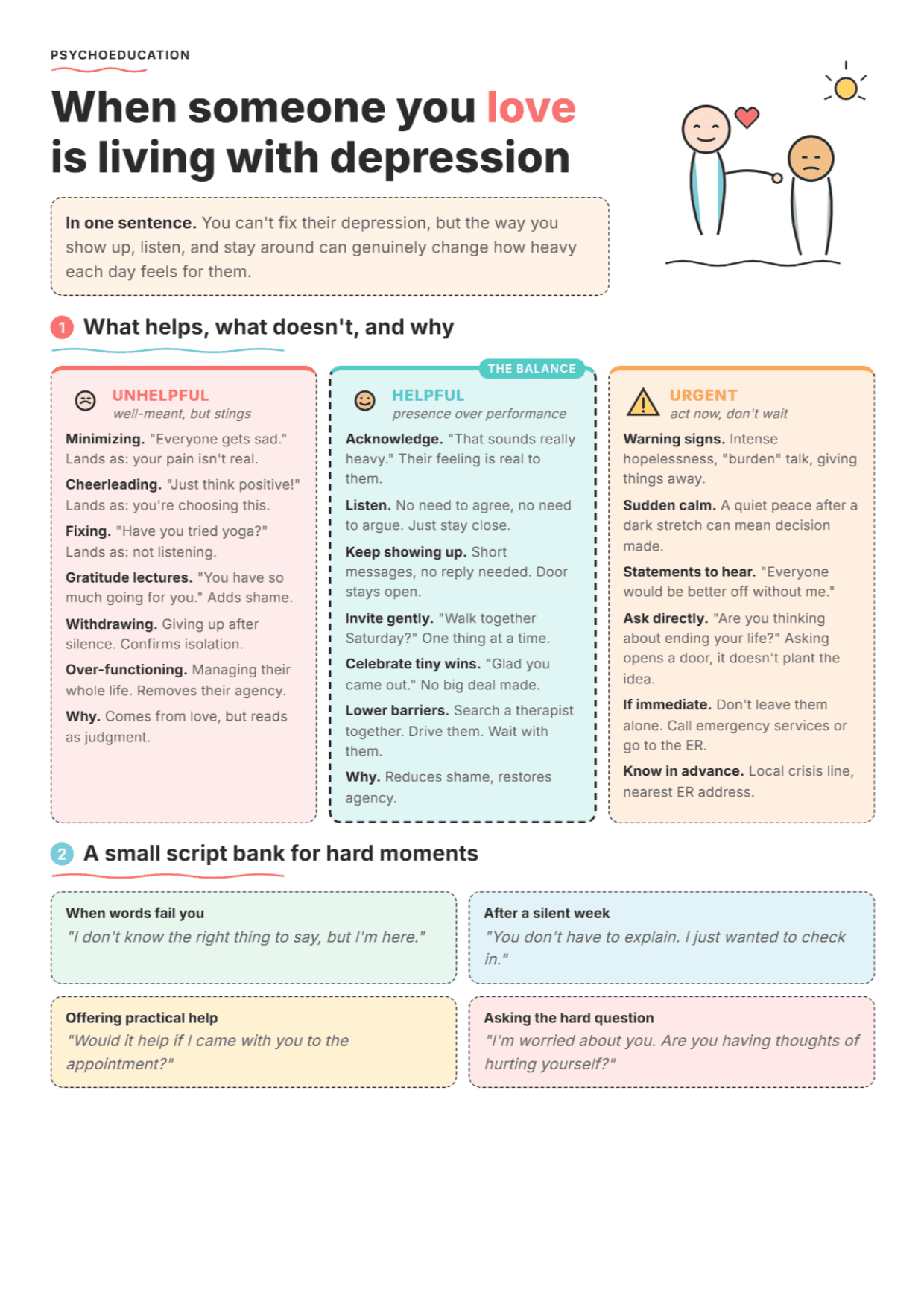
Supporting Someone with Depression: PDF Worksheet, Tools and Exercises
A printable psychoeducation fiche, tools and exercises to help clinicians explain what genuinely helps a depressed loved one, versus what backfires.
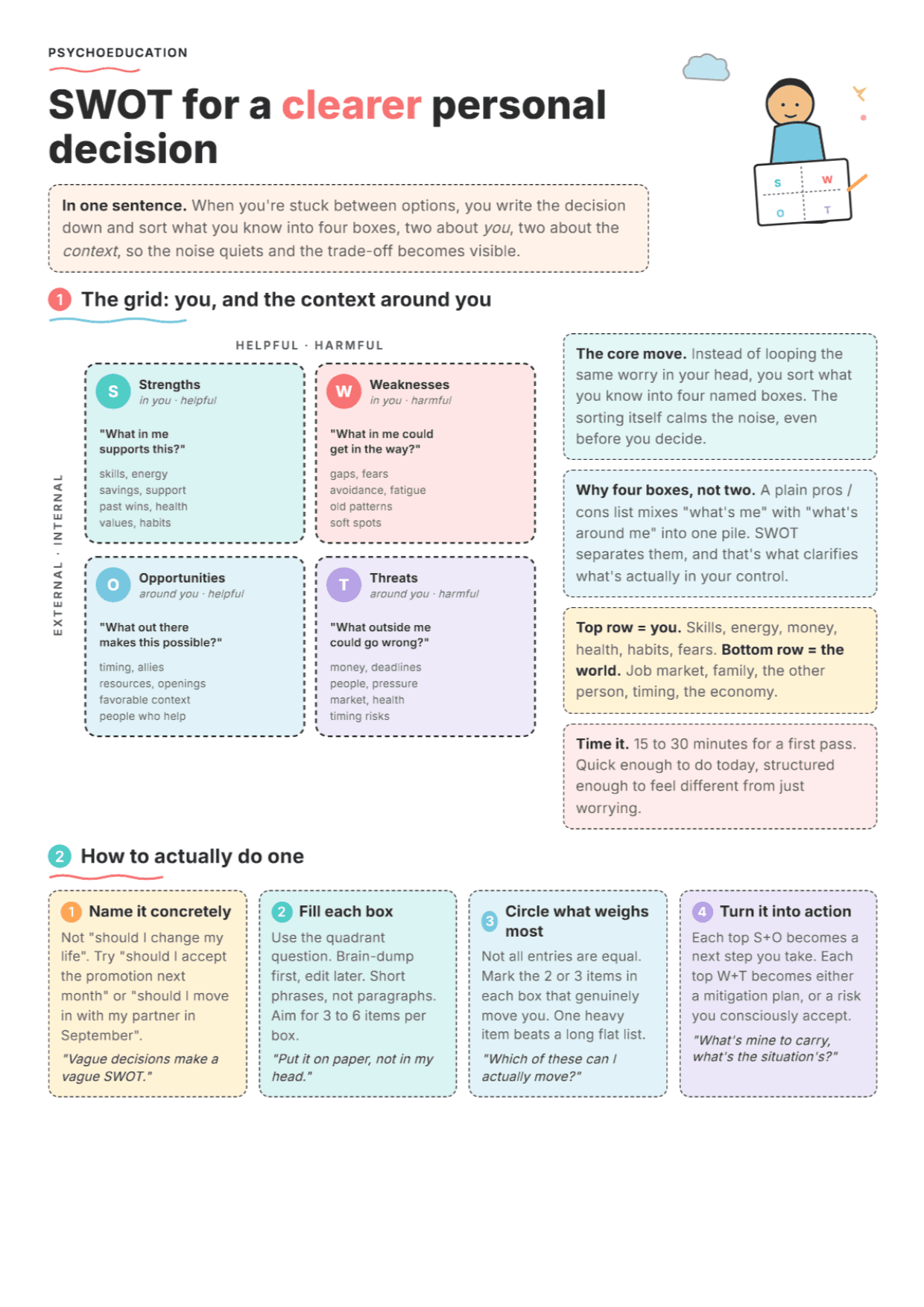
SWOT Analysis: PDF Worksheet, Tools and Exercises for Clinical Practice
A structured visual PDF worksheet helping clinicians externalise complex decisions with patients, separate internal from contextual factors, and turn looping deliberation into a concrete action plan.
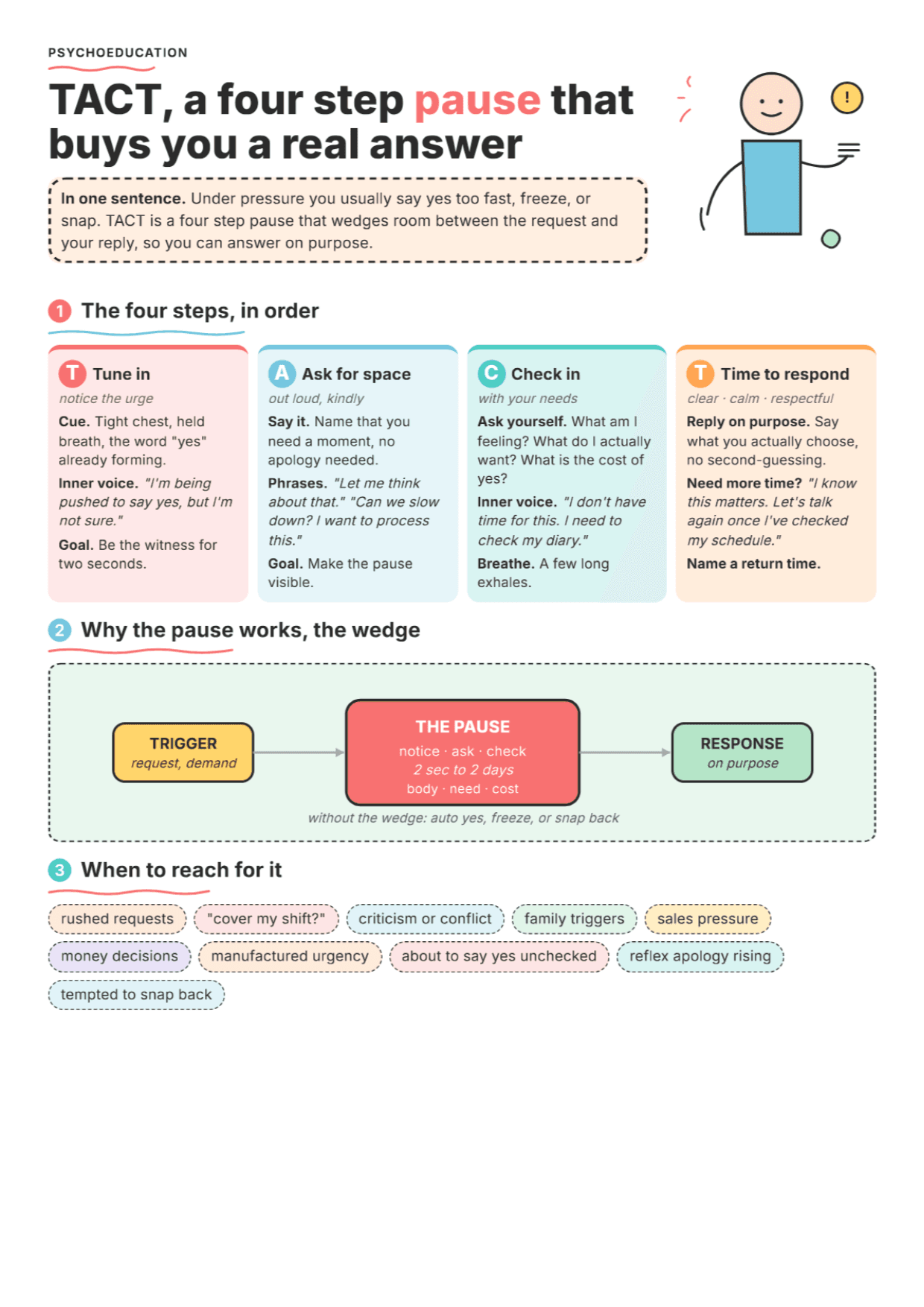
TACT: Using Pauses Assertively, PDF Worksheet, Tools and Exercises
A visual PDF worksheet clinicians can use in session to turn the abstract idea of 'pausing before you respond' into a concrete, four-step procedure patients can actually follow under pressure.
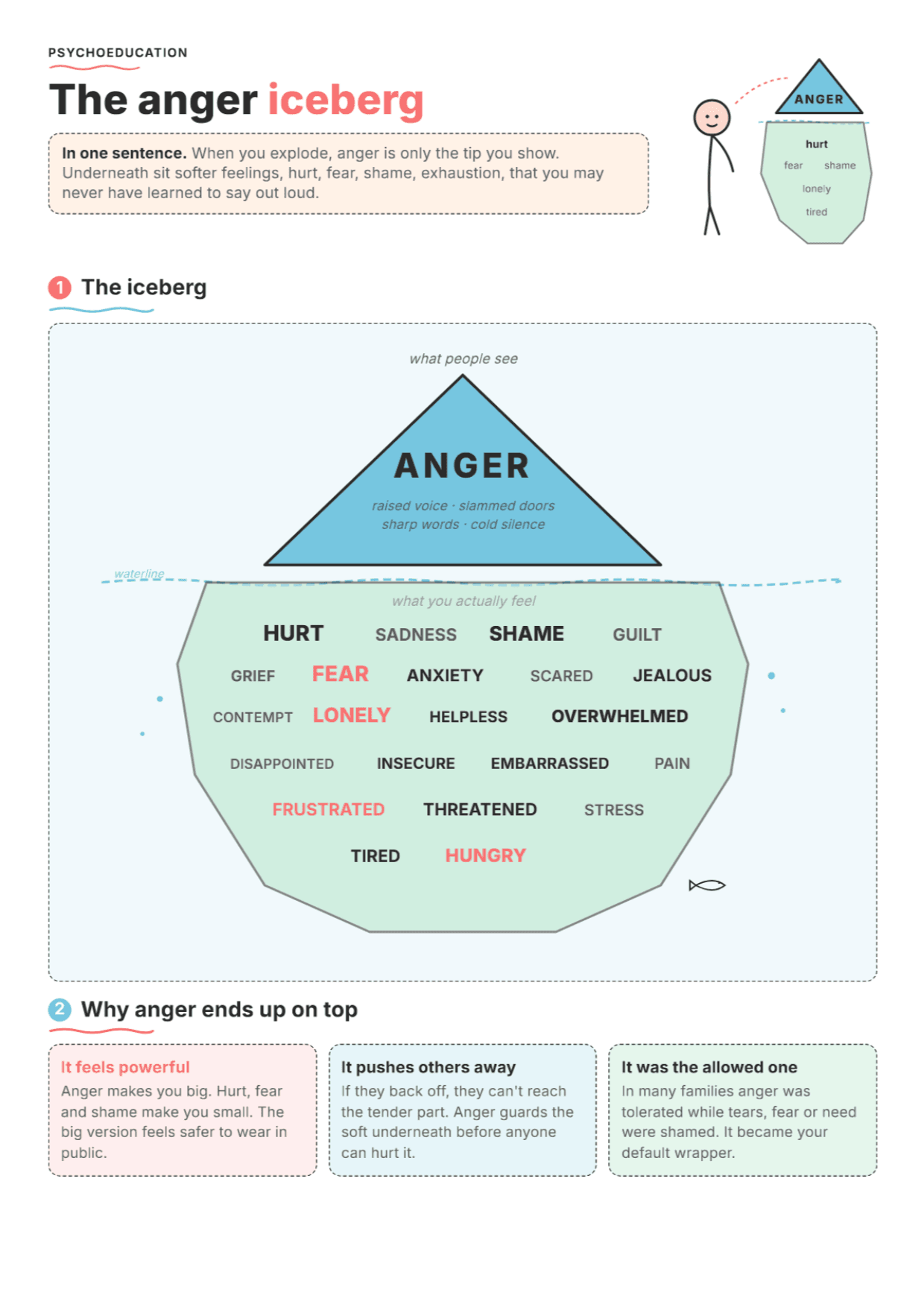
The Anger Iceberg: PDF Worksheet, Tools and Exercises
A visual psychoeducation worksheet clinicians can use in session to help patients identify the secondary emotions beneath anger and shift toward more precise emotional expression.
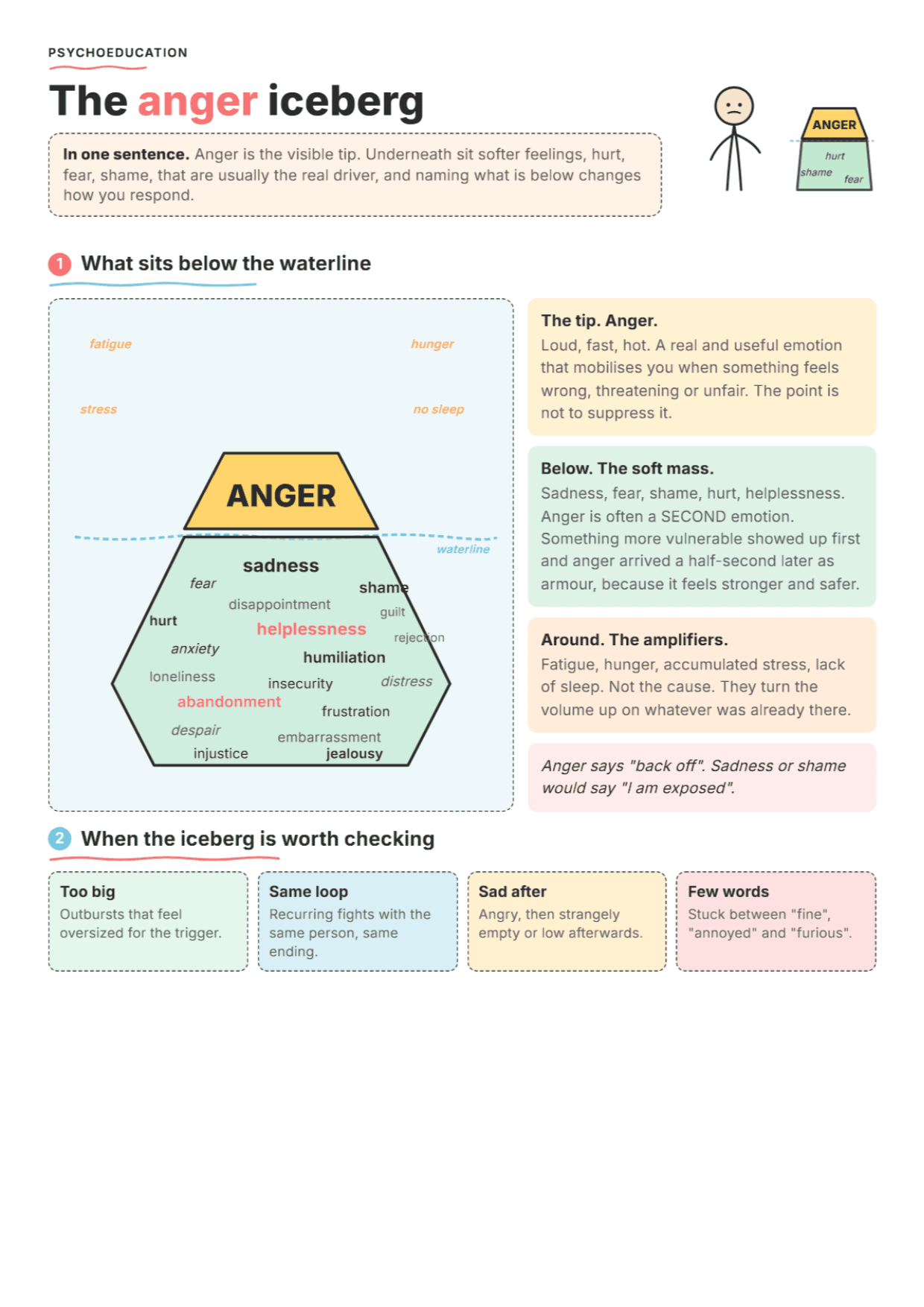
The Anger Iceberg: PDF Worksheet, Tools and Exercises for Clinical Practice
A visual PDF worksheet and practical tools to help clinicians explain the secondary-emotion structure of anger and map the softer feelings underneath in session.

The CBT Cognitive Model: PDF Worksheet, Tools and Exercises
A visual psychoeducation fiche that maps the S-T-E-B chain, names six automatic thought patterns, and gives patients a four-question self-monitoring tool to use between sessions.
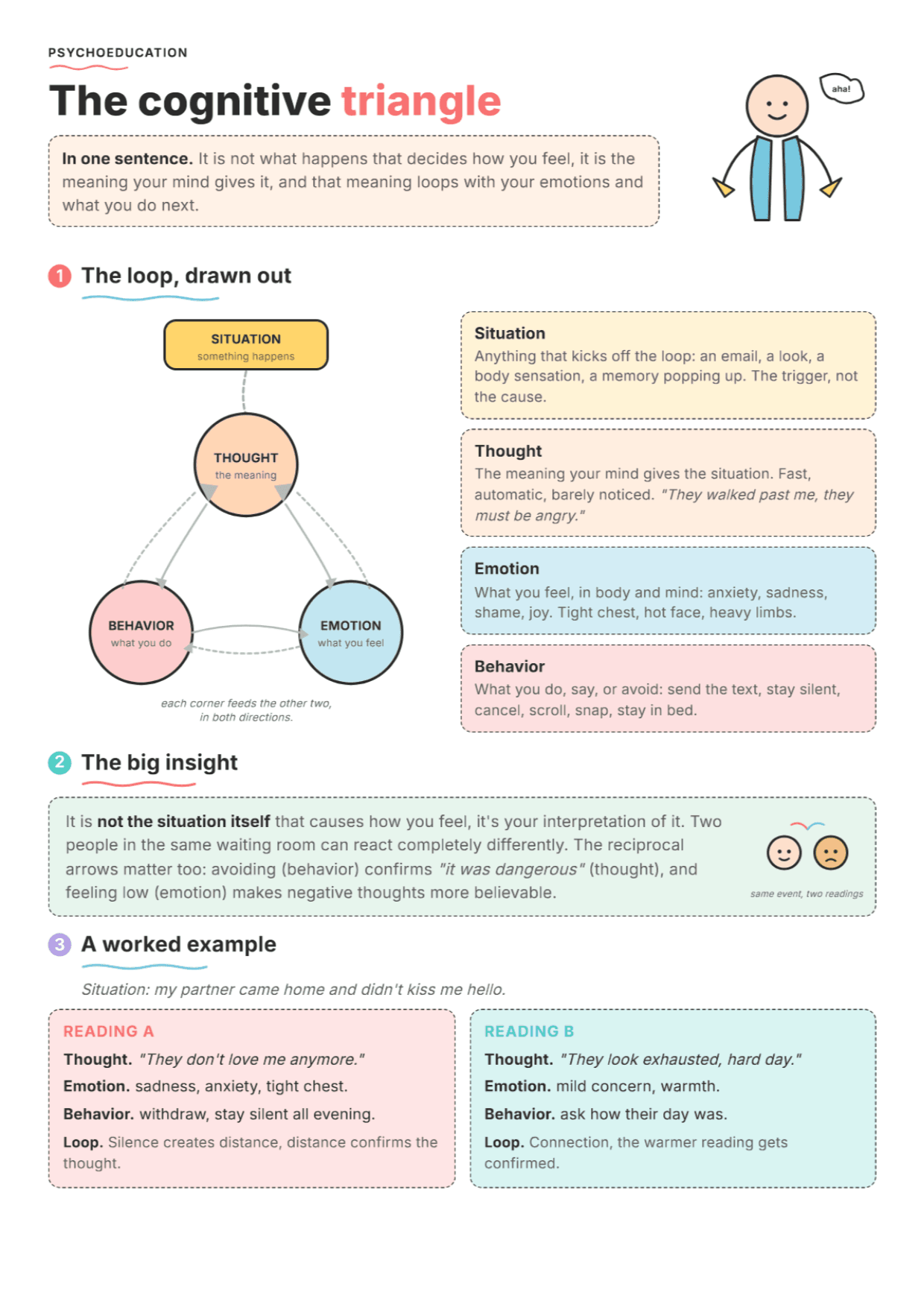
The Cognitive Triangle: PDF Worksheet, Tools and Exercises
A printable visual support clinicians use in session to explain the thought-emotion-behavior loop concretely, build shared vocabulary, and give patients a reference they can return to between appointments.
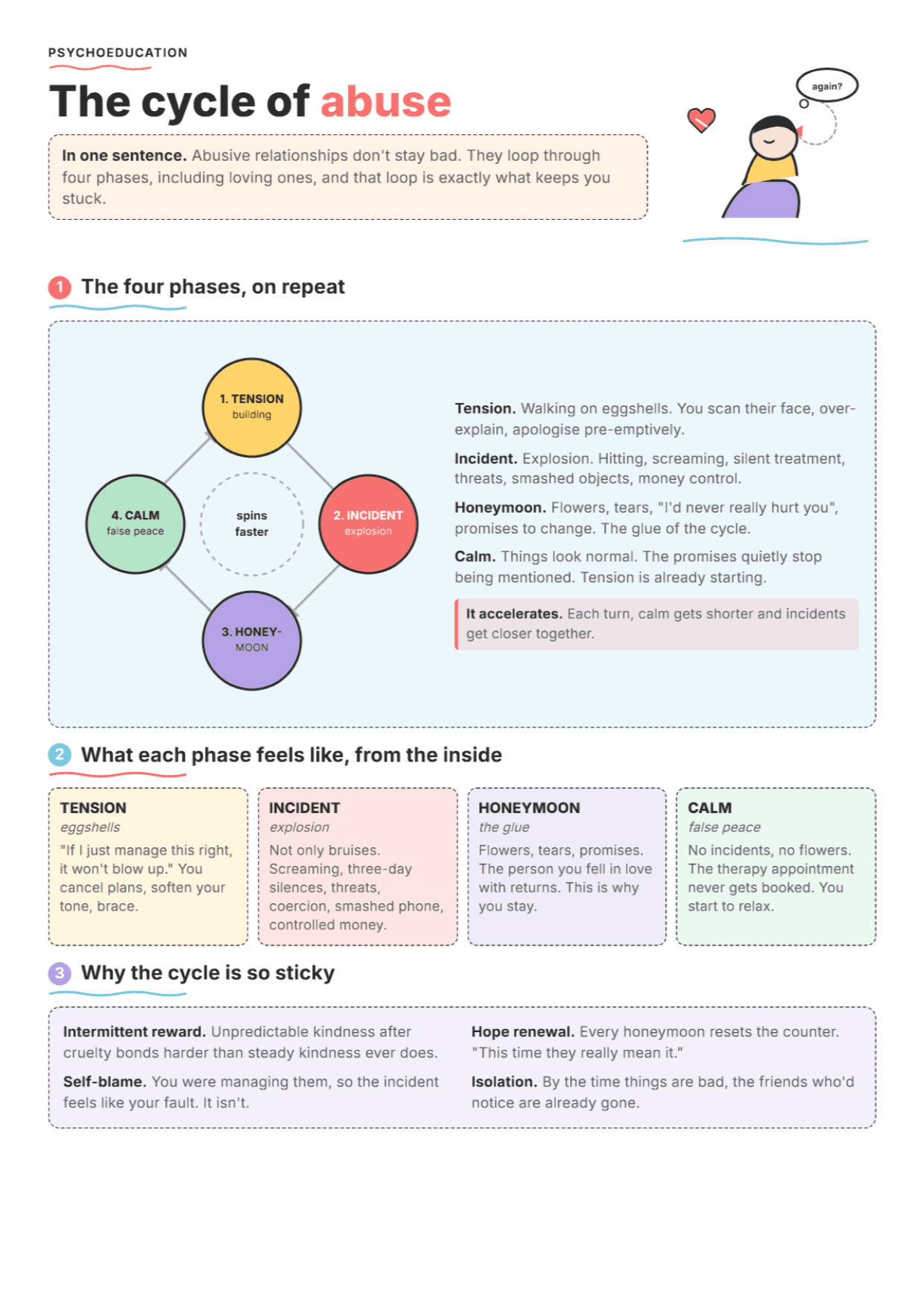
The Cycle of Abuse: PDF Worksheet, Tools and Exercises for Clinical Practice
A visual PDF worksheet with clinical tools and exercises to explain the four-phase abuse cycle in session, name intermittent reinforcement, and support patients in recognising what keeps them stuck.
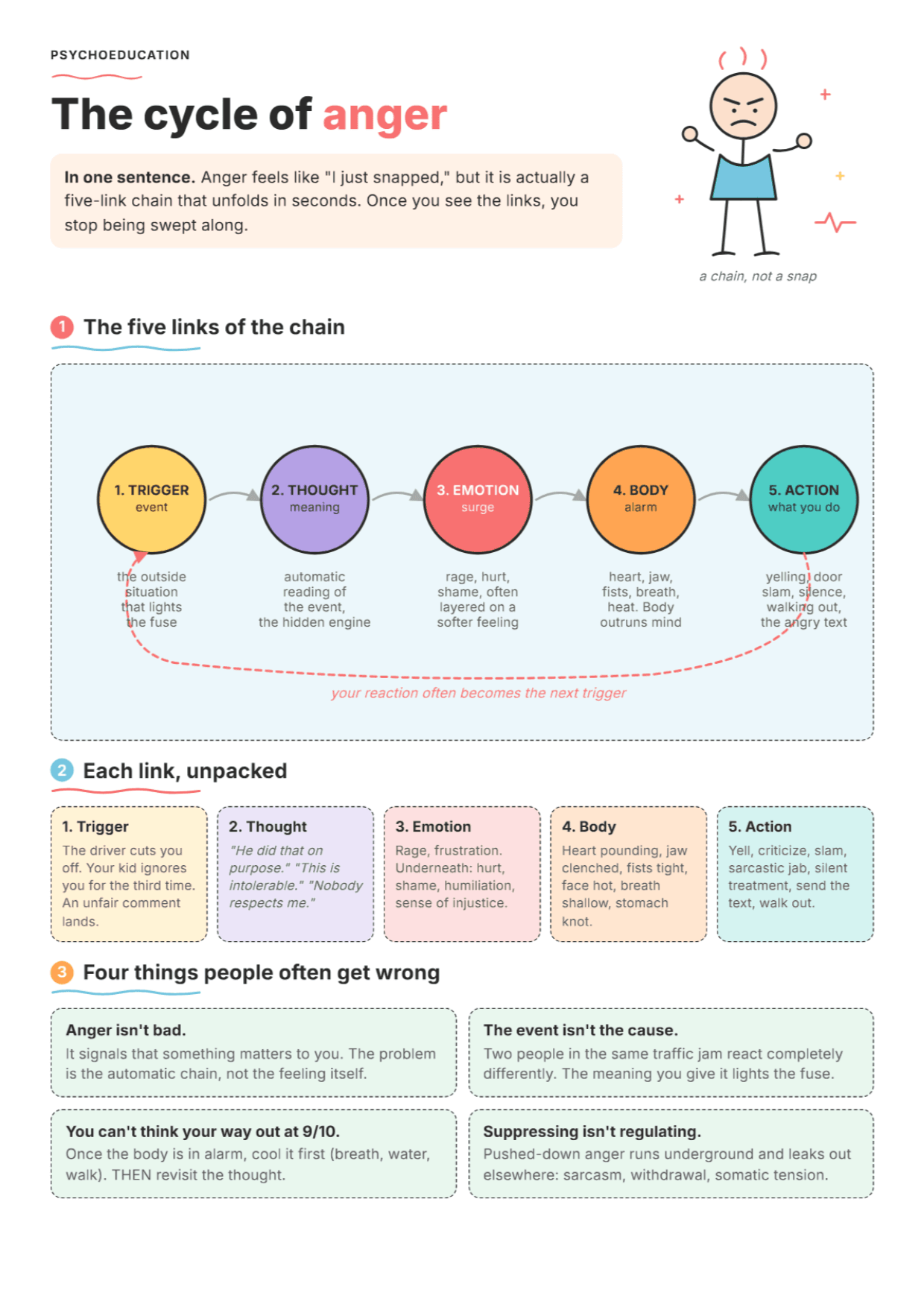
The Cycle of Anger: PDF Worksheet, Tools and Exercises
A printable CBT handout clinicians can use in session to make the five-link anger chain visible, name each intervention point, and build a durable shared vocabulary with patients.
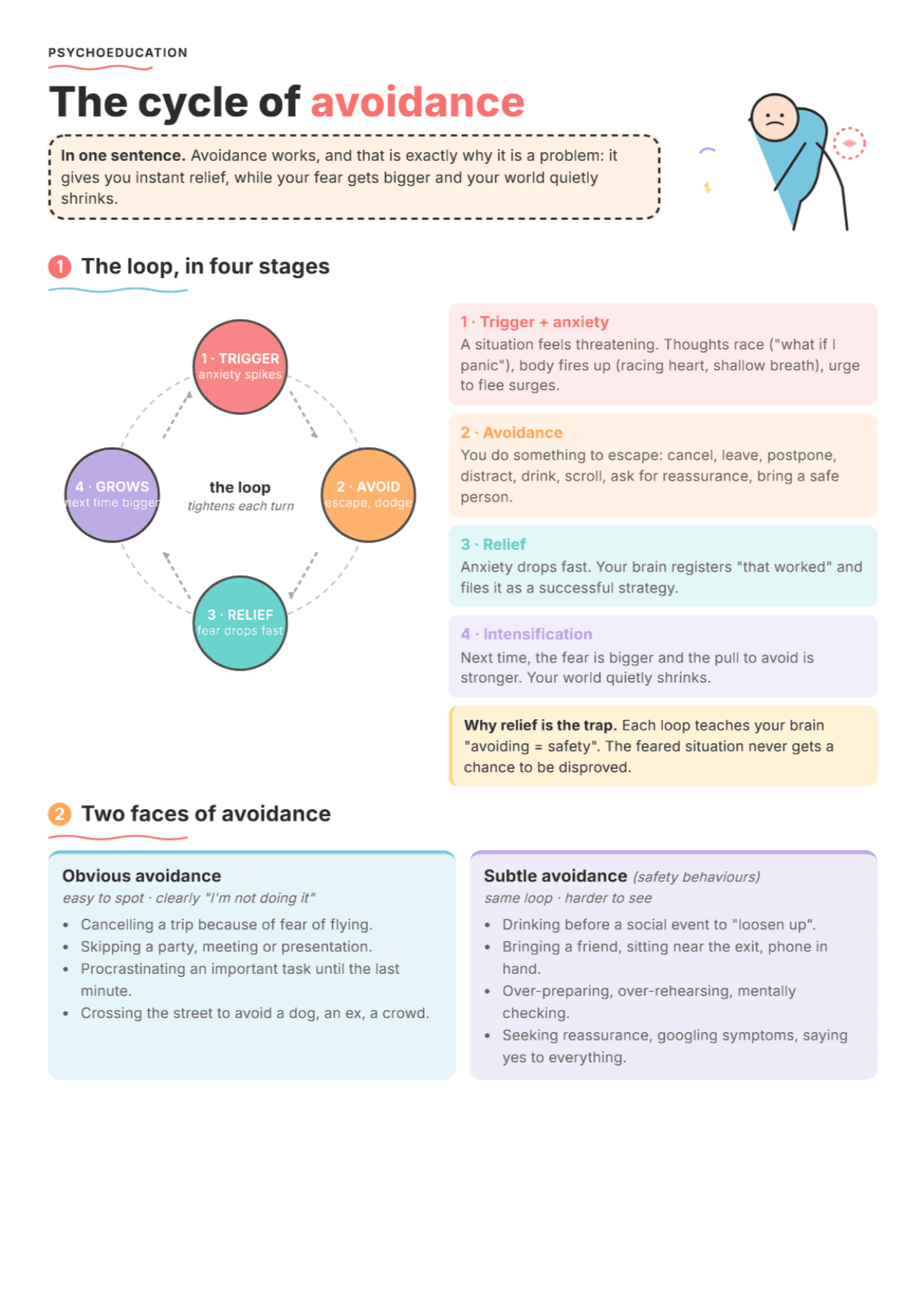
The Cycle of Avoidance: PDF Worksheet, Tools and Exercises for Clinical Practice
A visual psychoeducation tool clinicians can use in session to make the avoidance loop legible, name safety behaviours, and prepare patients for graded approach work.
Page 37 of 46•544 tools
Your session continues in your patients' pocket
Use with a patientYour resources, available everywhere
The handouts, exercises, programs and audios above: you choose which ones to make available to your patients, in the mobile app dedicated to them.
And far more than a library
The app goes well beyond resources, to support your patients every day:
Before, during and after the session
SessionFuel supports the therapy journey end to end.
Before the session
Prepare and take stock
- Standardized tests (baseline)
- Intake questionnaire
- Therapy journal
During the session
Support the clinical work
- Explanatory handouts
- Smart psychological profile analysis
- Review of exercise responses
- Assigning homework for the next session
After the session
Extend the work day to day
- Explanatory handouts
- Interactive programs to do
- Exercises to do
- Audios to listen to
- Therapy journal to keep
- Daily wellbeing challenge