
DBT: Dialectical Behavior Therapy Clinical Resources for Practitioners
Dialectical Behavior Therapy (DBT), the evidence-based treatment developed by Marsha Linehan and widely known by its acronym, stands as one of the most rigorously validated approaches for emotional dysregulation, self-destructive behavior, and chronic interpersonal instability. This page is designed for clinicians seeking printable worksheets, structured exercises, and psychoeducation tools organized within a DBT framework. Whether you apply the full standard protocol or draw selectively on DBT skills within an integrative care plan, the resources gathered here support direct clinical use across individual sessions, skills groups, and between-session practice.

The Biosocial Model and Emotional Dysregulation
Dialectical Behavior Therapy rests on Linehan's biosocial model, which posits that severe emotional dysregulation arises from a biological vulnerability to emotional sensitivity combined with a chronically invalidating environment. The person learns, often from early childhood onward, that their internal experiences are incorrect, exaggerated, or shameful. This invalidation does not teach effective emotion regulation; it teaches suppression, self-doubt, and escalating distress signals.
The result is a characteristic pattern: rapid emotional onset, high peak intensity, and a slow return to baseline. Clinically, this translates into impulsive behavior, volatile relationships, identity diffusion, and recurrent crises. DBT reframes these not as character flaws but as learned responses to an environmental mismatch, a framing that is therapeutically liberating for many patients.
The Dialectical Stance
The term dialectical refers to the synthesis of opposing truths, most centrally the balance between acceptance and change. The therapist holds both simultaneously: the patient is doing the best they can and they need to do better. This is not a rhetorical device; it is a structural principle that shapes every intervention, from validation strategies to behavioral chain analyses. DBT without the dialectical stance collapses either into pure behavioral pushing (which replicates invalidation) or pure validation (which fails to move the patient toward a life worth living).
The Four DBT Skills Modules: A Clinical Map
Mindfulness as the Core Skill
DBT is organized around four skills modules, each targeting a distinct domain of dysregulation. Mindfulness is the foundational module: it underpins all the others and is revisited at the start of every group rotation. Its function is not relaxation but rather the cultivation of wise mind, the capacity to integrate emotional experience with rational appraisal without being dominated by either. Clinically, mindfulness skills are taught before any other module because they provide the observational platform from which the patient begins to notice, name, and tolerate internal states.
Distress Tolerance, Emotion Regulation, and Interpersonal Effectiveness
Distress tolerance skills address crisis survival: they are explicitly not designed to solve the problem, only to prevent the patient from making it worse. Emotion regulation skills move upstream, targeting the antecedents and trajectories of emotional episodes rather than crisis moments. Interpersonal effectiveness skills teach the patient to pursue objectives in relationships while maintaining self-respect and relational quality, three goals that frequently feel mutually exclusive to dysregulated individuals.
Practitioners often sequence these modules according to the patient's presenting hierarchy. A patient in frequent behavioral crisis typically needs distress tolerance prioritized; a patient with chronic low-grade emotional suffering and avoidance may benefit more immediately from emotion regulation work.
Repérage Clinique: Presentations That Signal DBT Relevance
Primary Indications and Diagnostic Landscape
DBT was originally developed for borderline personality disorder (BPD), and the evidence base for that indication remains the strongest. However, its application has expanded substantially. Current evidence supports DBT for eating disorders (particularly binge-purge presentations), substance use disorders, treatment-resistant depression with emotional dysregulation, PTSD with high behavioral dyscontrol, and adolescent self-harm outside a formal personality disorder diagnosis.
The common thread is not diagnosis but phenotype: pervasive emotional dysregulation driving behavioral consequences across multiple life domains. When a patient's chart shows recurrent crises, multiple failed treatment attempts, or a pattern of intense but unstable therapeutic alliances, DBT warrants serious consideration regardless of the primary diagnosis.
Differential Considerations
Not every dysregulated presentation calls for DBT. Bipolar spectrum disorders produce episodic dysregulation with distinct neurovegetative features; ADHD produces impulsivity driven by attentional rather than emotional mechanisms; complex trauma can mimic BPD symptomatology closely. A careful functional analysis, examining when dysregulation occurs, what triggers it, and what it accomplishes, is essential before committing to a DBT framework. DBT skills remain useful adjuncts even when the core protocol is not indicated.
Using DBT Resources in Individual Session Work
Worksheets as Behavioral Chain Tools
Printable DBT resources serve a specific clinical function: they externalize internal processes that patients struggle to hold in mind during emotional activation. A structured worksheet slows the processing down, creates a shared reference point between therapist and patient, and produces a retrievable artifact the patient can consult between sessions. This is not busywork; it directly addresses the encoding failures that occur during high emotional arousal.
Angry episodes, for instance, are frequently experienced as sudden and undifferentiated. The Anger Iceberg: PDF Worksheet, Tools and Exercises for Clinical Practice supports the patient in mapping the secondary emotion (visible anger) onto the primary emotions beneath the surface, such as shame, fear, or grief. This directly serves DBT emotion regulation work by increasing emotional granularity and reducing the automaticity of anger-driven behavior.
Behavioral Rehearsal and Skill Consolidation
Interpersonal effectiveness skills require not just conceptual understanding but behavioral fluency. The Assertiveness Ladder: PDF Worksheet, Tools and Exercises for Clinical Practice provides a graduated structure for patients to practise moving from passive to assertive communication, a central DEAR MAN objective in DBT. The scaffold of incremental steps is particularly well suited to patients whose fear of conflict has kept their interpersonal repertoire narrow for years.
Between-session practice assignments are a structural requirement of DBT, not optional extensions. Worksheets and exercises assigned after session function as the between-session component of the skills training, reinforcing what was rehearsed in the room and providing material for the following session's diary card review.
Distress Tolerance Skills: Exercises for Crisis Moments
Grounding and Sensory Anchoring
Distress tolerance in DBT explicitly prioritizes survival of the crisis over resolution of the problem. Grounding techniques are among the most immediately teachable tools in this module. The Grounding Exercise: When Patients Are Stuck in Their Head targets ruminative cognitive loops by redirecting attentional focus to present-moment sensory experience, the TIPP and sensory-awareness components of DBT's crisis survival toolkit. It is particularly useful for patients who intellectualize during high distress or who dissociate under emotional load.
In session, the clinician can introduce this exercise during a moment of moderate activation (not full crisis) so the patient encodes it with some regulatory capacity intact. Sending it home as a between-session resource reinforces the skill without requiring crisis conditions for practice.
Frustration Tolerance as a Distress Tolerance Sub-Skill
Lower-stakes frustration, the kind that accumulates across ordinary daily interactions, is frequently the actual trigger for escalating dysregulation in DBT patients. They do not only crisis on major events. The Frustration Tolerance: A Guided Exercise for Clinicians targets this granular level of distress, building the patient's capacity to tolerate minor aversive states without impulsive action. Clinically, this connects directly to the ACCEPTS and self-soothe strategies in the distress tolerance module.
A stepped approach to introducing frustration tolerance work:
- Establish a shared psychoeducation frame: explain the biological sensitivity and the learned avoidance of discomfort.
- Identify the patient's personal frustration triggers using diary card data or session narrative.
- Introduce the guided exercise in session with the clinician present for debriefing.
- Assign between-session practice, starting with low-intensity frustration scenarios.
- Review at the next session, link the patient's observed response to the broader emotion regulation module.
Integrating DBT Resources into a Longitudinal Care Plan
Sequencing Skills Across the Treatment Hierarchy
Standard DBT follows a stage-based hierarchy: Stage 1 targets behavioral dyscontrol and life-threatening behaviors; Stage 2 addresses quiet desperation and PTSD; Stage 3 works on ordinary life problems and self-respect. Resources should be selected with this hierarchy in mind. Distress tolerance materials are front-loaded in Stage 1; emotion regulation and interpersonal effectiveness tools are progressively introduced as behavioral stability improves.
Clinicians working in solo practice without a full DBT team should be transparent with themselves about fidelity. Adapted DBT, sometimes called DBT-informed therapy, draws on the skills training and validation strategies without the full consultation team, phone coaching, and simultaneous individual plus group structure. Most of the printable resources on this page fit comfortably within DBT-informed work, even if the full protocol is not in place.
Tracking Progress with Skill Use
DBT operationalizes progress partly through skill use frequency, not only symptom reduction. Useful indicators to track alongside symptom measures:
- Frequency of diary card completion between sessions.
- Patient's ability to name the skill used during a crisis, rather than describing only the outcome.
- Shift from all-or-nothing language in session toward dialectical thinking (both/and rather than either/or).
- Reduction in therapy-interfering behaviors.
Clinical Vigilance and Limits of the DBT Framework
When DBT Skills Work Against the Patient
A recurring clinical pitfall is the patient who uses distress tolerance skills, particularly distraction-based TIPP strategies, to avoid emotion regulation work entirely. Distress tolerance is designed as a bridge to problem-solving, not a permanent residence. If a patient is consistently reporting successful use of crisis skills but showing no movement on the underlying emotional processing, the chain analysis and commitment conversations need revisiting.
Contraindications and Adaptations
DBT assumes a relatively stable therapeutic alliance and the patient's capacity to engage in collaborative behavioral analysis. Active psychosis, severe cognitive impairment, or acute medical instability may require adaptation or sequencing adjustment. Forensic and compulsory treatment contexts also modify the power dynamics that DBT's validation strategies depend on. Clinicians working in these settings should consult adapted DBT manuals rather than applying standard protocol assumptions uncritically.
Finally, DBT is a demanding treatment for the clinician as well as the patient. Consultation, supervision, and self-monitoring for therapist burnout are not peripheral; they are built into the model's original design for a reason.
Tools in this category
Handout
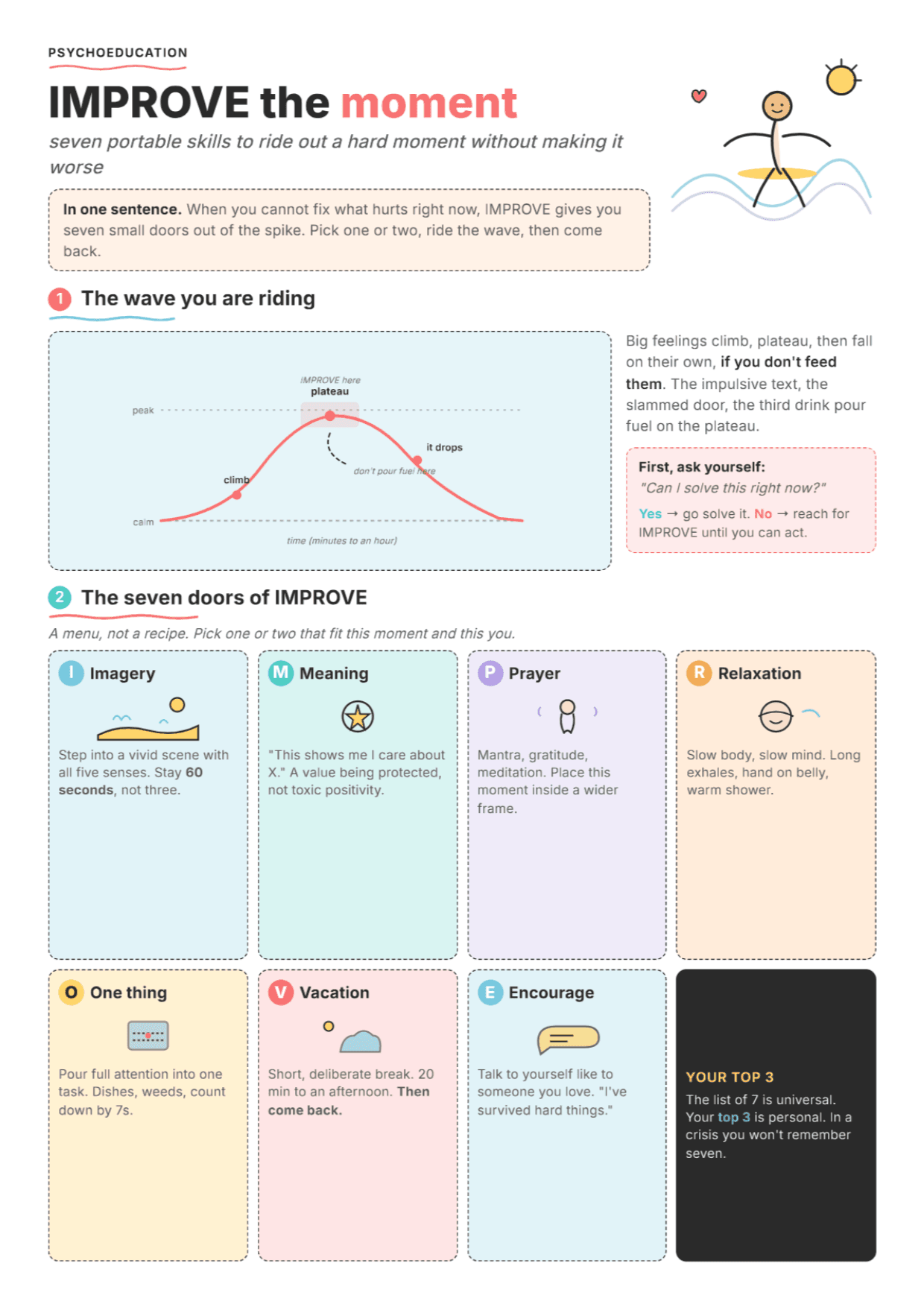
IMPROVE the Moment: PDF Worksheet, Tools and Exercises for Distress Tolerance
A visual DBT fiche to help clinicians teach the IMPROVE skill in session, giving patients a portable, personalised menu for riding out acute distress without behavioural escalation.
Emotions & stressAnxiety
Handout
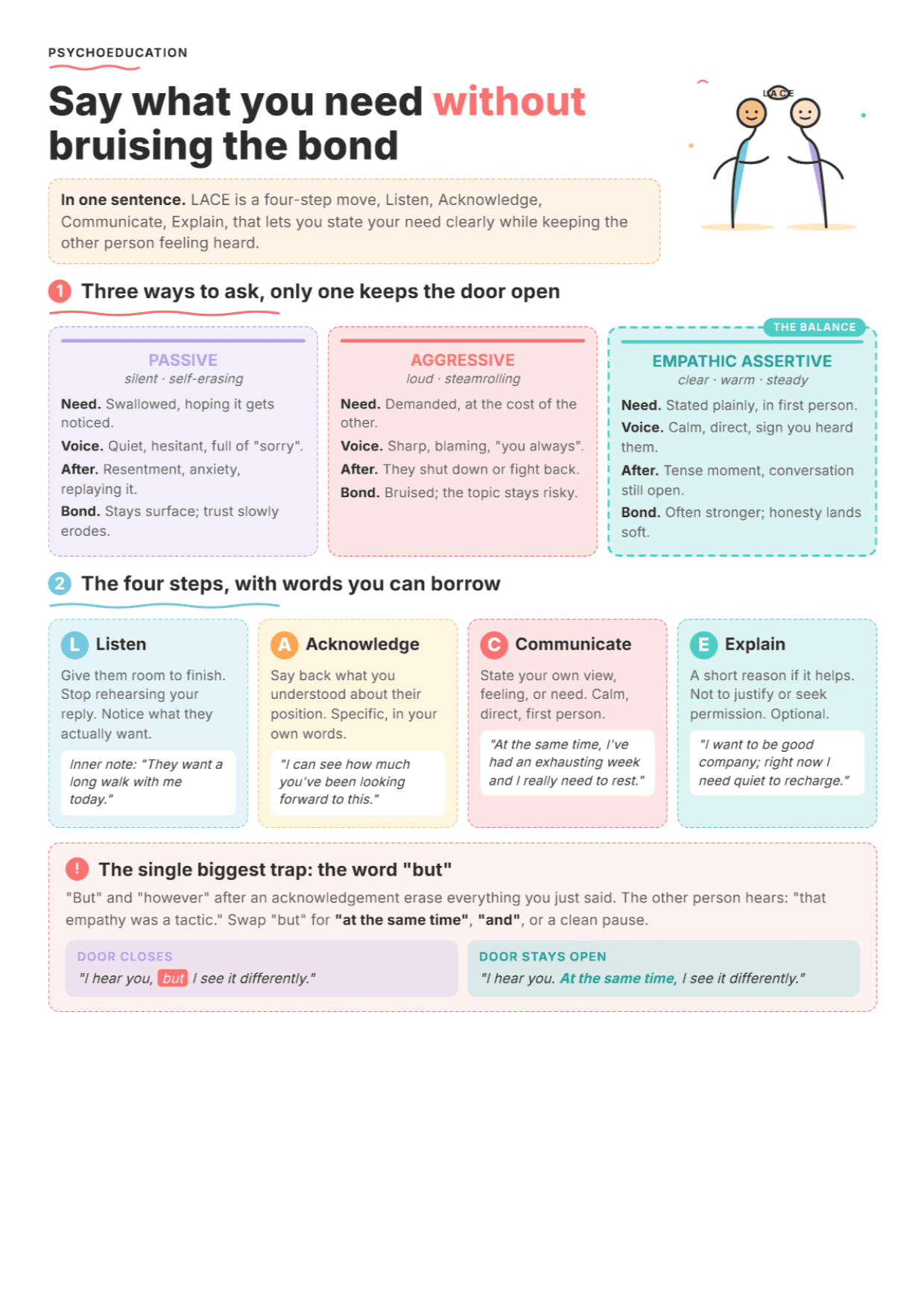
LACE Empathic Assertion: PDF Worksheet, Tools and Exercises
A printable visual support clinicians can use in session to teach patients the four-step LACE method for stating needs clearly while preserving the relational bond.
Self & identityRelationships
Handout
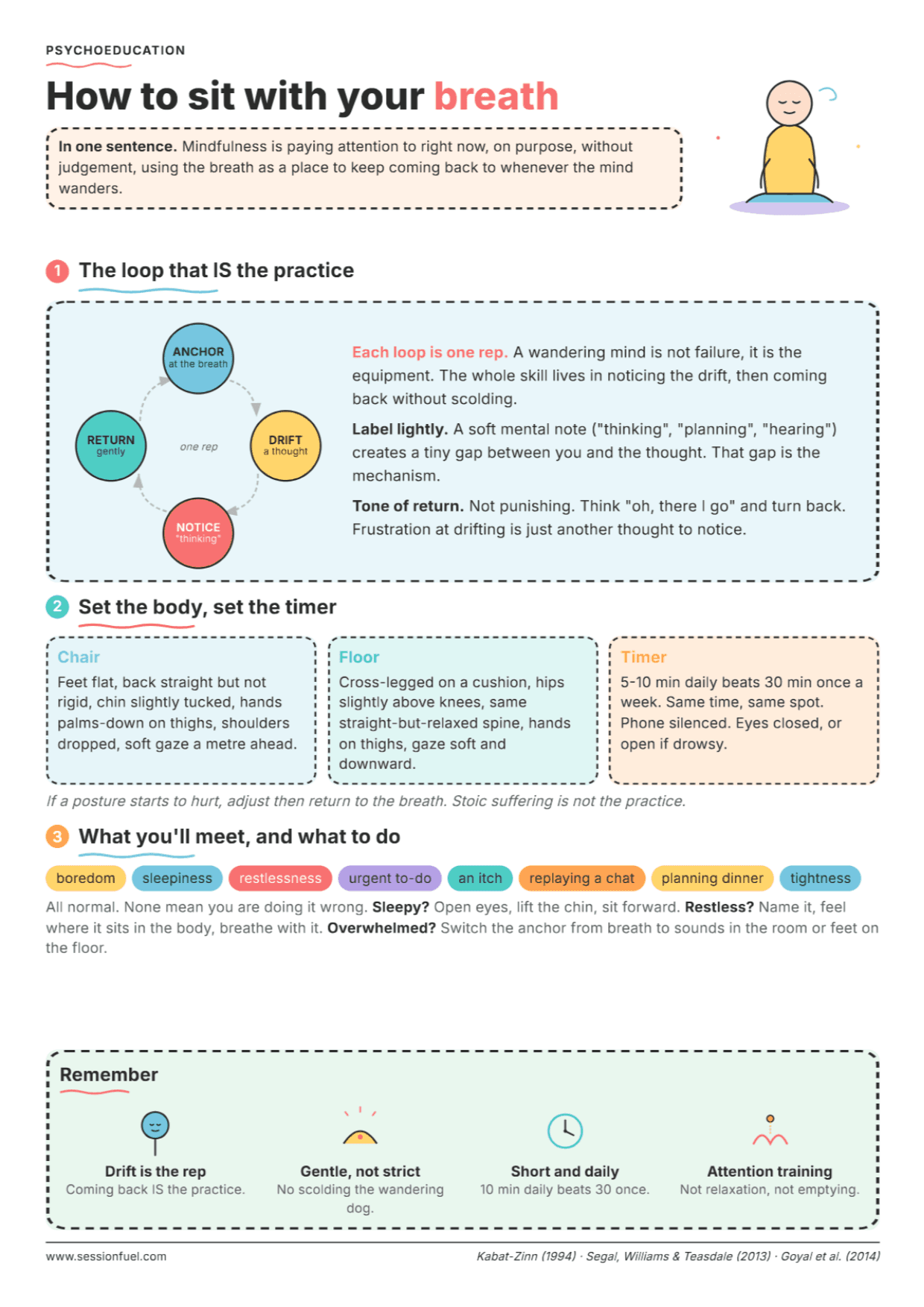
Mindfulness Meditation: PDF Worksheet, Tools and Exercises for Clinical Practice
A printable fiche and visual tools to explain mindfulness meditation clearly in session, install a shared vocabulary, and give patients a durable practice anchor they can actually use.
Emotions & stressAnxiety
Handout
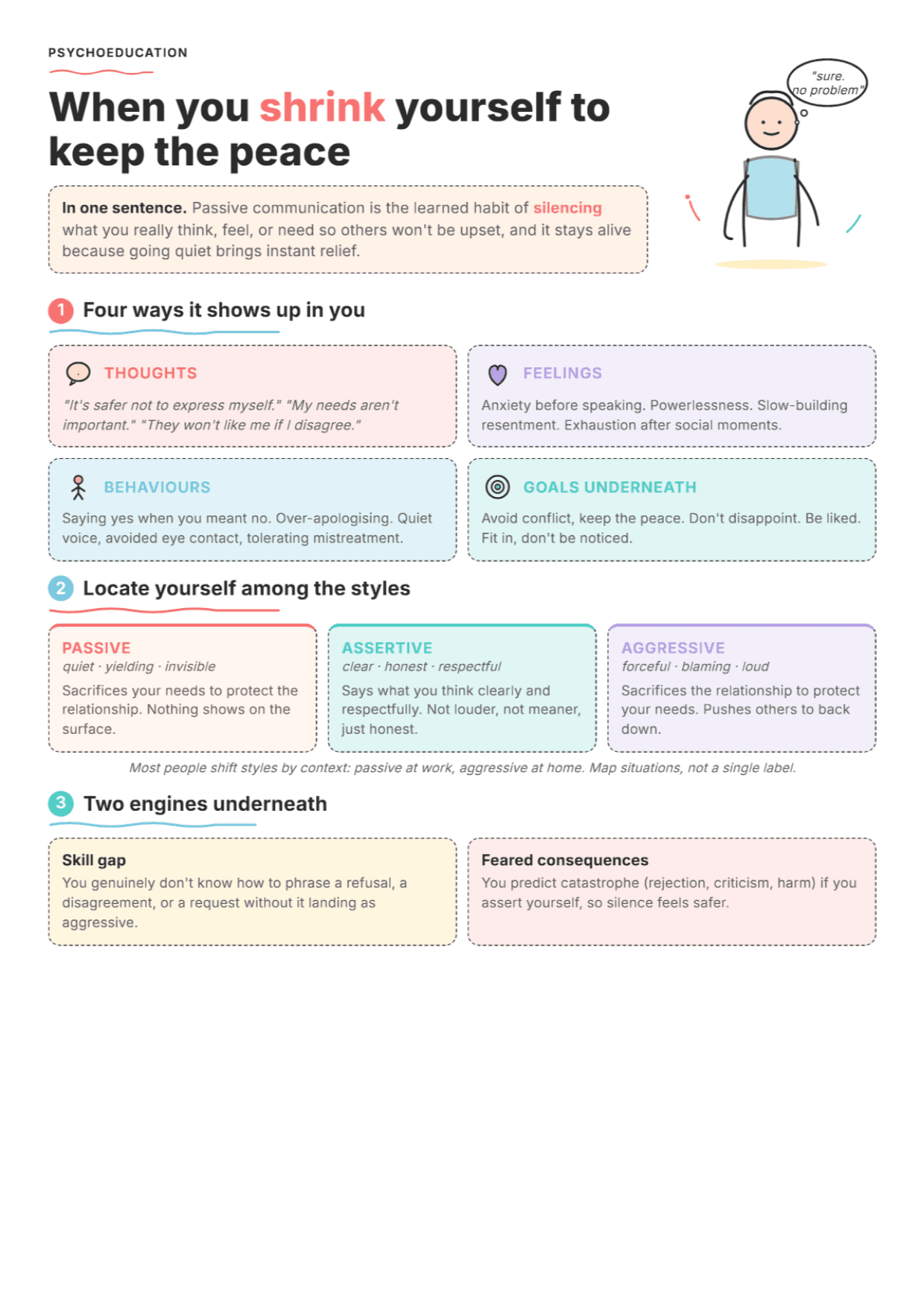
Passive Communication: PDF Worksheet, Tools and Exercises
A visual PDF worksheet, clinical tools and exercises to explain passive communication in session, name the relief trap, and open the path toward assertiveness.
Self & identityAnxiety
Handout
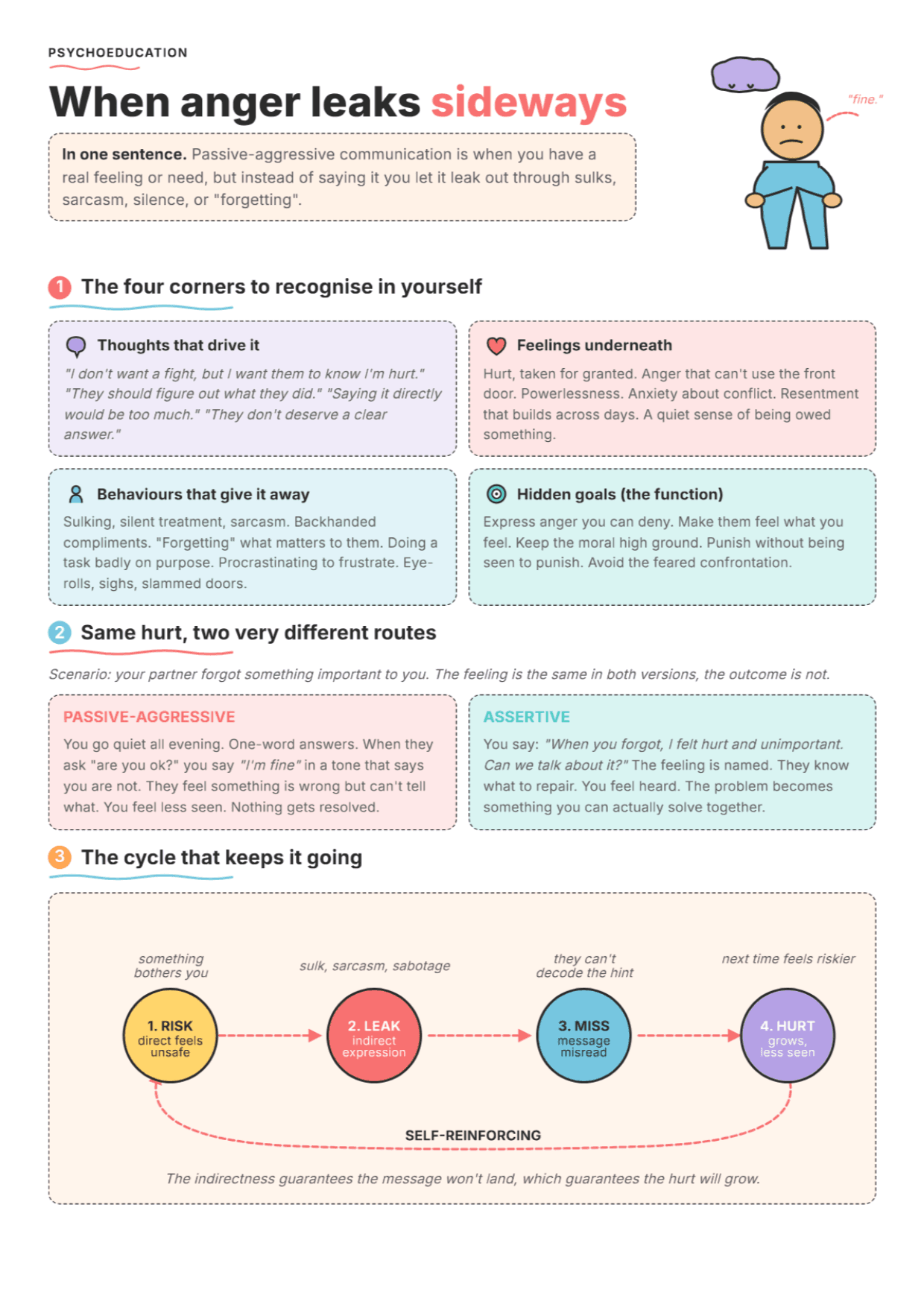
Passive-Aggressive Communication: PDF Worksheet, Tools and Exercises
A printable PDF worksheet, clinical tools, and structured exercises to explain passive-aggressive communication patterns and move patients toward assertive expression in session.
Self & identityEmotions & stress
Handout
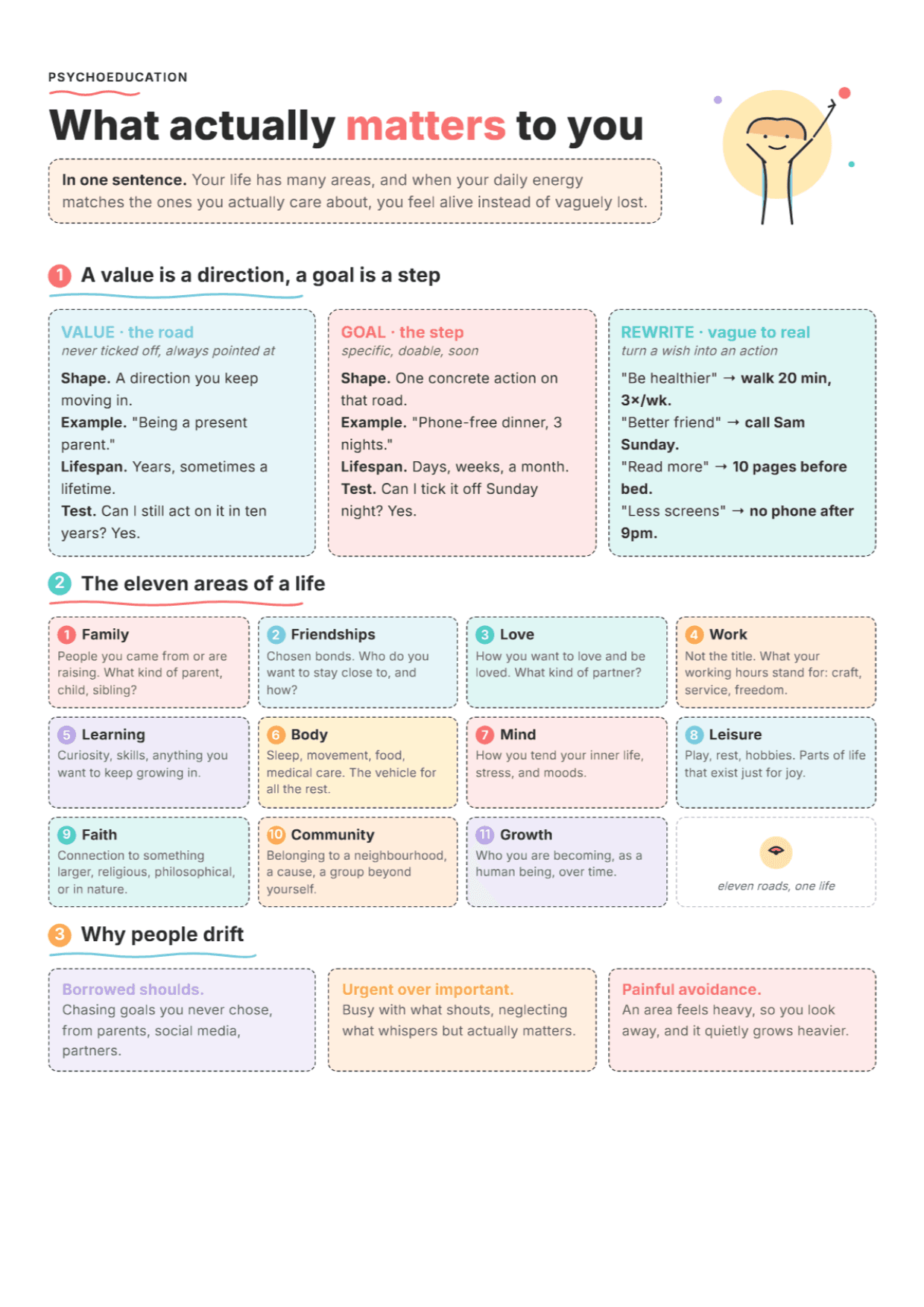
Personal Meaning and Direction: PDF Worksheet, Tools and Exercises
A visual psychoeducation fiche PDF to help clinicians clarify values, identify life-area gaps, and translate meaning into committed action during session.
Self & identityLife transitions
Handout
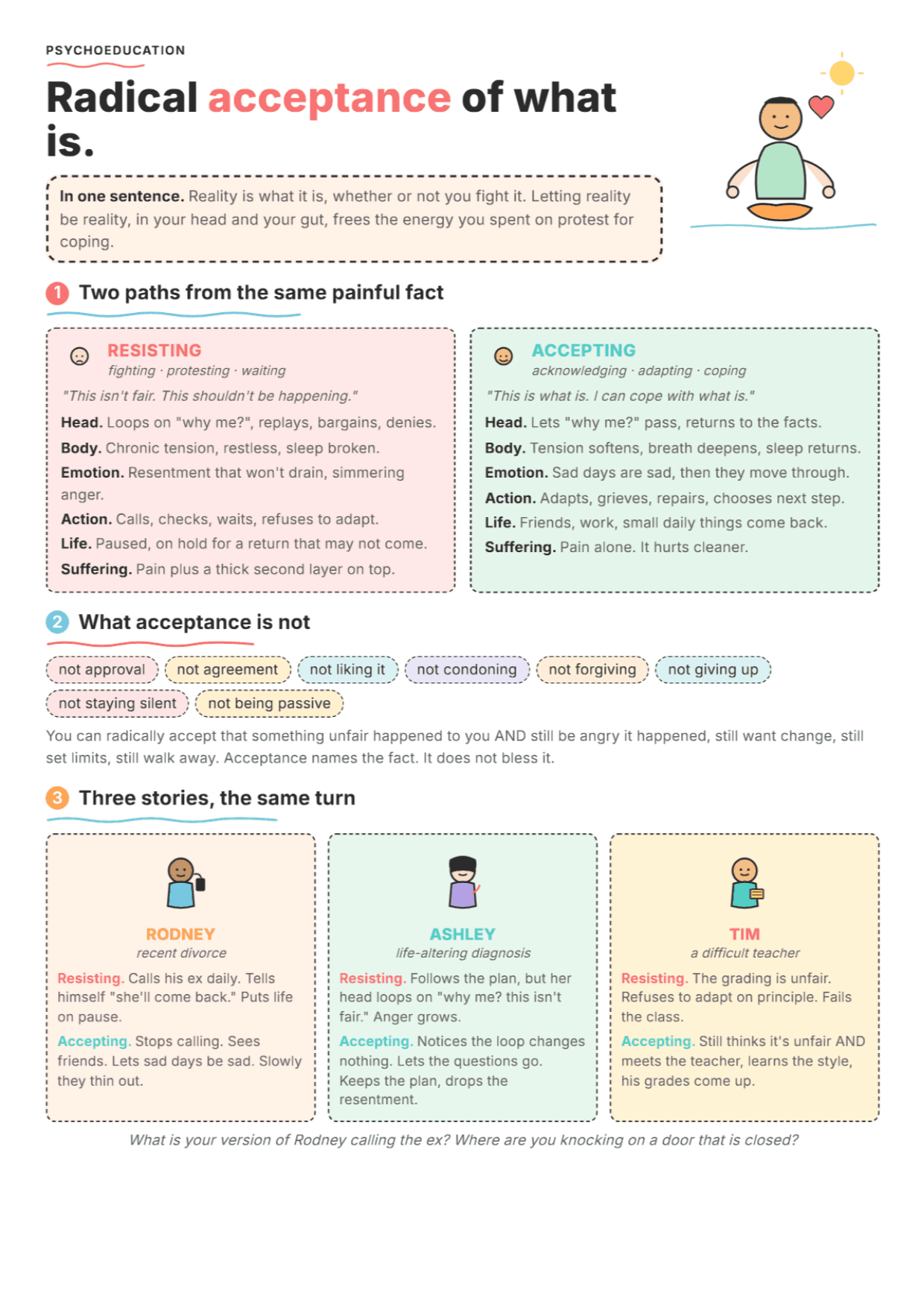
Radical Acceptance: PDF Worksheet, Tools and Exercises for DBT Practice
A printable DBT fiche PDF covering the resisting/accepting split, the 'turning the mind' practice, and clinical examples, for use as a visual psychoeducation support in session.
Emotions & stressMood & depression
Handout
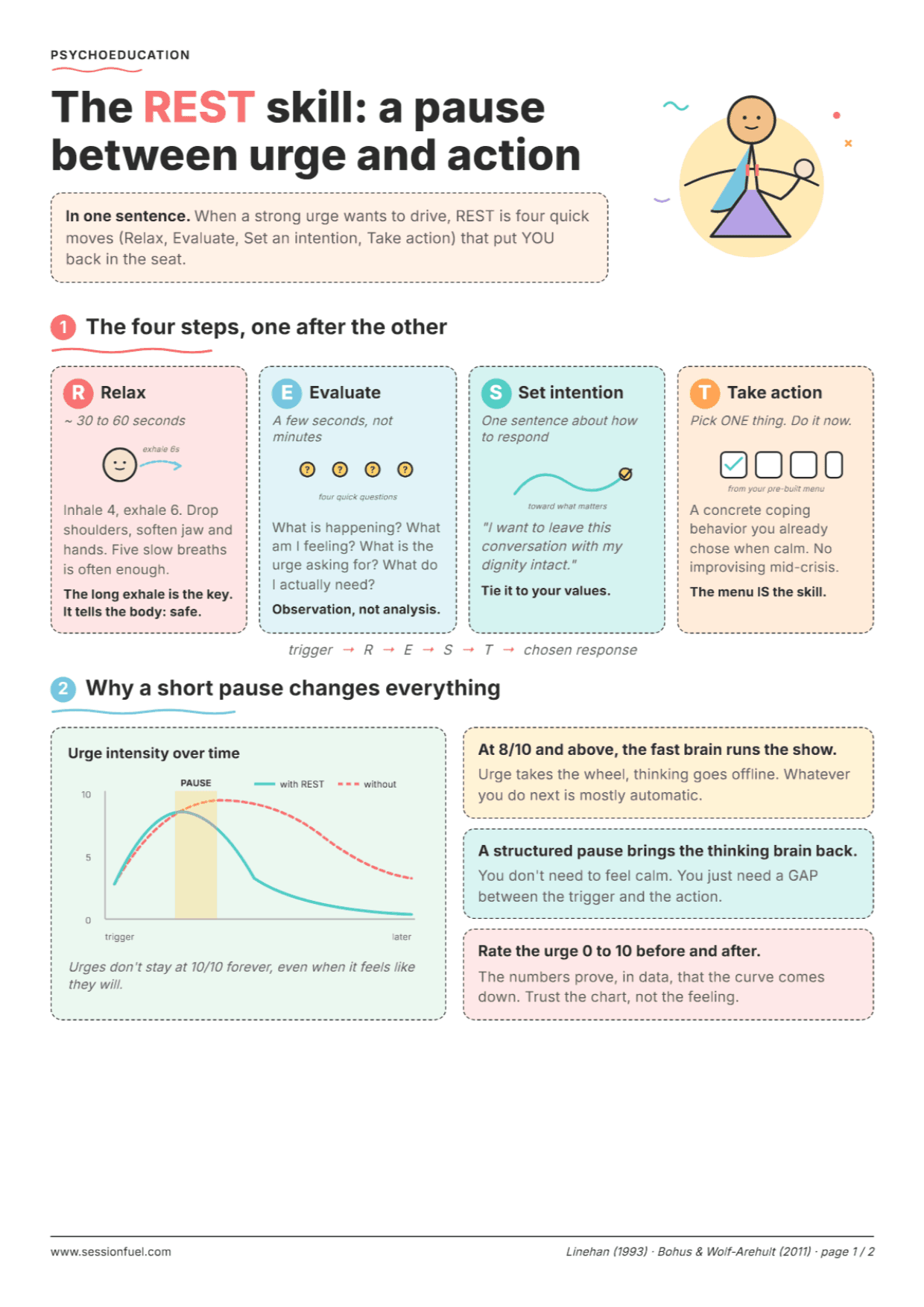
REST Distress Tolerance Skill: PDF Worksheet, Tools and Exercises
A visual PDF worksheet to help clinicians teach the REST distress tolerance skill in session, Relax, Evaluate, Set intention, Take action.
Emotions & stressBehaviours & addictions
Handout
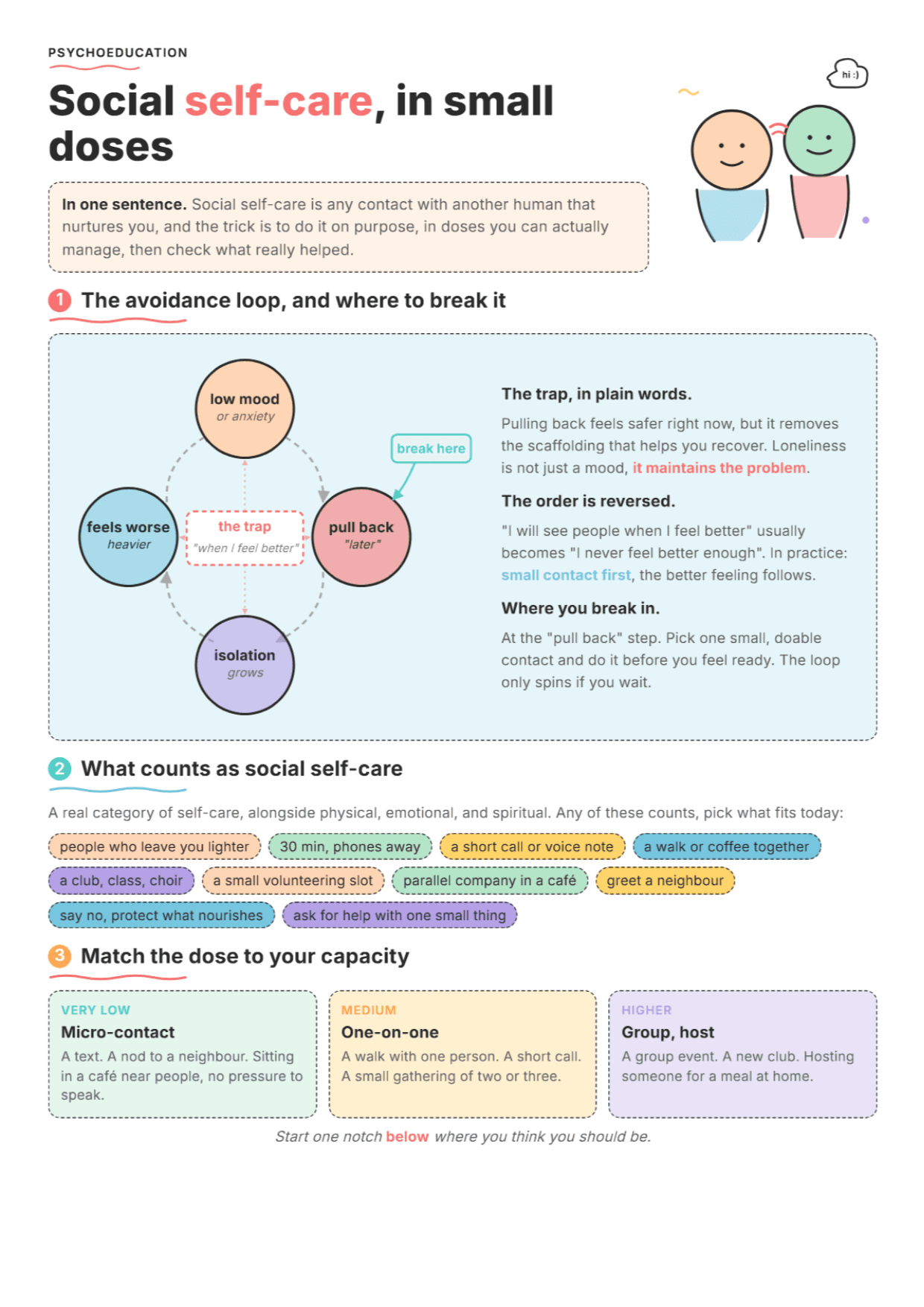
Social Self-Care Activities: PDF Worksheet, Tools and Exercises
A printable PDF worksheet, clinical tools, and structured exercises to help patients break isolation, dose social contact, and track what genuinely restores them.
Mood & depressionTrauma & PTSD