
Trauma & PTSD: Clinical Resources for Assessment and Treatment
Trauma and PTSD (post-traumatic stress disorder), along with the broader spectrum of trauma-related disorders and stress reactions, sit at the intersection of neurobiology, attachment, and social context, making them among the most clinically demanding presentations a practitioner will encounter. This page is designed for clinicians who work with trauma-exposed populations across settings: outpatient, hospital, crisis, or community care. Here you will find an expanding library of printable worksheets, psychoeducation sheets, structured exercises, and guided programs specifically selected to support evidence-based trauma treatment. Each resource is intended to complement your clinical formulation, not replace it.

From Event to Disorder: What Distinguishes Pathological Trauma Responses
Trauma is not defined by the event itself but by the organism's response to it. The DSM-5-TR criterion A for PTSD requires direct exposure, witnessing, learning of traumatic death or threat to a close other, or repeated first-hand exposure to aversive details of traumatic events. Yet exposure alone is neither necessary nor sufficient for disorder. The critical variable is the failure of the fear-extinction process: the hippocampus, medial prefrontal cortex, and amygdala circuit does not complete the contextualisation and inhibition of the threat memory, leaving it as what Bessel van der Kolk's conceptual framework describes as an unintegrated sensory and affective trace.
This neurobiological framing matters clinically because it predicts symptom topology. Re-experiencing symptoms (intrusions, nightmares, flashbacks) reflect involuntary memory reactivation. Avoidance reflects operant conditioning. Negative alterations in cognition and mood reflect cortical reappraisal deficits and shame-laden attributions. Hyperarousal and hypervigilance reflect persistent autonomic dysregulation. Recognising which cluster predominates shapes your treatment sequencing.
Complex Trauma and the Limits of the PTSD Construct
For many patients, a single-event PTSD model is insufficient. Complex PTSD (C-PTSD), as codified in the ICD-11, adds three disturbance clusters to the standard PTSD symptom set: affect dysregulation, negative self-concept, and relational disturbances. Clinicians working with histories of childhood maltreatment, domestic violence, prolonged captivity, or refugee trauma will encounter this presentation regularly. The distinction has direct implications for pacing treatment: pushing premature trauma processing in a patient without adequate affect regulation capacity often worsens functioning rather than improving it.
Identification in the Clinical Encounter: Signs, Forms, and Presentations
Reading the Room: Non-Obvious Presentations of Trauma
PTSD presents with far more heterogeneity than its textbook description suggests. Dissociative subtype presentations, where emotional numbing and depersonalisation dominate over hyperarousal, are frequently misread as flat affect from depression or a personality disorder. Somatic presentations (chronic pain, gastrointestinal complaints, unexplained neurological symptoms) often mask a trauma aetiology that the patient has never connected to their physical distress. Clinicians should hold a low threshold for trauma enquiry whenever a patient presents with treatment-resistant symptoms, substantial functional impairment across domains, or a fragmented, confusing narrative history.
Key clinical indicators to track from the first session include:
- Marked discontinuities or gaps in autobiographical narrative
- Disproportionate physiological reactivity to seemingly neutral stimuli
- Pervasive shame or self-blame framing (distinct from guilt)
- Chronic interpersonal mistrust or attachment disruption
- Sleep architecture disturbances, particularly nightmare frequency
- Effortful avoidance of specific topics, places, or sensory inputs
Screening and Structured Assessment
Formal screening tools (PCL-5, ITQ for ICD-11 C-PTSD, the Child PTSD Symptom Scale for younger patients) are useful anchors but do not substitute for a thorough trauma-informed interview. When administering any self-report measure, attend not only to the score but to the patient's behavioural and physiological response during completion, as the process is itself diagnostically informative. Printable psychoeducation worksheets on trauma symptoms, distributed before or after a structured assessment, help patients map their own experience onto a clinical framework and reduce shame through normalisation.
Differential Diagnosis and Comorbidities in Trauma Presentations
The Diagnostic Tangle: PTSD, Depression, and Dissociation
Comorbidity in PTSD is the rule, not the exception. Major depressive disorder co-occurs in roughly half of PTSD cases. Alcohol and substance use disorders are common as self-regulation strategies. Panic disorder, social anxiety, and specific phobias can represent trauma-conditioned fear structures rather than independent anxiety pathologies. Borderline personality disorder (BPD) shares substantial phenomenological overlap with C-PTSD, and the clinical and therapeutic implications of distinguishing them are significant.
Differential diagnosis requires careful attention to temporal sequence: did the mood or anxiety symptoms emerge after, or prior to, the trauma exposure? Are the depressive cognitions congruent with trauma-specific themes (danger, betrayal, contamination) or broader anhedonic/hopeless schemas? Dissociative symptoms warrant particular vigilance; unrecognised dissociative identity structure, or even high-trait dissociation without a formal DID diagnosis, will substantially alter the treatment approach.
Medical and Neurological Considerations
Traumatic brain injury frequently co-occurs with PTSD in military and accident populations, and the symptom overlap (concentration difficulties, sleep disruption, irritability) demands interdisciplinary coordination. Similarly, chronic pain conditions and autoimmune disorders are overrepresented in trauma-exposed populations, likely reflecting prolonged HPA-axis dysregulation. A biopsychosocial formulation that acknowledges these systemic effects positions the clinician to integrate mental health work with medical management rather than siloing them.
Evidence-Based Approaches to Trauma Treatment
First-Line Psychological Treatments
The empirical literature converges on several first-line psychological interventions for PTSD. Trauma-focused cognitive behavioural therapy (TF-CBT), prolonged exposure (PE), and cognitive processing therapy (CPT) carry the strongest evidence base across adult populations. EMDR (Eye Movement Desensitisation and Reprocessing) holds equivalent status in NICE and ISTSS guidelines. All share a common mechanism hypothesis: facilitating the integration and contextualisation of the traumatic memory within the larger autobiographical narrative.
For C-PTSD, a phase-based model is generally indicated:
- Stabilisation: safety, somatic grounding, affect regulation skills, and therapeutic alliance consolidation.
- Trauma processing: selective, titrated engagement with traumatic material using one of the evidence-based modalities.
- Integration and reconnection: meaning-making, identity reconstruction, and rebuilding relational capacities.
Phase-based work is not a rigid sequence; clinical judgment determines when and whether to move between phases, and cycling back to stabilisation is not a treatment failure.
Somatic and Adjunctive Approaches
Given the body-held nature of traumatic memory, purely verbal interventions are often insufficient. Somatic approaches such as Sensorimotor Psychotherapy, Somatic Experiencing, and yoga-informed trauma practice are increasingly integrated alongside first-line treatments. Psychoeducation about the autonomic nervous system, the window of tolerance, and polyvagal principles gives patients an accessible framework for understanding their own dysregulation, which itself reduces shame and builds self-compassion.
Using Clinical Resources in Trauma Work: Session Integration
Printable Tools as Therapeutic Extensions
Printable worksheets and structured exercises serve several distinct clinical functions in trauma work. Used well, they externalise and contain material that can otherwise feel overwhelming; the act of writing or completing a structured form introduces a degree of cognitive processing that pure verbal recounting sometimes bypasses. Psychoeducation sheets on trauma physiology help patients understand their symptoms as adaptive, not pathological, responses to overwhelming experience, a reframe that is almost always clinically productive early in treatment.
> A patient in her early forties, referred after years of treatment-resistant depression, had never connected her chronic hypervigilance and emotional numbness to the prolonged domestic violence she had minimised as 'just the past'. After reviewing a psychoeducation sheet on PTSD symptom clusters during session, she paused and said: 'So this isn't just me being broken. There's a reason my body does this.' That single reframe opened the door to phase-based trauma work.
Selecting Resources by Treatment Phase
Resource selection should map onto the current treatment phase. During stabilisation, grounding exercises, breathing-based regulation tools, and structured safety-planning worksheets are appropriate. During active processing, cognitive restructuring worksheets targeting trauma-specific appraisals (stuck points in CPT terminology) or between-session exposure logs can support in-session work. During integration, exercises oriented toward values clarification, posttraumatic growth, and relational repair become more relevant.
Key principles for clinician use of these materials:
- Always review a resource yourself before assigning it, ensuring it matches the patient's literacy, affect regulation capacity, and current phase.
- Debrief the completed worksheet in session rather than treating it as homework to be collected.
- Adapt language and framing where needed; no printable tool is clinician-proof.
Integration into the Broader Care Plan
Coordination Across Providers
Trauma and PTSD rarely exist in a clinical vacuum. Many patients are followed concurrently by a psychiatrist for pharmacological support (SSRIs, prazosin for nightmares, and in some jurisdictions low-dose antipsychotics for hyperarousal), a GP managing somatic comorbidities, or a social worker addressing housing and safety concerns. Clear communication about your trauma treatment model and current phase helps other providers calibrate their expectations, particularly around symptom fluctuation during active processing phases, which can look, temporarily, like deterioration.
Measuring Progress in Trauma Treatment
Routine outcome monitoring with validated instruments (PCL-5, PHQ-9, a functional impairment measure) provides structure to progress review and protects against both premature termination and treatment drift. Share scores with patients in a collaborative, non-evaluative way. Graphs of symptom trajectories over time can themselves be powerful interventions, making change visible when patients' internal experience is still dominated by the remaining symptoms rather than the distance already covered.
Points of Vigilance and Clinical Limits
Vicarious Trauma and Clinician Self-Care
Working intensively with vicarious traumatisation risk is well documented in trauma clinicians. Secondary traumatic stress, compassion fatigue, and countertransference activation are occupational realities, not signs of clinical inadequacy. Regular supervision, peer consultation, and deliberate self-monitoring of one's own physiological responses in session are not optional adjuncts; they are clinical safety infrastructure.
When to Refer and When to Pause Processing
Active suicidality, current domestic violence exposure, severe dissociation, or ongoing substance dependence are not contraindications to trauma-informed care, but they typically require stabilisation and risk management before trauma processing is appropriate. Recognise the limits of outpatient psychotherapy for the most complex presentations, and maintain low thresholds for psychiatric consultation, crisis intervention, or stepped-care escalation. No worksheet or exercise replaces the clinical relationship, and no clinical relationship replaces a safe living environment.
Tools in this category

Handout
Recognizing PTSD (ICD-11): PDF Worksheet, Tools and Exercises
A structured visual PDF worksheet to explain PTSD's three pillars, differential diagnosis, and common myths, tools and exercises for clinical psychoeducation.
Trauma & PTSD
Handout
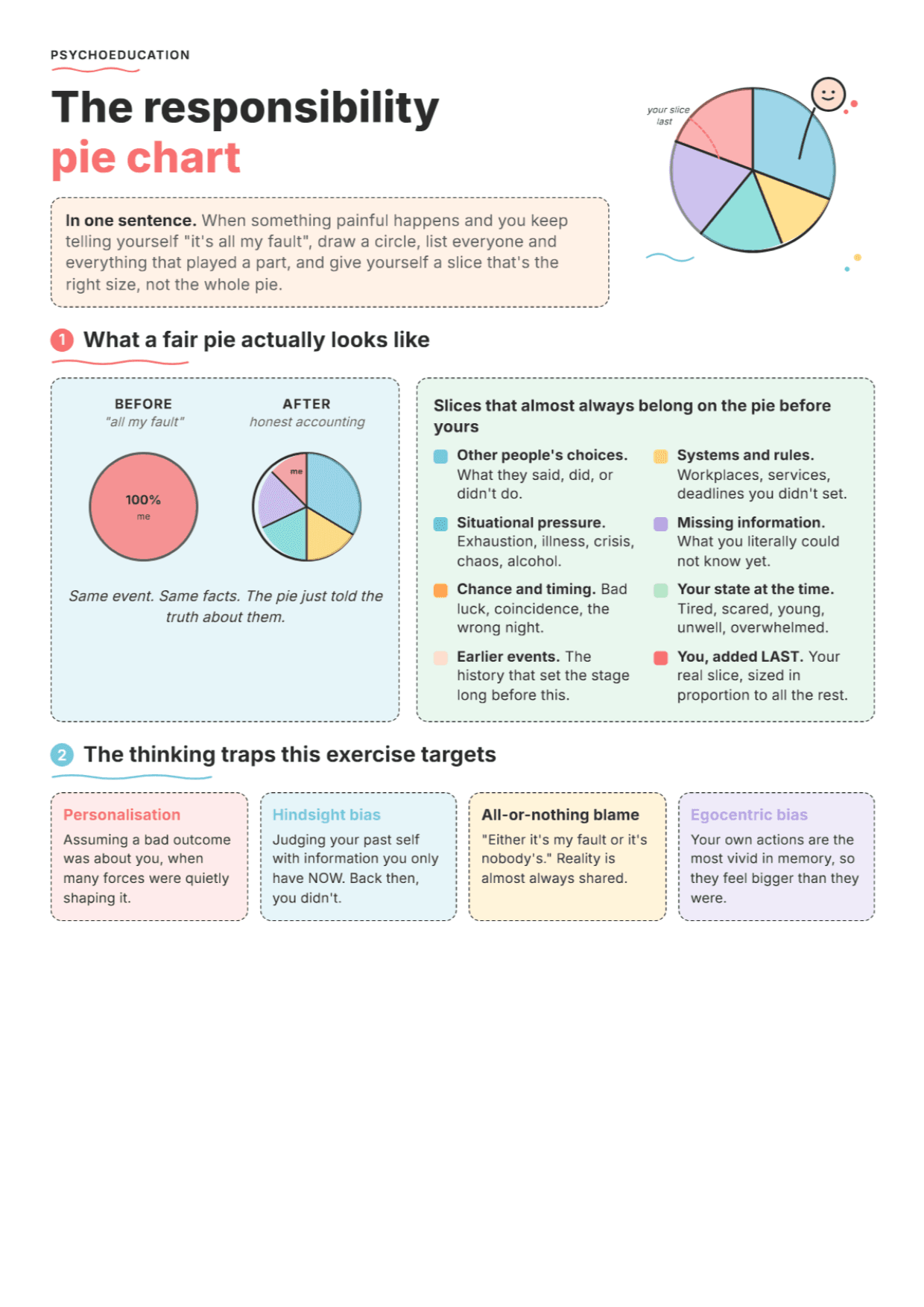
Responsibility Pie Chart: PDF Worksheet, Tools and Exercises
A visual PDF worksheet, clinical tools, and structured exercises to help patients redistribute self-blame accurately and move from crushing guilt to honest, proportionate responsibility.
AnxietyTrauma & PTSD
Handout
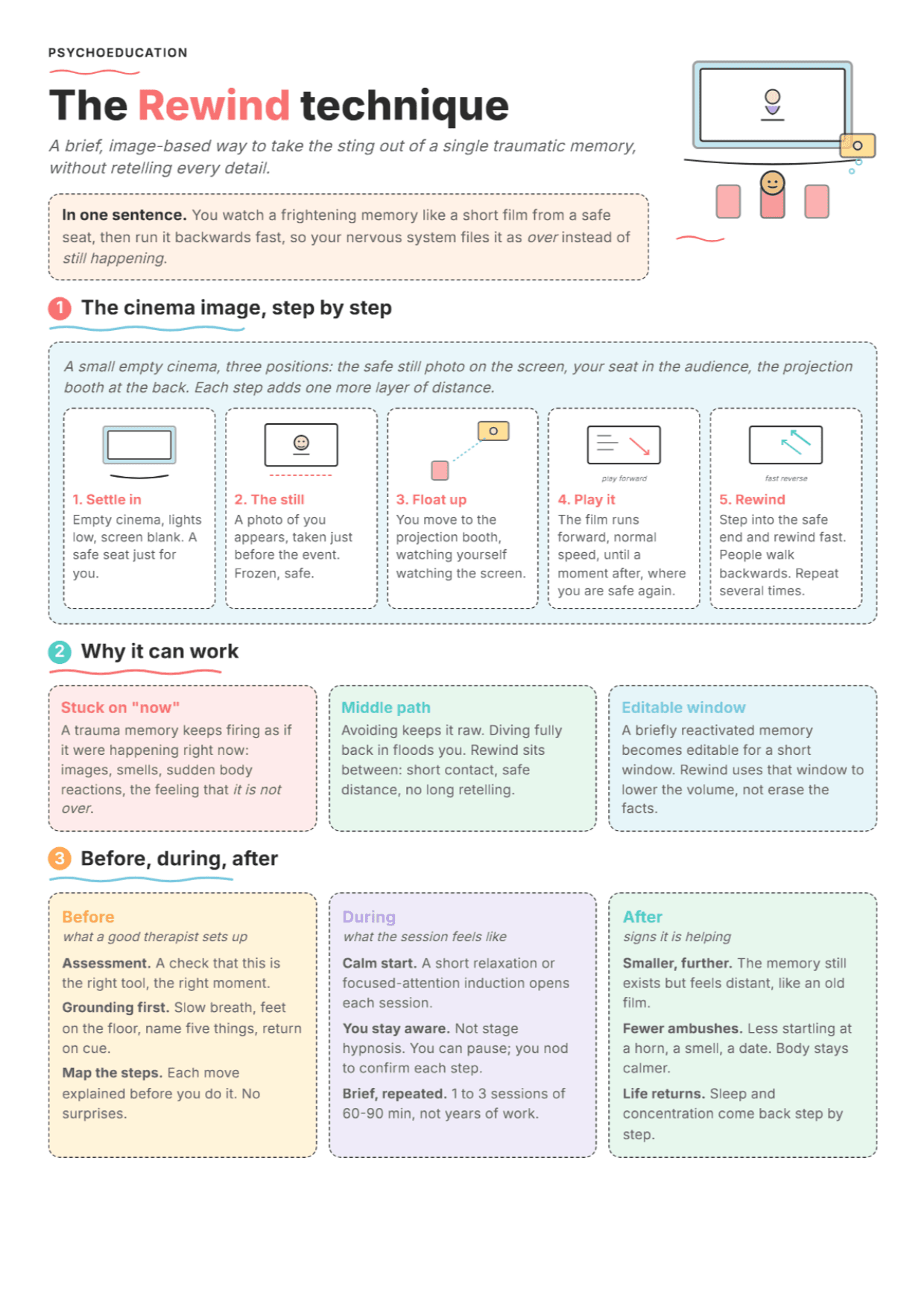
Rewind Technique for PTSD: PDF Worksheet, Tools and Exercises
A printable psychoeducation fiche to explain the Rewind Technique in session, give patients a visual map of each step, and lay the groundwork for trauma processing.
Trauma & PTSD
Handout
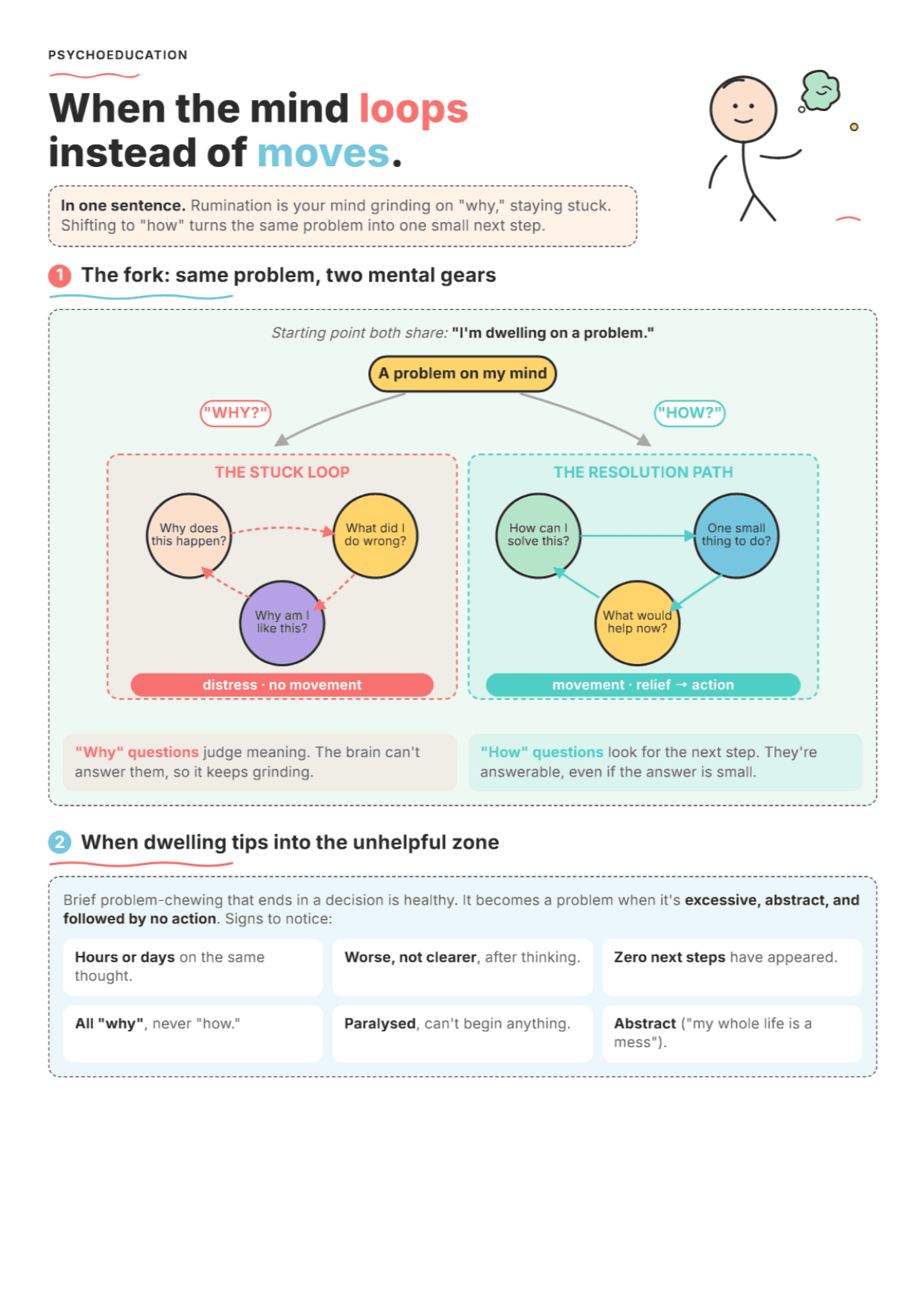
Rumination: PDF Worksheet, Tools and Exercises for Clinical Practice
A printable PDF fiche, clinical tools and exercises to explain ruminative thinking in session and help patients distinguish stuck 'why' loops from actionable problem-solving.
Thoughts & cognitionMood & depression
Handout
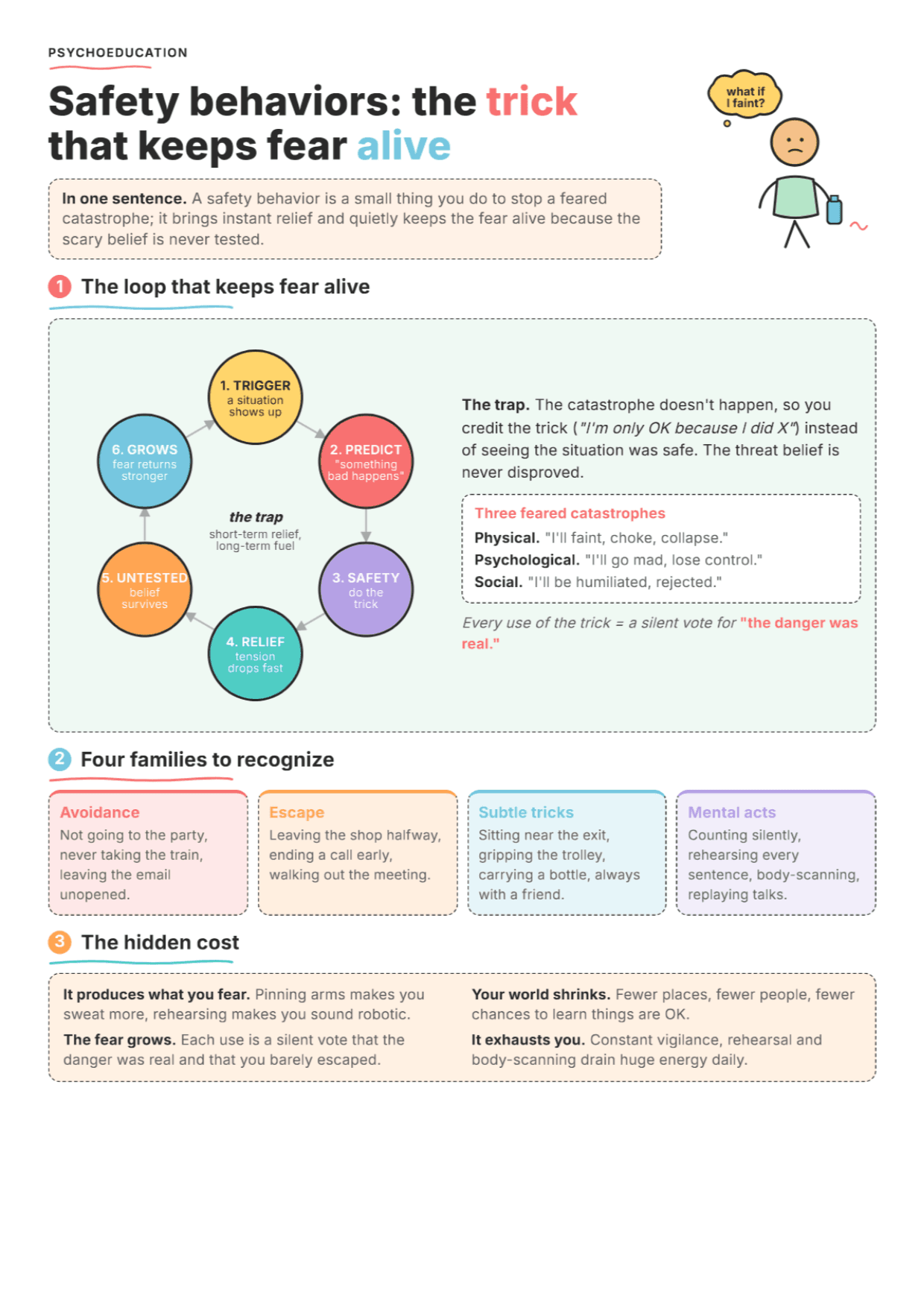
Safety Behaviors: PDF Worksheet, Tools and Exercises for Clinical Practice
A printable PDF fiche, clinical tools, and structured exercises to explain how safety behaviors maintain fear and guide patients through dropping them gradually.
AnxietyTrauma & PTSD

Handout
Schema Maintenance Vicious Cycles: PDF Worksheet, Tools and Exercises
A visual PDF worksheet, tools and exercises to map the self-confirming loops that keep early maladaptive schemas alive, and to identify exactly where the coping move can be shifted.
PersonalityMood & depression

Handout
Schema Model: Here and Now: PDF Worksheet, Tools and Exercises
A printable PDF worksheet with tools and exercises to help clinicians explain schema activation in the present moment and map today's overreaction back to its historical root.
Self & identityTrauma & PTSD

Handout
Selective Attention: PDF Worksheet, Tools and Exercises for Clinical Practice
A printable PDF worksheet, clinical tools and structured exercises to explain the attentional bias loop and help patients understand why their beliefs never update.
AnxietyMood & depression

Handout
Self-Blame: PDF Worksheet, Tools and Exercises for Clinical Practice
A printable PDF worksheet with tools and exercises to explain self-blame clearly in session, separate guilt from shame, and introduce the responsibility pie chart as a psychoeducation tool.
Thoughts & cognitionSelf & identity