
EMDR Therapy: Clinical Resources for Trauma Reprocessing
EMDR (Eye Movement Desensitization and Reprocessing), also referred to in the literature as eye movement desensitization and reprocessing therapy or trauma reprocessing therapy, is a structured, evidence-based psychotherapeutic approach designed to resolve the pathogenic effects of dysfunctionally stored memory. This page is intended for trained EMDR clinicians and trauma-specialist practitioners seeking printable worksheets, psychoeducation materials, stabilisation exercises, and guided audio to support each phase of treatment. The resources gathered here span the full arc of EMDR clinical work: from Phase 2 preparation and resourcing through to desensitisation, installation, body scan, closure, and re-evaluation. Whether you are consolidating a beginner practice or refining protocols for complex presentations, you will find session-ready tools organised around the therapeutic priorities that matter most.

The AIP Model and Dysfunctionally Stored Memory
The Adaptive Information Processing (AIP) model, formulated by Francine Shapiro, serves as the foundational theoretical framework for EMDR therapy. It posits that the brain possesses an innate physiological system designed to process experiences and integrate them adaptively, analogous to the body's wound-healing mechanisms. When this system is overwhelmed, as occurs in acute or chronic trauma, memories are stored in an unprocessed state: frozen with their original affects, somatic sensations, and maladaptive cognitions, and isolated from the broader associative networks that would otherwise contextualise and neutralise them.
These pathogenic memories (also called dysfunctionally stored memories or trauma nodes in the AIP idiom) continue to generate symptoms not because the past event persists, but because its neural representation does. Intrusions, hypervigilance, dissociative episodes, and negative self-referential beliefs are best understood, within this framework, as the direct output of unprocessed memory networks rather than as separate symptom clusters requiring independent intervention. This position has important implications for case conceptualisation: targeting the underlying memory material takes priority over symptom management per se.
Complementary Theoretical Perspectives
Recent narrative reviews have identified several theoretical models complementary to AIP, including predictive processing accounts and memory reconsolidation frameworks. These proposals converge on the view that EMDR produces its effects by facilitating access to distress-laden memory content and enabling transformative change at the level of the memory trace itself, not merely at the level of conditioned affect. For the practitioner, these convergences strengthen the rationale for careful target identification and rigorous protocol fidelity, rather than diluting the AIP framework.
The Eight-Phase Protocol: Clinical Structure and Sequencing
Phases 1 and 2: History-Taking, Conceptualisation, and Preparation
Phase 1 involves a thorough trauma history and the construction of a targeting sequence plan: an ordered map of past memories, current triggers, and desired future templates that will guide the entire treatment course. The quality of this conceptualisation directly conditions everything that follows. Clinicians should identify adverse childhood experiences (ACEs), relational trauma, and single-incident events, and organise them into a coherent target hierarchy before any desensitisation begins.
Phase 2 addresses client preparation and stabilisation. The core task is to ensure the client possesses sufficient affect regulation capacity to enter and exit activated states safely. This typically involves installing resourcing tools: a calm or safe place, container exercises, and if indicated, resource development and installation (RDI) sequences. Preparation is not a brief preliminary step; with complex presentations, it may constitute the main work for weeks or months. The window of tolerance serves as the operational guide here: reprocessing is contraindicated when the client is chronically outside it.
Phases 3 to 8: Assessment, Reprocessing, and Re-Evaluation
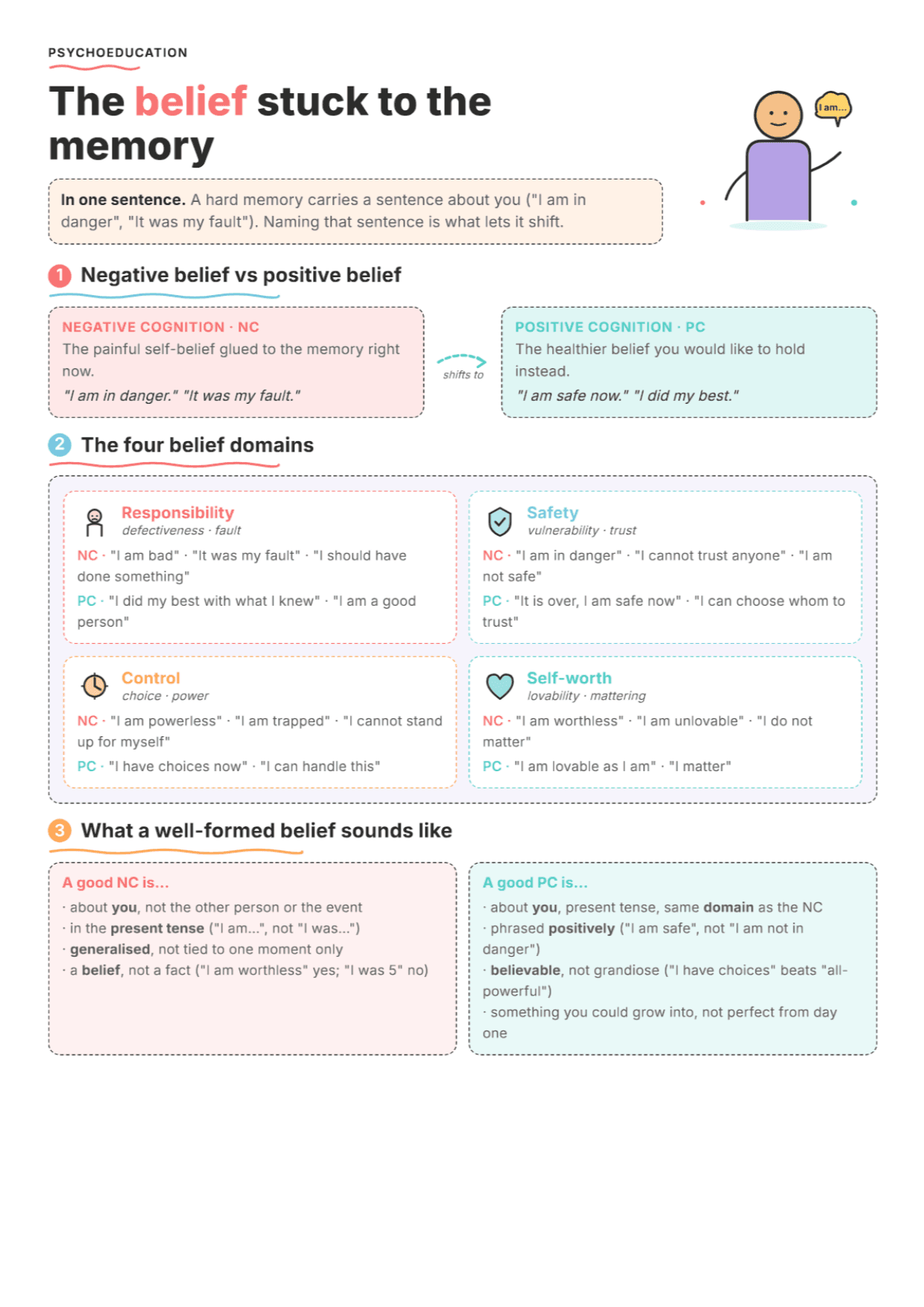
Phase 3 (Assessment) activates the target memory and establishes baseline measures: the Negative Cognition (NC), the Positive Cognition (PC), the Validity of Cognition (VOC) scale, emotional affect and its Subjective Units of Disturbance (SUD) rating, and the somatic localisation of disturbance. Precise Phase 3 work is a prerequisite for efficient desensitisation; imprecision here generates looping or incomplete processing in Phase 4.
Phase 4 (Desensitisation) uses bilateral stimulation (BLS): classically horizontal eye movements, but tactile tapping and auditory tones are equally validated alternatives. Sets of BLS alternate with brief client reports until the SUD reaches 0 (or an ecologically appropriate 1). Phase 5 (Installation) strengthens the PC using BLS until the VOC reaches 7. Phase 6 (Body Scan) identifies and processes residual somatic disturbance. Phase 7 (Closure) returns the client to equilibrium at session end, always, regardless of processing completion. Phase 8 (Re-Evaluation) opens subsequent sessions by reviewing consolidation.
Indications, Presentations, and Diagnostic Differential
Core Indications: PTSD, C-PTSD, and Trauma-Adjacent Presentations
Post-traumatic stress disorder (PTSD) and complex PTSD (C-PTSD) constitute the primary indications for EMDR, and its efficacy in both is supported by multiple randomised controlled trials and international clinical guidelines (WHO, APA, NICE). The distinction matters clinically: single-incident PTSD typically responds to standard EMDR protocols with a short targeting sequence, while C-PTSD arising from chronic relational adversity requires an extended Phase 2, careful resourcing, and a longer target hierarchy. Rushing to Phase 4 with a client whose window of tolerance is narrow and whose attachment system is disorganised is the most common clinical error in this population.
Expanding Indications: Beyond Classical Trauma
The AIP model's logic extends naturally to presentations where memory-encoded distress maintains psychopathology outside the strict PTSD nosology. Accumulating evidence supports EMDR in specific phobias, panic disorder, complicated grief, somatic symptom disorder, chronic pain, and certain personality disorder presentations, particularly where ACEs and relational trauma are implicated. In these cases, EMDR is not applied as a standalone alternative but is integrated into a broader case formulation that respects comorbidities.
Diagnostic differential points requiring attention: dissociative disorders (especially DID and OSDD) require specialised protocols and stabilisation-dominant phased approaches; active psychosis contraindicates standard EMDR; and clients with significant alexithymia may need substantial somatic and interoceptive work before Phase 3 is viable.
Using Printable EMDR Resources in the Clinical Workflow
Stabilisation and Resourcing Tools
The resources on this page are designed for direct clinical use, not for autonomous client self-help. The first category of value is Phase 2 stabilisation support. Guided imagery exercises and safe-place protocols serve a dual purpose: they build the affect-regulating capacity the client needs for reprocessing, and they provide a concrete anchor for closure at the end of activated sessions. The Cozy Nest Visualization: Building Inner Safety in Therapy, a guided audio resource, is a particularly well-suited tool for this phase. It supports the development of an internalised safe-place image using sensory grounding and containment cues, which can then be reinforced with BLS to enhance its calming efficacy.
> Clinical vignette: A 34-year-old client with C-PTSD and a history of early relational neglect presented with no accessible memory of felt safety. Standard safe-place installation yielded only flat affect. Using the Cozy Nest Visualization: Building Inner Safety in Therapy between sessions allowed her to rehearse the imagery independently, gradually building an affective anchor strong enough to withstand Phase 4 activation. Installation with BLS in the following session was markedly more effective.
Session Tracking and Between-Session Continuity
Printable worksheets that track SUD and VOC across sessions, map somatic responses, and log between-session material (dreams, spontaneous associations, symptom shifts) serve as vital continuity tools. EMDR processing continues between sessions as the brain consolidates newly integrated material; without structured tracking, this inter-session work goes unregistered and the re-evaluation phase loses its diagnostic value.
Integration into the Care Plan: Phased and Pluralistic Models
EMDR Within a Phase-Based Trauma Framework
EMDR integrates cleanly into the classic triphasic model of trauma treatment (stabilisation, trauma processing, reconnection/integration). Its eight phases already enact this structure internally, but the overall care plan must reflect it at the macro level. Clinicians should document explicitly which phase of the broader treatment model any given session belongs to, particularly with C-PTSD cases where the oscillation between stabilisation and reprocessing may span months.
The resourcing and stabilisation materials available here support Phase 1 of the triphasic model directly. Psychoeducation sheets on the AIP model and on the rationale for bilateral stimulation address an important therapeutic task: helping the client understand what EMDR does, without generating unrealistic expectations or inadvertently activating trauma material before the alliance and resourcing are in place.
Integrating EMDR with Other Therapeutic Modalities
EMDR is not incompatible with other orientations. Its combination with ego-state therapy, somatic approaches, polyvagal-informed interventions, and schema-focused conceptualisations is increasingly documented and clinically well-grounded. The AIP model accommodates attachment-based and parts-work perspectives: blocking beliefs, introjected objects, and ego-state conflicts can all be framed as memory-based impediments to adaptive processing and addressed within the EMDR protocol through appropriate interweaves or resourcing sequences.
When combining modalities, the practitioner's task is to maintain a coherent primary model and to deploy complementary tools in service of its logic, rather than eclectically shifting frameworks mid-treatment.
Points of Vigilance and Clinical Limits
Contraindications and High-Risk Configurations
Several configurations require particular caution. Clients with undiagnosed or undertreated dissociative disorders are at elevated risk of destabilisation if standard EMDR protocols are applied without dissociation-specific adaptations. Pre-treatment screening with validated instruments (DES, MID) is advisable whenever the history includes early, chronic, or relational trauma. Active suicidal ideation, borderline affective dysregulation without adequate stabilisation, and substance dependence in active use are relative contraindications that require clinical judgement, not categorical exclusion.
Informed consent specific to EMDR is essential. Clients need to understand that between-session processing may amplify distress temporarily, that incomplete sessions require closure procedures, and that they may need to modify driving or other demanding activities immediately after intensive processing work.
Scope and Limitations of Printable Resources
The worksheets, audio exercises, and psychoeducation materials on this page are clinical adjuncts, not protocol substitutes. They carry no therapeutic effect independent of the therapeutic frame and the practitioner's clinical competence. EMDR training at Part 1 and Part 2 level (or equivalent national certification) remains a prerequisite for deploying these tools in a trauma reprocessing context. Printable resources are most effective when the clinician selects them deliberately for a specific phase, a specific clinical need, and a specific client, rather than using them as generic handouts.
Tools in this category
Handout
EMDR Negative and Positive Cognitions: PDF Worksheet, Tools and Exercises
A visual PDF worksheet to help clinicians explain NC/PC identification clearly in EMDR sessions, establish shared vocabulary, and leave patients with a concrete reference they can actually use.
Trauma & PTSD

Handout
EMDR: PDF Handout, Tools and Exercises for Clinical Practice
A visual PDF handout clinicians can use in session to explain the stuck memory model, four processing channels, and 8-step reprocessing structure before bilateral work begins.
Trauma & PTSDAnxiety
Handout
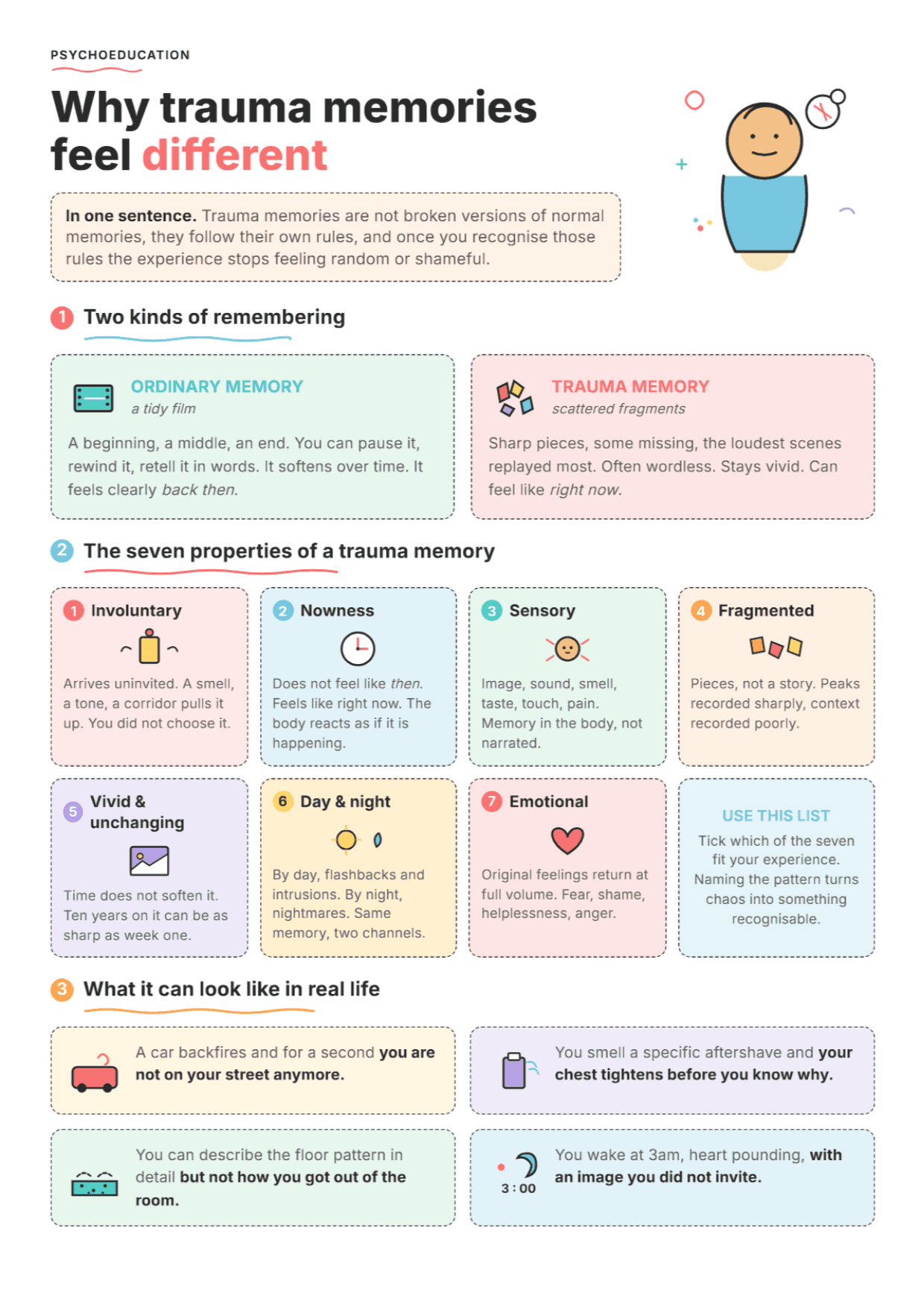
Properties of Trauma Memories: PDF Worksheet, Tools and Exercises
A visual PDF worksheet and clinical tools to help patients understand why trauma memories behave differently, and to reduce shame and confusion in the room.
Trauma & PTSD
Handout
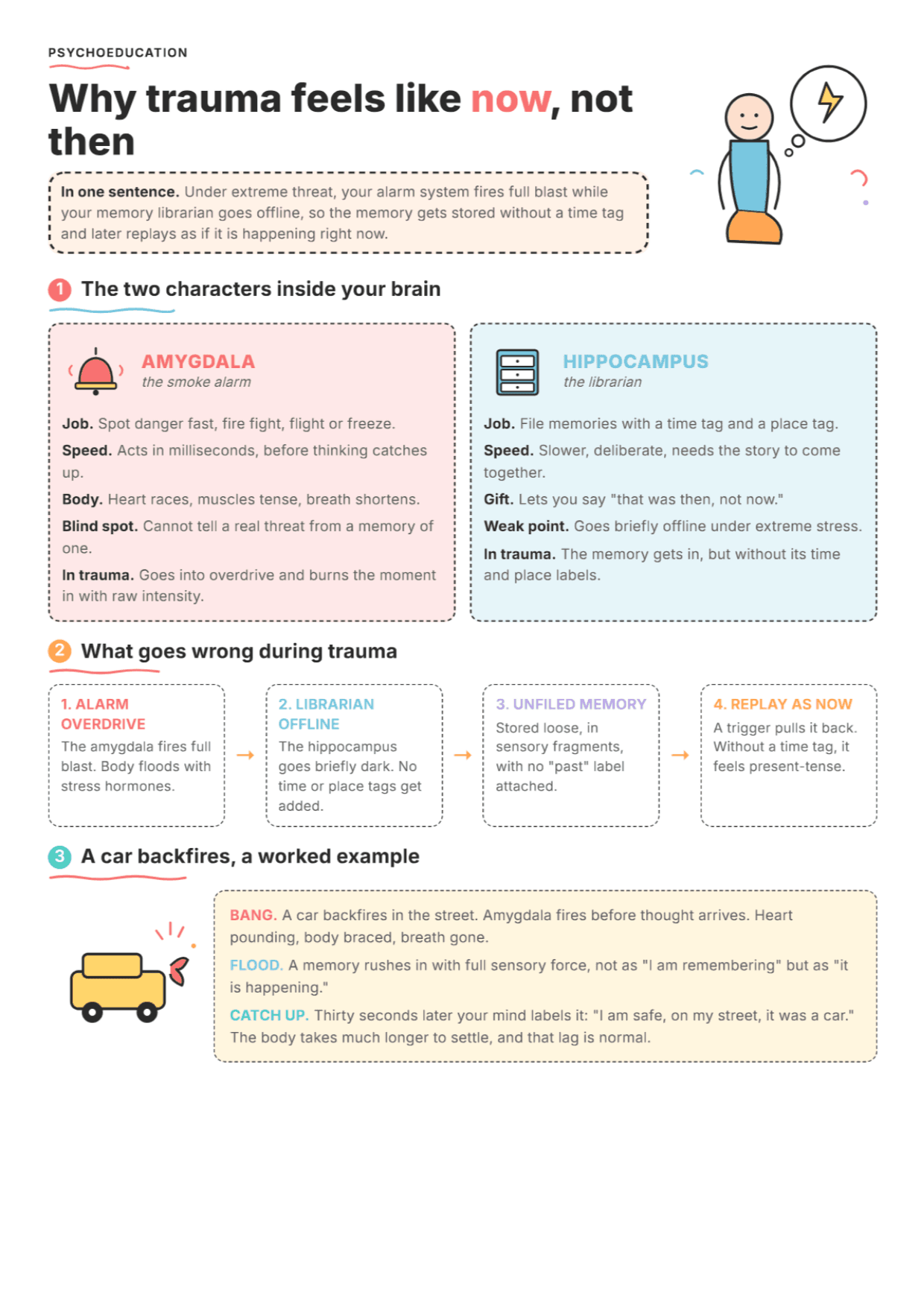
PTSD and Memory: PDF Worksheet, Tools and Exercises for Clinical Practice
A visual psychoeducation fiche PDF helping clinicians explain why traumatic memories replay as present-tense, with grounding tools and exercises for session use.
Trauma & PTSD
Handout
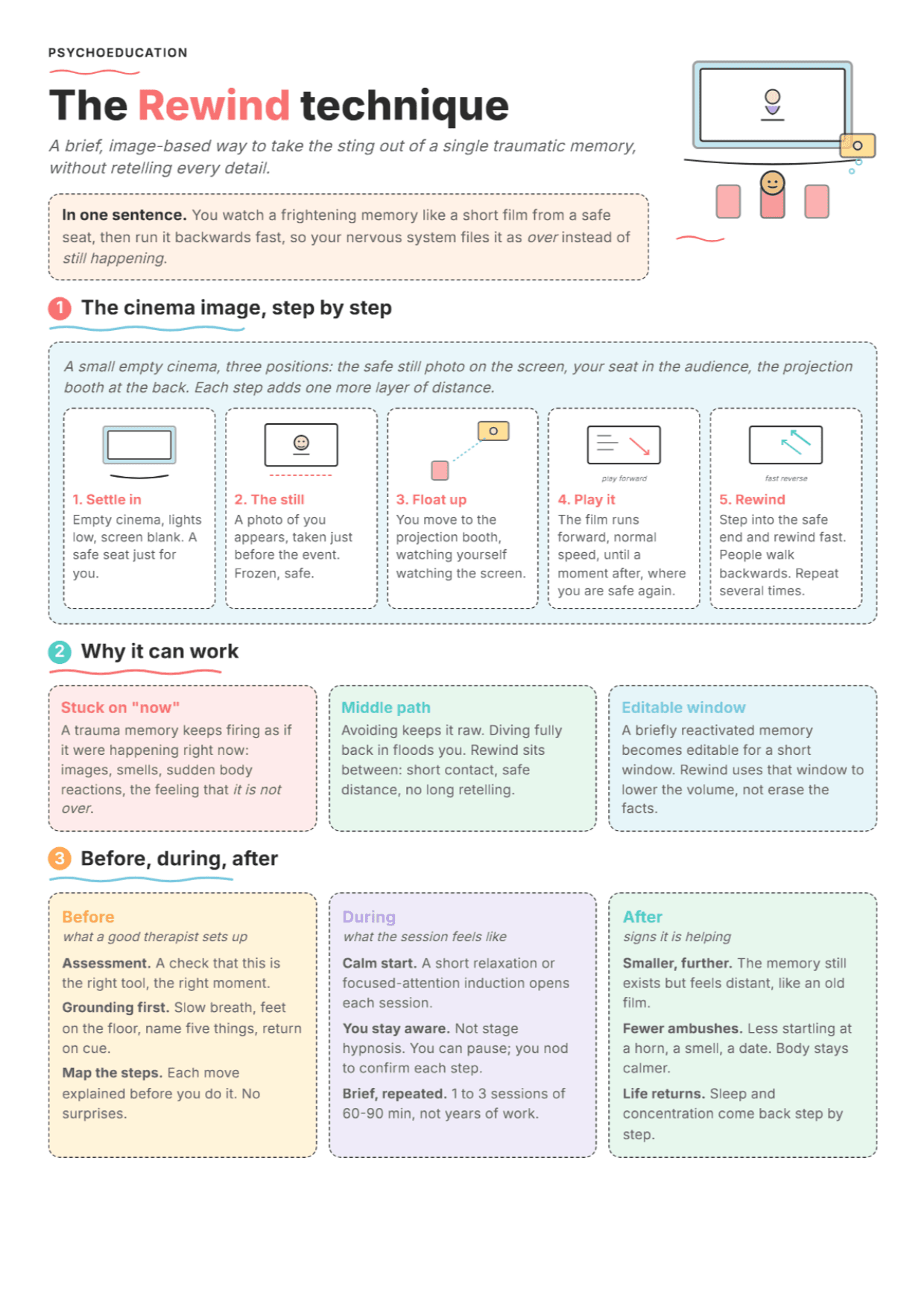
Rewind Technique for PTSD: PDF Worksheet, Tools and Exercises
A printable psychoeducation fiche to explain the Rewind Technique in session, give patients a visual map of each step, and lay the groundwork for trauma processing.
Trauma & PTSD
Handout
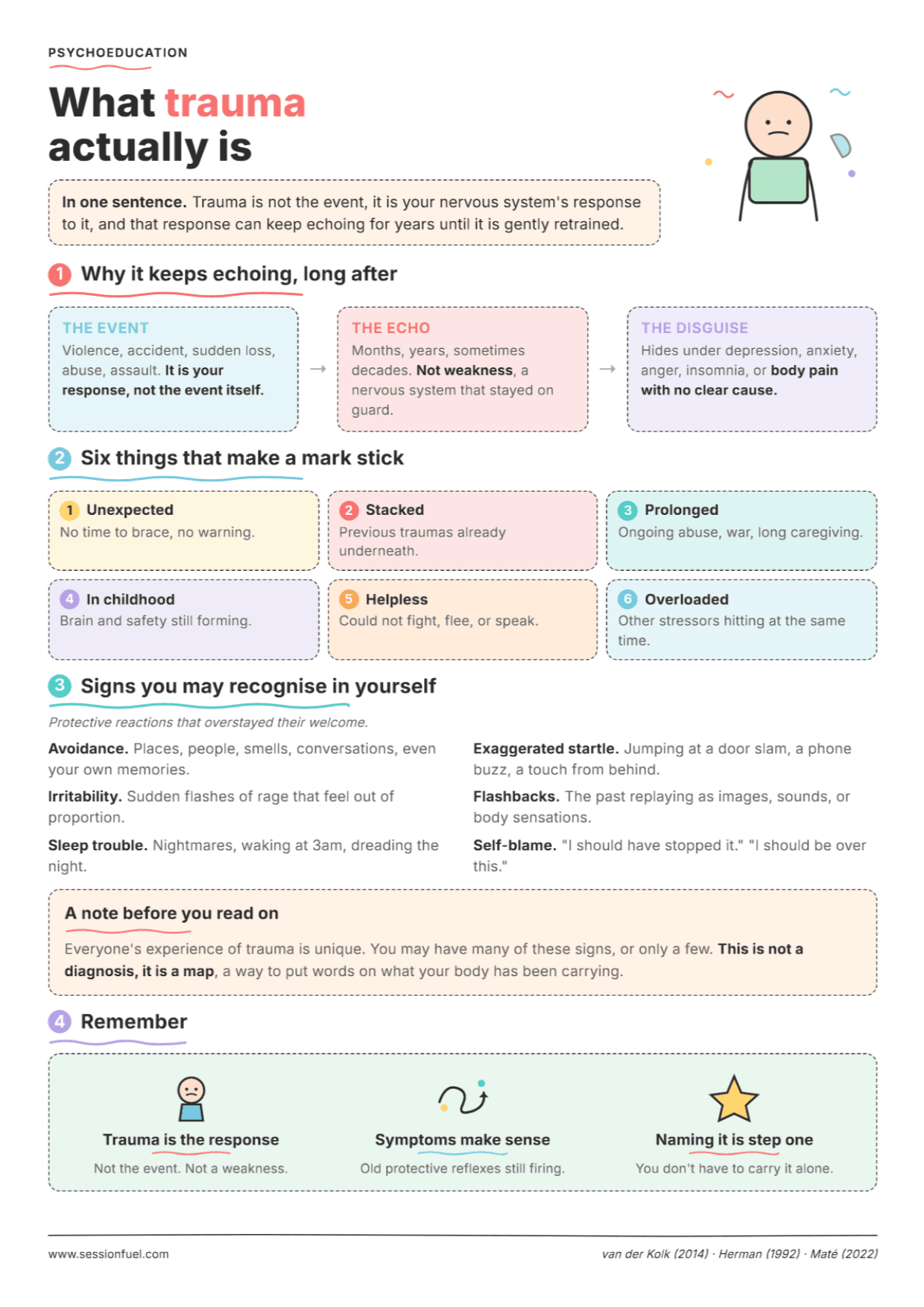
Trauma: PDF Worksheet, Tools and Exercises for Clinical Practice
A printable PDF worksheet with psychoeducation tools and exercises to make the trauma response tangible in session and leave patients with a durable conceptual map.
Trauma & PTSD
Handout
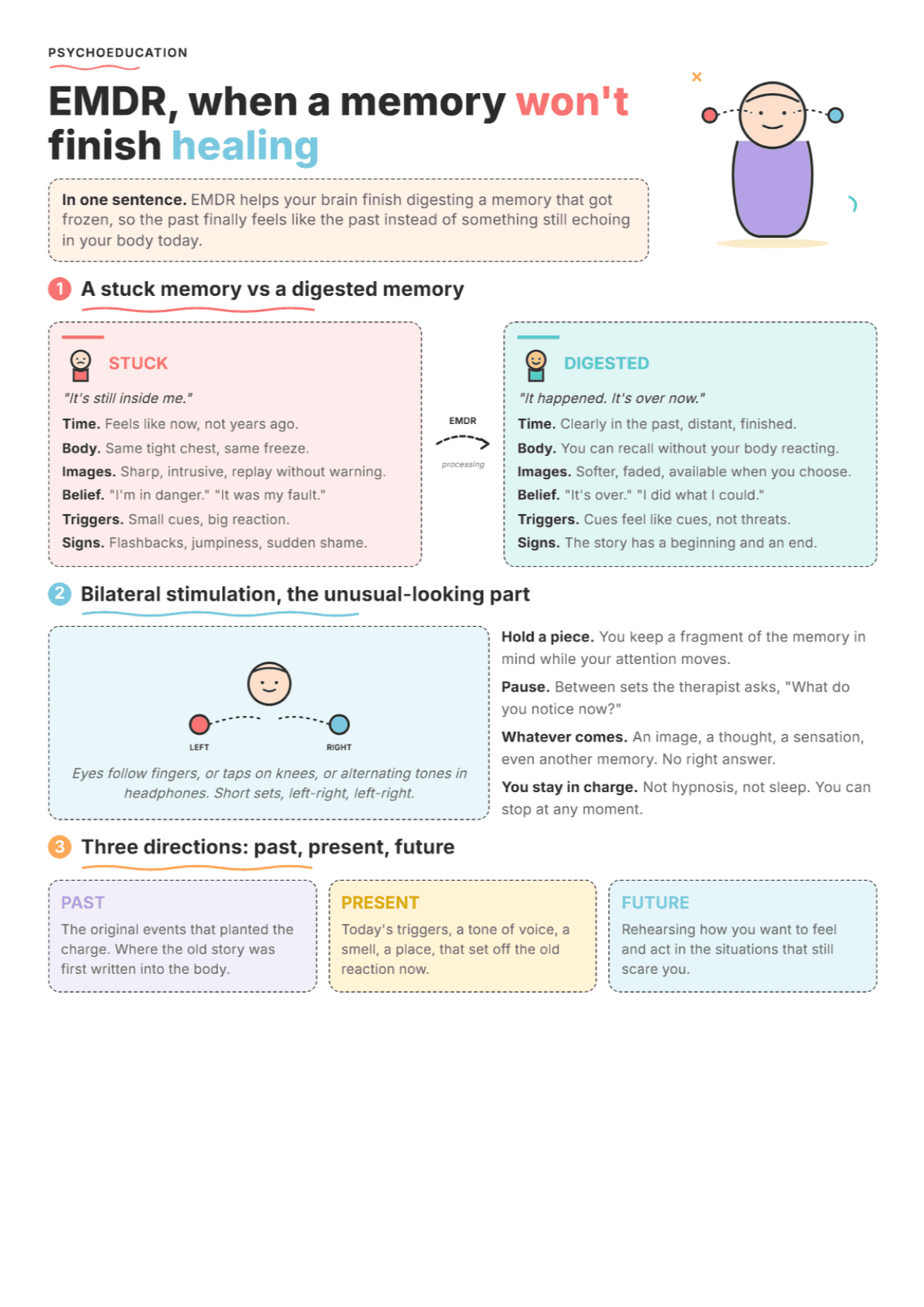
What Is EMDR Therapy? PDF Worksheet, Tools and Exercises
A printable PDF worksheet, tools and exercises to explain EMDR's rationale, phases, and bilateral stimulation to patients before processing begins.
Trauma & PTSD

Handout
What Is PTSD? PDF Worksheet, Tools and Exercises for Clinical Practice
A six-panel visual PDF worksheet to explain the PTSD maintenance cycle, symptom clusters, and treatment rationale clearly in session, with tools and exercises for clinical practice.
Trauma & PTSD