
Somatic Health: Clinical Resources for Body-Focused Care
Somatic health, broadly understood as the domain where physical symptoms, bodily experience, and psychological processes intersect, sits at the core of a wide range of presentations clinicians encounter across primary care, specialist outpatient, and psychotherapy settings. This page gathers printable worksheets, psychoeducation materials, structured exercises, and guided programs designed to support practitioners working with patients whose care plan requires explicit attention to the body, whether in the context of medically unexplained symptoms, chronic illness adjustment, somatic symptom disorder, or the somatic sequelae of trauma and stress. Resources here serve assessment, psychoeducation, skill-building, and therapeutic consolidation across multiple orientations and treatment phases.

From Biomedical Dualism to an Integrated Model
Somatic health is not a diagnosis; it is a clinical lens. The term covers the full range of ways the body carries, expresses, and maintains psychological distress, as well as the ways physical illness reciprocally shapes mental states. For decades, the field operated under a functional split: symptoms were either "organic" or "psychogenic." Contemporary models, informed by neuroscience and affective science, have largely abandoned that dichotomy in favour of a biopsychosocial framework in which central sensitisation, allostatic load, interoceptive dysregulation, and appraisal processes are understood as interacting continuously.
For the practitioner, this matters because it changes the therapeutic stance. Validating the reality of physical suffering is not in tension with exploring psychological contributors; it is the prerequisite for doing so. Patients with somatic symptom disorder (SSD), functional neurological disorder (FND), persistent physical symptoms (PPS), or medically unexplained symptoms frequently arrive having already been dismissed in other care contexts. The quality of the therapeutic alliance depends heavily on whether the clinician can hold both registers at once.
The Spectrum of Somatic Presentations
Somatic health presentations exist on a continuum of severity and chronicity. At one end sit acute, transient somatic responses to stress (tension headache, gastrointestinal upset, palpitations linked to panic). At the other end sit complex, years-long syndromes such as fibromyalgia, chronic fatigue syndrome (ME/CFS), and treatment-resistant chronic pain, often with significant functional impairment and secondary psychiatric comorbidity. Between these poles lie medically unexplained neurological episodes, persistent fatigue, unexplained sensory phenomena, and a broad range of somatoform presentations that do not meet full diagnostic criteria but nonetheless consume clinical resources and patient wellbeing.
Being precise about where a patient falls on this spectrum guides resource selection and pacing. A brief psychoeducation sheet on the stress-body connection is appropriate for a patient early in awareness-building; a multi-week structured program targeting interoceptive awareness and pacing is more suited to an established chronic presentation.
Clinical Assessment of Somatic Symptoms: What to Look For
Presentation Patterns and Red Flags
Screening for clinically significant somatic health concerns begins with noticing frequency, severity, and functional impact alongside the degree of health anxiety and illness-focused cognition. A patient who reports multiple, shifting, poorly localised physical symptoms across organ systems warrants more thorough somatic health mapping than one with a stable, well-characterised single symptom. The PHQ-15 and its shortened variants provide a quick quantitative anchor; however, semi-structured clinical questioning remains superior for capturing the phenomenology of the experience.
Key clinical markers include:
- Symptoms that worsen predictably under psychosocial stress but that the patient does not spontaneously connect to emotional states
- High medical utilisation without reassurance benefit
- Catastrophic misinterpretation of benign bodily sensations
- Avoidance behaviours organised around feared physical consequences
- Sleep disruption that amplifies next-day symptom perception (a common maintenance factor)
- History of adverse childhood experiences (ACEs), which strongly predict adult somatisation via dysregulated autonomic function
Somatic Markers in Trauma and Dissociation
A significant subset of complex somatic presentations are better understood through a trauma lens. Somatoform dissociation, as conceptualised by Nijenhuis and colleagues, describes the tendency of unintegrated traumatic memory to manifest as motor, sensory, or autonomic symptoms rather than, or in addition to, psychological re-experiencing. Clinicians working at this intersection require specific competencies: the pace of intervention must be carefully titrated to the patient's window of tolerance, and any somatic-focused exercise carries a potential for destabilising activation if introduced prematurely.
Comorbidities and Differential Diagnosis in Somatic Health Work
Psychiatric Comorbidities
Major depressive disorder and the anxiety spectrum disorders are the most frequent psychiatric comorbidities in patients presenting with persistent somatic symptoms. Depression, in particular, amplifies pain perception, disrupts sleep architecture, and reduces the motivational resources patients need to engage in active self-management. The clinical challenge is to address each dimension without inadvertently reinforcing the message that "it's all psychological", a message patients often experience as delegitimising.
Obsessive-compulsive spectrum presentations, particularly health anxiety (illness anxiety disorder), can mimic and co-occur with somatic symptom disorder. The distinction matters therapeutically: SSD targets excessive cognitive and behavioural responses to real symptoms, whereas illness anxiety disorder more centrally involves preoccupation with having a serious undiagnosed disease, often in the relative absence of somatic symptoms themselves.
Differential Diagnosis Pitfalls
Not all medically unexplained symptoms remain unexplained indefinitely. Autoimmune conditions, early-stage neurological disease, and endocrine pathology can present with symptoms that are initially labelled as functional. Ongoing liaison with medical colleagues and a clear protocol for reviewing the physical differential when the clinical picture changes are non-negotiable practice standards. Premature closure on a psychological formulation carries real risk.
Therapeutic Approaches and Mechanisms of Change
Evidence-Based Frameworks for Somatic Health
Several treatment modalities have accumulated a credible evidence base for somatic presentations:
- Cognitive-behavioural therapy for health anxiety and chronic pain targets catastrophising, avoidance, and attention to symptoms; it is the most extensively studied approach and the one with the widest applicability across the somatic spectrum.
- Acceptance and Commitment Therapy (ACT) is particularly well-suited to chronic illness adjustment, where symptom elimination is not a realistic goal; the focus shifts to values-based functioning despite ongoing physical experience.
- Pain reprocessing therapy (PRT) and related approaches addressing central sensitisation have shown early promising results for conditions such as chronic low back pain, working by reconceptualising pain as a brain-generated protective signal rather than a tissue signal.
- Somatic experiencing and sensorimotor psychotherapy address somatic presentations rooted in trauma by working directly with autonomic arousal, body posture, and movement impulses within the session.
- Pacing and graded activity remain cornerstones for ME/CFS and chronic fatigue presentations, taught within a collaborative self-management framework.
The Role of Interoceptive Work
Interoception, the perception of internal bodily states, is frequently disrupted in somatic health presentations: some patients are hypervigilant to every fluctuation, others are markedly alexithymic and poorly connected to physiological signals. Exercises targeting interoceptive awareness, body scanning, and distinguishing sensations from interpretations form a backbone of skills-based somatic health work. These exercises are most effective when introduced gradually, with explicit orientation to the rationale and ongoing monitoring for adverse reactions.
Using Printable Resources in Somatic Health Practice
Psychoeducation as a Therapeutic Tool
For most patients with somatic health concerns, psychoeducation is not a preliminary to therapy; it is therapy. Providing a coherent, biologically grounded account of why the nervous system generates and amplifies physical symptoms can be the single most powerful session in an entire treatment episode. Written materials reinforce verbal explanations, give patients something to review between sessions, and can be shared with family members or other treating clinicians.
The framing must be carefully calibrated. Psychoeducation sheets that explain central sensitisation, the role of the autonomic nervous system, or the pain neuromatrix are well received when they validate the reality of the experience while simultaneously expanding the patient's causal model beyond pure tissue damage.
Structured Exercises and Self-Monitoring Tools
Worksheets supporting symptom monitoring, activity pacing, thought records adapted to somatic catastrophising, and relaxation practice logs serve an important function in extending the therapeutic hour. They create a structure for between-session practice, yield data that can be reviewed and reframed in subsequent sessions, and foster the sense of agency that is often eroded in chronic somatic presentations.
> A patient in her late forties, referred after twelve months of unexplained chest tightness and three cardiac workups, declined the word "stress" initially. Over six sessions, a structured breathing log and a weekly body-state diary helped her notice that episodes clustered on Sunday evenings before high-stakes work weeks. She did not need convincing; the data convinced her. The monitoring tool carried the psychoeducation.
Points of Vigilance and Clinical Limits
When to Slow Down or Refer On
Somatic health work sits at a clinical boundary that requires ongoing reflexivity. Several situations call for explicit recalibration:
- Sudden change in symptom character or severity: always reconsider the organic differential before proceeding with psychological intervention
- Emergence of significant dissociative symptoms during body-focused exercises: pause, stabilise, and consider whether a trauma-specialist referral is indicated
- Therapeutic deterioration: some patients worsen with intensive focus on symptoms; a less symptom-focused ACT or behavioural activation approach may be preferable
- Iatrogenic harm through over-psychologisation: repeatedly attributing symptoms to psychological causes in the absence of a robust formulation risks alliance rupture and can cause genuine harm
Scope of the Resources on This Page
The materials gathered under this category are designed as adjuncts to professional clinical care, not as stand-alone interventions. They are appropriate for use by qualified clinicians (psychologists, psychiatrists, trained psychotherapists, specialist nurses, and allied health professionals with relevant competencies) who have conducted adequate assessment and formulation. No resource here replaces clinical judgment regarding medical safety, diagnosis, or treatment sequencing. Where printable tools are used with patients who have complex trauma histories or active psychiatric comorbidity, close monitoring and session-by-session titration of content remain essential.
Tools in this category
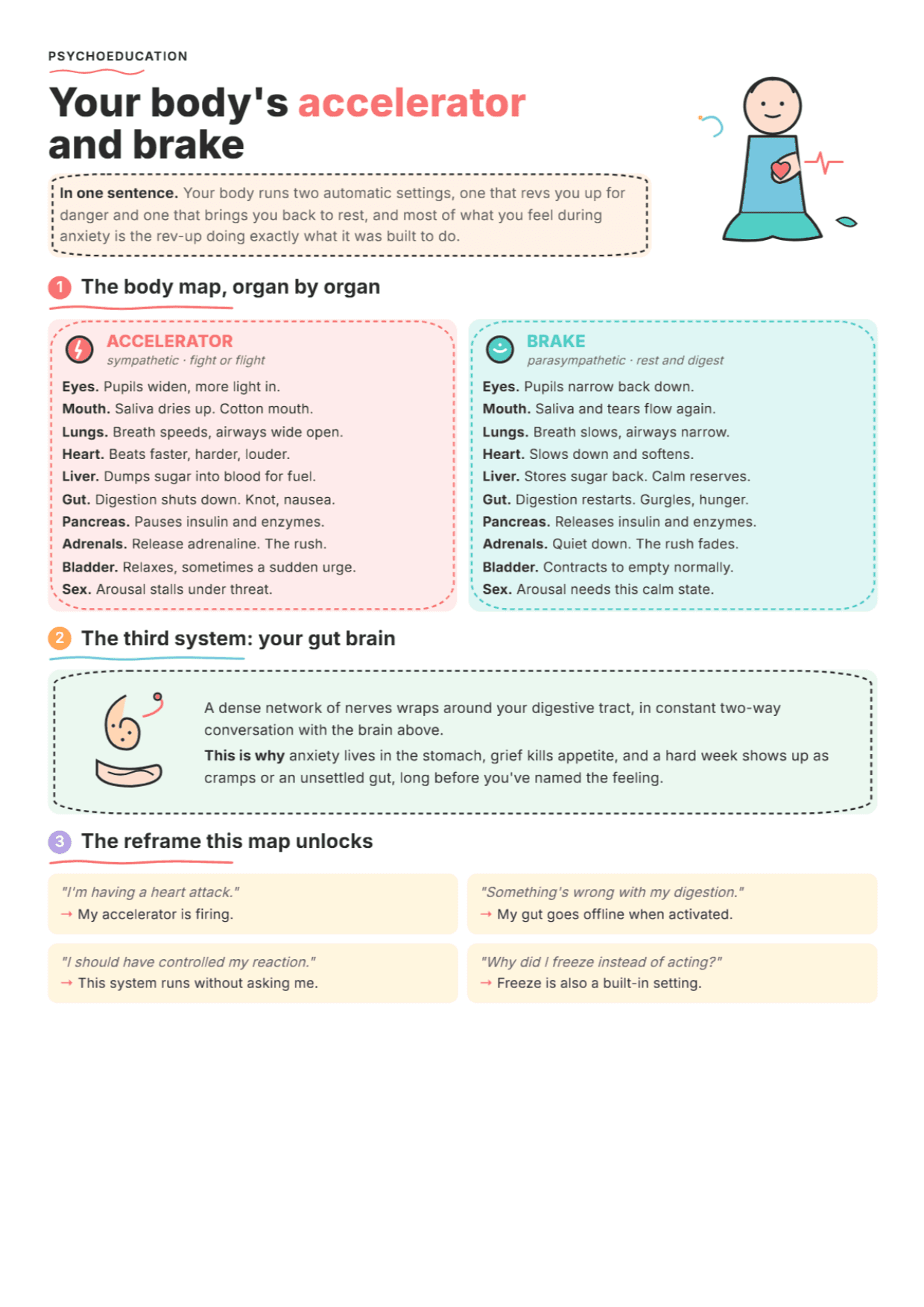
Handout
Autonomic Nervous System: PDF Worksheet, Tools and Exercises
A visual PDF worksheet, clinical tools, and concrete exercises to explain the body's stress and recovery system to patients in session.
AnxietyTrauma & PTSD
Feature
Box Breathing: A Guided Tool for Physiological Regulation
A four-phase animated breathing exercise that down-regulates sympathetic arousal and builds a portable self-regulation skill patients can practise autonomously.
AnxietyMood & depression
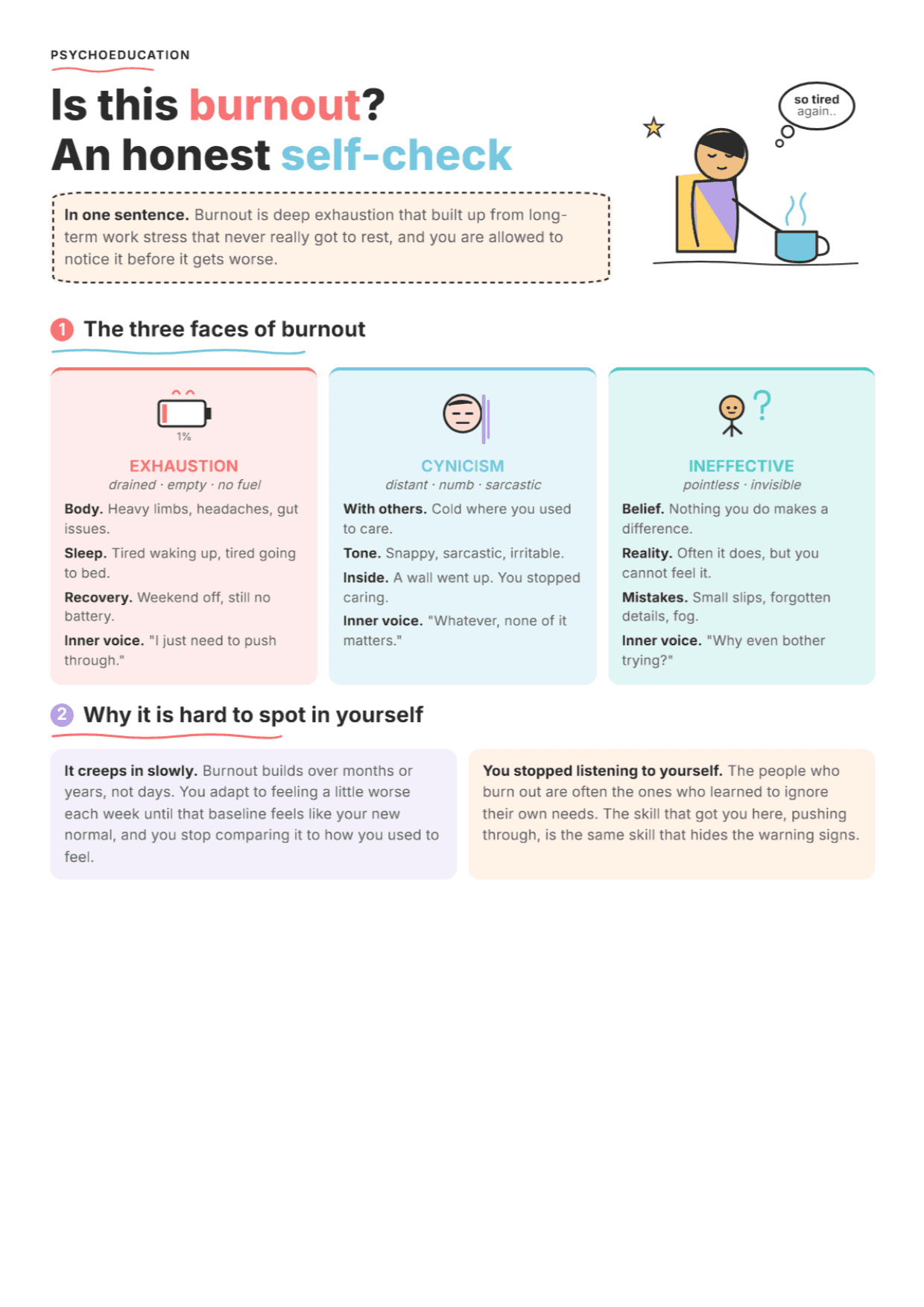
Handout
Burnout: PDF Worksheet, Tools and Exercises for Clinical Practice
A structured PDF worksheet with tools and exercises to explain burnout's three dimensions, run an 8-item self-check, and open the workload conversation in session.
Life transitionsBody & health
Feature
Cardiac Coherence: Paced Breathing for HRV Regulation
How to prescribe a daily six-breaths-per-minute practice to build lasting parasympathetic tone and support stress regulation between sessions.
AnxietyMood & depression
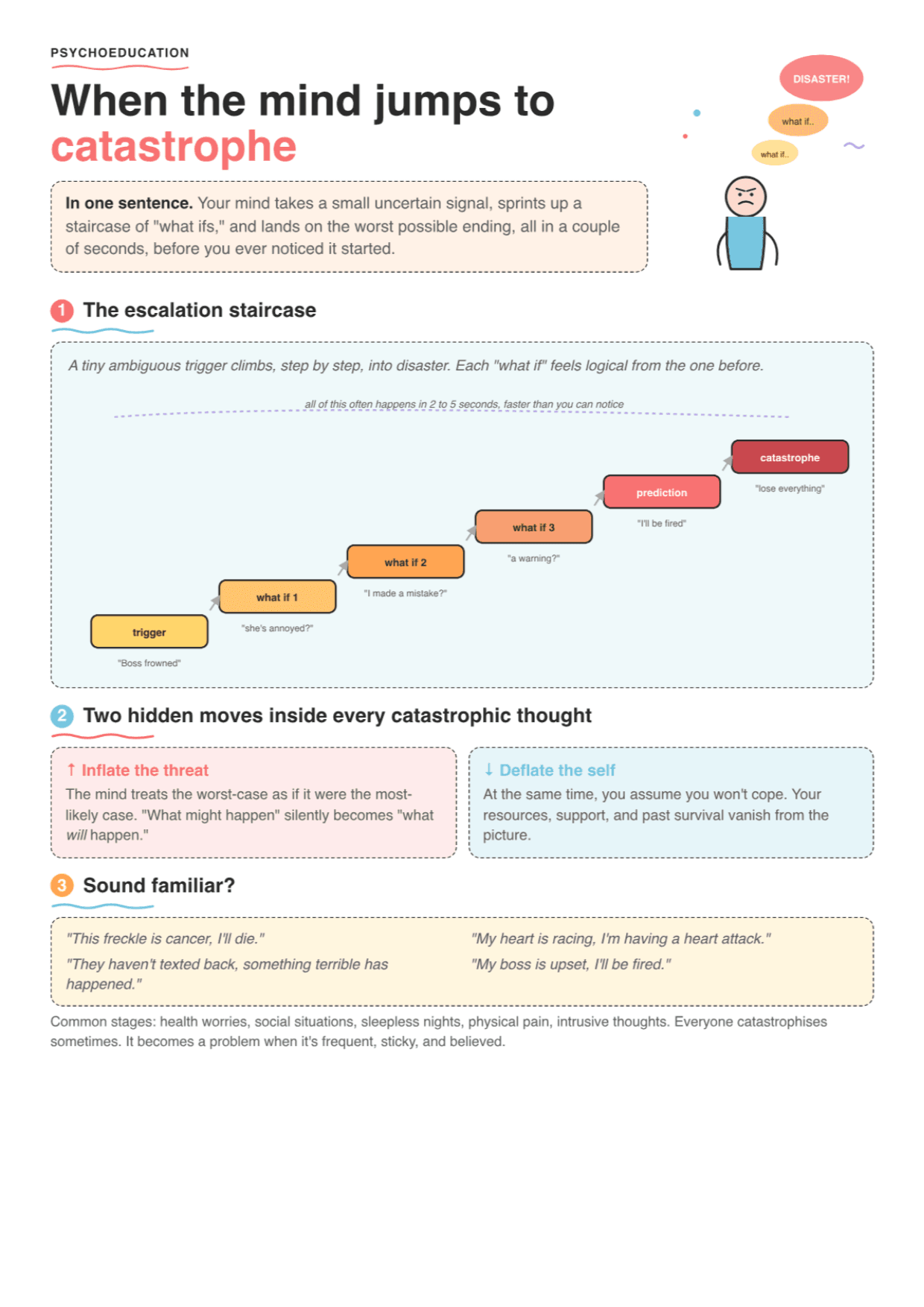
Handout
Catastrophizing: PDF Worksheet, Tools and Exercises for Clinical Practice
A printable PDF worksheet, clinical tools, and exercises to explain catastrophizing clearly in session and help patients interrupt the spiral.
AnxietyTrauma & PTSD
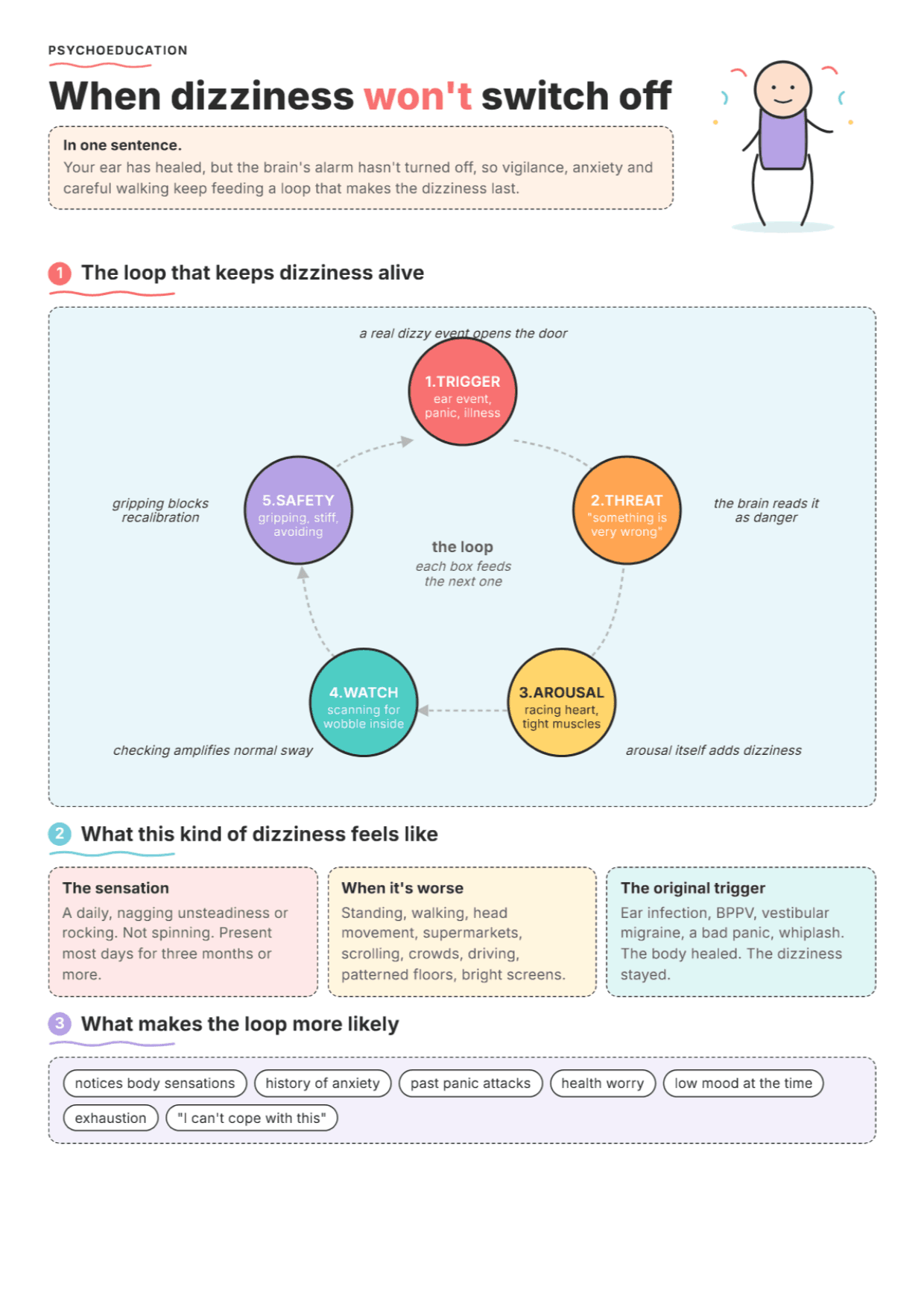
Handout
CBT Model of PPPD: PDF Worksheet, Tools and Exercises
A visual PDF worksheet clinicians can use in session to map the dizziness maintenance loop, correct common misconceptions, and ground PPPD psychoeducation in a shared model.
AnxietyBody & health
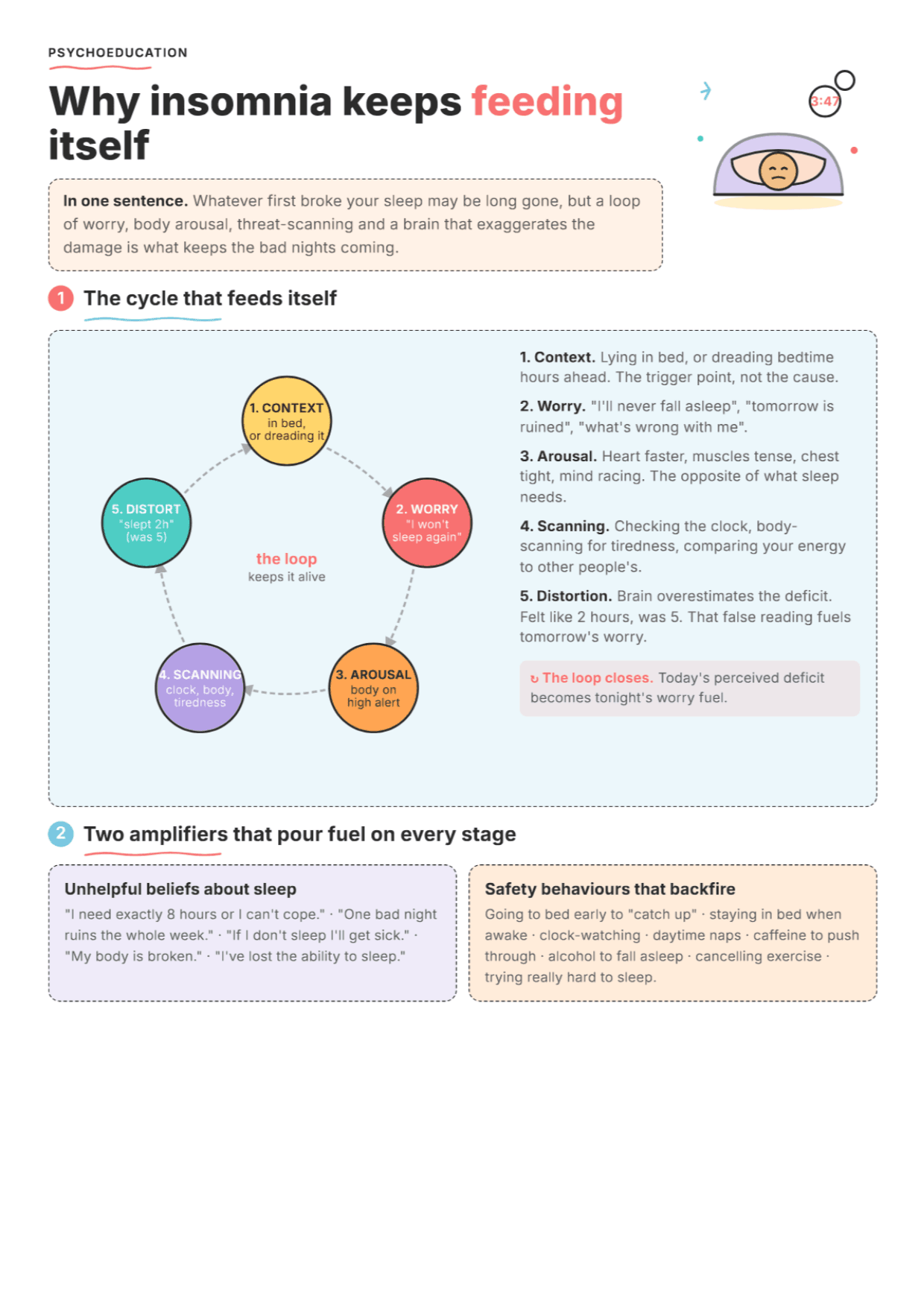
Handout
Cognitive Behavioral Model of Insomnia: PDF Worksheet, Tools and Exercises
A visual PDF worksheet clinicians can use in session to explain the insomnia maintenance cycle, with tools and exercises grounded in Harvey, Espie, and Morin's CBT framework.
Body & healthThoughts & cognition
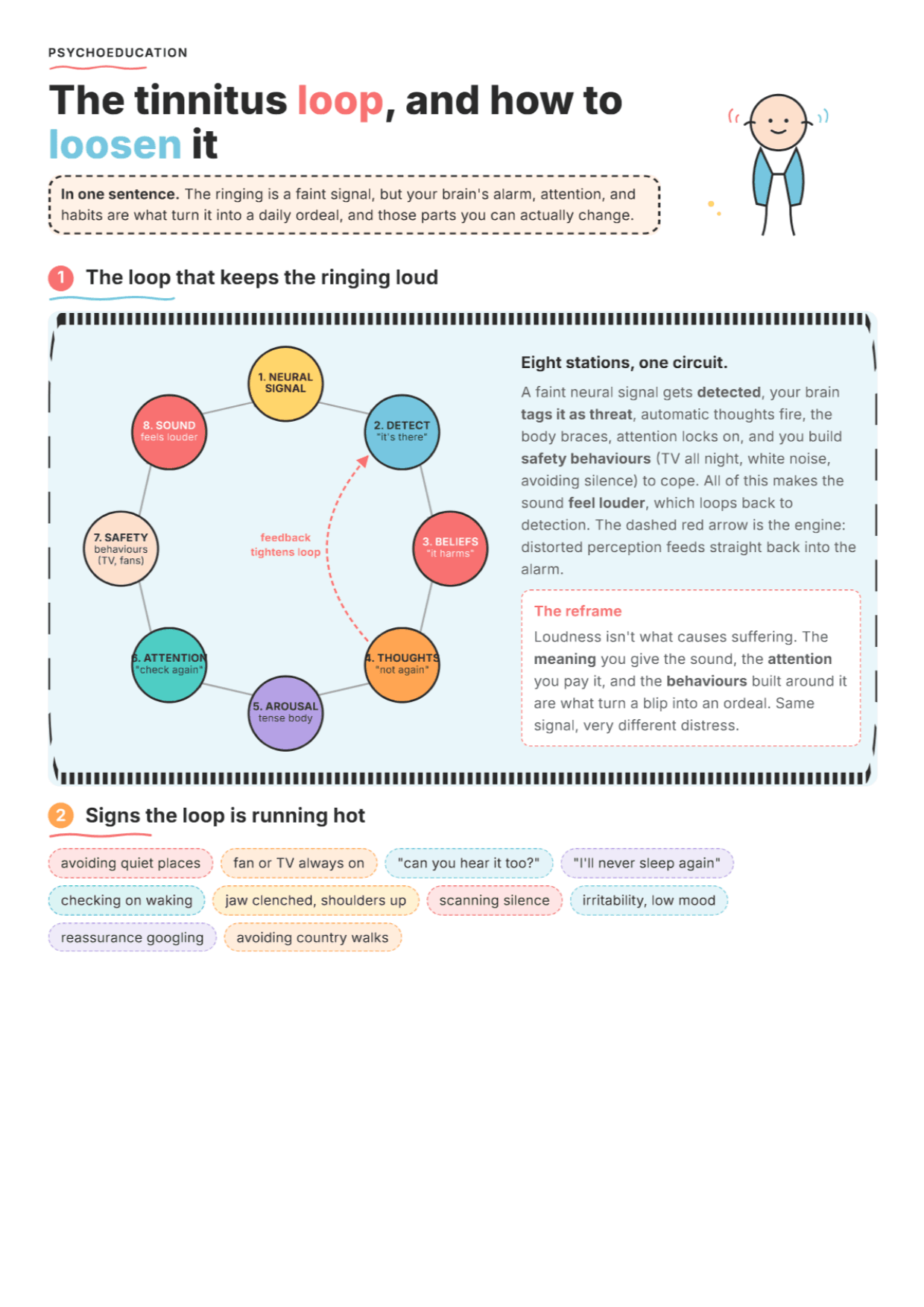
Handout
Cognitive Behavioral Model of Tinnitus: PDF Worksheet, Tools and Exercises
A visual PDF worksheet to explain the tinnitus distress loop to patients in session, identify maintaining behaviors, and anchor psychoeducation before cognitive or behavioral work begins.
Body & healthThoughts & cognition
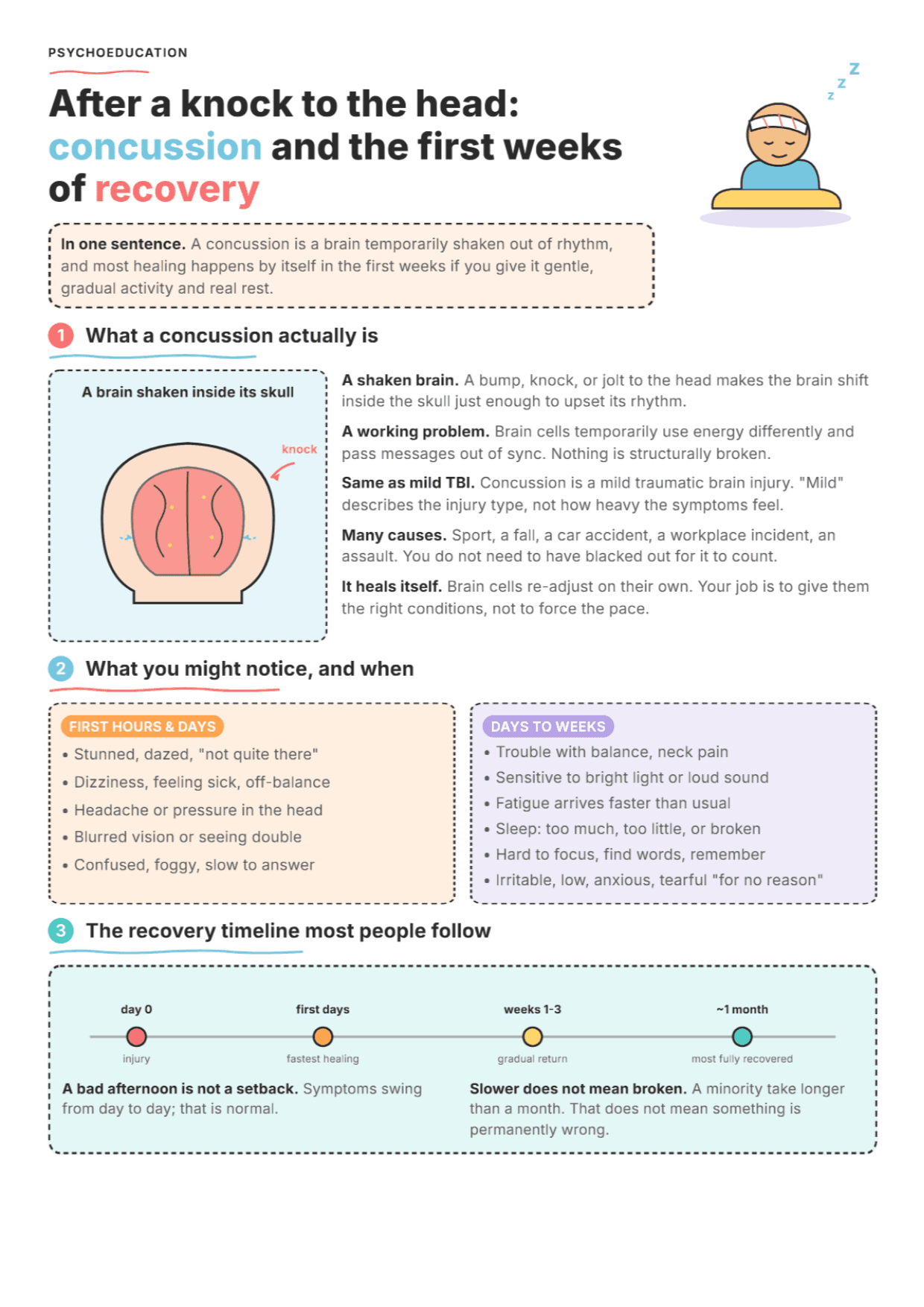
Handout
Concussion: PDF Worksheet, Tools and Exercises for Clinical Practice
A visual psychoeducation PDF worksheet covering concussion mechanics, symptom timelines, and graduated return to activity, for clinical use at the bedside or in consultation.
NeurodevelopmentBody & health