
Neurodevelopmental Disorders: Clinical Resources for Assessment & Intervention
Neurodevelopmental disorders, encompassing conditions such as ADHD, autism spectrum disorder, developmental coordination disorder, and intellectual disability, represent one of the most clinically heterogeneous categories a practitioner will encounter across the lifespan. This page is designed for psychologists, psychiatrists, neuropsychologists, and allied health clinicians who work with children, adolescents, or adults presenting with neurodevelopmental profiles. The resources grouped here span psychoeducation, self-regulation exercises, compensatory strategy training, and caregiver guidance, all adapted to the specific cognitive and emotional demands these conditions place on clients and their families. Whether you are supporting a newly diagnosed adolescent or refining a long-term intervention plan for an adult with late-identified autism, you will find structured, evidence-informed tools ready to integrate into your practice.

Defining the Neurodevelopmental Spectrum
Neurodevelopmental disorders are a group of conditions originating in the central nervous system during the developmental period, with onset typically in early childhood, though diagnosis often occurs much later. The DSM-5-TR and ICD-11 both organise this cluster to include attention-deficit/hyperactivity disorder (ADHD), autism spectrum disorder (ASD), specific learning disorders (including dyslexia and dyscalculia), developmental coordination disorder (DCD), intellectual developmental disorder, communication disorders, and tic disorders including Tourette syndrome.
What unites these presentations is not a single aetiology but a pattern of atypical neurodevelopment affecting cognition, behaviour, motor function, or social communication in ways that are pervasive and functionally impairing. Importantly, these are not transient reactions to stress or acquired injuries: they reflect enduring differences in neural architecture and processing.
A clinician-facing resource library for this category must therefore accommodate significant heterogeneity. A psychoeducation sheet suited to a parent of a six-year-old with DCD will look nothing like an executive function workbook for a university student with ADHD. The tools gathered here are designed with that range in mind.
The Lifespan Dimension
One of the most clinically significant shifts in recent decades has been the recognition that neurodevelopmental conditions are lifelong. Early identification remains critical for access to support, but a growing proportion of clinical referrals now involve adults receiving a first diagnosis of ADHD or ASD in their thirties, forties, or later. This late-identification population carries particular clinical complexity: years of masking, compensatory strategies that have partially succeeded, internalised narratives of failure, and high rates of secondary anxiety and depression.
The resources in this category are designed with that lifespan lens. Some tools are calibrated for developmental stage, while others address universal challenges such as emotional dysregulation, sensory sensitivity, or working memory difficulties that manifest across age groups.
Assessment Considerations and Clinical Identification
Recognising Neurodevelopmental Presentations in Consultation
Early clinical suspicion often arises from inconsistent profiles: a client who performs well on some tasks and struggles markedly on others, whose difficulties are not fully explained by mood, anxiety, trauma, or environmental factors. Key indicators include:
- Persistent difficulties with sustained attention, task initiation, or cognitive flexibility that predate current stressors
- A history of social communication differences, rigid routines, or sensory sensitivities from childhood
- Unexpected academic or occupational underachievement relative to measured ability
- Motor clumsiness, graphomotor difficulties, or significant speech and language delays in the developmental history
- Strong family loading, given the high heritability of most neurodevelopmental conditions
Collateral information is invaluable: school reports, parental accounts of early development, and prior assessments can all reveal patterns that a standard clinical interview may not capture.
Differential Diagnosis and Comorbidities
Comorbidity is the rule, not the exception in neurodevelopmental presentations. ADHD co-occurs with anxiety disorders in roughly 50% of cases; ASD frequently presents alongside ADHD, intellectual disability, epilepsy, and mood disorders. Specific learning disorders rarely appear in isolation. This comorbidity burden complicates treatment prioritisation and requires structured clinical formulation rather than a single diagnostic label driving the entire care plan.
Key differential considerations include:
- Trauma and attachment difficulties: complex developmental trauma can mimic ADHD and ASD features. A careful trauma history is essential before attributing all symptoms to a neurodevelopmental origin.
- Mood and anxiety disorders: inattention, social withdrawal, and dysregulation are transdiagnostic features. Onset timeline and developmental pervasiveness help differentiate.
- Sleep disorders: chronic sleep disruption, particularly common in ASD and ADHD, amplifies cognitive and behavioural symptoms substantially and warrants direct assessment.
- Intellectual disability vs. specific learning disorder: global versus domain-specific impairment must be carefully established, ideally with neuropsychological testing.
Core Clinical Challenges Addressed by These Resources
Executive Function and Self-Regulation
Executive dysfunction is arguably the most cross-cutting challenge across neurodevelopmental presentations. Working memory limitations, impaired inhibitory control, and weak cognitive flexibility affect academic performance, occupational functioning, and social relationships. Structured worksheets that externalise planning, break tasks into discrete steps, and build routine reduce cognitive load and compensate for underdeveloped frontal-executive capacity.
Self-regulation difficulties, particularly emotional dysregulation in ADHD and ASD, are among the most impairing features for daily functioning and are frequently the primary reason families seek clinical input. Tools that scaffold affect identification, build interoceptive awareness, and introduce regulation strategies progressively are well suited to this population, provided they are adapted to cognitive level and sensory profile.
Social Communication and Relationships
For clients on the autism spectrum, difficulties with implicit social understanding, perspective-taking, and reading non-verbal cues are central. Psychoeducation materials that make implicit social rules explicit, that validate the experience of social exhaustion and masking, and that support the development of genuine social connection rather than mere compliance are clinically preferred. The goal is not to make autistic clients appear neurotypical but to reduce distress and increase agency.
Integrating Neurodevelopmental Resources into the Care Plan
Sequencing Psychoeducation Before Skill-Building
For most clients and families, a diagnostic formulation session anchored in clear psychoeducation is the essential first step. Understanding the neurobiological basis of the difficulties reduces shame, reframes past failures, and builds the collaborative therapeutic alliance necessary for skill-building work. Psychoeducation materials serve a dual purpose: they structure the session and provide something concrete for the client or family to take away and revisit.
A practical sequence for introducing resources might follow this structure:
- Deliver the diagnostic formulation verbally, using accessible language calibrated to the client's cognitive and developmental level.
- Provide a psychoeducation sheet that summarises the key features of the condition and normalises the client's experience.
- Introduce a self-monitoring or tracking tool to build awareness of the target behaviour or experience (for example, attention patterns, sensory overload triggers, or emotional dysregulation episodes).
- Move to strategy-based worksheets once the client has sufficient self-awareness and motivation.
- Introduce generalisation exercises to support transfer of skills to real-world settings.
- Involve caregivers or partners through specific guidance materials adapted to their role.
Caregiver and Family Resources
Caregiver involvement is a significant predictor of outcomes in paediatric neurodevelopmental intervention. Parents and educators benefit from materials that explain the functional impact of the condition in practical terms, outline strategies that complement clinical work, and address the emotional toll of caring for or parenting a child with complex needs. Caregiver burnout is under-recognised and warrants direct clinical attention.
Adult clients also benefit from involving partners or close support persons, particularly when executive dysfunction or communication differences affect family relationships. A brief psychoeducation resource shared with a partner can reduce interpersonal conflict rooted in misattributed intentions.
> A 34-year-old woman referred for treatment-resistant depression disclosed during the intake that she had always felt "like an alien at work." A structured review of her developmental history revealed longstanding sensory sensitivities, a strong preference for routine, difficulty with implicit professional norms, and significant social exhaustion after meetings. A prior ADHD diagnosis had been made at 28, but the broader ASD presentation had never been named. Introducing a psychoeducation sheet on late-identified autism in women shifted the entire clinical formulation, reduced shame substantially, and became the foundation for a more targeted intervention.
Adapting Resources to the Client's Profile
Cognitive and Sensory Adaptations
Neurodevelopmental populations frequently require modified materials. High text density, abstract instructions, and unclear visual layouts can render an otherwise excellent worksheet inaccessible. When selecting or administering tools from this category, consider:
- Reading level and language complexity relative to the client's profile
- Sensory presentation: busy visual design may be dysregulating for some ASD presentations
- Length and session pacing, given variable attentional stamina
- Whether written, visual, or audio formats are better suited to the individual
Cultural and Intersectional Considerations
Diagnostic disparities along lines of gender, race, socioeconomic status, and cultural background are well documented in neurodevelopmental literature. Girls and women with ADHD and ASD remain systematically under-identified. Clients from minoritised backgrounds may present to services later, with more accumulated distress, and with greater scepticism toward diagnostic labels shaped by historical misuse. Resources should be offered within a formulation that acknowledges these systemic factors explicitly.
Clinical Vigilance: Limits and Ethical Considerations
What Structured Resources Cannot Replace
Printable tools and structured exercises are adjuncts to clinical care, never substitutes for it. A psychoeducation sheet does not replace a comprehensive neuropsychological assessment; a self-monitoring form does not replace a collaborative functional analysis. Clinicians should be alert to the risk of over-relying on structured materials with clients whose primary need is relational, particularly those with complex trauma histories alongside neurodevelopmental presentations.
Medication management, when indicated for ADHD or associated conditions, remains outside the scope of these resources and should be coordinated with the prescribing clinician as part of an integrated care plan.
Risk of Over-Identification and Self-Diagnosis
The increased public visibility of ADHD and ASD has led to a significant rise in self-referred clients presenting with self-diagnoses informed by social media content. This is clinically manageable but requires careful handling. Validation of the client's self-knowledge coexists with rigorous clinical assessment. Resources in this category are designed for use within a supervised clinical framework, not for self-directed diagnostic confirmation.
Tools in this category
Handout
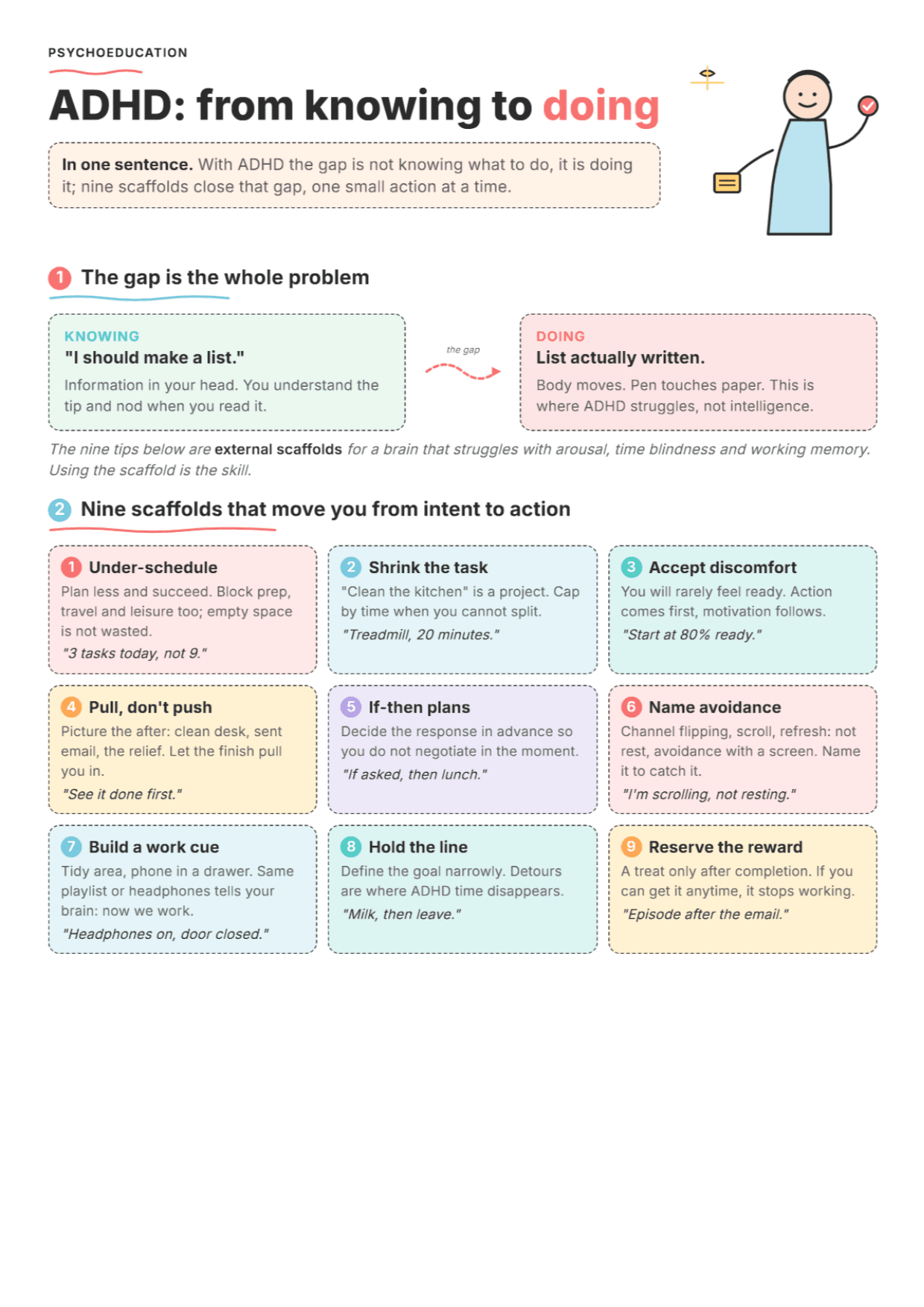
ADHD Management Tips: PDF Worksheet, Tools and Exercises
A visual PDF worksheet with nine concrete scaffolds to help clinicians explain the knowing-doing gap in ADHD and give patients a practical take-home reference.
NeurodevelopmentBehaviours & addictions
Handout
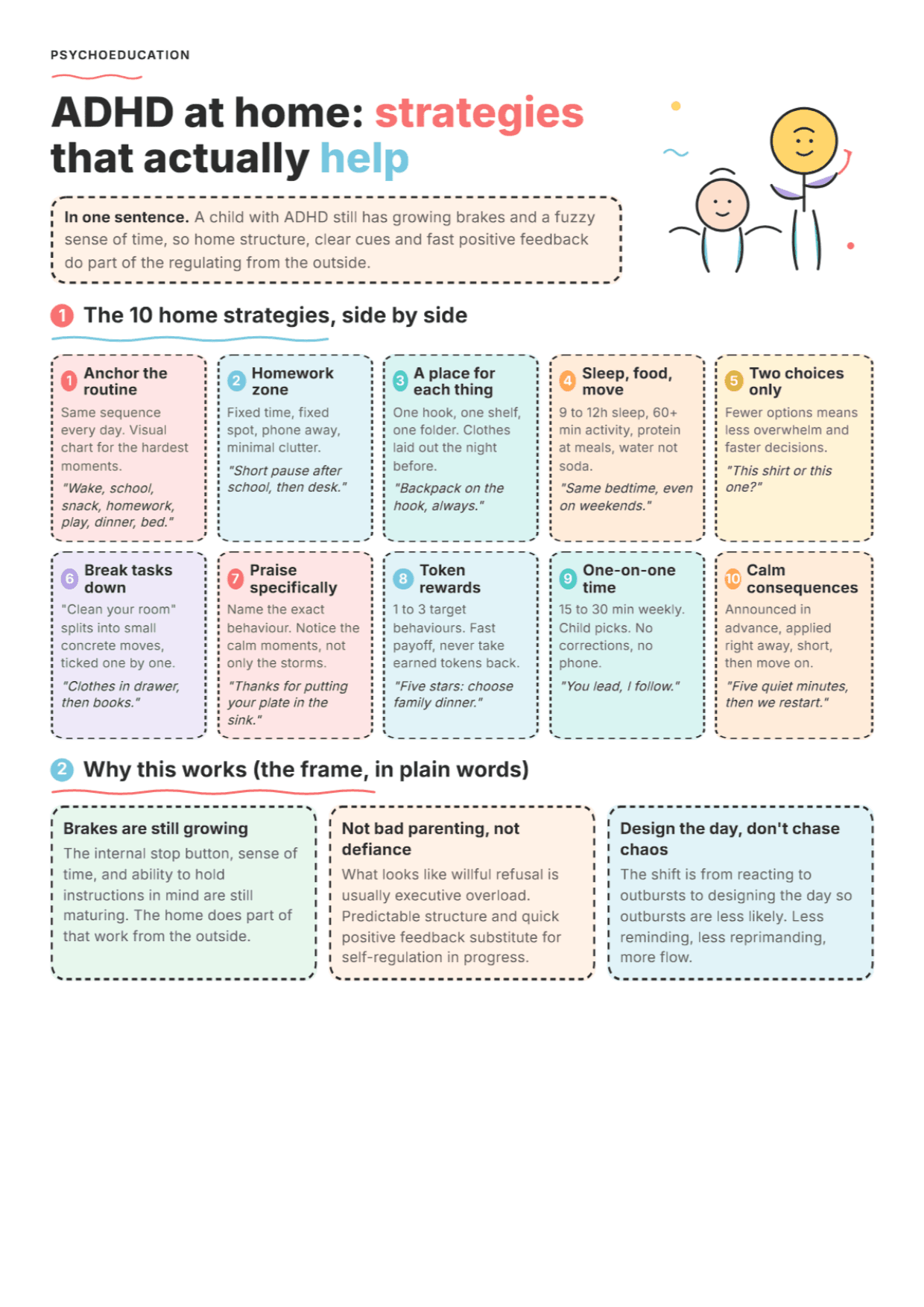
ADHD Parenting Tips: PDF Worksheet, Tools and Exercises for Clinical Practice
A structured visual fiche PDF with 10 concrete strategies, clinical tools, and exercises to support parents of children with ADHD in and between sessions.
NeurodevelopmentRelationships
Feature
Box Breathing: A Guided Tool for Physiological Regulation
A four-phase animated breathing exercise that down-regulates sympathetic arousal and builds a portable self-regulation skill patients can practise autonomously.
AnxietyMood & depression
Feature
Cardiac Coherence: Paced Breathing for HRV Regulation
How to prescribe a daily six-breaths-per-minute practice to build lasting parasympathetic tone and support stress regulation between sessions.
AnxietyMood & depression
Handout
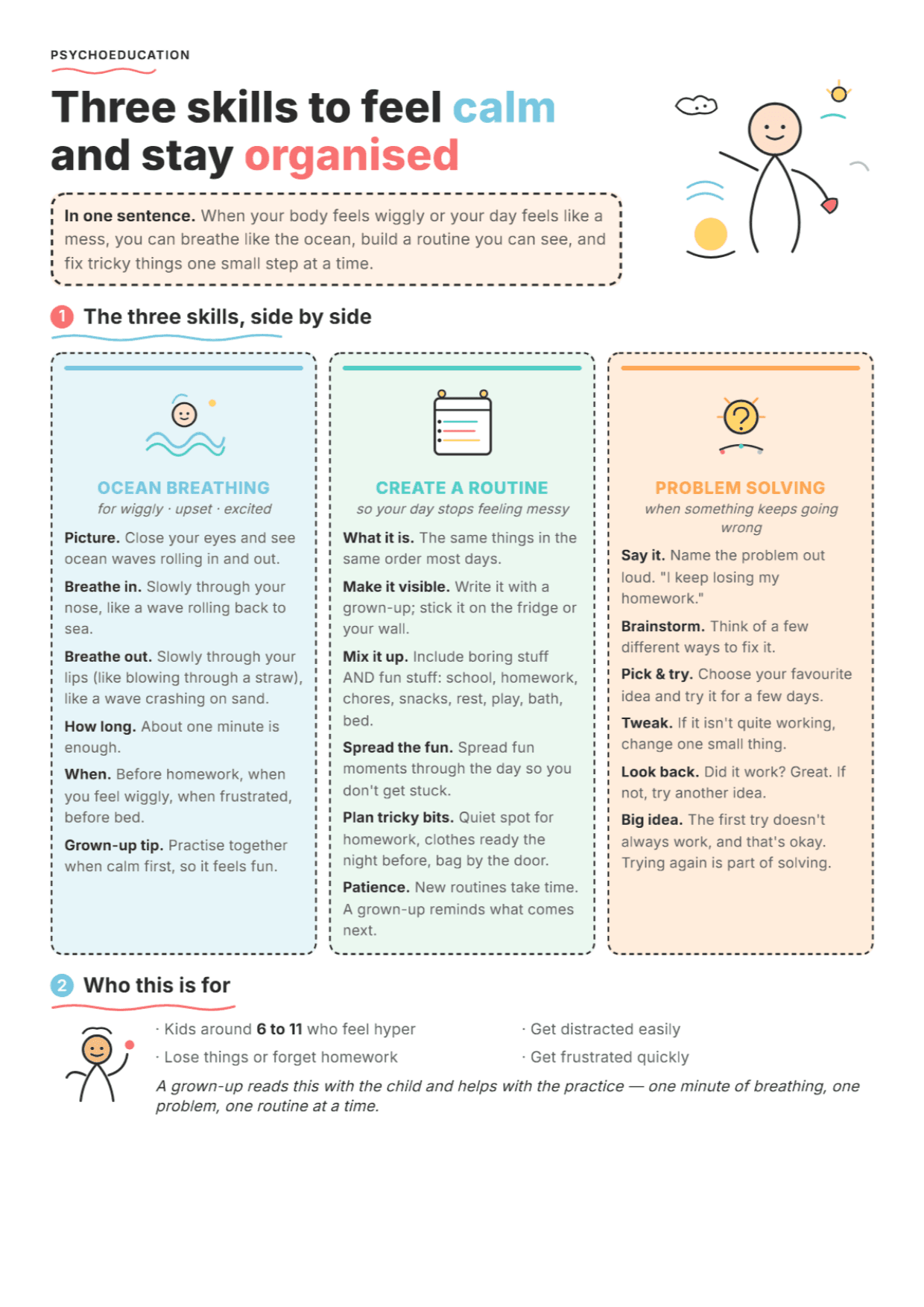
Children's ADHD: PDF Worksheet, Tools and Exercises for Clinical Practice
A visual psychoeducation worksheet presenting three concrete self-regulation skills for children aged 6 to 11 with ADHD, designed as a clinical in-session support.
NeurodevelopmentEmotions & stress
Handout
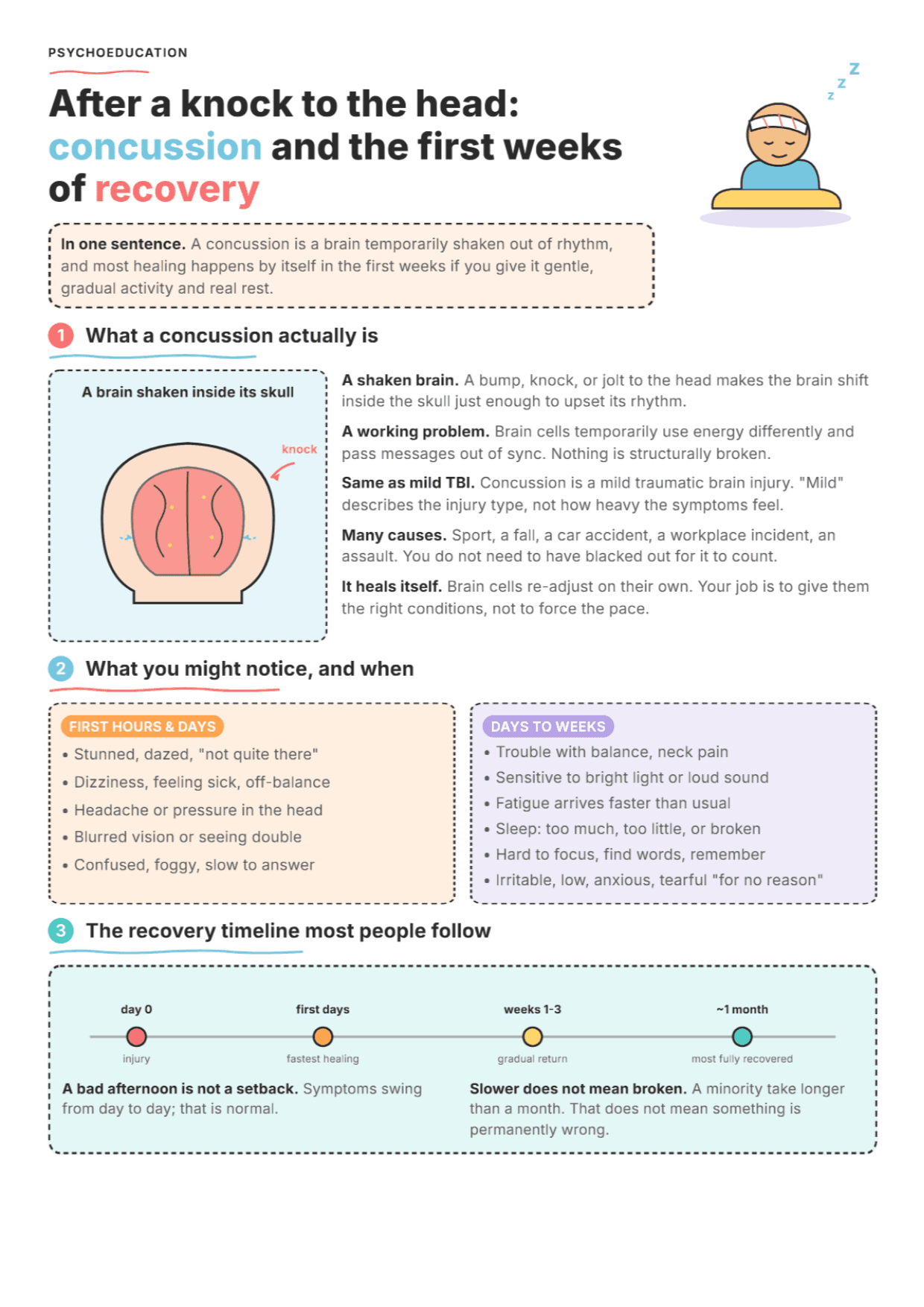
Concussion: PDF Worksheet, Tools and Exercises for Clinical Practice
A visual psychoeducation PDF worksheet covering concussion mechanics, symptom timelines, and graduated return to activity, for clinical use at the bedside or in consultation.
NeurodevelopmentBody & health
Feature
Daily Affirmations: Supporting Inner Dialogue in Therapy
A daily touchpoint that keeps cognitive restructuring and self-compassion alive between consultations, one credible message at a time.
AnxietyMood & depression
Feature
Daily Therapeutic Journal: Tracking Mood Over Time
A structured between-session journaling tool that builds emotional granularity, captures daily patterns, and gives clinicians a dated qualitative record to work from.
AnxietyMood & depression
Feature
Daily Wellbeing Challenges: Building Between-Session Momentum
One rotating daily action across self-compassion, activation, connection, and values themes to sustain patient engagement and reinforce therapeutic gains.
AnxietyMood & depression